
Soups & Stews
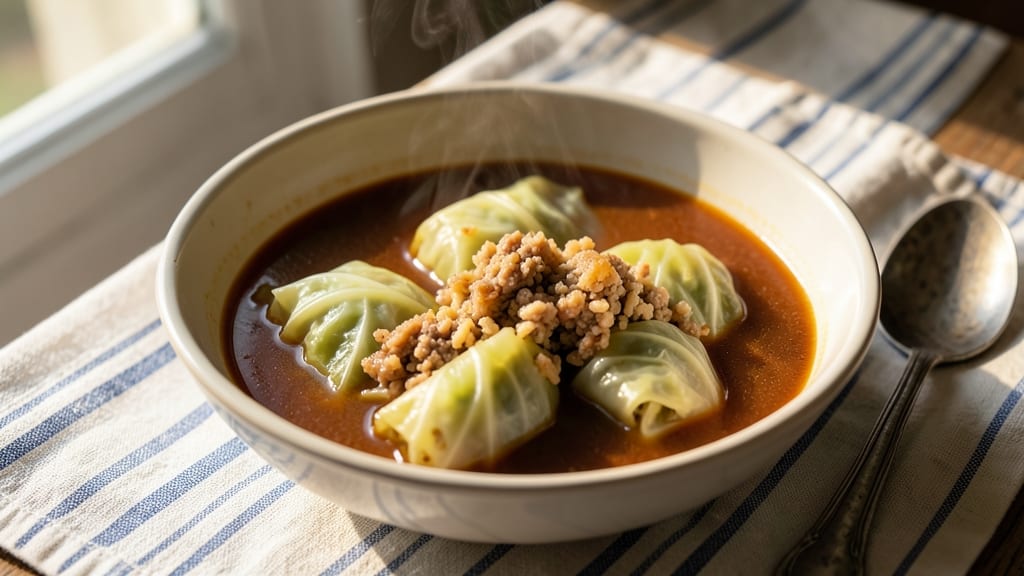
Hungarian stuffed cabbage soup brings hearty comfort to your table with tender meat and rice nestled in cabbage leaves, simmered until flavors meld into rich harmony. This traditional dish, known as töltött káposzta leves, transforms simple ingredients into a deeply satisfying meal that warms both body and soul.
The technique of rolling cabbage leaves around savory fillings might seem intricate, but it becomes intuitive with practice—each bite reveals layers of flavor.
The beauty of this soup lies in its balance: the cabbage leaves provide structure, while the meat and rice filling delivers substance. Ground pork or beef, combined with rice and seasonings, creates a filling that stays moist and flavorful even after hours of simmering.
The broth, rich with vegetables and herbs, deepens in complexity as it cooks, creating a foundation that supports every ingredient. This recipe delivers restaurant-quality results with just a few simple techniques.
By the time you serve this soup, your kitchen will smell like home—earthy cabbage, savory meat, and aromatic herbs intertwined. The cabbage leaves soften just enough to hold their shape while absorbing the surrounding flavors, creating a dish that's both rustic and refined.
Perfect for family dinners or cozy gatherings, this soup pairs beautifully with crusty bread and a dollop of sour cream. Let's bring Hungarian tradition to your kitchen.
What makes this recipe special is its versatility—adjust the filling to include vegetables or swap meats to suit dietary preferences. The slow simmering process ensures tender cabbage and perfectly cooked rice, making it a dish that rewards patience.
Whether you're serving it as a main course or a hearty appetizer, this stuffed cabbage soup will become a staple in your cooking repertoire. Ready to begin?
Ingredients for hungarian stuffed cabbage soup
Simple, hearty ingredients that transform into comforting Hungarian stuffed cabbage soup.
| Ingredient | Amount | Notes |
|---|---|---|
| Green Cabbage 🥬 | 1 whole | Large head, outer leaves removed |
| Ground Beef 🥩 | 1 lb | 80% lean, preferably chuck |
| White Rice 🍚 | 1 cup | Long-grain, uncooked |
| Onion 🧅 | 1 whole | Yellow or red, finely chopped |
| Garlic Cloves 🧄 | 4 cloves | Fresh, minced |
| Tomato Paste 🍅 | ½ cup | Smooth, not chunky |
| Beef Broth 💧 | 4 cups | Low-sodium, homemade preferred |
| Apple Cider Vinegar 🍎 | 2 tbsp | For tangy brightness |
| Bay Leaves 🌿 | 2 whole | Fresh or dried |
| Allspice Berries 🌶️ | ½ tsp | Ground or crushed |
| Ground Black Pepper 🌶️ | ½ tsp | Freshly cracked |
| Salt 🧂 | 1 ½ tsp | Kosher or sea salt |
| Sour Cream 🥛 | ¼ cup | Full-fat for serving |
| Fresh Dill 🌿 | ¼ cup | Chopped, for garnish |
| Olive Oil 🫒 | 2 tbsp | For cooking filling |
The cabbage is the backbone here. Grab a firm, heavy head—the outer leaves need to be big enough to roll, so skip the wilted ones. I always save the tightest leaves for the first few rolls (they hold their shape better). Whole Foods or your local farmers market usually have the freshest heads, but the grocery store works too. If you're using dried cabbage leaves, soak them in warm water for 10 minutes first. The beef matters too—chuck or ground round stays juicy while lean ground beef can turn dry. If you're vegetarian, swap the beef for mushrooms or lentils, but trust me on the meat for that classic flavor.
No apple cider vinegar? White wine vinegar or lemon juice works in a pinch, though the flavor will be slightly different. Allspice berries can be tricky to find—Penzeys or bulk spice shops carry them, but ground allspice in the spice aisle works too. The tomato paste is non-negotiable for depth, but if you're avoiding it, 1/2 cup crushed tomatoes will do. For the rice, I always use long-grain—it stays separate and soaks up flavors better. The bay leaves? Tuck them into the cabbage rolls so they infuse the filling directly. And if you're short on dill, parsley or marjoram can stand in, though it won't be the same.
This soup tastes even better the next day—3-4 days in the fridge, honestly. The cabbage leaves soften just right after sitting overnight. For freezing, portion it into containers with 1 inch of headspace—it expands as it thaws. I like to freeze it without the sour cream (add it fresh when serving). The filling keeps in the fridge for 2 days before rolling, so make it fresh if possible. And if you're prepping ahead, cook the rice separately and mix it into the filling just before stuffing—keeps it from getting mushy.
Why You'll Love This Recipe
- One-Pot Wonder: I swear by this recipe when I need zero cleanup. Just brown the beef, sauté the onions and garlic, toss in the rice and cabbage leaves—no chopping, no fuss. The pot does all the work while I sip wine and pretend I’m not cooking.
- Garlic-Beef Magic: That first bite of tender cabbage wrapped around seasoned beef? Pure satisfaction. The garlic cloves caramelize just enough to give it depth, while the rice soaks up all the savory juices. Honestly, it’s the kind of flavor that makes you want to eat it straight from the pot.
- Meal Prep MVP: Between us, this soup gets better the next day. I make a double batch on Sundays—the rice plumps up, the flavors meld, and it reheats like a dream. Perfect for lazy lunches or when I need to feed the whole family without slaving over the stove.
- Budget-Friendly Feast: Ground beef and cabbage stretch for miles here. I can feed four people for under $10, and the leftovers? They’re my secret weapon for quick dinners. Not the prettiest, but the taste makes up for it—and my wallet thanks me.
Step-by-step instructions for Hungarian stuffed cabbage soup
This hearty dish delivers tender cabbage leaves stuffed with savory beef and rice, simmered in rich broth. Let's bring this classic comfort food to life.
Prepare the Cabbage Leaves
Start by carefully removing the outer leaves from the whole green cabbage. You'll need about 8-10 large, pliable leaves. To soften them, bring a large pot of water to a boil and blanch the leaves for 3-4 minutes until they become more pliable. Drain immediately and set aside on a clean kitchen towel.
While the leaves are blanching, cut the core out of the cabbage head and chop it into small pieces. You'll use this chopped cabbage later in the soup. The blanching step is crucial—it prevents the leaves from curling too tightly when stuffed and makes them more tender after cooking.
Cook the Filling Mixture
In a large skillet, heat the 2 tablespoons olive oil over medium heat. Add the 1 whole finely chopped onion and cook for 5 minutes until softened. Stir in the 4 cloves minced garlic cloves and cook for another 30 seconds until fragrant.
Add the 1 lb ground beef to the skillet and cook until browned, breaking it apart with a wooden spoon. Drain any excess fat if needed, then stir in the 0.5 cup tomato paste, 1.5 teaspoons salt, 0.5 teaspoon ground black pepper, and 0.5 teaspoon allspice berries. Cook for 2 minutes until the mixture darkens slightly.
Add the 1 cup white rice and stir to coat it evenly in the beef mixture. Remove from heat and let cool for 5 minutes. This cooling step makes the filling easier to handle when stuffing the cabbage leaves.
Stuff and Assemble the Soup
Spread each blanched cabbage leaf on a clean surface with the vein side down. Place about 2 tablespoons of the beef-rice mixture near the stem end of each leaf. Fold the sides inward, then roll tightly from the stem end, tucking in the sides as you go. Place the stuffed cabbage rolls seam-side down in a large Dutch oven.
In the same Dutch oven, add 2 tablespoons apple cider vinegar, 2 whole bay leaves, and 4 cups beef broth. Bring to a simmer over medium heat, then carefully place the stuffed cabbage rolls in the broth. They should be partially submerged. If needed, add a little more broth to cover about 2/3 of the rolls.
Cover the Dutch oven and simmer for 45-50 minutes, until the rice is tender and the cabbage leaves are cooked through. You'll know it's ready when the rolls float to the surface and the broth has reduced slightly. Here's the thing—don't peek or stir during cooking, as this can break the rolls.
Finish and Serve
Once the cabbage rolls are cooked, carefully remove them from the broth using a slotted spoon and arrange them in a serving dish. Skim any excess fat from the broth, then stir in the chopped cabbage core you set aside earlier. Simmer the broth for another 5 minutes to thicken slightly.
To serve, ladle the broth over the cabbage rolls. Stir in the 0.25 cup chopped fresh dill and let it warm through for 1 minute. Ladle the soup into bowls, placing 2-3 cabbage rolls in each. Top each serving with a dollop of 0.25 cup sour cream and additional fresh dill. This dish tastes even better the next day as the flavors meld together.
Pro Tips For Making Hungarian Stuffed Cabbage Soup
- PARBOIL THE CABBAGE FIRST: I learned this the hard way—skipping this step means your cabbage stays tough as a boot. Drop whole heads into boiling water for 3-4 minutes until the outer leaves separate easily. This softens them just enough to wrap without tearing, and the flavor absorbs the broth better later. (Yes, even if you're impatient like me.)
- BROWN THE BEEF LOW AND SLOW: After burning three batches of ground beef, I finally figured out: low heat is your friend. Cook the beef in batches until it loses its raw color, breaking it up with a spoon. Rushing this step makes the soup taste like it’s still in the fridge. A splash of water or broth helps deglaze those browned bits—don’t skip it.
- USE DAY-OLD RICE FOR WRAPPING: Fresh rice is a disaster for stuffing. Cook your rice a day ahead, then chill it thoroughly. Cold rice holds its shape when wrapped in cabbage leaves, and it soaks up the broth like a sponge. (Pro move: Toss it with a little oil or butter while warm to keep it from sticking.)
- SIMMER THE SOUP COVERED, THEN UNCOVER: Start with a tight lid to build steam and soften the cabbage, but after 45 minutes, crack it open. The last 15 minutes uncovered lets the broth reduce slightly, deepening the flavor. This isn’t the prettiest method, but it’s the tastiest—trust the process. (Your future self will thank you.)
Serving suggestions for this dish
Traditional Hungarian Plating
Serve this soup in deep, rustic bowls to showcase the cabbage rolls prominently. I like using stoneware or ceramic bowls (like Le Creuset) that retain heat and complement the dish's earthy tones. Place 2-3 stuffed cabbage rolls in each bowl, then ladle the rich broth generously over them.
The rolls should be partially submerged, allowing diners to experience both the tender cabbage and flavorful filling in every bite. 🥣
Crusty Bread Pairings
A warm, crusty bread like Hungarian pita or sourdough is essential for soaking up the broth. I recommend Pilsner Urquell beer bread—its malty notes pair beautifully with the soup's savory depth.
For extra authenticity, try lángos, Hungary's famous fried dough, brushed with garlic butter. These pairings elevate the meal from comforting to celebratory. 🍞
Sour Cream & Herb Garnish
Finish each serving with a generous dollop of full-fat sour cream (about 1 tbsp per bowl) and a sprinkle of fresh dill. The tangy cream cuts through the richness while the dill adds a bright, herbal note.
For extra flair, I sometimes add a pinch of smoked paprika or a few toasted sesame seeds—these tiny details make the dish feel restaurant-worthy. ✨
Side Dish Harmony
Pair this soup with Hungarian-style sauerkraut for a tangy contrast or roasted root vegetables (like carrots and parsnips) for natural sweetness. A simple cucumber and radish salad with a drizzle of apple cider vinegar and olive oil adds freshness.
These sides balance the heartiness of the stuffed cabbage while keeping the meal light and vibrant. 🥕
Wine & Beverage Pairings
A dry Hungarian red wine like Egri Bikavér (Bull's Blood) complements the dish's rich flavors perfectly. For beer lovers, a crisp lager such as Soproni or a Belgian witbier with citrus notes works wonderfully.
Serve with sparkling water with lemon for those who prefer non-alcoholic options—it cleanses the palate between bites. 🍷
Make-Ahead Serving Tips
This soup tastes even better the next day, so prepare it ahead for gatherings. Reheat gently on the stovetop with 1 cup of water or broth to prevent drying. For serving, I like arranging the rolls in a wooden platter and ladling broth over them at the table.
Add fresh herbs and sour cream just before serving to keep everything vibrant. 💡
Nutrition facts
Frequently asked questions
Can I use frozen cabbage leaves instead of fresh?
Yes, but you'll need to thaw and prepare them carefully. Soak frozen cabbage leaves in warm water for 10-15 minutes until pliable, then blanch for 2-3 minutes to soften. The texture won't be as crisp as fresh leaves, but they'll still work well for stuffing. Avoid pre-shredded frozen cabbage—whole leaves hold their shape better.
What's the best way to prevent the cabbage rolls from falling apart?
Use firm, blanched leaves and don't overfill them—2 tablespoons of filling per roll is ideal. Tuck the sides tightly while rolling, and place them seam-side down in the pot. Most importantly, don't stir or peek during the 45-minute simmering time. Patience keeps them intact!
Can I make this soup vegetarian?
Replace the beef with 1 cup cooked lentils or mushrooms (cremini or portobello) sautéed with onions and garlic. Use vegetable broth instead of beef broth, and add 1 teaspoon smoked paprika for depth. The rice-to-filling ratio should stay 1:1 for proper texture.
How do I know when the soup is done cooking?
The cabbage rolls are ready when they float to the surface and the broth has reduced slightly (about 45-50 minutes of simmering). The rice should be tender, and the cabbage leaves should be soft but still hold their shape. If you cut one open, the center should be fully cooked through.
Can I prepare the filling ahead of time?
Yes, but cook the rice separately and mix it into the filling just before stuffing to prevent mushiness. Store the uncooked filling in an airtight container in the fridge for up to 2 days. For longer storage, freeze the filling (without rice) for up to 1 month)—just thaw and add cooked rice when ready to stuff.