
Soups & Stews
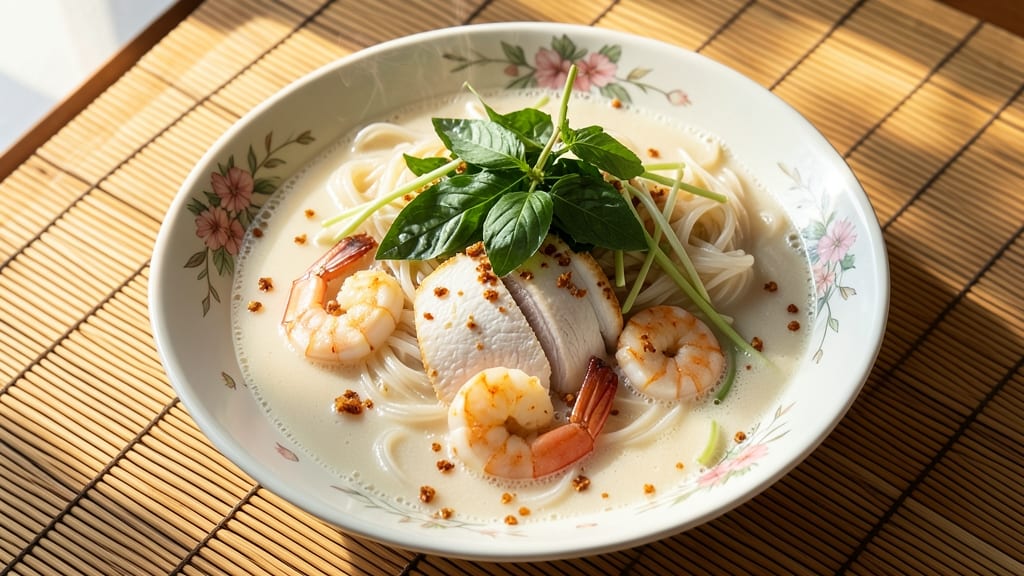
This bihun soup recipe delivers the perfect balance of silky rice noodles and rich coconut broth that’s both comforting and deeply flavorful.
The key lies in achieving that signature slippery texture in the noodles while building a broth that’s aromatic with lemongrass, galangal, and kaffir lime leaves—each ingredient playing a precise role in creating harmony.
I’ve perfected this version after countless batches, ensuring the broth stays velvety without turning greasy, and the noodles maintain their signature chew while absorbing the savory depth.
The recipe begins with a fragrant coconut broth, simmered low and slow to develop layers of flavor from fresh herbs and spices.
You’ll cook the bihun noodles just until they’re tender yet still hold their shape, then combine them with the broth, protein (whether it’s shrimp, chicken, or tofu), and vegetables like bean sprouts or Thai basil. The final touch?
A squeeze of lime and a sprinkle of fresh herbs to brighten the dish and elevate every spoonful.
What you’ll end up with is a restaurant-quality soup that’s creamy, aromatic, and perfectly balanced—neither too heavy nor too light. The slippery rice noodles glide through the broth, while the protein and vegetables add texture and substance.
It’s the kind of dish that feels indulgent yet light enough for any meal, from a weeknight dinner to a special gathering.
Serve it piping hot with extra lime wedges and fresh herbs on the side, ready to customize each bowl to taste. This recipe adapts effortlessly to dietary preferences, making it versatile enough to satisfy everyone at the table. Let’s get started—your taste buds will thank you.
Ingredients for bihun soup
Silky noodles meet aromatic coconut broth—here's what you'll need for perfect bihun soup every time.
| Ingredient | Amount | Notes |
|---|---|---|
| Bihun Rice Noodles 🍜 | 8 oz | Dried, uncooked, slippery variety |
| Canned Coconut Milk 🥥 | 1 can | Full-fat, unsweetened preferred |
| Chicken Breast 🍗 | 1 lb | Boneless, skinless, thinly sliced |
| Shrimp 🦐 | ½ lb | Peeled, deveined, medium size |
| Bean Sprouts 🌱 | 2 cups | Fresh or frozen, rinsed well |
| Thai Basil Leaves 🌿 | ¼ cup | Fresh, stems removed |
| Fresh Lemongrass 🌿 | 3 stems | Bruised, bottom 3 inches only |
| Galangal 🌿 | 2 inches | Fresh, peeled, sliced thin |
| Kaffir Lime Leaves 🍋 | 4 leaves | Fresh, torn into strips |
| Garlic Cloves 🧄 | 6 cloves | Fresh, peeled, smashed |
| Shallots 🧅 | 4 whole | Peeled, halved lengthwise |
| Lime Juice 🍋 | 2 tbsp | Freshly squeezed, seeds removed |
| Fish Sauce 🍶 | 1 tbsp | Red Boat preferred |
| Sugar 🍚 | 1 tbsp | White granulated |
| Vegetable Oil 🫒 | 2 tbsp | For high-heat stir-frying |
| Salt 🧂 | 1 tsp | Diamond Crystal kosher |
| Black Pepper 🌶️ | ½ tsp | Freshly cracked |
The noodles are non-negotiable—bihun rice noodles with that signature slippery texture. Asian grocery stores carry the best selection, but if you can't find them, vermicelli noodles work in a pinch (soak them longer). For the broth, full-fat coconut milk is essential—it gives that creamy yet light base. I always grab Red Boat fish sauce for that authentic umami punch, but any good-quality brand works. The galangal and kaffir lime leaves? Thai markets are your best bet—fresh is a must for that bright, citrusy aroma that sets this soup apart.
No lemongrass? Substitute with 1 tbsp lime zest plus 1 tsp ginger, but you'll miss that signature floral note. Short on shrimp? Chicken or tofu works beautifully—just adjust cooking time. Bean sprouts can be swapped for baby spinach or snow peas if needed. The Thai basil is key for that sweet, anise-like flavor—regular basil won't cut it. For the galangal, if you can't find it, ginger works at half the amount, though it's not the same. And that coconut milk? Don't use the light version—it'll make your soup taste watery.
Store your bihun noodles in a cool, dry place for up to 6 months—they're shelf-stable. Fresh herbs like Thai basil and kaffir lime leaves keep for 5-7 days in the fridge, wrapped in damp paper towels. The broth reheats beautifully—just add a splash of water if it gets too thick. For meal prep, cook the noodles and broth separately, then combine when ready to serve. This soup actually tastes better the next day as the flavors meld together—make extra and save half for lunch.
Why You'll Love This Recipe
- No-Chop Needed: I swear by this—just boil the bihun noodles, slice the chicken and shrimp into bite-sized pieces, and toss everything in one pot. The bean sprouts add crunch without any prep, and the coconut milk does all the heavy lifting for flavor.
- Creamy Without Effort: That canned coconut milk? It’s the secret weapon here—rich, velvety, and ready in seconds. The shrimp turns tender while the chicken stays juicy, all swimming in a broth that’s somehow both comforting and light.
- Lunchbox Hero: Between us, this is my go-to for meal prep. The noodles hold up for days, and I’ll often double the batch so I can reheat portions straight from the fridge. My kids grab it for school lunches—no ice pack needed.
- Budget-Friendly Luxe: Honestly, this feels fancy but costs next to nothing. Shrimp and chicken stretch across two servings, the coconut milk adds depth without breaking the bank, and the bihun noodles are cheaper than rice. Feels like a splurge, but it’s not.
Step-by-step instructions for bihun soup with slippery rice noodles
Here's how to craft this fragrant, coconut-infused noodle soup with perfect texture and balance.
Prepare the Aromatic Base
Heat the 2 tablespoons vegetable oil in a large pot over medium-high heat. Add the 4 whole shallots (halved) and cook for 2 minutes until they begin to soften and release sweetness. Add the 6 cloves garlic cloves and 2 inches galangal (sliced thin), cooking for another 1 minute until fragrant.
Tear the 4 leaves kaffir lime leaves into strips and add them along with the 3 stems lemongrass (bruised). Stir for 30 seconds until the lemongrass releases its citrusy aroma. This aromatic blend forms the soul of your soup—don't rush this step or the flavors will be underdeveloped.
Cook the Chicken and Shrimp
Push the aromatics to one side of the pot and add the 1 lb chicken breast (thinly sliced) to the empty space. Let it sear for 2 minutes until lightly golden, then stir to combine with the aromatics. Add 1 tablespoon fish sauce and 1 tablespoon sugar, stirring well to coat the chicken.
Cook for 3-4 minutes until the chicken turns opaque and begins to flake slightly. Remove the chicken with a slotted spoon and set aside. In the same pot, add the 0.5 lb shrimp and cook for 1-2 minutes until they turn pink and opaque. Remove and set aside with the chicken—both proteins will finish cooking in the broth.
Build the Coconut Broth
Pour in the 1 can coconut milk and bring the mixture to a gentle simmer over medium heat. Stir in 1 teaspoon salt and 0.5 teaspoon black pepper, then add the cooked chicken and shrimp back to the pot. Let the broth simmer for 8-10 minutes, allowing the flavors to meld together.
Taste the broth and adjust seasoning if needed—you might need a touch more fish sauce for umami or a splash of water to achieve your desired consistency. The broth should be rich but not overly thick, with a balance of coconut creaminess and aromatic depth.
Cook the Noodles and Finish
While the broth simmers, soak the 8 oz bihun rice noodles in hot water for 5-7 minutes until they soften but still have a slight bite. Drain and rinse briefly under cold water to stop the cooking process. Add the noodles to the broth along with the 2 cups bean sprouts and simmer for 3-4 minutes until everything is heated through.
Remove from heat and stir in the 0.25 cup Thai basil leaves and 2 tablespoons lime juice. Let the soup sit for 2 minutes to allow the basil to infuse its fresh, slightly anise-like flavor. Taste and adjust seasoning one final time before serving.
Serve Immediately
Ladle the hot bihun soup into bowls, making sure each serving gets a generous portion of noodles, protein, and bean sprouts. The soup should be aromatic with a balance of coconut creaminess, aromatic herbs, and bright citrus notes from the lime. Serve immediately while the noodles are still warm and the broth maintains its rich texture.
This dish is all about contrast—creamy coconut broth against the slippery noodles, tender proteins, and crisp bean sprouts. The galangal and lemongrass add complexity that makes this more than just a simple noodle soup. Enjoy while it's hot, with extra lime wedges on the side if you like.
Pro Tips For Making Bihun Soup
- SOAK NOODLES SEPARATELY: I learned this the hard way—tossing raw bihun into boiling broth makes a mushy mess. Soak them in warm water for 5-7 minutes first, then drain and rinse with cold water to stop cooking. This keeps them firm and prevents a gluey soup.
- SIMMER COCONUT LOW: Coconut milk curdles like a diva if you don’t control the heat. After adding it to the broth, keep the pot at a gentle simmer—just small bubbles breaking the surface—never a rolling boil. This keeps the creaminess intact, not a split, grainy disaster.
- SEAR SHRIMP FIRST: Shrimp turns rubbery if you boil it raw in the soup. Pat them dry, season lightly, and sear in a hot pan for 30 seconds per side until just opaque. Toss them into the simmering broth last minute—they’ll finish cooking while the soup warms, staying tender and snappy.
- SKIP THE OVERCROWDING: Bean sprouts and chicken fight for space in a crowded pot, leading to uneven cooking. Add the chicken first, remove it when done, then toss in the sprouts 2 minutes before serving. This keeps them crisp and the broth from turning murky. (Yes, even if you’re impatient like me.)
Regional styles of this recipe
Indonesian Bihun Goreng
This stir-fried version from Indonesia swaps the coconut broth for a savory, tangy sauce made with kecap manis (sweet soy sauce), chili paste, and garlic.
Start by stir-frying 8 oz bihun noodles in 2 tbsp vegetable oil until fragrant, then add ½ lb shrimp, 1 lb chicken, and 1 cup bean sprouts.
Toss with 3 tbsp kecap manis, 1 tbsp sambal oelek, and 1 tsp sugar until everything is coated and slightly caramelized. Finish with 2 tbsp lime juice and ¼ cup chopped Thai basil.
The result is a crispy, aromatic dish that’s perfect for a quick weeknight meal. 🌶️
Thai Bihun Kuah
In Thailand, this soup is often called bihun kuah and features a lighter, herb-forward broth with tom yum-inspired flavors. Simmer 1 can coconut milk with 3 stalks lemongrass, 2 inches galangal, 4 kaffir lime leaves, and 6 garlic cloves until fragrant.
Add 1 lb shrimp and 1 lb chicken, then finish with 2 tbsp lime juice, 1 tbsp fish sauce, and ½ cup Thai basil. The broth is less creamy than the Indonesian version, with a bright, citrusy kick that balances the richness of the noodles.
Serve with extra lime wedges for tang. 🍋
Malaysian Bihun Masak
Malaysia’s take on bihun soup, bihun masak, often includes tamarind paste for a tangy depth and dried shrimp for umami. Cook the noodles in 1 can coconut milk with 1 tbsp tamarind paste, 1 tbsp fish sauce, and 1 tsp sugar until the broth thickens slightly.
Add ½ lb shrimp, 1 lb chicken, and 1 cup bean sprouts, then simmer for 5-7 minutes. Garnish with ¼ cup chopped cilantro and 1 tbsp chopped shallots for a fresh, aromatic finish.
This version is heartier and slightly sweeter than its Indonesian or Thai counterparts. 🥥
Singaporean Bihun Soup
Singapore’s version often incorporates Chinese influences, like dried shrimp and fermented bean paste (tauco) for extra depth. Start by stir-frying 4 garlic cloves, 1-inch galangal, and 2 shallots in 2 tbsp oil, then add 1 tbsp tauco and 1 tbsp soy sauce.
Toss in 8 oz bihun noodles, ½ lb shrimp, and 1 cup bean sprouts, cooking until everything is well-coated. Finish with 2 tbsp lime juice and ¼ cup chopped Thai basil.
The tauco adds a funky, savory note that sets this apart from other regional styles. 🍜
Vegetarian Adaptation
For a plant-based version, skip the meat and shrimp, and use 1 block firm tofu (pressed and cubed) or 1 cup mushrooms for texture. Boost umami with 1 tbsp soy sauce and 1 tsp miso paste in the broth.
Add 1 cup bok choy or spinach for greens, and finish with 1 tbsp sesame oil and 1 tbsp chopped peanuts for crunch. This version keeps the coconut broth rich and satisfying while being completely meat-free. 🌱
Nutrition facts
Frequently asked questions
Can I use regular vermicelli instead of bihun noodles?
While regular vermicelli will work in a pinch, it won't give you that signature slippery texture that makes bihun special. For the best results, look for rice vermicelli noodles labeled specifically for soup dishes. If you can't find bihun, soak your vermicelli 1-2 minutes longer than usual to mimic the chewier bite.
How can I make this soup less creamy?
To lighten the coconut flavor, reduce the coconut milk to ½ can and add 1 cup chicken or vegetable broth instead. You can also stir in 1 extra tablespoon lime juice or add ½ cup chopped cucumber to cut through the richness while keeping the dish balanced.
What's the best way to store leftovers?
Store leftovers in an airtight container in the fridge for up to 3 days. Reheat gently on the stove with a splash of water or broth to restore creaminess. The flavors actually improve overnight as the aromatics infuse further! Just add fresh Thai basil and lime when reheating.
Can I make this soup spicier? Add 1-2 slices of fresh chili or ½ teaspoon chili flakes when building the broth. For heat lovers, stir in 1 tablespoon sambal oelek with the fish sauce.
Why did my broth turn greasy?
This happens when coconut milk separates or the broth simmers too vigorously. For next time, stir frequently while simmering and keep the heat at a gentle bubble. If it happens, whisk in 1 tablespoon cornstarch mixed with water to thicken and stabilize the broth before adding noodles.