
Soups & Stews
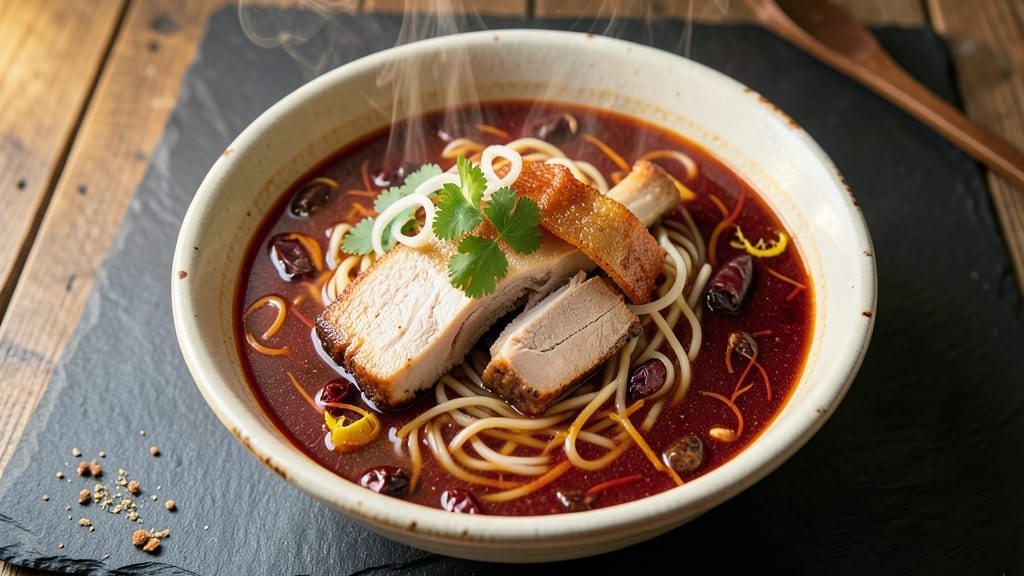
This birria ramen soup recipe fuses two bold flavors into one unforgettable bowl—smoky, spiced birria adobo meets the deep umami richness of tonkotsu broth. The result? A soup that balances heat, richness, and texture in every spoonful, with tender ramen noodles absorbing the complex broth.
I developed this after craving something that delivered the soul-warming comfort of ramen while keeping the fiery, aromatic punch of birria.
The secret lies in the broth: simmering birria spices with pork bones and tonkotsu-style pork fat creates a velvety base that’s both creamy and deeply flavorful.
We’ll build layers of heat with chiles, depth with garlic and cumin, and balance it all with a touch of sweetness—just enough to round out the bold flavors. The noodles cook directly in the broth, soaking up every smoky, savory note.
What you’ll end up with is a bowl that’s rich enough to satisfy hearty appetites but light enough for any meal. Top it with crispy consommé drizzles, fresh cilantro, and a squeeze of lime for brightness, or add mushrooms and tofu for extra texture.
This isn’t just ramen—it’s a flavor explosion that turns a simple soup into a restaurant-worthy experience.
Perfect for chilly evenings or when you’re craving something bold and comforting, this recipe delivers depth and complexity without requiring advanced techniques. Let’s get cooking—your taste buds will thank you.
Ingredients for birria ramen soup
Pork bones, smoky chiles, and aromatic spices—this broth builds flavor layer by layer.
| Ingredient | Amount | Notes |
|---|---|---|
| Pork Bones 🍖 | 2 lb | Pork knuckle or trotter for richness |
| Pork Fatback 🥓 | ½ lb | Unrendered for tonkotsu creaminess |
| Dried Guajillo Chiles 🌶️ | 4 whole | Stems/seeds removed, toasted |
| Dried Ancho Chiles 🌶️ | 2 whole | Stems/seeds removed, toasted |
| Garlic Cloves 🧄 | 8 cloves | Peeled, lightly toasted |
| White Onion 🧅 | 1 whole | Chopped, charred for depth |
| Ground Cumin 🌿 | 2 tbsp | Toasted for aromatic punch |
| Ground Coriander 🌿 | 1 tbsp | Freshly ground preferred |
| Cinnamon Stick 🌿 | 1 whole | For subtle warmth |
| Bay Leaves 🌿 | 2 whole | Dried, for aromatic base |
| Orange Peel 🍊 | 1 tbsp | Dried, for citrus brightness |
| Fresh Cilantro 🌿 | ½ cup | Chopped, for garnish |
| Lime 🍋 | 1 whole | Juiced, for acid balance |
| Ramen Noodles 🍜 | 1 package | Fresh or dried, 8 oz |
| Water 💧 | 8 cups | For initial broth |
| Sea Salt 🧂 | 1 ½ tsp | Diamond Crystal preferred |
| Black Peppercorns 🌶️ | ½ tsp | Freshly cracked |
The pork bones are everything here. Look for knuckle or trotter bones at your butcher—they yield the richest marrow. If you can't find them, pork shoulder bones work in a pinch, but expect slightly less creaminess. The fatback should be unrendered; Costco or Whole Foods usually carry it pre-sliced. For the chiles, Penzeys or Mexican markets have the best selection—guajillo and ancho are non-negotiable for that authentic birria heat. Toast them lightly in a dry pan first to deepen their flavor. The garlic and onion? Char them over an open flame for 30 seconds each side—this adds a smoky depth that's hard to replicate any other way.
No guajillo chiles? Ancho chiles alone at double the amount work, but you'll lose some of the fruity brightness. Substituting dried chipotle for heat? Use half the quantity—it's way more potent. The cumin and coriander are the soul of this broth, so don't skip them. If you're feeling fancy, toast the whole spices in a dry skillet for 30 seconds before grinding—that's the difference between good and restaurant-quality. For the orange peel, use organic if possible; conventional peel can taste bitter. And if you're making a big batch, double the broth ingredients—it freezes beautifully.
This broth tastes even better the next day—plan ahead. Store it in the fridge for up to 5 days or freeze for 3 months. I like to portion it into quart-sized containers so I can pull out exactly what I need. The noodles? Cook them directly in the broth for the last 2 minutes—no pre-boiling. Garnish with fresh cilantro and lime right before serving, or keep them separate so everyone can adjust to their taste. The consommé drizzle? Save some of the strained broth and chill it overnight—skim off the fat and reheat gently for that crispy finish.
Why You'll Love This Recipe
- One-Pot Magic: I swear by this recipe because it’s all in the pot—no chopping mountains of veggies, no juggling pans. Just toss in the pork bones and fatback, let the broth build itself, and the chiles and garlic work their magic while you stir once in a while. That’s it. No stress, no mess.
- Deep Umami Bomb: Between the rendered fat from the pork bones and the smoky, charred depth of those guajillo and ancho chiles, this broth is ridiculously rich. Honestly, I’ve made ramen before, but this? It’s like someone took all the good parts of birria and married them to ramen—creamy, spicy, and lingering on your tongue for hours.
- Weeknight Crowd-Pleaser: This feeds a small army (or at least my family of four plus my neighbor who always shows up unannounced). It’s the kind of dish that gets better the more you share—thick enough for seconds, but light enough to not leave you stuffed. And between us? It’s the only thing my picky-eating teen will eat when he’s "too tired" for dinner.
- Broth Goldmine: Make a double batch, and you’ve got freezer-friendly liquid wealth. That pork fatback alone turns the broth into a flavor bomb you can ladle over eggs, rice, or even use as a marinade. I’ll be real: I’ve pulled this from the freezer on lazy Sundays and still gotten compliments. Budget-friendly? More like smart money.
Step-by-step instructions for birria ramen soup
Here's how to build this smoky, rich ramen fusion with perfect balance.
Prepare the Birria Spice Blend
Toast the dried chiles over a gas flame or in a dry skillet for 30 seconds per side until fragrant and slightly puffed. Watch closely—they'll darken quickly. Transfer to a bowl and cover with 8 cups hot water from the ingredients list. Let steep for 20 minutes while you prep the rest.
Meanwhile, toast the 8 cloves garlic and 1 whole white onion (cut into wedges) in a separate skillet over medium heat until golden brown, about 8-10 minutes. This caramelization adds deep, smoky flavor. In a food processor, combine the toasted chiles (with their soaking liquid), garlic, onion, 2 tbsp ground cumin, 1 tbsp ground coriander, 1 cinnamon stick, 2 bay leaves, and 1 tbsp orange peel. Pulse until smooth but still slightly textured.
Render Fat and Build the Broth
Cut the 2 lb pork bones into 2-inch pieces and the 0.5 lb pork fatback into ½-inch cubes. In a large stockpot, render the fatback over medium heat until the fat is golden and crispy, about 10 minutes. Remove the fatback with a slotted spoon and set aside.
Add the pork bones to the pot and sear them until browned on all sides, about 5 minutes. Pour in the chile mixture and bring to a boil. Reduce heat to low and simmer uncovered for 3 hours, skimming any foam that rises to the surface. The broth should reduce slightly and develop a rich, smoky aroma.
Finish the Broth and Cook Noodles
Strain the broth through a fine-mesh sieve into a clean pot, pressing on the solids to extract maximum flavor. Return the broth to the pot and stir in the reserved crispy fatback, 1.5 tsp sea salt, and 0.5 tsp cracked black peppercorns. Bring to a gentle simmer and cook for another 30 minutes to meld the flavors.
While the broth simmers, cook the 1 package ramen noodles in a separate pot of salted boiling water for 2 minutes less than package instructions. Drain and set aside. Just before serving, add the cooked noodles to individual bowls and ladle the hot broth over them. Garnish with 0.5 cup chopped fresh cilantro and a squeeze of 1 lime.
Serve with Traditional Birria Touches
For the ultimate experience, serve with a side of consommé from the broth and a sprinkle of extra chile powder if desired. The soup should be rich and aromatic, with a perfect balance of smoky heat from the chiles and deep umami from the pork bones. Each bite delivers that satisfying ramen texture with the bold, complex flavors of birria.
This fusion dish keeps all the comfort of ramen while adding the smoky, spicy depth of birria. The secret? Patience in the broth-building and proper chile preparation. Trust the process, and you'll have a bowl that's as comforting as it is exciting.
Pro Tips For Making Birria Ramen Soup
- BLISTER THE FATBACK FIRST: Don’t toss that fatback straight into the pot—render it in a cold skillet over medium heat until the edges start smoking. This renders the fat faster and gives your broth that deep, nutty richness from the caramelized bits. I used to skip this, and my broth always tasted flat until I realized how much difference 5 minutes of patience makes.
- STEAM THE CHILES CLEVERLY: Instead of just soaking dried guajillo and ancho chiles in hot water, seal them in a bowl with boiling water and a plate on top for 10 minutes. The steam softens them faster and keeps them from floating away—no more fishing them out with a spoon. Works every time, even if you’re in a hurry.
- LOW AND SLOW FOR BONES: Once your pork bones hit the pot, don’t rush the simmer. Keep it at a gentle bubble—barely moving the liquid—until the meat falls off the bones (about 3-4 hours). I learned this the hard way when I cranked the heat and ended up with a cloudy, greasy broth instead of something silky and golden.
- CHAR THE GARLIC RIGHT: After blooming the chiles in the pot, add the garlic cloves whole and let them sizzle until their edges turn golden brown—about 2 minutes. Then crush them with the back of a spoon while still in the pot. This adds a smoky depth that raw garlic just can’t match. (Yes, even if it smells like your kitchen’s on fire for a second.)
Essential equipment for perfect results
Stockpot Essentials
You’ll need a large, heavy-bottomed stockpot (I use my All-Clad 8-quart) to handle the pork bones and fatback without burning. The wide surface area prevents hot spots that can scorch your broth.
A fine-mesh sieve (like the OXO Good Grips) is non-negotiable for straining—it catches all the flavorful solids while letting the liquid pass through smoothly. 🌡️
Spice Toasting Tools
Toast your guajillo and ancho chiles in a cast-iron skillet (my Lodge 10-inch) over medium heat. The even heat distribution ensures they char evenly without burning.
For garlic and onion, a gas flame works best—hold them with tongs over the burner for 30 seconds per side until blackened in spots. A food processor (like the Ninja FP-101) blends the spices into a smooth paste for seamless integration into the broth.
Fat Rendering Must-Haves
The pork fatback needs a slotted spoon (I love the OXO Good Grips) to remove crispy bits while keeping the rendered fat in the pot. A meat thermometer (like the Thermoworks Smoke) ensures your bones reach 200°F for maximum collagen extraction.
For skimming foam, a fine-mesh ladle (such as the KitchenAid 3-in-1) works perfectly—just skim frequently during the 3-hour simmer to keep the broth clear.
Broth Straining Setup
After simmering, strain the broth through a cheesecloth-lined sieve for extra clarity. I double up with a fine-mesh strainer (like the Eberhardt) to catch any lingering solids.
For storage, quart-sized glass jars (like Ball Mason) keep the broth fresh in the fridge for 5 days or frozen for 3 months. Label them with the date—trust me, you’ll forget! ❄️
Noodle Cooking Gear
Cook your ramen noodles in a separate pot (like a 3-quart saucepan) to avoid overcrowding. A wooden spoon (I use OXO’s bamboo-handled) helps stir gently, preventing breakage.
For serving, wide, shallow bowls (like Corelle stoneware) showcase the broth beautifully. Don’t skip the lime wedges and fresh cilantro—they’re your garnish game-changers!
Nutrition facts
Frequently asked questions
Can I substitute chicken or beef for the pork in this birria ramen?
While pork is traditional for birria's rich umami, you can use chicken thighs (bone-in for flavor) or beef chuck—just increase simmering time to 4 hours for deeper flavor extraction. The fatback is key for creaminess, so add an extra 0.25 lb beef fat if using beef, or chicken skin for chicken versions. Flavor will shift slightly but remain bold.
How do I adjust the heat level in this recipe?
The recipe balances smoky warmth with medium heat. For more spice, add 1-2 extra ancho chiles (remove seeds for less heat). For milder flavor, reduce to 2 guajillo chiles total and skip the extra ancho. Always taste the broth before adding noodles—you can adjust with a pinch of sugar or more lime juice to balance.
Can I make this ahead of time?
The broth tastes even better after 24 hours of resting. Store it in the fridge for up to 5 days or freeze for 3 months. Reheat gently on low—never boil—to preserve texture. Cook noodles fresh when serving, or store them separately in the broth (covered) for up to 3 days.
What are good toppings to add beyond cilantro and lime?
Try these for extra texture and flavor: crispy fried shallots, pickled red onions, sliced avocado, or quick-pickled jalapeños. For protein, add shredded rotisserie chicken or soft-boiled eggs. The key is balancing richness with acidity—lime and vinegar-based pickles work perfectly.
Why does my broth look cloudy after straining?
Cloudiness usually means unrendered fat or fine particles. For clearer broth, strain through cheesecloth after the fine-mesh sieve, or simmer the strained broth uncovered for 15 extra minutes to let fat rise. If you prefer richer texture, embrace the cloudiness—it means more collagen and flavor!