
Soups & Stews
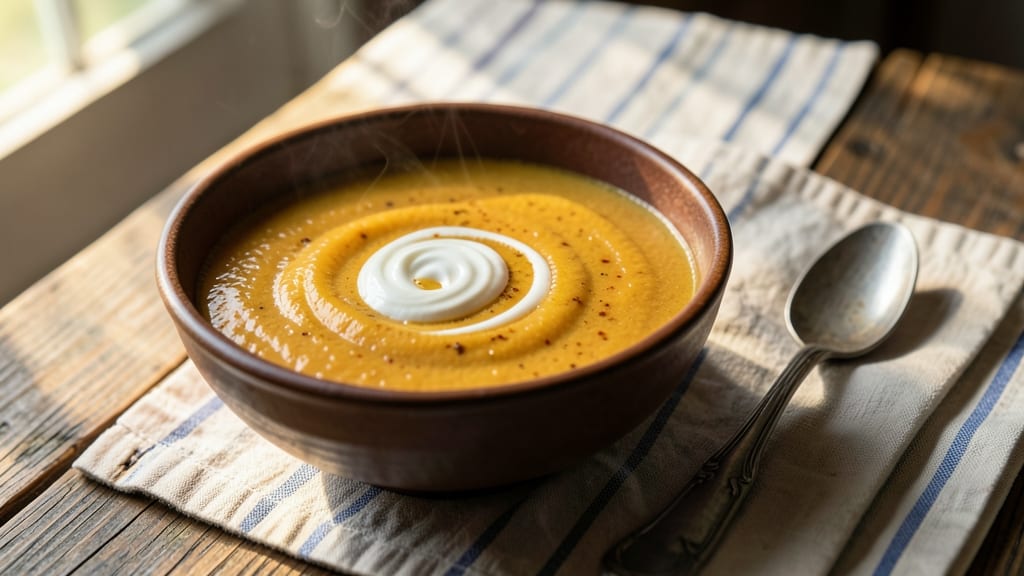
This creamy coconut pumpkin soup transforms humble doodhi (pumpkin) into a velvety, golden delight that balances traditional techniques with modern convenience. The secret lies in slow-sautéed spices and coconut milk that creates that signature silky texture without heavy cream.
I developed this version after years of testing—it’s the one that finally earned compliments from even the most skeptical family members.
The foundation starts with tempering whole spices in ghee, releasing their aromatic oils before adding the pumpkin. This method builds depth that no pre-ground spice blend can match, while blending the soup creates that restaurant-quality creaminess you crave.
The coconut milk adds natural richness, and a touch of ginger keeps the flavors bright and vibrant.
What you’ll end up with is a soup that’s smooth yet substantial, with just enough body to satisfy on chilly evenings. The aroma alone—warm spices, coconut, and caramelizing pumpkin—will have everyone gathering around the pot.
It’s the kind of dish that feels both comforting and sophisticated, perfect for weeknight dinners or special occasions.
Serve it with a swirl of yogurt, a sprinkle of toasted cumin, or fresh cilantro for extra freshness. The recipe scales beautifully, so you can make a small batch for two or a large pot for a crowd. Let’s get cooking—this soup is worth every minute of simmering time.
Ingredients for doodhi soup
Pantry staples meet aromatic spices for this velvety coconut pumpkin soup delight.
| Ingredient | Amount | Notes |
|---|---|---|
| Doodhi (Pumpkin) 🎃 | 2 lbs | Cubed, skin removed, seeds discarded |
| Coconut Milk 🥥 | 1 can | Full-fat, unsweetened, for richness |
| Ghee 🧈 | ¼ cup | For tempering spices, clarifies flavor |
| Fresh Ginger 🌿 | ½ inch | Peeled, grated, for brightness |
| Yellow Onion 🧅 | 1 whole | Diced, for aromatic base |
| Garlic Cloves 🧄 | 4 cloves | Minced, for depth of flavor |
| Green Cardamom Pods 🌱 | 6 whole | Lightly crushed, aromatic essence |
| Cinnamon Sticks 🌿 | 2 whole | For warm, earthy notes |
| Black Peppercorns 🌶️ | ½ tsp | Crushed, for subtle heat |
| Vegetable Stock 💧 | 4 cups | Homemade or quality store-bought |
| Plain Yogurt 🥛 | ¼ cup | For swirling, full-fat preferred |
| Toasted Cumin Seeds 🌾 | 1 tsp | For garnish, freshly toasted |
| Fresh Cilantro 🌿 | ¼ cup | Chopped, for fresh finish |
| Sea Salt 🧂 | 1 ½ tsp | Diamond Crystal preferred |
The doodhi (pumpkin) is the star—look for firm, heavy varieties like Kabocha or Sugar Pie at specialty stores or Indian markets. Whole Foods or Trader Joe's often carry pre-cut pumpkin if you're short on time, but fresh is always better. For the spices, Penzeys or local Indian grocers have the best quality whole spices. Toast your cardamom and cumin seeds in a dry pan for 30 seconds before adding to the ghee—this releases their essential oils and takes the soup to the next level. The coconut milk should be full-fat for that authentic creaminess; Thai Kitchen brand is my go-to when I'm in a pinch.
No fresh ginger? Substitute with 0.25 tsp ground ginger, though it won't have the same bright punch. Running low on cardamom? One cinnamon stick plus 0.25 tsp ground ginger works in a bind. For the yogurt, Greek yogurt at half the amount adds thickness if you're watching calories. The vegetable stock can be swapped for water in a pinch, but homemade or low-sodium store-bought makes a world of difference. Prefer a smoother texture? Blend half the soup before serving—just reserve some for garnish. And if you can't find doodhi, butternut squash works beautifully as a substitute, though the flavor will be slightly different.
This soup keeps beautifully—3-4 days in the fridge and 3 months in the freezer. The flavors actually deepen overnight, so making it ahead is ideal. I like to portion it into glass jars for easy reheating—just add a splash of water or coconut milk if it thickens too much. For serving, toast your cumin seeds in a dry pan until fragrant, then sprinkle over the top right before eating. The cilantro stays fresh longer if you wrap it in damp paper towels and store it in a plastic bag in the fridge. Leftovers reheat perfectly—just stir in a splash of coconut milk to restore that creamy texture.
Why You'll Love This Recipe
- No Chopping Needed: The pumpkin stays whole—just halve and roast it. Between us, that’s my kind of prep: minimal effort, zero mess.
- Creamy Without Guilt: That coconut milk and ghee combo? Pure satisfaction—rich but not heavy, with ginger cutting through like a bright little whisper.
- Leftover Goldmine: Tastes even better the next day, honestly. I make double batches and reheat it for lunch; the flavors meld into something deeper.
- Budget-Friendly Luxury: Pumpkin and coconut milk stretch for miles, and ghee adds that restaurant-worthy touch without breaking the bank. My wallet thanks me.
Step-by-step instructions for creamy coconut pumpkin velvety delight
Here's how to transform simple ingredients into a velvety, restaurant-worthy soup that's rich yet light.
Sauté the Aromatic Base
Heat the 0.25 cup ghee in a heavy-bottomed pot over medium heat until it shimmers but doesn't smoke. Add the 1 whole yellow onion and cook for 5 minutes until softened and translucent. This foundational step builds the soup's depth of flavor.
Add the 4 cloves garlic cloves and cook for 30 seconds until fragrant—don't let them brown, or they'll turn bitter. Stir in the 6 whole green cardamom pods and 2 whole cinnamon sticks, crushing them lightly with the back of a spoon to release their aromatic oils. The spices should sizzle gently for 1 minute before you move to the next stage.
Real talk: Skipping this step means missing the soul of the soup. The spices need time to bloom in the ghee to create that warm, earthy complexity that defines this dish.
Build the Creamy Pumpkin Foundation
Add the 2 lbs cubed doodhi (pumpkin) to the pot and stir to coat in the spiced ghee. Pour in the 4 cups vegetable stock and bring to a gentle simmer. The soup should bubble softly for 15 minutes until the pumpkin begins to soften and release its natural sweetness.
Here's the thing—you want the pumpkin to break down but not disintegrate. It should be fork-tender with just a slight resistance when pierced. If the soup reduces too quickly, add ½ cup water to maintain the proper consistency for blending later.
Stir in the 0.5 tsp crushed black peppercorns and 1.5 tsp sea salt, adjusting to taste. The salt should enhance all the flavors without making them taste flat. Let the soup simmer uncovered for another 10 minutes to allow the spices to infuse fully.
Create the Signature Creaminess
Remove the pot from heat and let the soup cool slightly for 5 minutes. Using an immersion blender, blend until completely smooth—this is where the magic happens. The result should be a silky, velvety texture with no visible chunks. If you prefer a slightly textured soup, blend for 20 seconds instead of until fully smooth.
Return the pot to low heat and stir in the 1 can coconut milk. The soup should thicken slightly as the coconut milk melds with the pumpkin base. Here's where it gets fun—taste and adjust the seasoning. You might need a pinch more salt or a squeeze of lemon juice to balance the richness.
Stir in the 0.25 cup plain yogurt and let it warm through for 2 minutes on low heat. The yogurt adds a subtle tang that cuts through the creaminess, creating that perfect balance. Don't let it boil, or the yogurt will curdle.
Finish and Garnish
Divide the soup among 4 bowls. For the final touch, swirl in a teaspoon of the 0.25 cup fresh cilantro into each bowl using a small spoon. The bright green color and fresh herb notes will contrast beautifully with the creamy orange soup.
Sprinkle each serving with 1 tsp toasted cumin seeds for a nutty crunch and aroma that elevates every spoonful. The cumin seeds should be freshly toasted—this makes all the difference in the final presentation and flavor.
Serve immediately while warm. The contrast of the cool yogurt swirl against the warm soup creates an experience that's both comforting and sophisticated. This is the moment that matters: where all the elements come together in perfect harmony.
Pro Tips For Making Doodhi Soup
- Peel Ginger Like a Pro: DESCRIPTION: Skip the knife and use a spoon’s back to scrape off the ginger skin—it’s faster and leaves you with smoother, less fibrous ginger for the soup. I used to waste half the ginger peeling it the long way; this method saves time and keeps the flavor intact.
- Sauté Onions Until Golden: DESCRIPTION: Don’t rush the onions—cook them in ghee over medium heat until they’re deep golden, not just translucent. That extra 2-3 minutes caramelizes the sugars and builds a richer base for the coconut milk. (Yes, even if you’re impatient like me.)
- Cut Pumpkin Small: DESCRIPTION: Dice the doodhi into 1-inch cubes instead of thick chunks. Smaller pieces soften evenly without turning mushy, and the soup gets creamy faster. I learned this the hard way after serving a lumpy batch.
- Temper Coconut Milk: DESCRIPTION: Warm the coconut milk gently before adding it to the soup—just heat it until tiny bubbles form at the edges. Cold milk can curdle when mixed with hot spices, and no one wants a grainy doodhi soup. (Trust me, it’s worse than it sounds.)
Regional styles of these flavors
Kerala-Style Kootu
In Kerala, this soup transforms into a Kootu—a spiced pumpkin and coconut milk preparation thickened with lentils. The key difference is adding ½ cup split yellow moong dal along with the pumpkin, simmered until tender.
The dal adds protein and a subtle earthiness that pairs beautifully with the coconut. I like to finish it with ½ cup shredded coconut and 1 tsp turmeric for a vibrant golden hue. 🌿
South Indian Sour Soup
For a tangy twist, the Tamil Nadu version incorporates tamarind pulp (about 1 tbsp) and ½ cup yogurt into the soup base before blending. The tamarind adds a bright acidity that cuts through the coconut richness.
Garnish with roasted chana dal and fresh coriander for a restaurant-style finish. This variation is perfect for balancing the heat of South Indian meals.
Bengali Kaddu Shorba
In West Bengal, this soup often includes potatoes (about 1 cup diced) alongside the pumpkin for extra heartiness. The spices shift to ½ tsp cumin seeds, ¼ tsp fennel seeds, and 1-inch ginger for a distinct aromatic profile.
The soup is traditionally served with steamed rice or luchi (Bengali fried dumplings). A splash of lemon juice at the end adds a refreshing zing. 🍋
Gujarati Kaddu no Ras
Gujarat’s version, called Kaddu no Ras, is sweeter and often includes ½ cup jaggery or 1 cup milk to balance the flavors. The spices focus on 1-inch ginger, 1 tsp coriander seeds, and ½ tsp asafoetida (hing) for depth.
The soup is served warm with roti or bhatura for a satisfying meal. For a modern twist, I sometimes add ½ cup grated paneer for extra protein and creaminess.
Modern Fusion Twist
For a contemporary take, blend in ½ avocado after the initial simmer for a creamy, nutrient-packed upgrade. Add 1 tbsp lime zest and ½ cup fresh mint for a refreshing, herbaceous note.
This version works perfectly as a vegan starter or light lunch option. Garnish with toasted pumpkin seeds for crunch and extra flavor. 🌱
Winter Spiced Variation
In colder months, I boost the warmth by adding 1 tsp cinnamon, ½ tsp cloves, and 1 star anise during the tempering stage. The spices infuse deeply into the coconut milk, creating a cozy, aromatic broth.
Serve with a sprinkle of crushed peanuts for texture and a dash of chili powder for heat. This version is a crowd-pleaser during holiday gatherings. ❄️
Nutrition facts
Frequently asked questions
What's the best type of pumpkin (doodhi) to use for this soup?
Look for firm, heavy varieties like Kabocha or Sugar Pie pumpkin—they have dense flesh that holds up well during cooking. Avoid soft or fibrous types. If you can't find doodhi, butternut squash works as a close substitute, though the flavor will be slightly different.
Can I make this soup without coconut milk?
Yes! For a lighter version, substitute with ½ cup Greek yogurt or ½ cup heavy cream. If you want to keep it dairy-free, use ½ cup cashew cream (soaked cashews blended with water). The coconut milk adds depth, but these alternatives work in a pinch.
Why does my soup taste bland after blending?
Blandness usually means the spices didn't infuse enough or the salt needs adjustment. Always toast whole spices in ghee first to release their oils. If needed, add a pinch of turmeric or a squeeze of lemon juice after blending to brighten flavors. Taste as you go!
How do I store and reheat leftovers?
Store in airtight containers for up to 4 days in the fridge or 3 months in the freezer. Reheat gently on low heat, stirring in a splash of water or coconut milk if it thickens too much. Never microwave directly from frozen—thaw first.
Can I make this soup spicier?
Add ½ tsp cayenne pepper during the tempering stage or stir in 1 tsp red chili powder after blending. For heat lovers, finish with a drizzle of hot sauce or a sprinkle of crushed black pepper. Adjust to your preference.