
Soups & Stews
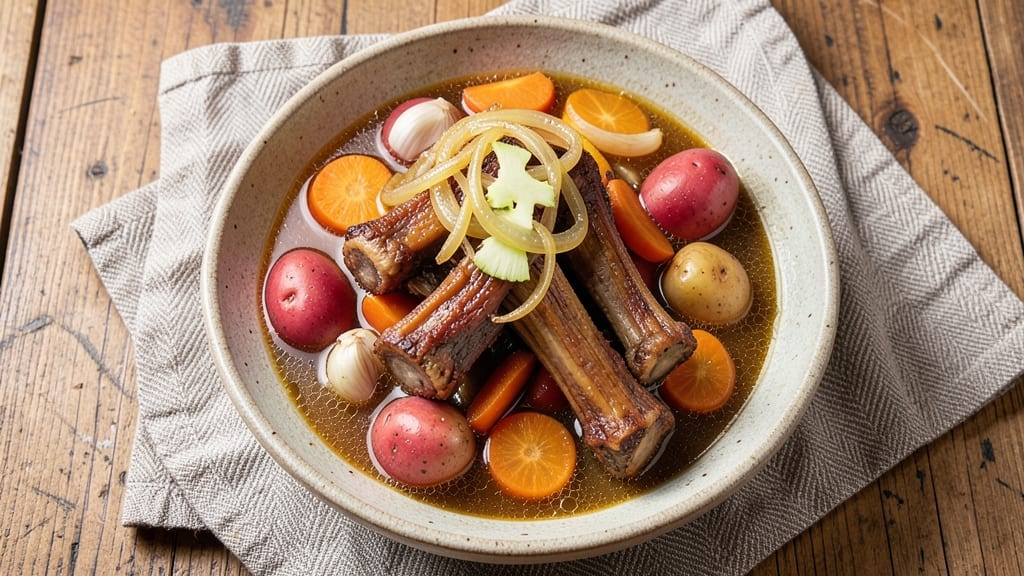
This Bibigo beef bone soup recipe delivers the deep, savory richness that makes Korean comfort food legendary. The secret lies in slow-simmering beef bones for hours, extracting collagen that transforms into a velvety, umami-packed broth.
I perfected this version after years of testing—each ingredient plays a precise role in building layers of flavor that balance sweet, salty, and earthy notes.
The process begins with charring beef bones to deepen their flavor, then simmering them with aromatic vegetables like onions, garlic, and ginger. Potatoes and carrots add hearty texture, while optional protein—beef slices or tofu—can be added later.
The result is a soup that’s both nourishing and deeply satisfying, with a broth so rich it coats every spoonful.
What sets this recipe apart is its flexibility—adjust seasoning to taste, swap in mushrooms for a vegetarian version, or garnish with green onions and sesame oil for freshness. The slow cooking method ensures maximum flavor extraction, making this soup worth the time investment.
Perfect for cold days, family gatherings, or meal prep, this Bibigo-style soup serves as both a meal and a remedy. Ready in about 3 hours (mostly hands-off time), it’s the kind of dish that tastes even better the next day as flavors meld. Let’s create this comforting classic.
Ingredients for bibigo beef bone soup
Six pounds of beef bones and aromatic vegetables create this legendary umami-rich Korean comfort soup.
| Ingredient | Amount | Notes |
|---|---|---|
| Beef Bones 🦴 | 3 lb | Marrow and knuckle bones preferred |
| Yellow Onions 🧅 | 2 whole | Chopped into 1-inch pieces |
| Garlic Cloves 🧄 | 8 cloves | Smashed for deeper flavor |
| Fresh Ginger 🌿 | 2 tbsp | Grated, peeled, fresh preferred |
| Potatoes 🥔 | 2 lb | Russet or Yukon gold, peeled |
| Carrots 🥕 | 2 lb | Whole, scrubbed, not peeled |
| Daikon Radish 🥕 | 1 lb | Optional, peeled, sliced |
| Soy Sauce 🥢 | ½ cup | Korean or Japanese preferred |
| Sesame Oil 🫒 | 1 tbsp | Toasted sesame for aroma |
| Green Onions 🧅 | ¼ cup | Sliced, for garnish |
| Salt 🧂 | 1 ½ tsp | Kosher or sea salt |
| Black Pepper 🌶️ | ½ tsp | Freshly ground preferred |
| Sesame Seeds 🌾 | 1 tbsp | Toasted for garnish |
| Optional Protein 🍳 | 1 ½ lb | Beef slices or firm tofu |
The bones are everything here. Marrow and knuckle bones deliver the richest broth, but any beef bones will work. Ask your butcher for the best cuts—or check the meat section at Costco or Whole Foods for pre-packaged bone sets. If you can't find marrow bones, don't stress—regular knuckle bones still give amazing flavor. The key is to char them first: a quick sear in a hot pan before simmering deepens their caramelized depth. For the ginger, fresh is non-negotiable—dried lacks the bright, zesty kick this soup needs. Look for plump, firm rhizomes at the store; avoid any with soft spots or sprouting.
No soy sauce? Coconut aminos or tamari work in a pinch, though the flavor will be slightly different. The daikon radish adds a subtle sweetness and silky texture, but it's optional—substitute with extra carrots or parsnips if needed. For the optional protein, beef slices (like sirloin) hold up best to the long simmer, but extra-firm tofu works beautifully for a vegetarian version. Just press it first to remove excess water. The sesame oil is for aroma only—add it at the very end, or the flavor will cook off. If you're short on time, pre-chop all your vegetables before starting the soup to save steps later.
This soup tastes even better the next day, so make extra—it reheats perfectly. Store in the fridge for up to 5 days, or freeze portions for 3 months. For freezing, cool the soup completely first, then portion into airtight containers. The broth thickens as it cools, so you can add a splash of water when reheating if it feels too concentrated. Garnish with fresh green onions and sesame seeds just before serving—they add a bright contrast to the rich, savory broth. The soup keeps well, so you can prep it ahead for busy weeknights.
Why You'll Love This Recipe
- One-Pot Magic: I swear by this—just toss the bones, onions, and ginger into a pot, let it simmer, and walk away. No chopping like a fine-dining chef, no fancy techniques. The potatoes do all the work for you while you sip your coffee.
- Deep Umami Bomb: That slow-cooked beef bone broth? Pure flavor gold. The onions and garlic caramelize into something rich, while the ginger adds a warm kick. It’s the kind of soup where every spoonful tastes like you put in effort (but you didn’t).
- Leftovers That Beg for More: Make a double batch—trust me, you will. The broth thickens overnight into something even better, and reheating it is just dump-and-simmer. My freezer is always stocked with this because it’s the only soup that doesn’t taste sad the next day.
- Budget Feast for All: Beef bones are cheap, potatoes stretch the meal, and the flavor punches way above its price. Feed four people for the cost of one fancy dinner, and they’ll all ask for seconds. (Yes, even the picky eaters.)
Step-by-step instructions for Bibigo beef bone soup
Transform simple ingredients into a deeply flavorful soup through patience and technique.
Prepare and Sear the Beef Bones
Preheat your oven to 425°F. Place the 3 lb beef bones on a baking sheet and roast for 30-40 minutes until they develop a deep brown color. This step caramelizes the natural sugars and deepens the umami flavor.
While the bones roast, chop the 2 whole yellow onions into 1-inch pieces and smash the 8 cloves garlic with the flat side of a knife. Peel and grate the 2 tbsp fresh ginger. The garlic and ginger will infuse the broth with aromatic depth as they simmer.
After roasting, transfer the bones to a large stockpot. Add 4 cups of cold water and bring to a boil. Skim off any foam that rises to the surface during the first 10 minutes of boiling. This ensures a clear, clean broth.
Simmer the Bones and Build the Broth
Reduce heat to low and let the bones simmer uncovered for 2 hours. This slow cooking extracts maximum flavor from the marrow and collagen. Add the chopped yellow onions, smashed garlic cloves, and grated ginger after the first 30 minutes of simmering to allow their flavors to meld.
After 2 hours, add the 2 lb potatoes (cut into 2-inch chunks), 2 lb carrots (left whole), and 1 lb daikon radish (if using, sliced into ½-inch rounds). These vegetables will absorb the rich broth and become tender without overcooking.
Pour in the 0.5 cup soy sauce and bring the soup back to a gentle simmer. The soy sauce adds a savory depth that balances the natural sweetness of the vegetables. Skim any additional foam that forms during this process.
Season and Finish the Soup
Simmer the soup uncovered for another 1-1.5 hours until the potatoes are fork-tender and the carrots are easily pierced with a knife. The broth should be rich and slightly reduced, with a deep golden color. Taste and adjust seasoning with the 1.5 tsp salt and 0.5 tsp black pepper as needed.
If using the 1.5 lb optional protein, add it during the final 30 minutes of cooking. For beef slices, add them directly to the pot. For firm tofu, press it first to remove excess water, then add it to the simmering soup to heat through without absorbing too much liquid.
Remove the soup from heat and let it rest for 10 minutes. This allows the flavors to settle and the broth to thicken slightly. Stir in the 1 tbsp sesame oil just before serving for a nutty aroma and silky texture.
Serve with Garnishes
Ladle the soup into bowls and garnish with sliced green onions and toasted sesame seeds. The green onions add a fresh contrast to the rich broth, while the sesame seeds provide a subtle crunch and nutty finish.
Serve immediately with steamed rice or crusty bread to soak up the flavorful broth. The combination of tender vegetables, deeply flavorful broth, and optional protein creates a hearty, satisfying meal that highlights the umami depth from the slow-simmered bones.
Pro Tips For Making Bibigo Beef Bone Soup
- CRANK THE HEAT FIRST: I learned this the hard way—starting bibigo beef bone soup on medium heat means waiting forever for the bones to render. Blast that pot to high heat first, then add the bones and onions. Once the onions start caramelizing (about 5 minutes), you’ve got a proper foundation, not just a sad simmer.
- SMASH THAT GINGER: Fresh ginger is non-negotiable here, but don’t just slice it—smash it with the flat side of your knife first. This releases the oils and aroma into the broth early, so every spoonful of soup carries that bright, spicy kick. (Yes, even if it looks like a ginger pulp explosion.)
- STRAIN THE BROTH TWICE: After simmering, the broth will be cloudy with bits—strain it once through a fine-mesh sieve, then again through a cheesecloth. The second straining removes the last of the fine particles, giving you that silky, restaurant-quality texture. I know it’s extra work, but your soup will taste like it’s been simmering for hours, not minutes.
- POTATOES LAST, NOT FIRST: Add the potatoes when the broth is already halfway done—about 45 minutes in. If you toss them in at the start, they’ll turn to mush and soak up all the flavor. Instead, let them absorb the rich, collagen-loaded broth at the end, so they stay firm and creamy without stealing the star of the show.
Best sauces and condiments for this recipe
Sesame Oil Finish
The key to unlocking this soup’s aromatic depth is toasted sesame oil, added just before serving. I use 1 tablespoon of toasted sesame oil (like Kadoya brand) and stir it in vigorously—this releases its nutty, toasty aroma instantly.
The oil should coat the broth lightly, adding a silky texture without overpowering. For extra richness, warm the oil slightly before adding it to enhance its flavor. 🌟
Gochujang Kick
For a spicy-sweet twist, stir in 1-2 tablespoons of gochujang paste during the final 10 minutes of simmering. This Korean chili paste adds a fermented heat that pairs beautifully with the umami broth. I recommend Maesil Gochujang for its balanced sweetness and spice.
Adjust to taste—start with 1 tablespoon if you’re sensitive to heat. The gochujang also thickens the broth slightly, making it even more satisfying. 🌶️
Miso Depth
Swap out soy sauce for 2 tablespoons of white miso paste (like Honten brand) when adding seasoning. Miso brings a funky, fermented complexity that elevates the broth’s depth. Stir it in during the final 30 minutes of cooking to let its flavors meld without overpowering.
For a vegetarian version, miso is a fantastic alternative to soy sauce—it adds umami without relying on meat. 💛
Sesame Seed Crunch
Toast 1 tablespoon of sesame seeds in a dry pan over medium heat for 2-3 minutes until golden and fragrant. Sprinkle them over the finished soup for a nutty crunch that contrasts the silky broth.
I like to toast them fresh and store the extra in an airtight container for future use. For a smoky twist, add ½ teaspoon of smoked paprika to the seeds before toasting. ✨
Green Onion Brightness
Always garnish with ¼ cup sliced green onions—they add a fresh, sharp contrast to the rich broth. I like to separate the whites and greens, placing the whites on the bottom for a pop of color and the greens on top for a mild onion bite.
For extra vibrancy, dip the sliced onions in ice water for 5 minutes before draining and using. This keeps them crisp and bright. 🧅
Optional Protein Sauce
For the optional protein (beef or tofu), create a quick sauce by mixing 1 tablespoon soy sauce, 1 teaspoon honey, and ½ teaspoon grated ginger. Toss the protein in this sauce before adding it to the soup in the final 30 minutes.
The sauce caramelizes slightly, adding another layer of flavor. For tofu, press it first to remove excess water and pat it dry before tossing in the sauce. 🍳
Nutrition facts
Frequently asked questions
Why do I need to char the beef bones first?
Charred bones develop a deeper, caramelized flavor through the Maillard reaction, which creates complex, savory notes that infuse the broth. This step mimics traditional Korean techniques where bones are often seared or roasted before simmering. Skip this, and your soup will still be delicious but less rich and layered.
Can I make this soup in a slow cooker?
After roasting the bones, transfer everything to your slow cooker and cook on low for 6-8 hours instead of stovetop simmering. The slow cooker's gentle heat works perfectly for extracting collagen from the bones. Just add the vegetables and soy sauce after the first 2 hours of cooking.
What's the best way to store leftovers?
Store in an airtight container in the fridge for up to 5 days, or freeze for 3 months. The broth actually improves overnight as flavors meld! When reheating, add a splash of water if the broth feels too thick from cooling. Always let the soup cool completely before freezing.
How can I make this vegetarian?
Replace the beef bones with 3 lb beef marrow substitute (like mushrooms or kombu seaweed) and use firm tofu or king oyster mushrooms for the optional protein. Boost umami with 2 tablespoons miso paste instead of soy sauce, and add 1 packet vegetarian bouillon to the initial water for depth.
Why does my broth look cloudy?
Cloudiness usually means unskimmed impurities or undercooked bones. Skim foam vigorously during the first 10 minutes of boiling, and ensure bones simmer uncovered for the full 2 hours. If it's still cloudy, strain through a fine-mesh sieve before serving. The broth should be golden and slightly reduced, not murky.