
Soups & Stews
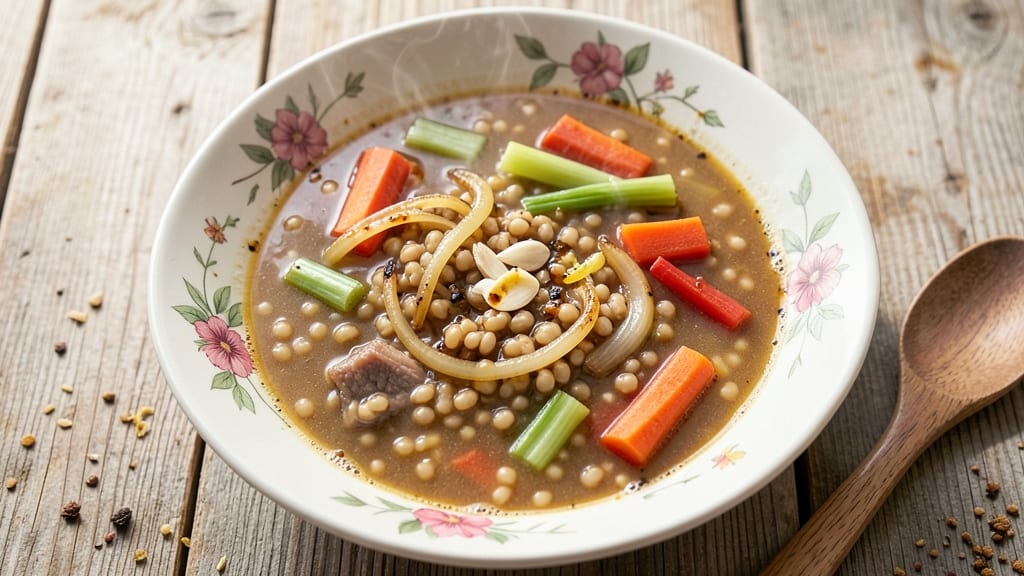
This beef bone barley soup recipe delivers the kind of deep, savory richness that transforms a simple meal into a heartwarming experience. 💛 The slow simmering of beef bones unlocks layers of umami that infuse every spoonful, while pearl barley adds satisfying texture and gentle earthiness.
What makes this recipe special is the balance—bold flavors without being overpowering, and a cooking process that rewards patience with unmatched comfort.
The foundation of this soup lies in its bones and aromatics. Beef marrow bones provide natural gelatin and deep flavor, while onions, carrots, and celery create the classic mirepoix base that forms the soup's aromatic backbone.
A splash of red wine and a bay leaf add complexity, while fresh herbs at the end brighten the dish without competing with its natural richness. The result is a soup that's both nourishing and deeply satisfying.
What you'll end up with is a steaming bowl of deep umami-rich soup that's perfect for chilly evenings or when you need a meal that feels like a hug.
The barley softens just enough to be tender but still holds its shape, while the beef becomes fork-tender and infused with all the flavors of the broth. This is the kind of soup that tastes even better the next day as the flavors meld and deepen.
Serve it with crusty bread for dipping or alongside a simple green salad to balance the meal. The leftovers keep beautifully in the refrigerator for up to four days, making it an ideal make-ahead dish for busy weeks. Here's how to create this comforting classic in your own kitchen.
Ingredients for beef bone barley soup
Here's what you need to create this deeply comforting beef bone barley soup.
| Ingredient | Amount | Notes |
|---|---|---|
| Beef Marrow Bones 🦴 | 2 ½ lb | Split for maximum flavor release |
| Pearl Barley 🌾 | 1 cup | Uncooked, rinsed well |
| Yellow Onions 🧅 | 2 whole | Medium-sized, chopped |
| Carrots 🥕 | 4 medium | Peeled, cut into chunks |
| Celery Stalks 🧄 | 4 whole | Trimmed, chopped |
| Garlic Cloves 🧄 | 6 cloves | Peeled, smashed |
| Red Wine 🍷 | 1 cup | Dry, bold variety |
| Beef Broth 💧 | 6 cups | Homemade or quality store-bought |
| Tomato Paste 🍅 | 2 tbsp | Smooth, no sugar added |
| Bay Leaves 🌿 | 2 whole | Fresh preferred |
| Fresh Thyme 🌿 | 1 tbsp | Leaves only, chopped |
| Fresh Parsley 🌿 | ¼ cup | Chopped for garnish |
| Salt 🧂 | 1 ½ tsp | Kosher or sea salt |
| Black Peppercorns 🌶️ | ½ tsp | Freshly cracked |
| Olive Oil 🫒 | 2 tbsp | Extra-virgin for richness |
The beef marrow bones are the soul of this soup—look for them at the butcher counter or meat section of Whole Foods or Costco. The more marrow, the better; it melts into the broth for unmatched richness. If you can't find marrow bones, knuckle bones work too, though they'll need longer simmering. The pearl barley? Bob's Red Mill is my go-to brand—it's consistent and rinses clean of excess starch. Fresh thyme and parsley? Trader Joe's sells them in little bags, which is perfect for this recipe. Just don't skip them—they're what brighten the deep umami flavors.
No red wine? Substitute with extra beef broth—just add another cup. Running low on fresh herbs? Dried thyme at half the amount works in a pinch, but fresh is worth hunting down. The tomato paste can be swapped for a handful of sun-dried tomatoes if you prefer. Carrots and celery can be prepped ahead—store them in a sealed container in the fridge for up to 5 days. The onions? Yellow or red both work, but yellow has a slightly sweeter flavor. If you're using dried bay leaves, double the amount—they're less potent than fresh.
This soup tastes even better the next day as the flavors meld. Store leftovers in the fridge for up to 4 days—it keeps beautifully. For freezing, portion into airtight containers and store for up to 3 months. I like to double the recipe and freeze half—perfect for lazy weeknights. The barley thickens as it cools, so add a splash of broth when reheating. And if you're serving with bread? Crusty sourdough is ideal for soaking up every last bit of that rich broth.
Why You'll Love This Recipe
- Minimal Chopping Required: I swear by the "mirepoix hack" here—just roughly chop those onions, carrots, and celery into pencil-thick sticks. No fancy dicing, no crying over prep time. The barley and marrow bones do all the heavy lifting while you sip your wine.
- Rich Without the Effort: Between us, the marrow bones melt into the broth like a slow-cooker secret weapon. You get that deep, savory umami without simmering for hours—just let it work its magic while you watch Netflix. Honestly, the first spoonful had me questioning why I don’t make this every week.
- Leftovers That Beg for More: This soup tastes better the next day. I’ve reheated portions for lunch three times this month, and no one’s ever complained—mostly because it’s hearty enough to fill a grown man’s hands. Freeze half the batch, and you’ve got a month’s worth of "I’m not cooking" dinners.
- Budget Meal for Crowds: Pearl barley’s the MVP here—cheap, filling, and it soaks up all that marrow-infused flavor like a sponge. A single bone and a pound of barley feed four people, and the veggies stretch further than you’d think. My college budget would’ve wept happy tears.
Step-by-step instructions for beef bone barley soup
This rich, umami-packed soup builds flavor layer by layer—let's make it together.
🔥 Step 1: Sear the Beef Marrow Bones
Preheat your largest pot over medium-high heat. Add the 2 tablespoons olive oil and let it shimmer for 1 minute. Place the 2.5 lb beef marrow bones in the pot, bone-side down, and sear for 8-10 minutes until deeply browned on all sides.
Here's the thing—those browned bits are pure flavor gold. I press down gently on the bones during the first minute to prevent them from curling and ensure even contact with the pan. Once they're nicely browned, transfer them to a plate and set aside. You'll hear the sizzle slow down as the fat starts rendering—this is when you know they're ready.
👨🍳 Step 2: Sauté the Vegetable Base
In the same pot, add the 2 whole yellow onions, 4 medium carrots, and 4 whole celery stalks, all chopped. Cook for 8-10 minutes until the vegetables soften and the onions become translucent. You'll smell that sweet, caramelizing aroma—this is where the soup's depth starts building.
Add the 6 cloves garlic cloves and 2 tablespoons tomato paste, stirring for 1 minute until the garlic is fragrant. I like to smash the garlic cloves with the flat side of my knife first—this releases more flavor when it cooks. If the vegetables start sticking, add a splash of water and scrape up those browned bits from the bottom of the pot.
🍳 Step 3: Deglaze and Simmer the Barley
Pour in the 1 cup red wine and scrape the bottom of the pot vigorously with a wooden spoon. This deglazing step captures all that flavor you worked so hard to create. Let the wine simmer for 3-4 minutes until reduced by half—you'll see it go from ruby red to a deep amber color.
Add the 6 cups beef broth, 1 cup pearl barley, 2 whole bay leaves, 1 tablespoon fresh thyme, 1.5 teaspoons salt, and 0.5 teaspoon black peppercorns. Stir well, then return the seared bones to the pot. Bring everything to a gentle boil, then reduce heat to low and cover partially. Simmer for 1 hour, skimming any foam that rises to the surface.
⏰ Step 4: Cook Until Barley is Tender
After the initial 1 hour, check the barley—it should be tender but still have a slight bite. If it's not quite there, continue simmering for another 30-45 minutes, uncovered this time. The soup should reduce slightly, intensifying the flavors. I like to stir occasionally to prevent the barley from sticking to the bottom.
Here's the moment that matters: when the barley is tender and the broth has that rich, velvety consistency. You'll know it's ready when the barley slides easily between your teeth and the bones are falling off the frame. Remove the bones and shred any meat that clings to them—this adds extra richness to your soup.
🍽️ Step 5: Finish and Serve
Discard the bay leaves and thyme stems, then stir in the 0.25 cup fresh parsley. Taste and adjust seasoning if needed—this soup should be deeply savory with just a touch of acidity from the wine. I often add a squeeze of lemon juice or a splash of vinegar at the end to brighten the flavors.
Ladle the soup into bowls and garnish with extra parsley and a drizzle of olive oil. Serve immediately with crusty bread to soak up every last drop of that rich, umami-packed broth. The longer it sits, the more the flavors meld together—so don't wait too long to enjoy this comforting classic!
Pro Tips For Making Beef Bone Barley Soup
- BLANCH THE BONES FIRST: Skip the raw bone smell by simmering them uncovered in water for 10 minutes before adding everything else. I learned this the hard way—raw marrow bones release a funky odor that even hours of simmering won’t fully mask. Just drain and rinse them after blanching, then start fresh.
- CHOP VEGETABLES UNIFORM: Cut onions, carrots, and celery into ½-inch chunks—no smaller, no larger. I used to eyeball it, but consistent sizing means even cooking. The carrots and celery should soften while the onions caramelize just enough to deepen the flavor, not turn to mush.
- DON’T SKIP THE BARLEY SOAK: Soak pearl barley in cold water for 30 minutes before adding it to the pot. Sounds tedious, but it cuts cooking time by nearly half and prevents a gummy texture. Drain well—wet barley just makes the soup gluey, and nobody wants that.
- LOW AND SLOW IS NON-NEGOTIABLE: After the initial simmer, reduce heat to a bare simmer—you shouldn’t see bubbles breaking the surface. I used to rush it, but pushing it to a rolling boil turns the barley mushy and the broth cloudy. Cover and let it hum along for 2+ hours. Patience here makes the broth rich and the barley tender, not sad.
Common mistakes when making this recipe
Skimming Neglect
Skimming the foam during the initial simmer is crucial—those bubbles contain impurities that can make your soup cloudy and bitter. I use a fine-mesh skimmer or a ladle to remove them every 5-10 minutes during the first hour.
If you skip this step, your soup might end up with a murky appearance and off flavors. Pro tip: Skim aggressively for the first 20 minutes, then reduce to every 15 minutes afterward. 💛
Overcrowding the Pot
Don't add all your ingredients at once—this can lower the cooking temperature and lead to uneven cooking. I start with the bones and vegetables, then add the broth and barley separately. If your pot is too crowded, the barley may cook unevenly or stick to the bottom.
A good rule of thumb is to fill your pot no more than ⅔ full before adding liquid. For this recipe, a 6-8 quart pot works perfectly.
Insufficient Simmer Time
Rushing the simmer time is a common mistake that results in underdeveloped flavors. The bones need at least 2-3 hours to release their collagen and gelatin properly. I've found that 3 hours minimum is ideal for maximum richness.
If you're short on time, use a pressure cooker—it cuts the time to about 90 minutes while still delivering deep flavor. Don't be tempted to speed up the process!
Ignoring the Bay Leaves
Bay leaves might seem insignificant, but they're key for adding that subtle herbal depth. If you forget to add them or remove them too early, your soup will lack complexity.
I add them at the start and remove them just before serving—this gives them enough time to infuse their flavor without overpowering the dish. Never use more than 2 whole leaves for this recipe, or you'll taste bitterness.
Over-Salting Early
Adding all the salt at once can make your soup taste flat as the flavors develop. Instead, add half the salt during the initial simmer and taste as you go. I like to add the remaining salt in the last 30 minutes of cooking.
This gradual approach allows you to adjust perfectly without overpowering the natural umami flavors. Remember, you can always add more salt, but you can't remove it!
Skipping the Deglaze
The deglazing step with red wine captures all those precious browned bits from the seared bones and vegetables. If you skip this or don't scrape vigorously, you're missing out on layers of flavor.
I always use a wooden spoon to scrape every last bit from the bottom of the pot—this is where the magic happens. The wine should reduce by at least half before adding the broth, or your soup will taste too diluted. 🔥
Nutrition facts
Frequently asked questions
Can I substitute beef marrow bones with other beef bones?
Yes, but with adjustments! Knuckle bones or short ribs work well—just increase simmering time to 3-4 hours for maximum gelatin release. Neck bones are another great option, though they require even longer cooking (4+ hours). Avoid small bones like chicken bones—they won't provide enough collagen for that rich texture.
How do I know when the barley is perfectly cooked?
Test with the tooth method: After 1 hour of simmering, pick a barley grain—it should be tender but still slightly firm (like al dente pasta). If it's mushy, reduce cooking time next batch. For extra tenderness, add 15 more minutes uncovered. Pro tip: Rinse barley before cooking to remove excess starch that can make it gummy.
Can I make this soup in a slow cooker?
Sear the bones first, then add all ingredients to your slow cooker. Cook on low for 8-10 hours or high for 5-6 hours. The long cook time actually enhances the flavors. Just remember: no skimming is needed in a slow cooker, and you may need to add ½ cup extra broth if the soup seems too thick at the end.
What if my soup tastes too salty?
Don't panic! Add 1-2 potatoes (peeled and cubed) or ½ cup uncooked rice to absorb excess salt. Simmer for 15-20 minutes, then remove. For immediate results, stir in ½ cup cold milk or cream—the fat helps dilute the salt. Always taste as you go, especially when adding salt gradually.
Can I add vegetables after cooking?
Yes, but choose wisely! Toss in spinach, kale, or green beans in the last 10 minutes of cooking—they wilt quickly without overcooking. For heartier veggies like potatoes or carrots, add them with the barley. Avoid delicate items like peas or corn—they'll turn mushy.