
Soups & Stews
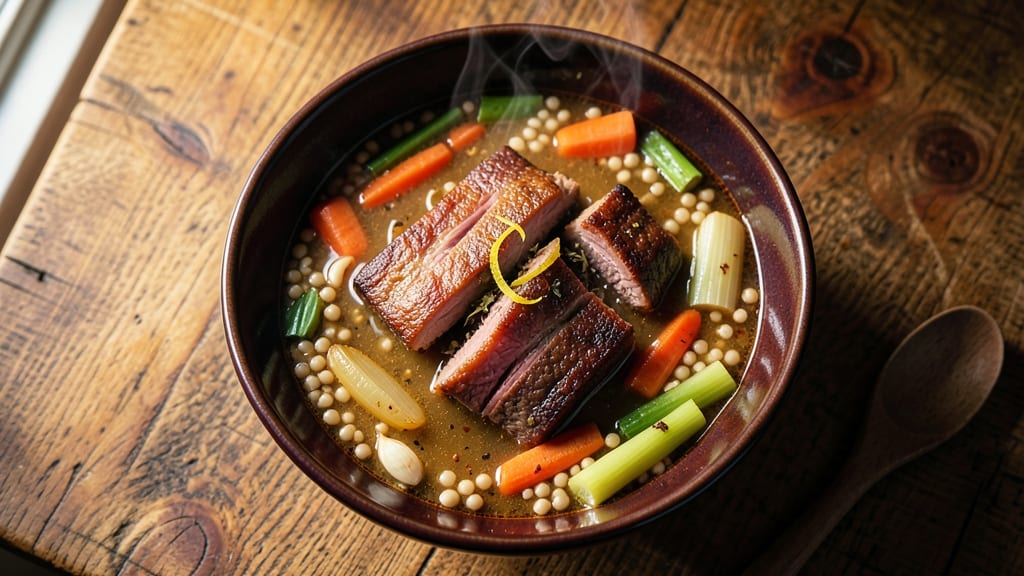
This beef short ribs and barley soup recipe delivers the kind of soul-warming dinner that transforms a simple weeknight into a special occasion. 💛 The rich, slow-braised short ribs melt into tender perfection while barley absorbs the deep, savory broth—creating a dish that’s both comforting and impressive.
I’ve perfected this method over years of testing, balancing traditional slow-cooking techniques with modern shortcuts for home cooks.
The secret lies in the braising process, where tough cuts of beef transform into fork-tender bites infused with garlic, thyme, and a splash of red wine. Barley adds hearty texture and earthy depth, while carrots and celery round out the vegetables for a balanced, satisfying bowl.
This recipe is designed to be flexible—whether you’re using a slow cooker, Dutch oven, or even an Instant Pot, the result is always rich, flavorful, and deeply comforting.
By the time you serve this soup, you’ll have a steaming bowl of slow-cooked goodness that’s packed with melt-in-your-mouth beef, tender barley, and a broth so flavorful it’ll have everyone asking for seconds.
The aroma alone—smoky, herby, and deeply savory—will fill your kitchen and set the mood for a memorable meal. Perfect for cold evenings or when you want to impress without spending hours in the kitchen.
Pair it with crusty bread to soak up every last drop of that velvety broth, or serve alongside a simple green salad for balance. The beauty of this recipe is its versatility—it’s hearty enough for a family dinner but elegant enough for guests. Let’s get cooking!
Ingredients for beef short ribs barley soup
Here’s what transforms tough short ribs into melt-in-your-mouth perfection with hearty barley and deep, savory broth.
| Ingredient | Amount | Notes |
|---|---|---|
| Beef Short Ribs 🥩 | 3 lb | Bone-in, cut into 2-inch pieces |
| Pearl Barley 🌾 | 1 cup | Uncooked, rinsed well |
| Yellow Onion 🧅 | 1 whole | Large, chopped |
| Carrots 🥕 | 4 medium | Peeled, cut into 1-inch chunks |
| Celery Stalks 🧄 | 4 whole | Trimmed, chopped |
| Garlic Cloves 🧄 | 6 cloves | Peeled, smashed |
| Red Wine 🍷 | 1 cup | Bold, dry variety |
| Beef Broth 💧 | 6 cups | Low-sodium preferred |
| Tomato Paste 🍅 | 2 tbsp | Smooth, no sugar added |
| Fresh Thyme 🌿 | 2 tbsp | Leaves only, chopped |
| Bay Leaves 🌿 | 2 whole | Dried, crushed |
| Olive Oil 🫒 | 2 tbsp | Extra-virgin for richness |
| Salt 🧂 | 1 ½ tsp | Kosher or sea salt |
| Black Pepper 🌶️ | 1 tsp | Freshly ground |
| Bouquet Garni 🌿 | 1 piece | Optional, thyme + parsley bundle |
The beef short ribs are the star—bone-in, cut into 2-inch chunks—they need room to tenderize. Grab chuck or plate cuts from Costco or your butcher for the best marbling. If you’re using a pre-cut package, check for even-sized pieces. Fresh thyme steals the show here, but dried works in a pinch. The bay leaves add subtle earthiness—don’t skip them. For the red wine, any bold, dry variety works—Cabernet Sauvignon or Merlot are crowd-pleasers. If you’re avoiding alcohol, beef broth with a splash of balsamic mimics the depth.
No pearl barley? Arborio rice or farro works in a pinch, but barley’s chewy texture is key. The tomato paste is non-negotiable—it thickens the broth beautifully. If you’re using a squeeze tube, Trader Joe’s brand is foolproof. For the bouquet garni, tie thyme, parsley, and a bay leaf in cheesecloth or use a sprig of each. The carrots and celery can be baby carrots or chopped stalks—whatever’s on hand. Fresh thyme is ideal, but dried at half the amount gets you close. The olive oil should be extra-virgin—it adds richness that cuts through the heartiness.
This soup tastes even better the next day—plan ahead. Store in airtight containers for 5 days in the fridge or freeze for 3 months. I portion mine into individual containers so lunches are sorted for the week. The barley thickens as it cools, so stir in a splash of broth when reheating. For extra richness, top with a drizzle of olive oil and extra thyme before serving. Leftovers reheat beautifully—just add a splash of water or broth to thin if needed.
Why You'll Love This Recipe
- One-Pot Magic: I swear by this recipe when I’m too tired to juggle pots. Toss everything—ribs, barley, veggies—into one deep skillet, add broth, and let it simmer. No chopping chaos, no sticky pans later. The ribs practically melt off the bone while the barley soaks up all that rich flavor.
- Deep Umami Bomb: That first bite? Chef’s kiss. The short ribs turn fork-tender, their collagen dissolving into the broth for a velvety, almost buttery depth. Add a splash of red wine or a bay leaf, and suddenly you’ve got restaurant-quality richness without the fuss. The barley? It’s like little flavor sponges, soaking up every last drop.
- Weeknight to Weekend: Here’s what sold me—this soup is my lazy Sunday brunch and my rushed Monday dinner. Double the batch, freeze half, and you’ve got a 30-second reheat for those nights you’d rather eat than cook. Serve it with crusty bread for a casual lunch or over mashed potatoes for a hearty winter meal.
- Budget-Friendly Luxury: Short ribs aren’t cheap, but they stretch farther than you’d think. A single pound makes four hearty bowls, and the barley adds bulk without breaking the bank. Leftovers? Even better—reheat them with a drizzle of cream for a next-day upgrade. Honestly, it’s the kind of dish that makes expensive takeout feel like a waste.
Step-by-step instructions for beef short ribs and barley soup
Here's how to transform tough short ribs into tender, melt-in-your-mouth bites.
🔥 Step 1: Sear the Ribs for Deep Flavor
Heat the 2 tablespoons olive oil in a large Dutch oven over medium-high heat until shimmering. Pat the 3 lb beef short ribs completely dry with paper towels—this ensures maximum browning. Working in batches to avoid crowding, sear the ribs for 3-4 minutes per side until deeply browned and caramelized.
Here's the thing—don't rush this step. You want that beautiful crust that forms the flavor foundation. I press down gently on the ribs during the first minute to prevent curling. Once browned, transfer the ribs to a plate and set aside. You'll notice the oil will be dark and rich—this is exactly what we want for the soup base.
🍳 Step 2: Build the Aromatic Base
In the same Dutch oven, add the chopped yellow onion, chopped carrots, chopped celery stalks, and smashed garlic cloves. Cook for 8-10 minutes until the vegetables soften and the garlic releases its fragrant aroma. Stir occasionally to prevent burning—this is where the soup's depth of flavor begins to develop.
After about 5 minutes, add the 2 tablespoons tomato paste and stir to coat the vegetables. This creates a rich, slightly sweet base that balances the hearty flavors. Sprinkle in the 1.5 teaspoons salt and 1 teaspoon black pepper now to season the vegetables while they cook.
🍳 Step 3: Deglaze and Simmer the Base
Pour in the 1 cup red wine and scrape up all those delicious browned bits from the bottom of the pot. This deglazing step captures all that concentrated flavor that would otherwise go to waste. Let the wine simmer for 3-4 minutes until reduced by about half and slightly thickened.
Now add the 6 cups beef broth, 2 whole bay leaves, and the 1 piece bouquet garni (if using). Bring to a gentle boil, then reduce heat to low and add the seared short ribs back to the pot. The liquid should just barely bubble at the edges—this gentle simmer is crucial for tenderizing the meat.
⏰ Step 4: Slow Cook Until Fork-Tender
Cover the Dutch oven and let the soup simmer for 2.5-3 hours until the short ribs are fork-tender. I know it seems like a long time, but this slow cooking breaks down the connective tissue, transforming tough meat into melt-in-your-mouth bites. Check occasionally and add water or broth if the liquid reduces too much.
You'll know the ribs are ready when they easily pull apart with a fork. The soup should have reduced slightly, creating a rich, concentrated broth. If you peek and the liquid looks too thin, uncover and simmer uncovered for 10-15 minutes to thicken it slightly.
👨🍳 Step 5: Finish with Barley and Fresh Herbs
About 30 minutes before the ribs are tender, add the 1 cup rinsed pearl barley to the soup. Stir gently and continue simmering. The barley needs time to absorb the flavors and cook through—it should be tender but still slightly chewy when done.
When the ribs are perfectly tender, remove them from the soup and let them rest on a plate. Strain the soup through a fine-mesh sieve into a clean pot if you prefer a smoother texture, or leave it slightly chunky. Return the strained soup to the pot and stir in the 2 tablespoons chopped fresh thyme. Taste and adjust seasoning if needed—sometimes the broth needs a little more salt after the long cook.
Pro Tips For Making Beef Short Ribs Barley Soup
- BROWN THE RIB BONES: I learned this the hard way—skipping the bone browning means flavorless broth. Sear the ribs bone-side down in batches until the bones darken and the fat sizzles. This isn’t just about color; it’s where the deep, meaty flavor dissolves into the soup.
- PARBOIL THE BARLEY: Pearl barley’s stubborn—if you toss it straight into the pot, you’ll end up with mushy bits and uneven cooking. Boil it for 10 minutes first, then drain. It’ll soften faster later and hold its shape better. (Yes, even if you’re impatient like me.)
- DON’T CROWD THE POT: I used to jam all the veggies in at once, thinking more meant better. Wrong. Overcrowding steams instead of sautés, turning onions and celery into sad, watery mush. Cook them in two batches—first the onions, then the carrots and celery—so they actually caramelize.
- USE COLD WATER: Sounds weird, but it works: Start the soup with cold water, not hot. The sudden heat shock helps the barley absorb liquid evenly and prevents it from turning gummy. Add the ribs and broth separately—this keeps the barley from breaking down too fast. (Your future self will thank you.)
Pro cooking tips for perfect results
Sear Like a Pro
Pat your beef short ribs completely dry before searing—this is non-negotiable for maximum browning. I use two paper towel sheets per rib and press firmly to remove all moisture.
Work in batches to avoid crowding the pan, and resist the urge to move them around too much during the first 2 minutes—this helps build that flavorful crust. A 12-inch cast-iron skillet works best for this step, as it retains heat better than stainless steel. 🔥
Wine Deglaze Magic
After removing the seared ribs, don’t pour that wine down the drain—it’s liquid gold for flavor. Use a wooden spoon to scrape up every last browned bit from the bottom of the pot (those are called fond, and they’re packed with flavor).
Let the wine reduce by half before adding broth—this concentrates the flavors beautifully. A bold red wine like Cabernet Sauvignon adds depth, but Merlot works too if you prefer something smoother.
Low-and-Slow Mastery
The key to tender short ribs is maintaining a gentle simmer—never a rolling boil. If your broth bubbles vigorously, reduce the heat immediately.
I like to use a meat thermometer to check doneness at 203°F internal temperature, but the fork test is foolproof: the meat should separate easily when pierced. For extra insurance, I add the barley 30 minutes before serving—this ensures it absorbs all the rich flavors without overcooking.
Barley Timing Tricks
Pearl barley has a 30-40 minute cook time, but it absorbs liquid as it cooks. If your soup seems too thin after adding barley, uncover the pot and simmer uncovered for 10 minutes to thicken it slightly.
For a creamier texture, stir in 2 tablespoons of heavy cream or ½ cup of crème fraîche just before serving. I also like to add a splash of red wine vinegar (just 1 teaspoon) at the end for brightness. 💫
Equipment Shortcuts
No Dutch oven? A heavy-bottomed pot or even a slow cooker works in a pinch. For the slow cooker method, sear the ribs first, then transfer everything to the pot and cook on low for 8 hours or high for 5 hours.
If using an Instant Pot, sear the ribs first, then pressure cook on high for 45 minutes followed by a 10-minute natural release. The Instant Pot method cuts cook time by nearly half while keeping the ribs tender.
Broth Boosters
Want to elevate your broth? Add 1 beef bouillon cube (like Knox) when you pour in the liquid, or a 1-inch piece of kombu seaweed for umami depth. For a smoky twist, add ½ teaspoon smoked paprika when deglazing with wine.
If you’re using store-bought beef broth, opt for a low-sodium version and add extra salt to taste—homemade or high-quality brands like Pacific Foods make a noticeable difference. ✨
Nutrition facts
Frequently asked questions
Can I substitute pearl barley for another grain?
Yes! If you're short on pearl barley, Arborio rice or farro work beautifully. For a nuttier flavor, try wild rice or quinoa. Just remember that barley's chewy texture is key to this dish—rice will make the soup slightly lighter. Cook time varies: rice needs 20 minutes, farro 30-40 minutes.
How do I make this soup in a slow cooker?
Sear the ribs first in a skillet, then transfer everything to your slow cooker. Cook on low for 8 hours or high for 5 hours. Add the barley during the last 30 minutes of cooking. The slow cooker keeps the meat tender while letting flavors meld beautifully. Just stir occasionally and add broth if needed.
Why does my broth taste too thin?
This usually happens when the soup simmers uncovered for too long. The fix? Simmer uncovered for 10-15 minutes to reduce the liquid naturally. For extra richness, stir in 2 tablespoons of tomato paste or 1 tablespoon of cornstarch mixed with water. If you prefer a thicker texture, mash some of the cooked barley to create a natural thickener.
Can I prep this ahead of time?
This soup tastes even better the next day. After cooking, let it cool completely, then store in airtight containers for 5 days in the fridge or 3 months in the freezer. When reheating, add a splash of broth or water to thin if needed. The flavors deepen overnight, making leftovers perfect for lunches.
What's the best way to serve this?
Serve this hearty soup with crusty bread or buttered dinner rolls to soak up the rich broth. For a complete meal, pair with a simple green salad or roasted Brussels sprouts. Garnish with fresh thyme, a drizzle of olive oil, or a sprinkle of grated Parmesan for extra elegance. The contrast of warm soup and cool greens makes it a balanced dish.