
Soups & Stews
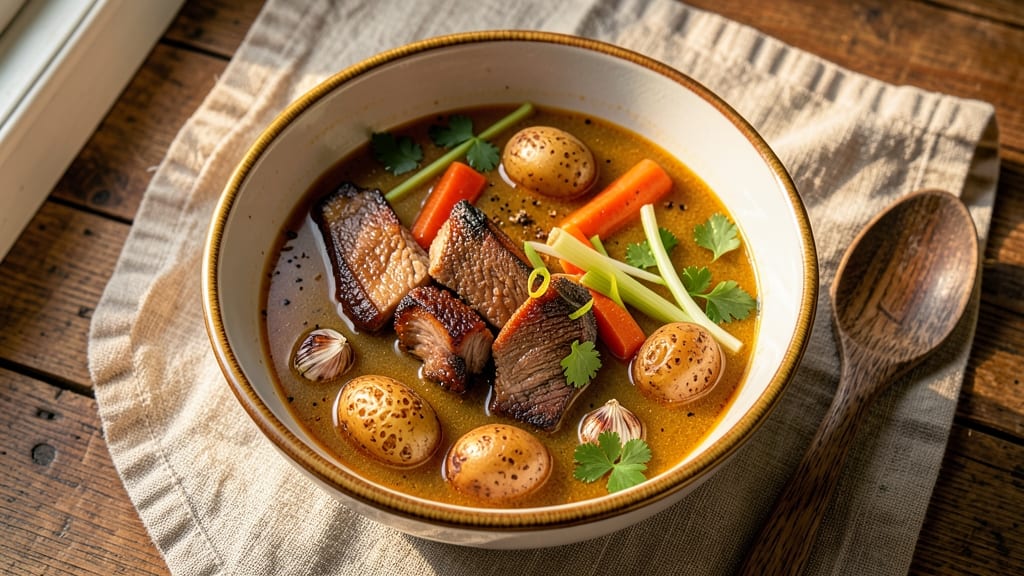
This beef short rib vegetable soup recipe delivers restaurant-quality depth with fall-apart meat and aromatic broth. The secret lies in slow-braising the short ribs until they practically melt in your mouth, while hardy vegetables like carrots, celery, and potatoes absorb all that rich flavor.
I've perfected this technique over years of testing—it's the kind of soup that transforms a simple weeknight into a memorable meal.
The process begins with searing the short ribs to develop deep, caramelized flavors, then simmering them low and slow until tender. We'll add vegetables in stages so they cook perfectly without turning to mush, and finish with fresh herbs for brightness.
This isn't just comfort food—it's a technique that transforms humble ingredients into something extraordinary.
What you'll end up with is a bowl of soup where every spoonful delivers layers of flavor: tender beef that falls apart at the touch of a spoon, vegetables that are perfectly cooked but still hold their shape, and a broth so rich it coats your tongue.
The aroma alone will have everyone gathering around your table.
Perfect for chilly evenings or when you want to impress without complicated techniques. The best part? Leftovers taste even better the next day as the flavors continue to meld. Let's get cooking—this soup is worth every minute of preparation.
Ingredients for beef short rib vegetable soup
The core ingredients that create restaurant-quality beef short rib vegetable soup.
| Ingredient | Amount | Notes |
|---|---|---|
| Beef Short Ribs 🥩 | 3 lb | Bone-in, cut into 2-inch pieces |
| Yellow Onion 🧅 | 1 ½ cups | Chopped, about 2 medium onions |
| Carrots 🥕 | 1 ½ lb | Peeled, cut into 1-inch chunks |
| Celery Stalks 🧄 | 6 whole | Chopped, about 3 ribs |
| Russet Potatoes 🥔 | 2 lb | Peeled, cut into 1.5-inch cubes |
| Garlic Cloves 🧄 | 8 cloves | Minced, about 2 heads |
| Tomato Paste 🍅 | ½ cup | Smooth, not chunky |
| Dry Red Wine 🍷 | 1 cup | Bold, like Cabernet Sauvignon |
| Beef Broth 💧 | 6 cups | Homemade or high-quality store-bought |
| Fresh Thyme 🌿 | ¼ cup | Leaves only, stems removed |
| Fresh Parsley 🌿 | ¼ cup | Chopped, for garnish |
| Olive Oil 🫒 | ½ cup | Extra-virgin for richness |
| Salt 🧂 | 2 tsp | Kosher or sea salt, plus more to taste |
| Black Pepper 🌶️ | 1 tsp | Freshly ground, plus extra for garnish |
| Bay Leaves 🌿 | 2 whole | Fresh if possible, dried works too |
The beef short ribs are the star—look for well-marbled cuts at your butcher or grocery store's meat counter. Costco or Whole Foods often have excellent options, but don't overlook your local butcher who can cut them fresh. The ribs should be bone-in for maximum flavor, and cutting them into 2-inch pieces ensures they cook through evenly. If you can't find short ribs, chuck roast cut into chunks works in a pinch, though it won't be quite as tender. For the vegetables, freshness matters less than uniformity—pick carrots and potatoes of similar size so they cook at the same rate. Celery should be crisp, not rubbery, and thyme should smell vibrant, not dusty.
No red wine? Substitute with beef broth plus 1 tbsp balsamic vinegar—it adds depth without alcohol. Fresh thyme is ideal, but dried works at one-third the amount. If tomato paste feels like overkill, a can of crushed tomatoes works too, though you'll need to adjust seasoning. For the broth, homemade is best, but Swanson or Pacific Foods brands are solid store-bought options. The potatoes should be russet—Yukon Golds will turn mushy. If you're short on time, pre-cut frozen vegetables (like carrots and celery mix) save chopping time without sacrificing flavor. And always taste as you go—the broth needs seasoning adjustments based on your specific ingredients.
This soup tastes even better the next day as flavors meld. Store in an airtight container in the fridge for up to 5 days, or freeze portions for 3 months. I like to portion into individual containers so I can grab a bowl straight from the fridge. The ribs will continue cooking slightly when reheated, so reheat gently on low to avoid drying them out. Fresh herbs like parsley and thyme can be added right before serving—they wilt when reheated. For meal prep, double the recipe and freeze half—nothing beats coming home to a hot bowl of soup after a long day.
Why You'll Love This Recipe
- One-Pot Magic: I swear by this—just toss everything in one pot, and the short ribs melt into the broth while the veggies soften. No chopping like a maniac, no extra pans, and honestly? The smell alone makes me forget I ever cooked.
- Deep, Rich Payoff: That first bite of tender short rib falling apart in your spoon? The onions caramelize right into the broth, and the potatoes soak up all the meaty goodness. It’s the kind of soup that makes you slow down and savor every mouthful—no sad, watery leftovers here.
- Weeknight to Dinner Party: Make a double batch on Sunday—it reheats like a dream for lunches, and the same pot becomes a showstopper when you add a sprinkle of parsley and crusty bread. My friends think I slaved over it, but they’re just impressed by the short ribs.
- Budget-Friendly Luxury: Short ribs are cheaper than steak but taste like you splurged. The veggies stretch the meal, and a single pot feeds four for under $20. Leftovers? Even better the next day—if they last that long. (Between us, they rarely do.)
Step-by-step instructions for beef short rib vegetable soup
Here's how to create a soup so rich and flavorful, every spoonful delivers melt-in-your-mouth meat and velvety broth.
Sear the Beef Short Ribs for Deep Flavor
Heat a large Dutch oven over medium-high heat and add the 0.5 cup olive oil. Working in batches if needed, add the 3 lb beef short ribs in a single layer and sear for 4-5 minutes per side until deeply browned. This caramelization builds the foundation of your soup's rich flavor profile.
Don't rush this step—the ribs should develop a dark mahogany crust. Once browned, transfer them to a plate and set aside. The ribs will continue cooking in the broth later, but this initial searing ensures maximum flavor extraction. Leave all the browned bits in your pot—they're packed with flavor that will dissolve into your soup.
Sauté Vegetables and Build the Aromatic Base
In the same Dutch oven, add 1.5 cups chopped yellow onion, 1.5 lb peeled and chopped carrots, and 6 chopped celery stalks. Cook over medium heat for 8-10 minutes, stirring occasionally, until the vegetables soften and the onions become translucent. This creates the aromatic base that will infuse your entire soup.
Add the 8 minced garlic cloves and 0.25 cup fresh thyme leaves, stirring for 30 seconds until fragrant. Here's where it gets good—stir in the 0.5 cup tomato paste and cook for another 2 minutes. This creates a rich, slightly sweet foundation that balances the deep beef flavors. The tomato paste also helps thicken the broth slightly, giving your soup that perfect body.
Deglaze and Simmer with Wine and Broth
Pour in the 1 cup dry red wine and scrape up all those delicious browned bits from the bottom of the pot. Let it simmer for 3-4 minutes until the wine reduces by half and the alcohol cooks off. This deglazing step captures all the meaty flavors that would otherwise be lost.
Add the 6 cups beef broth, 2 tsp salt, 1 tsp black pepper, and the 2 whole bay leaves. Bring to a gentle boil, then reduce heat to low and add the seared beef short ribs back to the pot. Cover and let it simmer for 1.5 hours, stirring occasionally. The ribs should become fork-tender with the meat falling off the bone easily.
Add Potatoes and Finish the Soup
After the initial simmering, add the 2 lb peeled and cubed russet potatoes to the pot. Return to a gentle simmer and cook uncovered for another 45-60 minutes until the potatoes are tender when pierced with a fork. The potatoes should absorb some of the broth, creating a heartier soup while maintaining a velvety texture.
Taste and adjust seasoning with additional salt and pepper if needed. Real talk: the soup should be rich but not overly salty—you want the natural flavors of the beef and vegetables to shine. Remove the bay leaves before serving, as they can make the soup bitter if left in too long.
Garnish and Serve Warm
Ladle the soup into bowls and garnish each serving with 0.25 cup chopped fresh parsley and a sprinkle of freshly ground black pepper. The parsley adds a bright, fresh contrast to the rich beef and vegetables, while the pepper enhances all the flavors. Serve immediately while hot—this soup tastes best fresh from the pot.
Each bite should deliver tender, fall-apart beef short ribs swimming in a deeply flavorful broth with perfectly cooked vegetables. The wine and tomato paste create a subtle richness that complements the hearty beef, while the fresh herbs brighten the whole dish. Leftovers actually improve overnight as the flavors meld further, but it's best enjoyed fresh.
Pro Tips For Making Beef Short Rib Vegetable Soup
- SEAR THE RIBS FIRST: Don’t skip browning—get those short ribs screaming hot in a dry pan for 3-4 minutes per side until deep brown. I used to rush this step, and the soup never had that rich, caramelized depth. The Maillard reaction is what turns this from good to unforgettable.
- CUT POTATOES UNIFORM: Chunk Russets into 1.5-inch cubes so they cook evenly—no mushy centers or undercooked edges. I learned this after serving a bowl where half the potatoes were still firm while the rest fell apart. A mandoline makes this faster, but a sharp knife works too.
- STRAIN THE BROTH: After simmering ribs and veggies, strain out solids before blending for a silky texture. I know, it’s extra work, but the difference between a chunky stew and a velvety soup is night and day. Save the veggie scraps for stock if you’re feeling thrifty.
- SALT THE POTATOES: Toss diced potatoes in 1 teaspoon salt before adding them to the pot. It seasons them directly and prevents blandness—no need to rely on the broth alone. (Yes, even if the recipe doesn’t say it.)
Make-ahead tips for beef short rib vegetable soup
Prep Ahead Secrets
Start by prepping all your vegetables the night before—chop the onions, carrots, celery, and potatoes and store them in airtight containers in the fridge. This saves 30-45 minutes of prep time on cooking day. I like to use glass Pyrex containers because they're easy to see through and stack neatly.
The vegetables will keep fresh for up to 2 days this way, though I recommend using them within 48 hours for best texture. 🥕
Beef Prep Shortcut
If you're short on time, ask your butcher to cut the short ribs into 2-inch pieces for you—this saves 20 minutes of prep work. Store the raw ribs in a sealed plastic bag in the fridge for up to 2 days before cooking.
For even more convenience, sear the ribs the day before and refrigerate them in the broth (without adding wine or potatoes yet). Just reheat everything gently on the stove when you're ready to finish cooking. 🥩
Freezer-Friendly Broth Base
Make a big batch of the aromatic base (onions, carrots, celery, garlic, tomato paste) and freeze it in quart-sized freezer bags for up to 3 months. When you're ready to make soup, simply thaw the base overnight in the fridge, then proceed with the recipe from the deglazing step.
This is perfect for busy weeknights when you want restaurant-quality soup with minimal effort. I like to label my bags with the date and contents so I can keep track. ❄️
Portion Control for Leftovers
Divide the finished soup into individual quart-sized containers before refrigerating. This makes it easy to reheat just what you need—simply pop a container in the microwave for 2-3 minutes or warm on the stovetop over low heat for 5-7 minutes.
The ribs will continue cooking slightly when reheated, so they'll stay tender if you're gentle with the heat. I usually make 2-3 extra servings so I have leftovers for the next day or two. 💫
Herb Storage Tips
Store fresh thyme and parsley in airtight containers with a paper towel to absorb moisture. They'll stay fresh in the fridge for up to 5 days.
For even longer storage, wrap the herbs in a damp paper towel, place them in a ziplock bag, and store in the crisper drawer.
I like to keep a small container of dried thyme on hand for when I'm out of fresh—just use ¼ tsp dried for every 1 tbsp fresh called for in the recipe. 🌿
Slow Cooker Adaptation
For a hands-off approach, brown the ribs and vegetables as directed, then transfer everything (including the wine and broth) to a 6-quart slow cooker. Cook on low for 8 hours or high for 5 hours, then add the potatoes and cook for another 2-3 hours until tender.
The slow cooker maintains consistent heat, ensuring the ribs become fork-tender without drying out. This method is perfect for meal prep—just store and reheat as needed. 🔥
Nutrition facts
Frequently asked questions
Can I use bone-in or boneless beef short ribs for this recipe?
This recipe is designed for bone-in short ribs—they add incredible depth of flavor as the bones release collagen into the broth. However, if you must use boneless, opt for chuck roast cut into 2-inch chunks instead. The meat will be slightly less tender but still delicious. For best results, increase the simmering time by 30 minutes to compensate for the lack of connective tissue.
What vegetables work best in this soup?
The recipe uses classic carrots, celery, and potatoes for their natural sweetness and hearty texture. For variety, try adding turnips, parsnips, or leeks—they hold up well to long simmering. Avoid leafy greens like spinach or kale (they'll turn mushy) unless you add them in the last 10 minutes. Swap potatoes for sweet potatoes if you prefer a slightly sweeter flavor profile.
Why does my beef short rib soup turn out too salty?
This usually happens when using store-bought broth (which is often overly salted) or adding salt too early. Taste your broth before adding all the salt—it should be slightly underseasoned at this stage. If it's already too salty, add potatoes or extra broth to dilute the flavor. For homemade broth, use low-sodium bouillon and season gradually. A splash of red wine can also help balance excessive saltiness.
Can I make this soup in an Instant Pot or pressure cooker?
Sear the ribs as directed, then sauté the vegetables and tomato paste. Add the wine, broth, and seasonings, then pressure cook on high for 45 minutes (natural release). Add potatoes and cook for another 10 minutes. The pressure cooker cuts time by 2 hours but delivers the same rich, tender results. Just be careful not to overfill the pot—leave at least 1 inch of headspace for safety.
How do I make this soup vegetarian?
Replace the beef with mushrooms (8 oz cremini) and hearty beans (1 can white beans or lentils). Use vegetable broth instead of beef broth and add 1 tbsp soy sauce or miso paste for umami depth. Sauté the mushrooms with the onions and celery for 10 minutes before adding the tomato paste. The wine can be omitted or replaced with vegetable stock + 1 tbsp balsamic vinegar. The texture will be different but still deeply flavorful!