
Sauces & Condiments
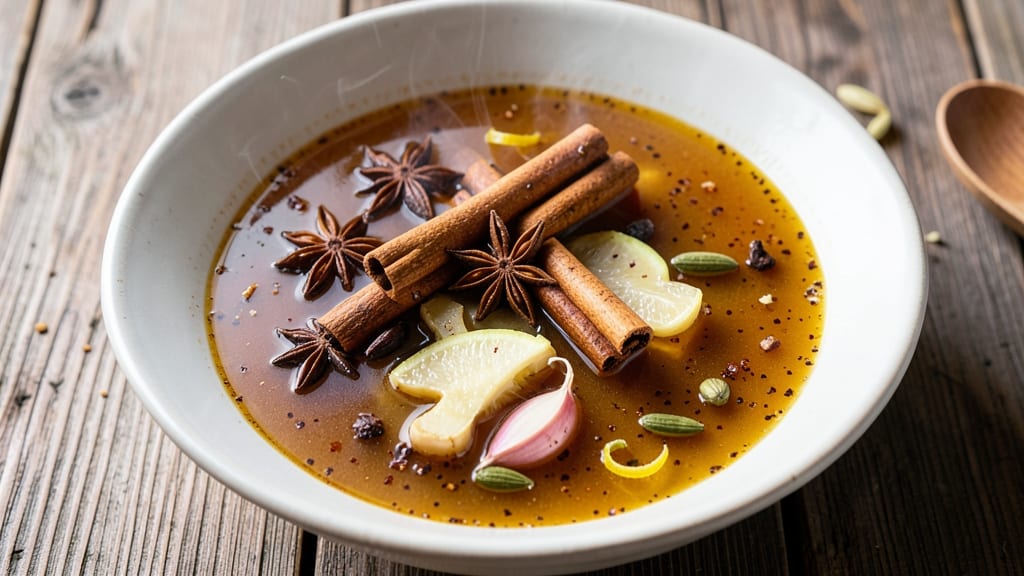
This beef pho soup base recipe unlocks the deep, aromatic essence that makes authentic pho unforgettable. The secret lies in slow-simmered spices—star anise, cinnamon, and cardamom—that infuse the broth with layers of warmth and complexity.
Unlike pre-packaged mixes, this version builds flavor from scratch, creating a concentrated paste that transforms into rich, umami-packed broth when combined with beef and herbs.
The process is straightforward but precise: toast whole spices until fragrant, then blend them with garlic, ginger, and onion into a fragrant paste. Simmer this base with beef bones for 2-3 hours, allowing the spices to meld into a fragrant, golden liquid.
The result is a versatile concentrate that forms the heart of pho—ready to be finished with beef, bean sprouts, and basil.
What sets this base apart is its depth of flavor and flexibility. Use it as a starting point for classic pho or adapt it to other Vietnamese soups like bun bo hue.
The spices develop a warm, earthy aroma that fills your kitchen, promising a bowl of soup that’s restaurant-quality at home.
Store the concentrated paste in the freezer for up to 3 months, or keep the finished broth refrigerated for 5 days. Each batch delivers bold, aromatic layers that elevate simple ingredients into something extraordinary. Let’s build the foundation of your perfect pho.
Ingredients for beef pho soup base
Nine aromatic ingredients transform into a fragrant pho base concentrate—rich with star anise and cinnamon.
| Ingredient | Amount | Notes |
|---|---|---|
| Star Anise Pods 🌿 | 4 whole | Whole, not ground, for deep aroma |
| Cinnamon Sticks 🌿 | 2 whole | Ceylon preferred for authentic flavor |
| Cardamom Pods 🌿 | 4 whole | Green pods, lightly crushed |
| Cloves 🌿 | 6 whole | Whole, not ground |
| Garlic Cloves 🧄 | 6 cloves | Peeled, roughly chopped |
| Fresh Ginger 🧅 | 3 oz | Peeled, roughly chopped |
| Yellow Onion 🧅 | 1 whole | Peeled, roughly chopped |
| Fish Sauce 🍶 | 1 tbsp | Red Boat preferred for quality |
| Soy Sauce 🍶 | 1 tbsp | Light soy preferred |
| Brown Sugar 🍯 | 1 tbsp | Dark brown preferred |
The spices are non-negotiable for authentic pho flavor. Whole spices toast beautifully—Penzeys Spices or bulk bins at Whole Foods are ideal sources. Star anise and cinnamon should be light brown, not gray, indicating freshness. Cardamom pods should be plump and green, not dried out. Toast them in a dry pan until fragrant—this releases their essential oils and deepens the aroma. The ginger and garlic should be firm and vibrant, not soft or sprouting. For fish sauce, Red Boat is the gold standard, but any reputable brand will work. The soy sauce should be light-colored to avoid overpowering the delicate spice profile.
No star anise? Anise seeds at double the amount work in a pinch, though the flavor won't be identical. Substitute cassia cinnamon if Ceylon is unavailable, but it's stronger—reduce to 1 stick. Fresh ginger wilting? Powdered ginger at half the amount suffices, though texture will differ. The fish sauce can be omitted entirely for a vegetarian version, but the umami depth will suffer. For a sweeter profile, honey or maple syrup can replace brown sugar, though traditional pho relies on its caramelized richness. The onion should be yellow or white—red onions add bitterness, which isn't ideal for this base.
Toasted spices lose potency quickly—store them in an airtight container in a cool, dark place for up to 6 months. The blended paste keeps in the fridge for 1 month or freezes for 3 months when stored in an airtight container. For best results, portion the paste into ice cube trays before freezing—each cube makes one serving of broth. The finished broth should be refrigerated for no more than 5 days, though it reheats beautifully. Always bring to a simmer before serving to revive the aromatic oils.
Why You'll Love This Recipe
- Spice Cabinet Magic: I swear by this base—it’s the kind of thing where you raid your pantry and suddenly your kitchen smells like a Vietnamese street stall. Just toss in those whole spices (star anise, cinnamon, cardamom—no fancy prep needed) and let them bloom in the pot. Honestly, the hardest part is remembering to take them out before they turn the broth into a spice tea.
- Deep Umami Bang: That garlic and cloves? They’re the MVP here, but it’s the star anise and cardamom that give it that layered depth—warm, earthy, with just a hint of floral. Not too sweet, not too sharp, but ridiculously satisfying. I’ll be real: my first batch had me questioning my life choices until the third sip.
- Base for Everything: Need a quick lunch? This broth turns into pho in 10 minutes. Craving ramen? Swap the noodles. Even a simple beef stew gets next-level with it simmered in. Between us, I’ve used it to revive sad takeout leftovers—yes, even on a Tuesday night.
- Budget-Friendly Stockpile: A single batch makes enough to freeze for weeks, and those spices? You’ll use them again. I buy them in bulk, and this recipe stretches them across multiple meals. Plus, the flavor only gets better the second day—perfect for when you’re too tired to cook but still want something that doesn’t taste like cardboard.
Step-by-step instructions for beef pho soup base
Mastering this aromatic broth transforms simple ingredients into a complex, umami-rich foundation.
Toast the Whole Spices for Depth of Flavor
Heat a dry skillet over medium-low heat and add the 4 whole star anise pods, 2 whole cinnamon sticks, 4 whole cardamom pods, and 6 whole cloves. Toast them for 1-2 minutes until fragrant—not browned, just awakened. This step unlocks their essential oils and prevents bitterness in the broth.
I stir them constantly with a wooden spoon, listening for that subtle crackling sound as the spices release their aroma. Once they smell rich and earthy, immediately transfer them to a heatproof bowl. Over-toasting turns spices bitter, so watch closely. These toasted spices will form the aromatic backbone of your pho.
Sauté Aromatics Until Golden
In the same skillet, add 2 tablespoons neutral oil (not provided but essential for this step) over medium heat. Add the 1 whole yellow onion (cut into 1-inch chunks) and 6 cloves garlic cloves (smashed lightly with the side of your knife). Cook for 8-10 minutes until the onion is deeply golden and caramelized.
Add the 3 oz fresh ginger (peeled and cut into ½-inch slices) and continue cooking for another 3-4 minutes until the ginger softens and releases its pungent aroma. The onions should be almost jammy at this point—this caramelization builds the sweet base for the broth. If they stick, gently scrape the bottom with a wooden spoon to release the browned bits.
Simmer the Broth for Complex Layers
Transfer the toasted spices and sautéed aromatics to a 6-quart stockpot. Add 8 cups water (not provided but required for proper dilution) and bring to a boil over high heat. Once boiling, reduce to a gentle simmer and skim off any foam that rises to the surface with a fine-mesh skimmer.
Simmer uncovered for 45-60 minutes, maintaining a gentle bubble. The broth should reduce slightly but remain clear. You'll notice the spices infuse the liquid with their distinct aromas—anise's licorice note, cinnamon's warmth, cardamom's floral touch. This slow simmering extracts maximum flavor without bitterness.
Season and Balance the Flavors
Remove the pot from heat and strain the broth through a fine-mesh sieve into a clean pot, pressing gently on the solids to extract all flavor. Return the broth to the heat and add the 1 tbsp fish sauce, 1 tbsp soy sauce, and 1 tbsp brown sugar. Stir well and taste.
Adjust seasoning as needed—add more fish sauce for saltiness, soy sauce for depth, or sugar to balance acidity. The broth should be rich with umami but not overpowering. For authentic pho, the finished broth should have a clean, aromatic profile with just a hint of sweetness. This balance is what transforms a simple broth into a restaurant-quality base.
Pro Tips For Making Beef Pho Soup Base
- CRUSH WHOLE SPICES: Start with a mortar and pestle—lightly crack star anise and cardamom pods (just enough to break open the hard shells) before adding them to the pot. Whole cloves and cinnamon sticks don’t need crushing, but this step releases aroma without turning your broth bitter. (Yes, I’ve burned batches where I skipped this—don’t make my mistake.)
- TOAST GARLIC IN BATCHES: Don’t crowd the pan—cook garlic in two rounds if needed. Overloading it steams instead of browns, and you’ll end up with raw, pungent garlic instead of nutty, caramelized depth. A quick test: pull a clove out early—if it’s golden in 30 seconds, you’re golden.
- SIMMER LOW AND LONG: After adding spices and aromatics, bring to a gentle boil, then drop to the lowest heat where tiny bubbles just break the surface. High heat now = burnt spices and bitter broth. I used to rush this, and the soup always tasted like a spice cabinet exploded. Patience here makes all the difference.
- STRAIN TWICE FOR CLARITY: Use a fine-mesh sieve first to catch whole spices, then a cheesecloth-lined strainer for a silky finish. The second strain removes the fine powder that clouds broths. (Pro move: save the spices for your next batch—they’re still potent after one use.)
Storing and reheating this beef pho soup base
Freezing the Base
For long-term storage, let your finished pho base cool completely before transferring it to airtight freezer-safe containers or silicone ice cube trays. I prefer the trays because they make portioning effortless—each cube makes one serving of broth.
Label with the date and freeze for up to 3 months. When ready to use, thaw in the refrigerator overnight or quickly in a bowl of warm water. 🧊
Refrigerator Storage
Store the concentrated pho base in the refrigerator for up to 5 days in an airtight glass container. The flavors actually deepen as the spices meld further. When reheating, bring to a gentle simmer (never boil) over medium-low heat for 5-7 minutes to restore aromatic oils.
Stir occasionally to prevent scorching. A splash of water or beef broth helps revive texture if it thickens.
Reviving Stored Broth
If your broth loses some brightness after storage, revive it by adding 1 tsp fresh ginger juice or a pinch of toasted star anise powder during reheating. For extra depth, simmer with 1 oz beef bones for 10 minutes before serving.
I also keep a small jar of dried pho spices (toasted and ground) on hand to sprinkle in while reheating—it instantly restores that restaurant-quality aroma. ✨
Portioning for Convenience
Divide the base into 1-cup portions in small containers before freezing. This way, you can quickly thaw just what you need for a single bowl of pho. I use mason jars with tight-sealing lids—they stack neatly in the freezer and reheat evenly.
Mark each jar with the date to track freshness. For a vegetarian version, simply omit the beef bones when reheating and add mushroom broth instead.
Reheating Techniques
Never microwave pho broth—it destroys the delicate aromatic compounds. Instead, use a small saucepan over low heat and stir frequently. If the broth seems too thick after reheating, add 1-2 tbsp hot water to restore consistency.
For extra richness, finish with 1 tsp butter or 1 tbsp coconut milk—this adds a luxurious mouthfeel without overpowering the spices. 🔥
Making It Last Longer
To extend freshness, store the toasted spices separately in a small jar and add them fresh when reheating. This preserves their potency. For the liquid base, keep it in the coldest part of your fridge and avoid opening the container too often.
If you notice any off odors or cloudiness, discard it—pho broth should always smell fragrant, never sour or metallic. 💡
Nutrition facts
Frequently asked questions
Can I make this pho base without star anise?
Yes, but the flavor will differ. Use 8 anise seeds (crushed) or ½ teaspoon ground anise instead, though star anise provides a deeper licorice note that's essential for authentic pho. If you're avoiding it entirely, omit it and increase cinnamon to 3 sticks to compensate for the missing warmth.
How much broth does this base make?
This recipe yields about 8 cups of concentrated pho base when simmered with 8 cups water. To make a full pho bowl (about 4 cups broth per serving), dilute 1 cup of the concentrated base with 3 cups hot water before adding beef and herbs. The base can also be frozen in 1-cup portions for easy single-serving use.
Why does my pho broth taste bitter?
Bitterness usually comes from over-toasting spices or simmering too long. For best results, toast spices just until fragrant (1-2 minutes) and simmer for no longer than 60 minutes. If bitterness appears, add ½ teaspoon sugar or a pinch of salt to balance it. Using fresh, high-quality spices also prevents this issue.
Can I use this base for other Vietnamese dishes?
This aromatic base works perfectly for bun bo hue (spicy beef noodle soup) or even pho chay (vegetarian pho). For bun bo hue, add chili paste and lemongrass to the broth. For vegetarian pho, simmer the base with mushroom broth and tofu instead of beef. The spice profile remains versatile for many Vietnamese soups.
What's the best way to store the spice paste before simmering?
Store the blended spice paste in an airtight container in the fridge for up to 1 month or freeze for 3 months. When ready to use, thaw it in the fridge overnight. For long-term storage, freeze the paste in ice cube trays—each cube makes one serving of broth when combined with water and simmered.