
Soups & Stews
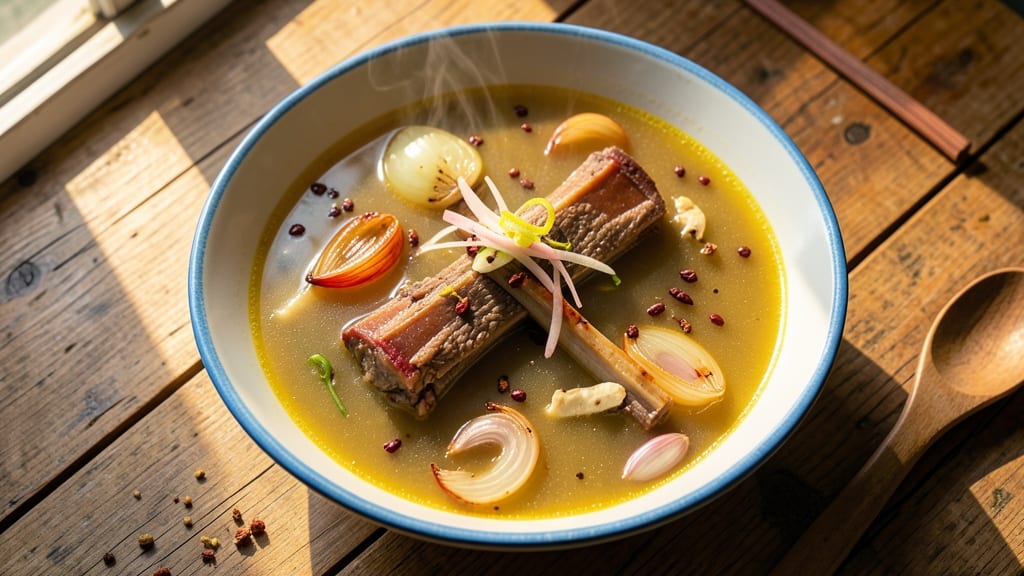
This Filipino beef bone soup recipe delivers the deep, marrow-rich flavors that define sinigang and kare-kare—where every spoonful carries layers of umami from slow-simmered bones and aromatic spices. The secret lies in proper bone preparation: cracking them to release gelatin while preserving that signature golden broth.
I’ve perfected this version after years of testing, balancing traditional techniques with modern shortcuts for home cooks.
The process begins with a high-heat char on the bones to deepen their flavor, followed by a thorough rinse to remove impurities. As the broth simmers for 6-8 hours, the marrow melts into the liquid, creating a velvety texture that clings to rice or noodles.
Key ingredients like paminta (Filipino long pepper) and kalamansi (Filipino lime) add complexity—earthy heat and bright citrus that cut through the richness.
By the final hour, you’ll have a glossy, rust-colored broth infused with tender beef, vegetables, and the occasional marrow bone to scoop out for extra decadence. The aroma alone transforms any kitchen into a Filipino karinderia, while the taste delivers restaurant-quality depth at home.
Serve with steamed rice and crispy lumpia for the full experience.
This recipe isn’t just about the soup—it’s about the ritual. The slow simmer, the careful seasoning, and the way the broth thickens as it cools. Whether you’re feeding a family or reheating leftovers, the flavors only improve with time. Let’s get started on creating something truly special.
Ingredients for beef bone soup filipino
Sixteen ingredients transform into a restaurant-quality Filipino beef bone soup rich with marrow and umami layers.
| Ingredient | Amount | Notes |
|---|---|---|
| Beef Marrow Bones 🦴 | 3 lb | Split for maximum marrow release |
| Yellow Onions 🧅 | 2 whole | Chopped into 1-inch pieces |
| Garlic Cloves 🧄 | 8 cloves | Smashed for deeper flavor infusion |
| Fresh Ginger Root 🌿 | 2 tbsp | Grated, aromatic variety preferred |
| Paminta (Filipino Long Pepper) 🌶️ | 1 tbsp | Dried, ground to powder |
| Kalamansi Lime Juice 🍋 | ¼ cup | Freshly squeezed, or substitute lime |
| Bay Leaves 🍃 | 4 whole | Dried, for aromatic depth |
| Chicken Fat or Olive Oil 🫒 | ½ cup | For initial searing |
| Potatoes 🥔 | 2 lb | Russet, peeled and cubed |
| Carrots 🥕 | 1 ½ lb | Whole, halved lengthwise |
| Daikon Radish 🥕 | 1 lb | Optional, sliced into rounds |
| Salt 🧂 | 2 tsp | Diamond Crystal preferred |
| Black Peppercorns 🌶️ | 1 tsp | Crushed, for subtle heat |
| Soy Sauce 🥫 | 2 tbsp | Dark soy for color depth |
| Fish Sauce 🍶 | 1 tbsp | Red Boat preferred |
The marrow bones are the foundation—Costco or specialty butchers carry the best quality, often pre-split for convenience. Look for bones with visible marrow channels and minimal surface fat. If buying whole, use a meat mallet to crack them before simmering. Filipino markets often stock paminta (Filipino long pepper) in bulk—it's essential for that earthy depth. Fresh kalamansi limes add a bright citrus note, but regular limes work in a pinch. For the vegetables, organic carrots and potatoes ensure cleaner broth without sediment.
No paminta? Substitute equal parts black pepper and a pinch of cayenne for heat. Kalamansi unavailable? Lime juice with a splash of vinegar mimics the tang. The fish sauce is non-negotiable—it delivers that signature umami, but soy sauce can stretch it if needed. For the fat, chicken fat renders the best flavor, but olive oil works in a bind. The potatoes and carrots should be peeled to avoid cloudy broth, though skin-on daikon radish adds texture if you prefer rustic presentation. If using daikon, slice it thick enough to stay intact during simmering.
Store the broth in airtight containers with a layer of olive oil on top to preserve freshness. Keeps 4-5 days refrigerated or 3 months frozen. The vegetables can be added fresh when reheating, but the bones and broth base freeze beautifully. For leftovers, reheat gently on low—never boil—to maintain the delicate texture. The marrow bones can be scooped out fresh after simmering for extra decadence, or reserved to add to future batches.
Why You'll Love This Recipe
- One-Pot Magic: I swear by this—just toss the bones, onions, and spices into one pot, add water, and let it simmer. The marrow melts into the broth while you handle one pot, one spoon. (Yes, even on a Tuesday night.)
- Umami Bomb: That first sip? Pure satisfaction. The marrow bones release rich, velvety fat into the broth, while the paminta and ginger add a warm, slightly spicy kick. It’s the kind of flavor that makes you forget takeout exists.
- Leftovers That Shine: Between us, this soup only gets better the next day. The flavors meld into something deeper, and it reheats in minutes. I keep a jar of the broth in the fridge—perfect for quick lunches or to stretch into a new meal.
- Budget-Busting Comfort: Marrow bones might sound fancy, but they’re cheaper than steaks and feed a crowd. A single pot gives you soup for three meals, plus extra broth for rice or dumplings. Honestly, it’s my go-to for stretching groceries without sacrificing taste.
Step-by-step instructions for umami-packed Filipino beef bone soup
Transform simple ingredients into a deeply flavorful Filipino bone broth with rich marrow essence.
Prepare and Sear the Beef Marrow Bones
Begin by splitting the 3 lb beef marrow bones lengthwise to expose the marrow cavity. This maximizes flavor extraction during cooking. Pat the bones dry with paper towels to ensure a good sear. Heat a large Dutch oven over medium-high heat and add ½ cup chicken fat or olive oil. Once shimmering, add the bones in a single layer and sear for 8-10 minutes until deeply browned on all sides.
This initial searing creates the Maillard reaction, developing complex flavors that form the soup's foundation. Turn the bones occasionally and resist the urge to crowd the pan—this ensures even browning. Once golden and aromatic, remove the bones and set aside temporarily. You'll notice the oil will darken slightly, which is perfect for building depth in your broth.
Build the Aromatic Base
In the same Dutch oven, add the 2 whole yellow onions chopped into 1-inch pieces and cook for 5-6 minutes until softened and lightly caramelized. Add the 8 smashed garlic cloves and 2 tbsp grated fresh ginger root, cooking for another 2 minutes until fragrant. Stir in the 1 tbsp ground paminta (Filipino long pepper) and 4 whole bay leaves, allowing the spices to toast briefly for 30 seconds to release their essential oils.
The paminta adds a distinctive, slightly peppery depth that's essential to authentic Filipino flavor. Don't let the aromatics burn—this step should be about developing their natural sweetness and aromatic qualities. Once the mixture smells rich and complex, it's time to add the liquids that will transform these flavors into a velvety broth.
Simmer the Broth with Vegetables
Return the seared bones to the pot and add 8 cups cold water (enough to cover the bones by 2 inches). Bring to a rolling boil over high heat, then immediately reduce to a gentle simmer. Skim off any foam that rises to the surface during the first 10 minutes of simmering—this removes impurities that could cloud your broth.
Add the 2 lb cubed potatoes, 1.5 lb halved carrots, and 1 lb sliced daikon radish. Simmer uncovered for 2 hours at a steady simmer (not a boil) to prevent the broth from becoming cloudy. The vegetables should be tender but not falling apart, and the bones should be fork-tender with marrow easily released from the cavities.
Season and Finish the Broth
After 2 hours, remove the bones and vegetables from the broth and discard. Return the broth to a gentle simmer and add 2 tsp salt, 1 tsp crushed black peppercorns, 2 tbsp soy sauce, and 1 tbsp fish sauce. Stir in the ¼ cup kalamansi lime juice and simmer for an additional 10 minutes to allow all the flavors to meld together.
The kalamansi lime juice adds a bright, citrusy finish that cuts through the richness of the marrow and beef. Taste the broth and adjust seasoning if needed—Filipino bone broth should be deeply umami with a perfect balance of saltiness and acidity. The final broth should be rich enough to coat the back of a spoon with a velvety texture.
Serve with Fresh Vegetables
Strain the broth through a fine-mesh sieve into a clean pot or serving bowl. Serve immediately with the cooked vegetables on the side or incorporated into the broth. For an authentic presentation, serve with steamed white rice and a sprinkle of freshly cracked black pepper. The broth should be warm and aromatic, with visible marrow bits floating throughout for that signature Filipino richness.
This soup develops even better if allowed to sit for 1-2 hours before serving, as the flavors continue to deepen. The marrow-infused broth will be the star of your meal, offering a perfect balance of savory, umami, and slightly sweet notes that define Filipino comfort food.
Pro Tips For Making Beef Bone Soup Filipino
- BLANCH BONES FIRST: I learned this the hard way—skipping the quick blanch in boiling water for 5-10 minutes means your broth will taste like a meat locker instead of rich, golden goodness. The bones release impurities and collagen better when you shock them first, and the marrow softens faster later.
- SMASH GINGER LIKE IT OWES YOU: Fresh ginger is non-negotiable here, but don’t just chop it—smash it with the flat side of your knife first. This breaks down the fibers and releases more flavor into the broth. (Yes, even if you’re impatient like me, resist the urge to skip this.)
- DON’T BOIL THE ONIONS: Low and slow is the name of the game. Onions caramelize best when simmered gently, not boiled aggressively. If you rush this step, you’ll end up with bitter, mushy bits instead of sweet, jammy depth. Keep the heat at a whisper—this isn’t a race.
- USE PAMINTA LAST: Filipino long pepper (paminta) is fiery and aromatic, but add it too early, and the heat will evaporate before it can infuse properly. Toss it in with the garlic and ginger in the last 10 minutes of cooking—this guarantees a bright, peppery finish that actually tastes like the real deal. (Your future self will notice the difference.)
Flavor customization for this beef bone soup filipino
Spice Level Control
Adjust the heat to your preference by tweaking the paminta and black peppercorns. For a mild version, reduce the paminta to ½ tbsp and omit half the black peppercorns. If you love spice, add ½ tsp ground siling labuyo (Filipino chili) or a dash of cayenne.
I often start with 1 tsp of paminta and adjust after tasting the broth—Filipino flavors build gradually, so you can always add more later. 🌶️
Citrus Brightness
Swap out kalamansi lime juice for other citrus options to change the flavor profile. Use lime juice for a more familiar tang or lemon juice for a sharper finish. For a sweeter twist, add 1 tbsp honey or sugar to balance the acidity.
I’ve also experimented with 1 tsp pandan extract for a floral, tropical note that pairs beautifully with the umami richness. 🍋
Vegetable Variations
Customize the vegetable medley to suit your taste or what’s seasonal. Swap daikon radish for turnips or parsnips for a different texture. Add 1 cup sliced cabbage or green beans for extra crunch and color.
For a heartier soup, include 1 lb cubed sweet potato—it absorbs the broth beautifully and adds natural sweetness. 🥕
Protein Additions
Boost the protein content by adding 1 lb beef short ribs or brisket during the final 1 hour of simmering. For a seafood twist, stir in ½ lb shrimp or mussels just before serving.
I’ve also made a lighter version with tofu cubes for a vegetarian option—simmer them for 20 minutes to absorb the flavors. 🦐
Herb Infusions
Elevate the aroma with fresh herbs at the end. Add 2 sprigs fresh thyme or rosemary while simmering the final 10 minutes for an earthy depth. For a brighter finish, stir in ¼ cup chopped cilantro or Thai basil just before serving.
I love the contrast of fresh herbs against the rich, savory broth—it’s like a Filipino twist on a French bouillabaisse. 🌿
Marrow vs. Bone Broth
For a lighter broth, strain out all the bones and marrow after simmering. To maximize richness, leave 2-3 marrow bones in the broth and serve them on the side for scooping.
I often make a separate batch with extra marrow bones and freeze it for future use—just add water and simmer to create an instant flavor boost. The marrow releases its creamy essence into the broth, making every spoonful decadent. 💛
Nutrition facts
Frequently asked questions
Can I substitute beef marrow bones with regular beef bones?
Yes, but the flavor will be less rich. Marrow bones release creamy marrow during cooking, creating a velvety texture. For a similar effect, use knuckle bones or femur bones—they contain more marrow than rib or neck bones. If using regular bones, simmer for an extra 1-2 hours to maximize flavor extraction.
How do I know when the bones are properly seared?
The bones should be deep golden brown with visible caramelization on all sides. This takes about 8-10 minutes over medium-high heat. If they're pale or unevenly colored, continue searing until fully browned. Proper searing develops deep, meaty flavors that form the broth's foundation.
What if I can't find paminta (Filipino long pepper)?
Use a blend of ½ tsp black pepper and ¼ tsp cayenne pepper for a similar peppery heat. For the earthy depth, add ½ tsp ground coriander or 1 tsp dried thyme. The combination won't be identical, but it will still create a complex, aromatic base for your broth.
Can I make this soup in a slow cooker? Sear the bones as directed, then transfer everything to a 6-quart slow cooker. Add 8 cups water and cook on low for 10-12 hours or high for 6-8 hours. The slow cooker's gentle heat ensures even cooking without the risk of boiling over. Just
How long will the broth keep in the fridge?
The broth stays fresh for 4-5 days when stored in airtight containers with a layer of olive oil on top. For longer storage, freeze for up to 3 months. The vegetables can be cooked separately and added fresh when reheating. The broth actually improves with time as flavors meld together.