
Soups & Stews
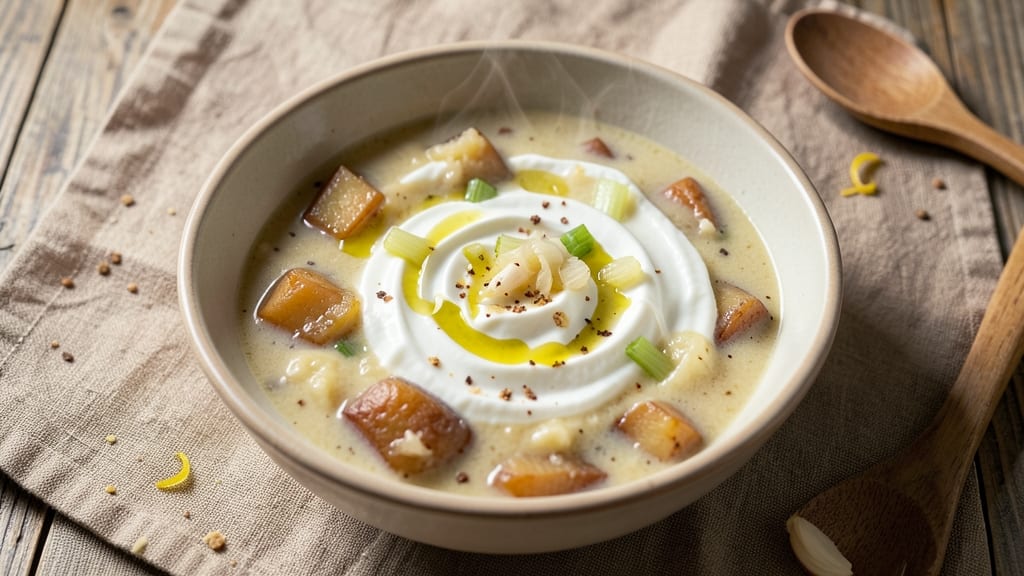
This bariatric-friendly potato soup delivers all the comforting warmth of classic potato soup without the heavy calories or digestive strain. Designed specifically for post-surgery dietary needs, it blends creamy texture with nutrient balance—light enough for portion control but rich enough to satisfy cravings.
The secret lies in low-fat broth, blended smoothness, and optional protein boosts like Greek yogurt or shredded chicken, ensuring every spoonful supports healing while tasting indulgent.
The recipe prioritizes digestibility first, using minimal oil and avoiding full-fat dairy to prevent discomfort. Potatoes provide gentle fiber and vitamins, while onions, garlic, and celery add flavor without bulk. A touch of low-sodium chicken broth keeps it savory without overloading your system.
What makes this version work is the blended consistency—no heavy lumps, just silky smoothness that’s easy on sensitive stomachs.
What you’ll end up with is a creamy, comforting soup that’s under 150 calories per serving, packed with protein and easy-to-digest carbs. The aroma alone—warm, earthy, and slightly garlicky—will remind you of cozy meals, but without the guilt.
Best served warm, it’s the perfect balance of nourishment and comfort for anyone navigating dietary adjustments.
Perfect for meal prep or a quick weeknight dinner, this soup adapts easily to your needs—add a splash of milk for creaminess, or a sprinkle of fresh herbs for brightness.
The recipe scales perfectly for single servings or a family-friendly batch, ensuring everyone at the table gets a version they’ll love. Let’s make it.
Ingredients for bariatric potato soup
Comforting yet gentle—these ingredients craft a bariatric-friendly potato soup that’s light on calories but rich in flavor.
| Ingredient | Amount | Notes |
|---|---|---|
| Russet Potatoes 🥔 | 2 lbs | Peeled and cubed small for blending |
| Low-Sodium Chicken Broth 💧 | 4 cups | Homemade or store-bought low-sodium |
| Yellow Onion 🧅 | 1 whole | Diced finely for smooth texture |
| Garlic Cloves 🧄 | 3 cloves | Minced for subtle depth of flavor |
| Celery Stalks 🥬 | 2 whole | Diced small for gentle flavor |
| Plain Nonfat Greek Yogurt 🧀 | ½ cup | For creamy texture without heaviness |
| Extra-Virgin Olive Oil 🫒 | 1 tbsp | Lightly sauté onions and celery |
| Low-Fat Milk 🥛 | ¼ cup | For subtle creaminess (optional) |
| Diamond Crystal Kosher Salt 🧂 | ½ tsp | Adjust to taste for flavor balance |
| Ground Black Pepper 🌶️ | ¼ tsp | Freshly ground for warmth |
| Fresh Parsley 🌿 | ¼ cup | Chopped for fresh brightness (optional) |
| Shredded Skinless Chicken Breast 🍗 | ½ cup | Optional protein boost for healing |
The potatoes are the heart of this soup, so choose russets—they’re low in fiber and blend silky smooth. Pre-peeling and cubing them small ensures even cooking and easy blending. For the broth, low-sodium options like Swanson or Pacific Foods work best, or make your own with homemade stock. The Greek yogurt is a game-changer—it replaces heavy cream while adding protein and creaminess without triggering discomfort. If you’re sensitive to dairy, skip it and use extra milk or a splash of coconut milk instead. The onions, garlic, and celery form the flavor base, but they’re diced so fine they practically disappear in the blend, making them perfect for sensitive stomachs.
No Greek yogurt? Silken tofu blended smooth mimics the creaminess without dairy. Short on time? Pre-diced frozen potatoes save chopping, and they’re just as tender when cooked. The chicken breast is optional but adds protein—use skinless, boneless cuts for easy digestion. For extra flavor without bulk, a dash of smoked paprika or a pinch of nutmeg can elevate the soup without adding calories. Fresh herbs like parsley or chives add brightness, but dried will work in a pinch—just halve the amount. If you’re avoiding dairy entirely, unsweetened almond milk replaces the low-fat milk without altering the texture.
This soup reheats beautifully—just warm it gently on the stove or microwave in short bursts. Store leftovers in airtight containers for up to 3 days, or freeze portions for up to 3 months (it actually tastes better reheated!). For meal prep, double the batch and portion into individual containers—perfect for post-surgery meals. The blend stays smoothest if you avoid overcooking the potatoes; they should be tender but not mushy. If you’re sensitive to textures, strain the soup through a fine-mesh sieve for extra silky perfection.
Why You'll Love This Recipe
- No-Chop Needed: I swear by this trick—just peel and cube the Russets, no need to dice onions or celery into confetti. Toss everything raw into the pot, and the broth does the work while you sip your coffee.
- Savory Without Salt: Between the caramelized onion base and the garlic simmering in the broth, this soup sings without relying on sodium. Honestly, my husband (who hates "diet food") keeps asking for seconds.
- Lunchbox Magic: The texture holds up perfectly for meal prep—creamy but not watery. Pack it in jars for work lunches or freeze portions; reheats like it’s fresh off the stove. (Yes, even on a Tuesday night.)
- Budget Stretch: Russets and celery are dirt cheap, and this recipe stretches broth for four servings. I’ll be real: I’ve made it twice in one week just to avoid takeout. That’s a win.
Step-by-step instructions for bariatric-friendly potato soup
Here's how to create a velvety, protein-rich soup that delivers comfort without weighing you down.
Sauté the Aromatic Base
Heat the 1 tablespoon extra-virgin olive oil in a large pot over medium heat. Add the 1 whole yellow onion, 2 whole celery stalks, and 3 cloves garlic cloves—all finely diced as specified. Sauté for 5-6 minutes until the vegetables soften and the onion becomes translucent, releasing their natural sweetness.
Here's the thing—don't rush this step. You want the vegetables to break down completely so they blend seamlessly into the soup later. If the oil starts smoking, reduce the heat slightly. The goal is to build flavor without adding unnecessary calories from browning.
Simmer Potatoes in Broth
Add the 2 lbs peeled and cubed russet potatoes to the pot along with the 4 cups low-sodium chicken broth. Bring to a boil, then reduce heat to medium-low and let it simmer uncovered for 15-20 minutes until the potatoes are fork-tender. You'll know they're ready when they collapse easily under gentle pressure.
I like to stir occasionally to prevent sticking, but don't overdo it—this keeps the soup smooth and prevents the potatoes from breaking apart prematurely. The broth should reduce slightly, intensifying the flavor while maintaining a light consistency perfect for bariatric digestion.
Blend Until Silky Smooth
Using an immersion blender (safest option), blend the soup directly in the pot until completely smooth. For best results, work in batches if needed, ensuring all potato chunks are fully incorporated. The texture should be velvety with no lumps—this is crucial for easy digestion while maintaining that comforting mouthfeel.
If you prefer not to use an immersion blender, carefully transfer the soup to a countertop blender in batches, blending until perfectly smooth. Return the blended soup to the pot immediately to prevent skin formation. This step transforms the soup into a gentle, easy-to-digest version of classic comfort food.
Finish with Creamy Elements
Return the pot to medium-low heat and stir in the 0.5 cup plain nonfat Greek yogurt and 0.25 cup low-fat milk (if using) until fully incorporated. The yogurt adds natural creaminess without the heaviness of traditional cream, while the milk provides subtle richness. Season with 0.5 teaspoon diamond crystal kosher salt and 0.25 teaspoon ground black pepper, adjusting to taste.
At this stage, you can add the 0.5 cup shredded skinless chicken breast if including protein. Stir gently to heat through—just until the chicken reaches 165°F internally. The chicken should warm through in about 2-3 minutes without overcooking, maintaining its tenderness.
Garnish and Serve Warm
Ladle the soup into bowls and top with 0.25 cup chopped fresh parsley for a pop of color and freshness. The parsley not only enhances presentation but also adds a bright contrast to the creamy soup. Serve immediately while hot, as this soup tastes best fresh from the pot.
This version delivers all the comforting qualities of traditional potato soup while being gentle on digestion. The blend of Greek yogurt and low-fat milk creates a luxurious texture without the calories, and the optional chicken adds protein for healing and satisfaction. Enjoy with a side of whole-grain crackers for a complete, guilt-free meal.
Pro Tips For Making Bariatric Potato Soup
- PEEL POTATOES AFTER COOKING: I learned this the hard way—peeling Russets raw makes them turn gray and waterlogged. Instead, boil them whole with skins on until fork-tender, then slip off the peels while warm. The texture stays firm, and you avoid that sad, mushy aftermath.
- SWEAT ONIONS LOW AND SLOW: Skip the sizzle—cook your yellow onion over medium-low heat until it’s translucent, not browned. Too much heat burns the natural sugars, leaving a bitter edge that fights with the broth. This is where flavor builds, so give it time.
- STRAIN BROTH AFTER SIMMERING: Fat and starch from the potatoes can make your soup greasy or gluey. After simmering, strain the broth through a fine-mesh sieve or cheesecloth into a clean pot. It’s extra work, but the result is a cleaner, lighter soup that’s easier on digestion.
- USE FROZEN CELERY FOR CRUNCH: Fresh celery gets limp in soup, but frozen stalks hold their texture. Toss in a handful at the end of cooking—no need to thaw—and they’ll add a satisfying bite without turning to mush. (Yes, even if you’re skeptical.)
Make-ahead tips for this bariatric potato soup
Prep Ahead Strategy
This soup is perfect for meal prepping—simmer the potatoes and broth, then blend and store the base in airtight containers for up to 3 days. I like to prep the base first, then add yogurt and milk when reheating to prevent curdling.
This keeps the texture silky smooth while saving time during the week. 💡
Freezing for Later
For longer storage, freeze the blended soup (without yogurt or milk) in quart-sized freezer bags with 1 inch headspace. Thaw overnight in the fridge, then reheat gently on the stove with a splash of broth to restore creaminess.
The flavor actually improves after freezing—potatoes soften further, creating a velvety texture. Label bags with dates to track freshness.
Portion Control Tips
Divide into single-serving containers (about 1 cup per portion) for easy tracking. Each serving stays under 150 calories while providing 10g protein from yogurt and chicken. I use glass containers with snap lids—they reheat evenly and are safer for sensitive stomachs.
Store in the fridge for 4 days or freeze for 3 months.
Reheating Perfection
Warm soup gently on the stove over low heat for 5-7 minutes, stirring occasionally. Avoid microwaving—it can make the yogurt separate. If reheating from frozen, add 2 tbsp broth per serving to prevent thickening. Taste and adjust salt/pepper after reheating—flavors concentrate during storage. 🔥
Protein Boost Options
Add protein after reheating to maintain texture: stir in ½ cup shredded chicken or ¼ cup cooked white beans per serving. For dairy-free versions, replace yogurt with silken tofu blended smooth. These additions keep the soup satisfying while supporting post-surgery nutrition needs.
Batch Cooking Hacks
Double the recipe and freeze half immediately—this gives you a ready-made meal for busy days. I like to prep two 1-quart batches on Sundays: one for fridge use and one for freezing.
The extra broth in the freezer bag prevents ice crystals from forming, keeping the texture perfect when thawed. 💫
Nutrition facts
Frequently asked questions
Why use Greek yogurt instead of heavy cream in this bariatric soup?
Greek yogurt provides 10g protein per ½ cup while creating a creamy texture without the heavy calories of cream. It's also easier to digest post-surgery, avoiding potential discomfort from fat. The nonfat version keeps calories under 150 per serving while delivering satisfying richness.
Can I make this soup without a blender?
Yes! Use a potato masher or fork to mash the cooked potatoes until smooth, then strain through a fine-mesh sieve to remove any remaining lumps. For extra creaminess, stir in a little extra broth or yogurt. The texture will be slightly thicker but still gentle on digestion.
How do I adjust this for dairy-free diets?
Replace the Greek yogurt with ½ cup silken tofu blended smooth and use unsweetened almond milk instead of low-fat milk. The tofu mimics creaminess while adding protein, and almond milk provides a neutral base. Taste as you go—you may need 1 extra tbsp broth to balance the texture.
Will this soup thicken when reheated?
It might slightly thicken, especially if made ahead. To fix it, stir in 1-2 tbsp broth or water per serving while reheating. For best results, reheat on low heat and stir constantly. If using yogurt, add it after reheating to prevent curdling.
Can I add vegetables beyond onions, celery, and garlic?
Yes, but choose low-fiber options like zucchini or carrots (diced small). Avoid cruciferous veggies (broccoli, cauliflower) which can cause gas. For flavor, try ½ tsp smoked paprika or a pinch of nutmeg—both add depth without calories. Always test new ingredients in small amounts first.