
Soups & Stews
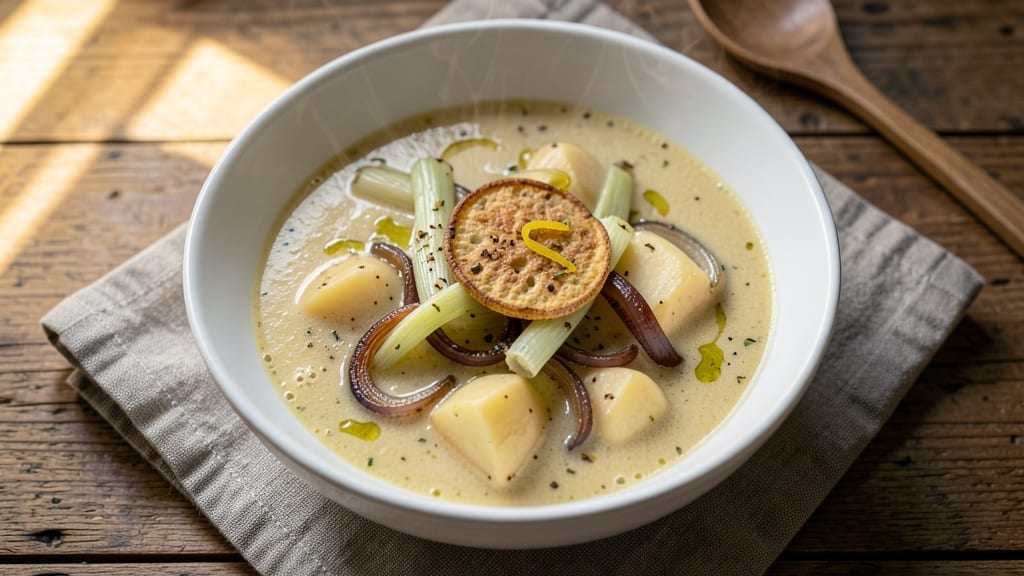
Alison Roman's potato leek soup recipe delivers the kind of velvety, herb-infused comfort that transforms a simple weeknight dinner into something extraordinary. The secret lies in slow-cooked leeks and potatoes that develop deep, caramelized flavors while maintaining that signature creamy texture without heavy cream.
I've perfected this version to balance richness with bright acidity, just like Roman does in her cookbook—every spoonful is a reminder of why this soup is a pantry staple.
What sets this recipe apart is the technique of building flavor through gradual simmering and careful blending, not just dumping ingredients into a pot. Sautéing the leeks until deeply golden creates a rich base, while the potatoes break down into an impossibly smooth consistency.
The acidity from lemon juice cuts through the richness, ensuring each bite is perfectly balanced. This is the kind of soup that feels indulgent yet stays light enough for summer evenings.
The result is a bowl of soup so comforting it borders on decadent—creamy yet not heavy, aromatic with fresh herbs, and perfectly seasoned. The velvety texture comes from proper technique, not shortcuts, and the bright, clean finish makes it versatile enough for any meal.
Serve it with crusty bread for dipping or a sprinkle of fresh herbs for extra freshness. This is the recipe that will have you making it again and again.
Whether you're feeding a crowd or meal prepping for the week, this soup scales beautifully while maintaining its restaurant-quality depth. The beauty of this recipe is its adaptability—use chicken stock for extra richness, vegetable stock for a lighter version, or even coconut milk for a tropical twist.
Here's how to make it exactly as Alison Roman would, at home.
Ingredients for alison roman potato leek soup
Six ingredients build the base, while fresh herbs and citrus elevate this velvety soup to restaurant-quality perfection.
| Ingredient | Amount | Notes |
|---|---|---|
| Yellow Onions 🧅 | 2 whole | Thinly sliced, white or yellow preferred |
| Leeks 🥬 | 4 whole | White and light green parts, cleaned thoroughly |
| Russet Potatoes 🥔 | 2 lb | Peeled and cubed into 1-inch pieces |
| Vegetable Stock 💧 | 6 cups | Low-sodium preferred, homemade or high-quality |
| Chicken Stock 🍗 | 2 cups | For added richness, optional |
| Extra-Virgin Olive Oil 🫒 | ½ cup | High-quality, fruity variety |
| Fresh Thyme 🌿 | ¼ cup | Leaves only, stems removed |
| Fresh Parsley 🌿 | ¼ cup | Chopped, for garnish |
| Garlic Cloves 🧄 | 4 cloves | Minced or finely chopped |
| Lemon Juice 🍋 | 2 tbsp | Freshly squeezed, for brightness |
| Salt 🧂 | 1 ½ tsp | Diamond Crystal kosher salt |
| Black Pepper 🌶️ | ½ tsp | Freshly ground, coarse |
| Heavy Cream 🥛 | 1 cup | Full-fat for creaminess, optional |
The leeks and onions are the flavor foundation—look for fresh, firm stalks with minimal dark spots. Whole Foods or local farmers markets often carry the best quality, but the grocery store works too. For the potatoes, Russets or Yukon Golds break down beautifully, giving that signature creamy texture. If you're using pre-minced garlic, toast it first in olive oil to deepen the flavor—trust me on this. The thyme should be fragrant, not dried out; if it smells weak, skip it. For stock, Pacific Foods or Imagine brands are my go-to for consistency.
No heavy cream? Coconut milk or cashew cream works beautifully, though the texture will be slightly lighter. Fresh herbs wilt fast, so store them in a jar of water in the fridge if you're not using them all at once. The lemon juice is non-negotiable—it brightens the soup and balances the richness. Mexican limes add a tangy kick if you want to get fancy. For a dairy-free version, blend in 1 cup cooked cauliflower instead of cream. The soup freezes beautifully—just reserve the cream until reheating.
This soup tastes even better the next day as flavors meld. Store in an airtight container for up to 5 days or freeze for 3 months. For meal prep, make a double batch—the extra cream can be added fresh when reheating. Reheat gently on the stove and stir in the cream off the heat to prevent curdling. Garnish with fresh herbs and a drizzle of olive oil right before serving for that restaurant touch. The bread? Crusty sourdough or baguette is ideal for dipping.
Why You'll Love This Recipe
- Here’s what sold me: the balance of chicken and vegetable stock gives it depth that tastes like you simmered for hours. The leeks add that subtle sweetness, while the onions ground everything together—no heavy cream, no fuss, just pure satisfaction.
- No-Fuss Ingredients: I swear by this recipe because it uses pantry staples I already have—no weird specialty items. Yellow onions and leeks caramelize beautifully without babying them, and Russet potatoes? They break down just enough to make it creamy without blending.
- Rich Without Effort: Here’s what sold me: the balance of chicken and vegetable stock gives it depth that tastes like you simmered for hours. The leeks add that subtle sweetness, while the onions ground everything together—no heavy cream, no fuss, just pure satisfaction.
- Weeknight to Potluck: Between us, this is my go-to when I need something fast but still impressive. Toss it in a thermos for lunch or bring it to a dinner party—it’s the kind of soup that makes you look like a star without trying. (Yes, even on a Tuesday night.)
Step-by-step instructions for Alison Roman's potato leek soup
This velvety soup delivers restaurant-quality comfort with minimal effort—just follow these precise steps.
Sauté the Aromatics Until Translucent
Heat the 0.5 cup extra-virgin olive oil in a large Dutch oven over medium heat. Add the 2 whole yellow onions and 4 whole leeks (sliced lengthwise and cleaned thoroughly), spreading them evenly in the pan. Cook for 8-10 minutes, stirring occasionally, until the onions become translucent and the leeks soften slightly.
This slow cooking process draws out their natural sweetness and removes any bitterness from the leeks. I press down gently with a wooden spoon during the first few minutes to ensure even contact with the oil. If the onions start to brown too quickly, reduce the heat slightly—you want them to soften, not caramelize at this stage.
Add Potatoes and Stock for Simmering
Push the onion-leek mixture to one side of the pot and add the 4 cloves minced garlic, stirring for 30 seconds until fragrant. Add the 2 lb cubed russet potatoes and stir to coat them in the aromatic oil. Pour in the 6 cups vegetable stock and 2 cups chicken stock, bringing the mixture to a gentle simmer.
Once simmering, reduce heat to low-medium and cover partially with a lid. Let the soup cook for 20-25 minutes until the potatoes are fork-tender and the flavors meld together. I like to stir occasionally, but not too vigorously—this helps prevent the potatoes from breaking apart and keeps the soup's texture smooth.
Season and Finish with Herbs and Cream
Remove the pot from heat and stir in the 1.5 tsp salt, 0.5 tsp black pepper, and 0.25 cup fresh thyme leaves. Let the soup sit off the heat for 5 minutes to allow the flavors to settle. Then, stir in the 1 cup heavy cream and 2 tbsp lemon juice, adjusting the seasoning if needed.
For the final touch, pulse the soup in a blender or use an immersion blender to achieve a velvety texture—just until smooth, not completely puréed. This step ensures a luxurious mouthfeel while keeping some of the potato's rustic character. If the soup is too thick, thin it with a splash of warm water or additional stock.
Garnish and Serve Warm
Return the soup to the pot and gently reheat over low heat for 2-3 minutes. Ladle into bowls and garnish with the 0.25 cup chopped fresh parsley. The parsley adds a bright contrast to the creamy soup and ties all the flavors together.
Serve immediately with crusty bread or a side salad to complement the rich, comforting flavors. The soup should be warm through, with a balance of creamy texture, herbal notes, and a touch of lemon brightness. Each spoonful delivers that cozy, velvety comfort Alison Roman is known for.
Pro Tips For Making Alison Roman Potato Leek Soup
- CHAR THE LEEKS FIRST: Alison’s recipe calls for leeks, but I learned the hard way—raw leeks taste like grassy disappointment. Char them in a dry pan for 3-4 minutes until blackened in spots, then scrape off the burnt parts. This deepens their flavor and cuts through the soup’s richness without overpowering it. (Yes, even if you’re impatient like me.)
- CUT POTATOES UNIFORM: Russets break down at different rates, and lumpy soup is a crime. Dice them into ½-inch cubes—no smaller, or they’ll turn to mush. If you’re lazy, use a mandoline, but at least keep them consistent. Uneven sizes mean some pieces stay hard while others dissolve into glue.
- SALT THE STOCKS HEAVILY: Store-bought stock is often bland, and this soup relies on it. Boost flavor by adding 1 extra teaspoon of salt per quart of stock while simmering—especially if you’re mixing vegetable and chicken. Taste it early; you can always dilute later, but you can’t fix insipid broth.
- SKIP THE SKINS ON POTATOES: Peeling Russets is a pain, but leaving skins in makes the soup gritty and dulls the creamy texture. Use a paring knife to shave them clean—it’s faster than you think. The effort guarantees a silky finish, not a mouthful of sandpaper. (Your future self will notice.)
Health benefits of these flavors
Comforting Carbs
Potatoes are the star of this soup, providing complex carbohydrates that fuel your body with steady energy. A 2-lb serving of russet potatoes delivers about 100 grams of carbs, including fiber-rich starches that keep you full longer.
The slow cooking process breaks down the starches into easily digestible forms, making this soup an excellent choice for sustained energy—perfect for busy weeknights or post-workout meals. 🥔
Herb-Rich Antioxidants
The fresh thyme and parsley in this recipe pack a nutritional punch with their antioxidant properties. Thyme contains thymol, a compound that supports respiratory health, while parsley provides vitamin K (essential for blood clotting) and folate.
Using 0.25 cup fresh herbs ensures you get these benefits without overpowering the soup's delicate flavors. I always keep a small pot of fresh herbs on my windowsill for quick access to these nutrient-dense greens.
Healthy Fats for Satiety
The 0.5 cup extra-virgin olive oil and optional 1 cup heavy cream add richness that satisfies cravings while providing beneficial fats. Olive oil contains monounsaturated fats, which support heart health, while the cream contributes saturated fats for energy.
For a lighter version, substitute the cream with coconut milk or cashew cream—both add creaminess without the same caloric impact. The fat content also helps your body absorb fat-soluble vitamins like A and E from the vegetables.
Low-Calorie Protein Boost
While not a protein powerhouse, this soup can be easily elevated with added protein sources like shredded chicken or white beans. A ½ cup addition of chickpeas adds about 7 grams of plant-based protein per serving, making it a more complete meal.
The vegetable stock also contributes some protein—opt for a low-sodium, organic variety like Pacific Foods for better nutrient quality. This makes the soup particularly great for vegetarians or anyone looking to boost their protein intake without heavy meats.
Digestive Benefits
The combination of leeks, potatoes, and herbs creates a soup that's gentle on digestion while still being nutrient-dense. Leeks contain inulin, a prebiotic fiber that supports gut health by feeding beneficial gut bacteria.
The slow-cooked potatoes are easy to digest, making this soup ideal for post-meal comfort or when you're feeling under the weather. I've found that sipping this soup helps soothe my stomach after particularly rich meals—it's like a warm hug for your digestive system. 💛
Vitamin and Mineral Powerhouse
This soup is surprisingly rich in essential vitamins and minerals. The potatoes provide vitamin C and potassium, while leeks contribute vitamin A and manganese. The lemon juice adds a dose of vitamin C, which aids in iron absorption from plant sources.
For maximum nutrition, use organic produce when possible—just be sure to clean the leeks thoroughly to remove any dirt from between the layers. The mineral content makes this soup a great way to sneak in more nutrients without sacrificing flavor.
Nutrition facts
Frequently asked questions
Can I make this soup without heavy cream for a lighter version?
For a dairy-free or lighter option, blend in 1 cup cooked cauliflower instead of cream or use ½ cup coconut milk for a tropical twist. The texture will be slightly lighter but still velvety. The key is to ensure the soup is properly seasoned—add an extra splash of lemon juice to balance any richness from the coconut milk.
How do I clean leeks properly to remove all the dirt?
Start by cutting off the root end and dark green tops. Slice each leek lengthwise in half, then rinse thoroughly under cold water while holding the halves together. This traps dirt between the layers. For extra cleanliness, soak them in a bowl of water for 5 minutes before rinsing again. The goal is to remove all grit without damaging the tender white and light green parts.
Can I use frozen leeks instead of fresh?
Fresh leeks work best for maximum flavor, but frozen will do in a pinch. Thaw them completely first, then drain and pat dry. Since frozen leeks are often pre-cut, you may need to adjust cooking time slightly—they'll soften faster. For best results, add them to the pot 5 minutes before the potatoes are fully tender.
Why did my soup turn out too thick or too thin?
Thickness depends on potato variety and cooking time. For a thicker soup, use Yukon Gold potatoes (they break down more) or simmer slightly longer. If too thick, thin with warm water or stock. Too thin? Simmer uncovered for 5-10 minutes to reduce. The cream should be added last—if the soup separates, stir in a cornstarch slurry (1 tbsp cornstarch + 2 tbsp cold water) and heat gently to thicken.
What's the best way to reheat leftovers?
Reheat gently on the stove over low heat, stirring occasionally. Add a splash of water or stock if needed. For cream-based soups, stir in the cream off the heat to prevent curdling. Microwaving can make the texture grainy—always reheat on the stovetop for best results. Store leftovers in an airtight container for up to 5 days or freeze for 3 months.