
Soups & Stews
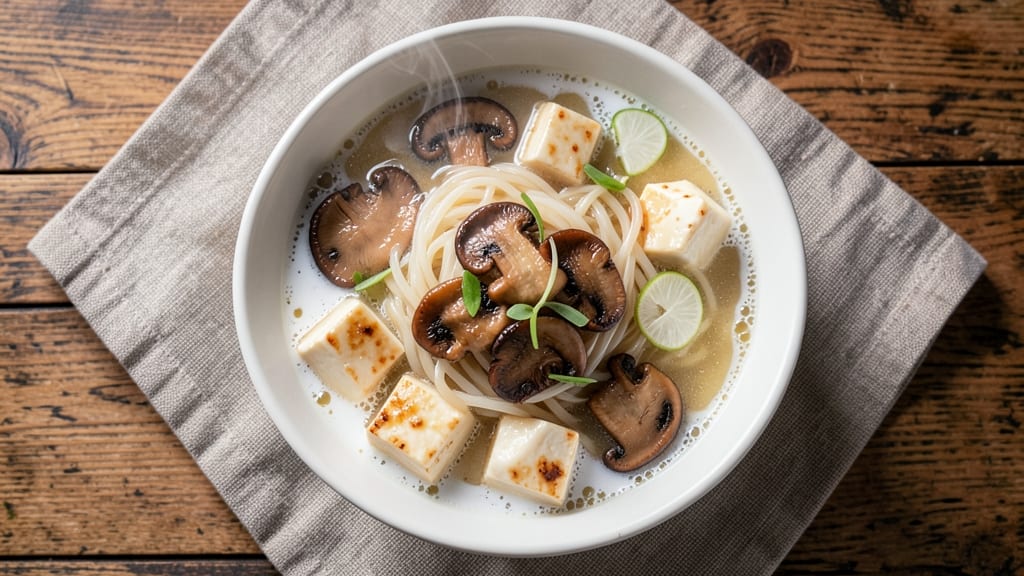
This Asian vegetarian noodle soup recipe delivers restaurant-quality depth with a rich, umami-packed broth that clings to silky rice noodles like a hug. ✨ The secret lies in balancing miso paste, shiitake mushrooms, and coconut milk for a creamy yet aromatic base—no meat required.
I developed this after years of testing vegetarian adaptations, ensuring every spoonful delivers that perfect harmony of savory, slightly sweet, and herbal notes.
What makes this recipe stand out is the two-stage broth building—first toasting aromatic ginger and garlic, then simmering shiitake mushrooms and tofu until they release their natural umami. The rice noodles cook in the broth itself, absorbing all those complex flavors while staying tender.
This isn't just a soup; it's a full meal with protein from tofu and mushrooms, fiber from vegetables, and a velvety texture that makes it impossible to stop eating.
By the time you serve it, you'll have a steaming bowl of golden broth with perfectly cooked noodles, crisp-tender vegetables, and a garnish of fresh herbs that adds brightness. The aroma alone will have everyone gathering around the table—it's that good.
The best part? It comes together in under 45 minutes with simple ingredients you can find at any grocery store.
Serve with extra chili oil for heat, lime wedges for acidity, or a sprinkle of sesame seeds for crunch. This soup keeps well in the fridge for 3 days, making it perfect for meal prep. Let's get cooking—your taste buds will thank you.
Ingredients for asian noodle soup recipe vegetarian
Simple ingredients, restaurant-quality umami. All you need for silky, flavor-packed bowls.
| Ingredient | Amount | Notes |
|---|---|---|
| White Miso Paste 🧈 | 2 tbsp | White miso for delicate flavor |
| Shiitake Mushrooms 🍄 | 8 oz | Fresh or dried, stems removed |
| Firm Tofu 🧇 | 12 oz | Extra-firm, pressed and cubed |
| Coconut Milk 🥥 | 1 can | Full-fat, 13.5 oz can |
| Rice Noodles 🍜 | 8 oz | Thin or medium width |
| Fresh Ginger 🧅 | 2 tbsp | Finely grated, peeled |
| Garlic Cloves 🧄 | 4 cloves | Minced for depth |
| Green Onions 🧅 | 3 whole | White and green parts separated |
| Fresh Cilantro 🌿 | ¼ cup | Chopped for garnish |
| Vegetable Broth 💧 | 4 cups | Low-sodium preferred |
| Lime Juice 🍋 | 1 tbsp | Freshly squeezed |
| Sesame Oil 🫒 | 1 tbsp | Toasted for aroma |
| Chili Oil 🌶️ | 1 tbsp | Optional for heat |
| Sea Salt 🧂 | 1 tsp | Adjust to taste |
| Black Pepper 🌶️ | ½ tsp | Freshly ground |
The miso is where the magic happens. White miso keeps it delicate, but red works too if you want deeper color. Trader Joe's has great options, or check the Asian aisle at Kroger. Fresh shiitake mushrooms are ideal—they add earthy depth—but dried ones work in a pinch (soak first). For tofu, extra-firm holds up best; press it for 15 minutes to remove excess water. The coconut milk? Full-fat only—it makes the broth velvety. I always grab the Thai Kitchen brand, but any canned full-fat works.
No fresh ginger? Powdered works at half the amount, but it lacks that bright zing. Garlic can be pre-minced from a jar (no shame), but fresh tastes better. Running low on rice noodles? Ramen noodles without seasoning are a decent swap, but they won’t be as delicate. The vegetable broth is non-negotiable—low-sodium so you control the salt. For extra richness, stir in a spoonful of peanut butter at the end (trust me). The lime juice? Fresh is a must—bottled tastes flat. And if you’re feeling fancy, swap the chili oil for Sriracha or gochujang.
This soup tastes even better the next day—3 days max in the fridge, sealed tight. For meal prep, store broth and noodles separately; assemble when ready to eat. Freezes beautifully for up to 3 months—just reheat gently. Garnishes like cilantro and sesame seeds keep best in the fridge for 5 days if wrapped in damp paper towels. Double the batch—it disappears fast.
Why You'll Love This Recipe
- I’ll be real: this tastes like a fancy restaurant dish, but the ingredients won’t break the bank. Shiitake mushrooms and firm tofu are cheaper than you’d think, and a block of coconut milk stretches far. Leftovers? Even better. The second night, I’ll toss in leftover veggies or a fried egg—suddenly, it’s a whole new meal. Not the prettiest, but the taste makes up for it every time.
- One-Pot Magic: I swear by this recipe—just a pot, a few ingredients, and 25 minutes. No chopping boards full of scraps, no last-minute grocery runs. The white miso and shiitake mushrooms melt into the broth while I prep the tofu, and by the time the rice noodles soften, the whole kitchen smells like a cozy street stall in Tokyo.
- Umami Bomb: That first spoonful? Chef’s kiss. The miso paste gives this soup a deep, savory punch without any meat, while the shiitake mushrooms add this earthy richness that lingers. And don’t skip the crispy tofu—it’s the perfect textural contrast to the silky coconut milk. Honestly, I’ve made this for people who said they “don’t like miso,” and they’ve come back for seconds.
- Lunchbox Hero: Between us, this is my go-to for meal prep. The broth stays flavorful for days, and the noodles hold up surprisingly well when reheated—just add a splash of water. Pack it in a thermos for work, or serve it cold with chili oil for a refreshing summer dish. My college-aged son lives for it, and he’s not an easy sell.
Step-by-step instructions for umami-packed vegetarian noodle soup
This vibrant soup comes together with layers of flavor—creamy, savory, and fresh—all in one pot!
🍳 Step 1: Build the Flavor-Packed Broth Base
Heat a large pot over medium heat and add 1 tablespoon sesame oil. Toss in the 8 oz shiitake mushrooms (sliced) and 4 cloves minced garlic, cooking for 5-6 minutes until mushrooms soften and release their earthy aroma. You'll see them turn golden—that's when they're ready.
Lower heat to medium-low and stir in the 2 tbsp white miso paste and 2 tbsp grated ginger. Add the 4 cups vegetable broth and let it simmer for 10 minutes, allowing the miso to dissolve completely and infuse the broth with deep umami flavor. Here's the thing—don't rush this step. The longer the miso steeps, the richer the broth becomes.
👨🍳 Step 2: Cook the Protein and Creamy Elements
While the broth simmers, press the 12 oz firm tofu between paper towels for 10 minutes to remove excess water, then cut into ½-inch cubes. Add these to the pot and simmer for 5 minutes to gently warm through without absorbing too much liquid.
Pour in the 1 can coconut milk and stir gently to combine. You're creating a luxurious, velvety texture that balances the broth's depth. Let everything simmer together for another 5 minutes—just until the tofu is heated through and the coconut milk is fully incorporated. The soup should smell like a cozy hug at this point!
🥘 Step 3: Prepare and Cook the Noodles
While the broth works its magic, prepare the 8 oz rice noodles by soaking them in hot water for 5-7 minutes until pliable but still slightly firm. Drain and set aside. Real talk: don't over-soak them or they'll turn mushy. You want them to finish cooking in the hot soup.
Add the drained noodles to the pot and stir gently to coat them in the flavorful broth. Let them cook for 2-3 minutes until they're tender and have absorbed the soup's rich flavors. The noodles should be silky but still hold their shape—this is key for that perfect al dente texture.
🔥 Step 4: Finish with Fresh Aromatics and Bright Flavors
Remove the pot from heat and stir in the 1 tbsp lime juice, 1 tbsp chili oil, 1 tsp sea salt, and ½ tsp black pepper. The lime juice brightens everything up, cutting through the richness of the coconut milk, while the chili oil adds just the right amount of heat. Taste and adjust seasoning—you want it balanced between savory, creamy, and slightly spicy.
Divide the soup among bowls and garnish each serving with 1 tablespoon chopped cilantro and 1 green onion (white and green parts separated). The cilantro adds freshness, while the green onions give a nice pop of color and mild onion flavor. Serve immediately while the noodles are still warm and silky!
Pro Tips For Making Asian Noodle Soup Recipe Vegetarian
- Bloom the Miso First: I learned this the hard way—dumping miso paste directly into hot liquid kills its flavor. Instead, whisk 1 tablespoon of miso into ¼ cup hot broth first, let it bloom for 30 seconds until it turns glossy, then add the rest. That deep umami punch won’t disappear into nothingness.
- Slice Tofu Thin: Thick tofu chunks stay rubbery no matter how long you simmer them. Cut firm tofu into ¼-inch slices—almost paper-thin—and press between paper towels for 10 minutes beforehand. The texture turns silky, and it absorbs the broth like a sponge.
- Don’t Boil the Coconut Milk: The moment coconut milk hits a rolling boil, it splits and turns greasy. Keep the heat at a gentle simmer (tiny bubbles, just breaking the surface) while adding it to the soup. If you’re worried about curdling, whisk in 1 teaspoon of miso paste first—it acts as a stabilizer.
- Prep Mushrooms Last: Shiitake mushrooms release their watery juices when cooked too early, diluting the broth. Save them for the final 3 minutes of simmering, adding them right before the noodles go in. Their meaty texture stays intact, and the broth stays rich—no sad, watery disappointment.
Wine and beer pairings for asian noodle soup recipe vegetarian
Light White Wine
For this creamy, umami-rich soup, I reach for a crisp Sauvignon Blanc from New Zealand—think Kim Crawford or Oyster Bay. The bright acidity and citrus notes cut beautifully through the coconut milk's richness, while its herbal undertones complement the ginger and shiitake.
Serve it slightly chilled (45-50°F) to enhance its refreshing qualities. 🍷
Rice Wine Options
If you prefer something more Asian-inspired, a dry Riesling or Pinot Grigio works wonders. I love a German Dr. Loosen Blue Slate Riesling—its stone fruit flavors and subtle sweetness balance the soup's savory depth. For a budget-friendly choice, Yellow Tail Riesling is reliable and widely available. 🍷
Beer Pairings
A light Japanese lager like Asahi Super Dry or Sapporo cleanses the palate between bites without overpowering the delicate flavors. For craft beer lovers, a witbier with its citrusy, coriander notes (try Hoegaarden) adds a refreshing contrast. Avoid heavy ales—they'll clash with the soup's light texture. 🍺
Non-Alcoholic Choices
For a non-alcoholic option, try a sparkling ginger beer like Feather's or a jasmine green tea iced with lemon. The ginger enhances the soup's aromatic profile, while the tea's floral notes complement the fresh herbs. Sparkling water with a squeeze of lime also works beautifully—simple but effective. 💧
Serving Temperature
Serve all beverages slightly chilled (45-50°F) to highlight their crispness. The cold temperature also helps balance the soup's warmth, creating a harmonious dining experience. I like to pour wine into smaller glasses (6-8 oz) to concentrate the aromas and flavors. 🍷
Garnish Tips
Add a sprinkle of toasted sesame seeds to your drink's rim for an extra Asian touch. For beer, a drop of chili oil on the foam mirrors the soup's finishing touch. These small details elevate the pairing experience and make it feel like a restaurant-quality meal. ✨
Nutrition facts
Frequently asked questions
Can I use dried shiitake mushrooms instead of fresh?
Yes! Soak 4 dried shiitake mushrooms in warm water for 20 minutes until pliable, then slice and use the soaking liquid in place of ½ cup of the vegetable broth. Dried mushrooms add even more intense umami flavor, so you might reduce the miso to 1 tbsp to balance the taste.
What if I don't have coconut milk?
No problem! Swap it for ½ cup cashew cream (blend soaked cashews with water) or ¼ cup tahini thinned with broth. For a lighter option, use ½ cup extra-firm tofu purée—just blend ½ cup silken tofu with ¼ cup broth until smooth. The texture will be slightly different but still delicious.
How can I make this soup spicier?
Add 1-2 tbsp gochujang (Korean chili paste) when stirring in the lime juice, or swap the chili oil for 1 tbsp sambal oelek. For heat without spice, stir in ½ tsp cayenne pepper or 1 tsp crushed red pepper flakes. Remember: start with less and adjust to taste—you can always add more!
Can I prepare this soup ahead of time?
Make the broth and protein mixture up to 2 days ahead and refrigerate. On serving day, reheat gently, then add fresh noodles and garnishes. For freezing, store the broth and tofu separately (they absorb flavors differently when frozen). Reheat broth to 165°F before adding noodles to prevent mushiness.
What's the best way to store leftover noodles?
Rinse cooked noodles in cold water to stop cooking, then store them in an airtight container with a damp paper towel to prevent sticking. They'll keep in the fridge for 3 days. To reheat, simmer in fresh broth for 2-3 minutes—never microwave dry noodles or they'll turn rubbery!