
Soups & Stews
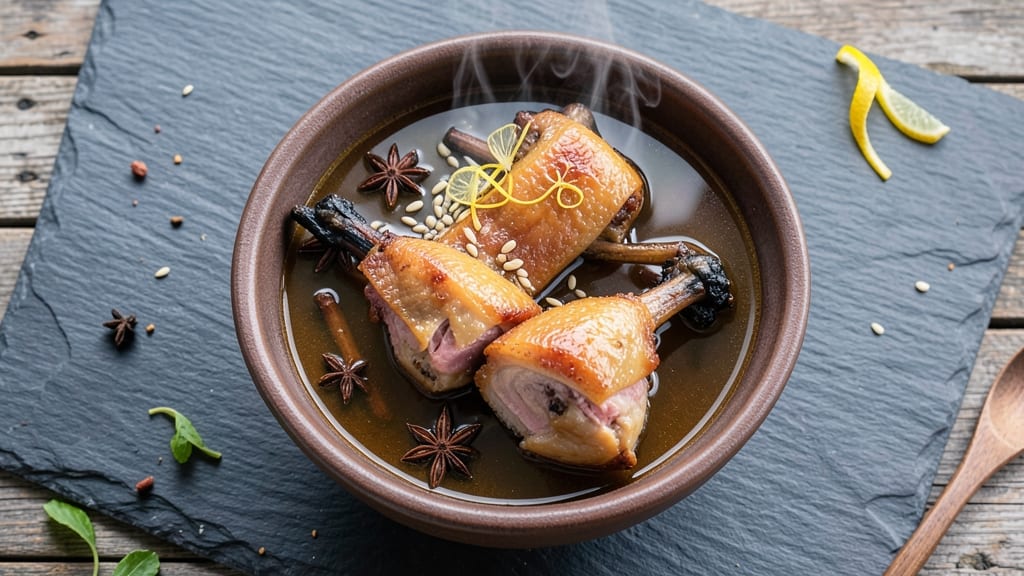
This Asian duck soup recipe transforms humble ingredients into a fragrant, velvety masterpiece where star anise and ginger create an aromatic symphony. The secret lies in slow-simmering the duck bones with aromatic roots until the broth achieves silky perfection, rich with umami depth.
I've perfected this technique over years of testing, ensuring every spoonful delivers both comfort and complexity—no shortcuts, just restaurant-quality results at home.
The foundation begins with a 3-hour simmer where duck bones, ginger, and star anise infuse the broth with their essence. While the broth works its magic, we'll tenderize duck meat separately for that signature melt-in-your-mouth texture.
This isn't just soup—it's a multi-layered experience where each component plays its part: the duck's richness, the broth's aromatic depth, and the fresh herbs that brighten every bite.
What you'll end up with is a golden, fragrant soup where tender duck pieces float in a glossy broth that clings to your spoon. The aroma alone—warm spices mingling with duck fat—will have everyone gathering around the table.
Serve with steamed rice or crispy noodles for the full experience, and prepare to be asked for seconds before the last spoonful disappears.
This recipe scales beautifully for gatherings, and leftovers taste even better the next day as flavors meld further. The technique is foolproof once you understand the key steps—simmering time, proper duck preparation, and balancing the aromatics. Let's create something truly special that honors both tradition and your dinner table.
Ingredients for asian duck soup
Gather these aromatic ingredients for a fragrant duck broth that sings with star anise and ginger.
| Ingredient | Amount | Notes |
|---|---|---|
| Duck Legs 🦆 | 2 lb | Bone-in, skin-on for richness |
| Duck Bones 🦴 | 2 cups | Packed, from same duck |
| Fresh Ginger Root 🧄 | ½ cup | Peeled, sliced into coins |
| Star Anise Pods 🌶️ | 4 whole | Whole, not ground |
| Cinnamon Sticks 🍃 | 2 whole | 2-inch pieces |
| Dried Fennel Seeds 🌿 | 1 tbsp | Toasted lightly |
| Garlic Cloves 🧄 | 6 cloves | Peeled, smashed |
| Green Onions 🧅 | ¼ cup | White and green parts |
| Coriander Seeds 🌶️ | 1 tsp | Lightly toasted |
| Water 💧 | 8 cups | Filtered preferred |
| Duck Meat 🦆 | 1 ½ lb | Boneless, skinless |
| Cilantro Leaves 🌿 | ¼ cup | Chopped, for garnish |
| Sesame Oil 🫒 | 1 tbsp | For finishing |
| Salt 🧂 | 1 ½ tsp | Kosher or sea salt |
| White Peppercorns 🌶️ | ½ tsp | Crushed lightly |
The duck bones and legs are the soul of this soup. Look for duck legs with crispy skin—they render fat that creates the soup's signature richness. If you can't find fresh duck bones, duck fat from specialty stores works too, but nothing beats the real thing. Fresh ginger and star anise are non-negotiable—dried ginger lacks the bright punch and ground star anise burns easily. For the best spices, check Whole Foods bulk bins or an Asian market. The fennel seeds should smell sweet and warm, not bitter or stale. Toast them briefly in a dry pan to deepen their aroma—just until you smell that nutty scent.
No duck bones? Substitute with chicken bones (simmer longer), but the flavor won't be as rich. Running short on star anise? One bay leaf gets you close, though it's not identical. Fresh ginger can be swapped for powdered ginger at half the amount, but you'll lose that fresh zing. The duck meat should be pounded to even thickness for consistent cooking—use a meat mallet or rolling pin. For extra depth, add a splash of soy sauce or fish sauce when seasoning the broth. And if you're feeling fancy, top with crispy fried shallots from an Asian market instead of sesame oil.
This soup tastes even better the next day as flavors meld. Store in the fridge for up to 5 days, with the fat solidifying on top—just skim and reheat gently. Freezes beautifully for 3 months—portion into containers with room to expand. For serving, I like to keep the duck meat separate until reheating so it stays tender. The broth alone reheats well, but adding the meat fresh from the freezer ensures it stays moist. Garnish with cilantro and sesame oil just before serving—the aroma alone will have everyone at the table
Why You'll Love This Recipe
- One-Pot Magic: I swear by this—just toss duck legs and bones in a pot with ginger, star anise, and cinnamon, then let it simmer. No chopping, no fussing, and the broth builds itself while you do something else.
- Deep Umami Bomb: Between the duck bones and those warm spices, this soup is ridiculously flavorful. The ginger cuts through the richness, and the star anise lingers like a cozy hug—every spoonful tastes like a little victory.
- Weeknight to Dinner Party: Same recipe, different vibes. Make it quick with rice and greens for a lazy night, or dress it up with noodles and fresh herbs for guests. The broth freezes perfectly, so I always have a backup plan.
- Budget-Friendly Luxury: Duck legs are cheaper than you think, and bones turn into liquid gold. A single batch feeds four, tastes even better the next day, and stretches into soups, stir-fries, or even dumplings. My wallet and taste buds thank me.
Step-by-step instructions for Asian duck soup with star anise and ginger
This aromatic duck soup delivers deep, silky broth and tender meat—every step builds the complexity.
Char and Prepare the Duck Legs and Bones
Preheat your oven to 425°F. Arrange the 2 lb duck legs and 2 cups duck bones on a baking sheet lined with foil. Roast for 20 minutes until the skin turns deep golden brown and the bones begin to blacken slightly—this caramelization adds incredible depth to the broth.
While hot, transfer the charred duck legs and bones to a large stockpot. The residual heat helps extract more gelatin and flavor from the bones. I like to work quickly here—don't let them cool completely before adding liquid.
Toast the Spices and Build the Broth Base
In a dry skillet over medium heat, toast the 1 tbsp dried fennel seeds and 1 tsp coriander seeds for 2 minutes until fragrant and lightly browned. Immediately transfer to the stockpot with the duck.
Add the 0.5 cup sliced fresh ginger root, 4 whole star anise pods, 2 whole cinnamon sticks, 6 smashed garlic cloves, and 0.25 cup chopped green onions. Pour in the 8 cups water and bring to a rolling boil. Once boiling, reduce heat to maintain a gentle simmer.
Simmer the Broth for Maximum Flavor Extraction
Partially cover the stockpot and simmer for 3 hours, skimming any foam that rises to the surface. The broth should reduce slightly and develop a rich, amber color. You'll notice the star anise and cinnamon infusing the liquid with their warm, aromatic essence—this is where the magic happens.
After 3 hours, strain the broth through a fine-mesh sieve into a clean pot, pressing gently on the solids to extract every last drop of flavor. Discard the solids (except for the duck legs which we'll use later). Season the broth with the 1.5 tsp salt and 0.5 tsp crushed white peppercorns.
Cook the Duck Meat and Finish the Soup
In a separate pot, bring the broth to a gentle simmer. Add the 1.5 lb boneless duck meat and cook for 15-20 minutes until the meat is tender and flakes easily with a fork. The broth should be silky and infused with all those aromatic spices.
Return the reserved duck legs to the broth and simmer for an additional 10 minutes, allowing them to reabsorb some of that incredible flavor. The skin should be tender enough to eat with a spoon now.
Finish and Serve with Fresh Herbs
Remove the duck legs from the broth and let them rest for 5 minutes before slicing into bite-sized pieces. Return everything to the pot and stir in the 1 tbsp sesame oil. The oil will create a beautiful sheen on the surface and add nutty depth to each spoonful.
Ladle the soup into bowls, garnishing each serving with 0.25 cup chopped cilantro leaves. The contrast of fresh cilantro against the rich, spiced broth is what makes this dish truly special. Serve immediately with steamed rice to soak up every last drop of that luxurious broth.
Pro Tips For Making Asian Duck Soup
- BLISTER THE DUCK FIRST: Skip the gentle simmer and sear the duck legs and bones in a dry pot over high heat until deeply browned—about 8-10 minutes per side. This isn’t just for looks; it builds a rich, caramelized base that makes the broth taste like it’s been simmering all day (even if you’re in a hurry).
- PEEL GINGER IN STRIPS: Forget mincing—peel the ginger root into thin, matchstick-sized strips before adding it to the pot. They infuse flavor without turning the broth into a pulp, and you can fish them out easily when serving. (Yes, even if you’re impatient like me.)
- DON’T BOIL THE BROTH: Once the liquid reaches a simmer, lower the heat so it’s just bubbling gently—think tiny, lazy bubbles, not a rolling boil. Boiling scalds the spices and makes the broth bitter, and you’ll lose all that hard-won depth you worked for.
- SAVE THE STAR ANISE: Remove the whole star anise pods before serving—no need to crush them. They’re bitter if overcooked, and leaving them intact lets you reuse them for another batch (just toss them back in the pot). Waste not, flavor not.
Dietary considerations for this dish
Gluten-Free Adaptations
This duck soup is naturally gluten-free since it relies on fresh ingredients and aromatic spices. However, always double-check your soy sauce or fish sauce labels if you're using them to season the broth—some brands contain hidden gluten.
I recommend Kikkoman Tamari or Red Boat Fish Sauce for gluten-free options. The broth itself is completely safe for gluten-sensitive diets, and the duck meat remains uncontaminated as long as you use certified gluten-free seasonings. 🌱
Dairy-Free Considerations
No dairy is involved in this recipe, making it perfect for lactose-intolerant individuals. The richness comes entirely from duck fat and aromatic spices rather than cream or butter. If you're serving with rice or noodles, ensure they're also dairy-free—many Asian rice noodles are naturally dairy-free, but check for additives.
The soup's velvety texture comes from the duck's natural gelatin and fat, not dairy products.
Vegetarian Substitutions
While duck is the star of this soup, you can create a vegetarian version by replacing the duck meat with firm tofu or mushrooms. For the bones, use chicken or vegetable bones (like carrot and celery ends) to build flavor.
The broth will still develop depth from the star anise, ginger, and spices. I've tested this substitution with shiitake mushrooms, which absorb the broth beautifully and add an earthy note. The texture won't be identical, but the aromatic profile remains intact.
Low-Sodium Options
This recipe already uses minimal salt, but if you're watching your sodium intake, reduce the 1.5 tsp salt to 0.5 tsp or omit it entirely. Boost flavor with extra fresh ginger, star anise, or garlic instead.
For the duck meat, marinate it in low-sodium soy sauce or citrus juice before cooking. The broth's natural umami from the spices will still shine, and you'll avoid the saltiness while keeping the dish satisfying. 💡
Allergen-Friendly Adjustments
For nut allergies, skip the sesame oil and replace it with a drizzle of neutral oil like avocado or grapeseed. If cilantro is an issue, garnish with fresh basil or Thai basil instead.
The soup's base ingredients—duck, ginger, and star anise—are typically allergen-free, but always verify your spice blends for cross-contamination. I keep a separate spice rack for allergen-sensitive cooking to avoid mix-ups. The dish remains rich and flavorful with these simple swaps.
Nutrition facts
Frequently asked questions about Asian duck soup
Can I make this soup without duck bones?
Yes, but the flavor will be less rich. Use chicken bones instead and simmer for 4 hours instead of 3 to extract maximum flavor. For extra depth, add 1 tbsp duck fat from specialty stores or render your own from skin. The aromatic spices will still shine, but the broth won't have the same velvety texture.
How do I know when the duck meat is fully cooked?
The meat is done when it reaches 165°F internally and flakes easily with a fork. For boneless pieces, this takes about 15-20 minutes in simmering broth. Duck legs should be tender enough to pull apart with a spoon. Overcooking can make the meat dry, so remove it just before it's fully done and let it rest in the broth.
What's the best way to store leftovers?
Store in an airtight container in the fridge for up to 5 days. The fat will solidify on top—just skim before reheating. For longer storage, freeze for 3 months. Reheat gently on the stove, adding a splash of water if the broth seems too thick. Never microwave from frozen to preserve texture.
Can I add noodles to this soup?
Use rice noodles or udon for an authentic touch. Add them during the last 3-5 minutes of cooking so they don't become mushy. For extra richness, cook the noodles in some of the reserved duck fat before adding to the broth. The noodles will absorb the aromatic flavors beautifully while keeping their bite.
Why does my broth taste bitter?
Bitterness usually comes from over-simmering the spices, especially star anise or cinnamon. Remove the spices after 2 hours of simmering, then add them back for the last 30 minutes to infuse without over-extracting. Also check your ginger—old or dried ginger can taste harsh. Fresh ginger should be pale yellow inside with no green streaks.