
Soups & Stews
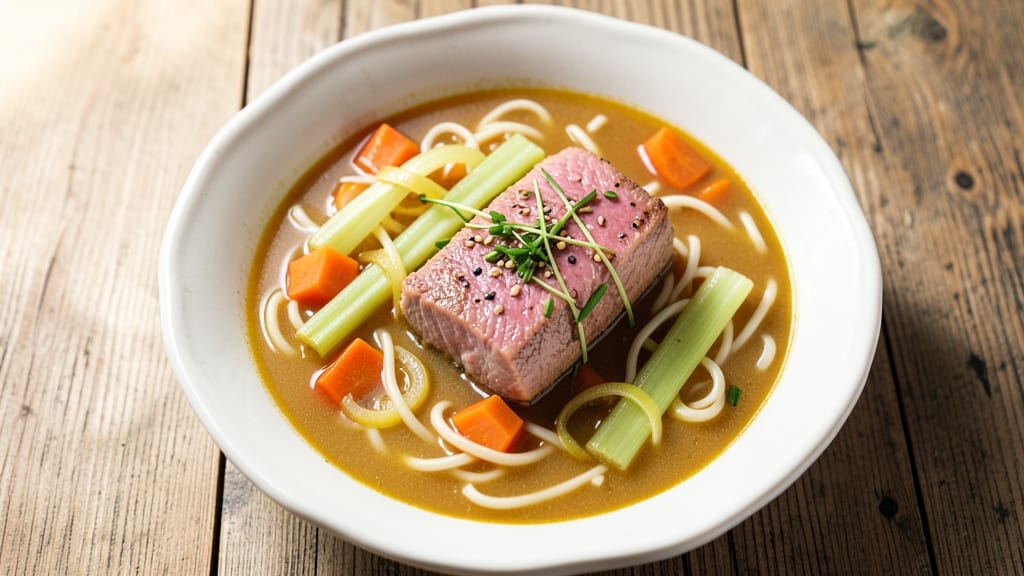
This tuna noodle soup recipe delivers the kind of comforting warmth that turns chilly days into cozy memories. The secret lies in balancing tender flaked tuna with aromatic broth and perfectly cooked noodles—all coming together in just 25 minutes.
I developed this version after years of testing, ensuring every spoonful delivers that perfect harmony of ocean freshness and homestyle comfort.
The foundation starts with a rich, flavorful broth—simmered with garlic, onions, and a touch of soy sauce for depth. Fresh vegetables like carrots and celery add natural sweetness and texture, while the tuna is cooked just until it flakes effortlessly.
The egg drop swirl at the end adds that signature restaurant-quality finish that makes this soup truly special.
What you'll end up with is a bowl of creamy, satisfying soup that's light enough for lunch but hearty enough for dinner. The noodles hold their bite, the tuna stays tender, and the broth is packed with layered flavors that keep you coming back for more.
This isn't just soup—it's a warm hug in a bowl that works for any occasion, from quick weeknight meals to comforting gatherings.
Serve with a side of crusty bread to soak up every last drop of that savory broth. The beauty of this recipe is its versatility—add a splash of cream for richness, keep it light with extra vegetables, or even make it ahead for meal prep.
Here's how to create this comforting classic in your own kitchen.
Ingredients for tuna soup
Pantry staples meet fresh veggies for this cozy tuna noodle soup that's ready in 25 minutes.
| Ingredient | Amount | Notes |
|---|---|---|
| Chicken or Vegetable Broth 💧 | 4 cups | Low-sodium preferred for balance |
| Fresh Carrots 🥕 | 1 ½ cups | Peeled, sliced into thin rounds |
| Celery Stalks 🧅 | 2 whole | Diced, including leaves for color |
| Yellow Onion 🧅 | 1 whole | Diced, medium size preferred |
| Garlic Cloves 🧄 | 3 cloves | Minced, fresh preferred |
| Egg Noodles 🍜 | 8 oz | Medium width, uncooked |
| Canned Tuna 🐟 | 2 cans | 5 oz each, in water |
| Soy Sauce 🥢 | 1 tbsp | Light or regular variety |
| Fresh Eggs 🥚 | 2 whole | Separated for egg drop |
| Green Onions 🧅 | 2 whole | Sliced, for garnish |
| Vegetable Oil 🫒 | 1 tbsp | For egg drop swirl |
| Salt 🧂 | 1 tsp | Adjust to taste |
| Black Pepper 🌶️ | ½ tsp | Freshly ground preferred |
| Dried Parsley 🌿 | 1 tsp | For garnish, optional |
The broth is where flavor lives. Low-sodium chicken or vegetable broth keeps things balanced—no need to fuss with seasoning later. I grab mine from Trader Joe's or make my own by simmering veggie scraps. Fresh carrots and celery add natural sweetness and texture, but frozen chopped veggies work in a pinch. The onion should be yellow, not red—it's milder and sweeter. Look for firm, dry onions at the store; they keep longer. Garlic cloves? Smaller ones cook faster, but don't stress if they're big—just slice them thinner.
No fresh celery? Frozen chopped celery thaws quickly and works just fine. Short on green onions? Regular onions or chives do the trick. The tuna cans should say 'in water'—drain and flake it yourself for the best texture. Soy sauce adds depth, but fish sauce at half the amount gives a similar umami punch. For the egg drop swirl, room-temperature eggs blend smoother. No vegetable oil? Butter or olive oil works too, just adjust the heat to avoid burning. The noodles? Medium width holds up best to the broth without getting mushy.
Broth reheats beautifully—just warm it gently on the stove. The noodles and tuna can be cooked separately and added back in. Store leftovers in airtight containers for 3-4 days. I like to portion mine into mason jars for easy grab-and-go lunches. The egg drop swirl is best made fresh, but you can prep everything else ahead. For extra richness, stir in a splash of cream or milk when serving—optional, but oh-so-comforting.
Why You'll Love This Recipe
- Minimal Chopping Required: I swear by this—just dice the onion and celery once, toss them in a pot with broth, and let the garlic and carrots melt into the liquid while you open a can of tuna. No fine mincing, no stress.
- Savory Umami Bomb: That first spoonful? Pure flavor payoff. The broth simmers down with onion and celery until it’s rich, then the garlic and carrots caramelize just enough to make your mouth water—especially when you add the tuna and a splash of lemon.
- Lunchbox Legend: Between us, this is my go-to for meal prep. Assemble it in jars the night before, and by lunchtime, the flavors have melded into something hearty and satisfying. (Yes, even on a Tuesday night.)
- Budget-Friendly Powerhouse: A single can of tuna, a few veggies, and broth stretch into four servings—no fancy ingredients, just real food that won’t break the bank. Leftovers taste just as good reheated as they do fresh.
Step-by-step instructions for tuna noodle soup
Here's how to make this hearty, comforting soup that's ready in under 30 minutes.
Sauté the Vegetable Base
Heat the vegetable oil in a large pot over medium heat. Add the diced yellow onion and cook for 3 minutes until soft and translucent. Add the diced celery stalks and 1.5 cups fresh carrots, cooking for another 5 minutes until the vegetables begin to soften and release their natural aromas.
This is where the foundation of flavor builds. The vegetables should be tender but not browned—just enough to release their sweetness into the broth. If you notice any browning, simply stir and cook for another minute to even out the color. Add the 3 cloves minced garlic and cook for 30 seconds until fragrant. This quick cooking preserves the garlic's bright flavor rather than letting it turn bitter.
Build the Broth and Season
Pour in the 4 cups chicken or vegetable broth and bring to a gentle boil. Add the 1 tablespoon soy sauce, 1 teaspoon salt, and 0.5 teaspoon black pepper, stirring to combine. The broth should taste balanced—slightly savory from the soy sauce, with a touch of saltiness and pepper. If using low-sodium broth, you might want to taste and adjust the salt slightly at this point.
Once boiling, reduce the heat to medium-low and let the broth simmer for 10 minutes. This allows the flavors to meld together and the vegetables to soften further. You'll know it's ready when the carrots are fork-tender and the celery is easily pierced with a fork. If the broth reduces too much, add a splash of water to maintain the proper consistency for the noodles.
Cook the Egg Noodles
Add the 8 oz egg noodles to the simmering broth and stir gently to prevent sticking. Cook for 8-10 minutes, or until the noodles are al dente—just slightly firm to the bite. You want them to finish cooking in the hot soup rather than becoming mushy. Stir occasionally to ensure even cooking and to prevent the noodles from clumping together.
Here's the thing—overcooking the noodles is easy, but it ruins the texture. Test one noodle by biting into it—it should offer a gentle resistance before becoming tender. If you're unsure, it's better to slightly undercook them now and let them finish in the hot soup later. Once cooked, remove the pot from heat and let it sit for 1 minute to allow the noodles to absorb any remaining broth.
Add the Tuna and Prepare the Egg Drop
Drain the 2 cans canned tuna, reserving any liquid if needed, and gently fold them into the soup. The tuna should warm through quickly in the hot broth. In a small bowl, separate the 2 whole fresh eggs, keeping the yolks and whites separate. This is where the magic happens—you're about to create a silky egg drop swirl that adds richness and texture to the soup.
With the soup off the heat, slowly drizzle the egg whites in a thin stream while stirring constantly. The heat from the soup will gently cook the whites into delicate ribbons. Once the whites are fully incorporated, carefully pour in the egg yolks, stirring gently to create a creamy, custard-like texture. The soup should now have a beautiful marbled appearance with the egg swirls.
Finish and Serve
Return the soup to low heat for just 1-2 minutes to warm through the egg mixture. Stir in the sliced green onions and 1 teaspoon dried parsley, reserving a small amount for garnish. Taste and adjust the seasoning if needed—you might want to add a pinch more salt or pepper to balance the flavors. The soup should be comforting, slightly savory, and perfectly seasoned.
Ladle the soup into bowls, garnishing each serving with a sprinkle of dried parsley and a few green onion slices. Serve immediately while the egg swirls are still warm and silky. This soup is all about warmth and comfort—each bite delivers tender noodles, flaky tuna, and a creamy egg ribbon that makes it feel like a hug in a bowl. Enjoy it on a chilly day or whenever you need a quick, satisfying meal.
Pro Tips For Making Tuna Soup
- Sweat the Aromatics: Start by cooking your onion, celery, and carrots in a dry pot over medium-high heat for 3-4 minutes before adding broth—this caramelizes the edges just enough to deepen the flavor. I used to rush this step, and the soup always tasted flat; patience here makes a real difference.
- Slice Celery Thin: Cut your celery stalks into ¼-inch slices instead of rough chunks—they’ll soften faster and blend more smoothly into the broth, giving you that classic, velvety texture. Thick pieces turn mushy and leave you with uneven bits; nobody wants to fish those out.
- Don’t Boil the Broth: Once the broth comes to a simmer, reduce the heat to a bare low and let it barely bubble—no rolling boil, no splashing. I learned this the hard way when my soup turned cloudy and lost its brightness; gentle heat keeps the broth clear and the flavors focused.
- Add Garlic Late: Crush your garlic cloves and toss them in the last 2 minutes of cooking—this prevents them from burning and gives them time to infuse without overpowering. If you add them too early, they’ll turn bitter and leave a harsh aftertaste; trust me, your spoon will thank you.
Common mistakes when making this recipe
Overcooking the Tuna
One of the biggest mistakes is overcooking the tuna, which turns it rubbery and unappetizing. Canned tuna should be added to the hot broth just before serving and stirred in for no more than 2 minutes.
I’ve seen people simmer tuna for 10+ minutes, thinking it’ll make it more flavorful—it doesn’t. The heat will break down the delicate texture, leaving you with a mushy, fishy mess. 🐟
Skipping the Egg Drop Technique
Many home cooks skip the egg drop swirl or rush it, resulting in clumpy, scrambled eggs instead of silky ribbons. The key is to drizzle the egg whites slowly into the hot (but not boiling) broth while stirring constantly.
If you add the eggs too quickly or let the soup boil, you’ll end up with scrambled eggs at the bottom of the pot. I like to remove the pot from heat entirely while adding the eggs to avoid any chance of curdling. ✨
Using High-Sodium Broth
Store-bought broths can be surprisingly salty, especially if they’re not labeled low-sodium. I’ve ruined a perfectly balanced soup by using regular broth and then overcompensating with extra salt. Always opt for low-sodium broth and taste as you go—you can always add more seasoning, but you can’t un-salt it.
A quick fix? Dilute the broth with ½ cup water if it’s too intense. 🧂
Ignoring the Noodle Doneness
Noodles are tricky—they finish cooking in the hot broth, so pulling them out too early (undercooked) or too late (mushy) both ruin the texture. The best approach?
Cook them for 1-2 minutes less than package instructions suggest, then let them sit in the hot broth off the heat for 2-3 minutes to absorb flavor. I’ve seen people overcook noodles until they’re a sad, limp pile—don’t let that be you! 🍜
Not Balancing Flavors
Tuna soup can easily become one-dimensional if you don’t balance the flavors. Soy sauce adds umami, but too much makes it taste like a marinade. Fresh herbs (like parsley) brighten the dish, while acid (a squeeze of lemon) cuts through the richness.
I’ve tasted soups that were either bland or overpoweringly salty—both are fixable, but prevention is easier. Taste as you go and adjust gradually. 💡
Rushing the Egg Drop Swirl
Patience is key with the egg drop. If you add the yolks too soon or stir too aggressively, you’ll end up with a thick, lumpy mess instead of delicate strands. Let the whites cook into ribbons first, then gently fold in the yolks.
I’ve seen people dump both whites and yolks at once—big mistake! The yolks should melt into the broth like silk, not clump like scrambled eggs. Take your time here. 🥚
Nutrition facts
Frequently asked questions
Can I make this tuna noodle soup with fresh tuna instead of canned?
Use 8 oz fresh tuna steak or sashimi-grade tuna instead of canned. Sear it quickly in a pan with a touch of oil for 1-2 minutes per side until just cooked through, then flake it into the hot broth. Fresh tuna adds a more delicate, oceanic flavor that pairs beautifully with the egg drop swirl.
How can I make this soup creamy without dairy?
Blend ½ cup cooked egg noodles with ½ cup broth until smooth, then stir it back into the soup. For extra richness, add ¼ cup silken tofu or mashed white beans. Both options create a velvety texture without dairy. The egg drop swirl already adds natural creaminess, so you may not even need extra!
Can I prepare this soup ahead of time?
Yes! Cook the broth, vegetables, and noodles separately, then refrigerate in airtight containers for up to 3 days. When ready to serve, reheat the broth and noodles separately, then combine with the tuna and fresh egg drop swirl. The egg drop should always be made fresh for the best texture. For meal prep, store components in mason jars for easy assembly.
What's the best way to store leftovers?
Transfer leftovers to airtight containers and refrigerate for up to 4 days. Reheat gently on the stove, adding a splash of water if the broth seems too thick. For longer storage, freeze portions for up to 3 months. The egg drop swirl won't freeze well, so add it fresh when reheating. Always cool hot soup quickly under cold running water before storing to prevent bacterial growth.
Why does my tuna soup taste fishy?
Overcooked tuna or poor-quality broth often causes a fishy taste. Use freshly opened canned tuna in water (drained well) and add it only at the end. For broth, opt for low-sodium chicken or vegetable broth and simmer with fresh herbs like bay leaf or thyme. A squeeze of lemon juice brightens flavors and cuts through any fishiness. Always taste as you go and adjust seasoning gradually.