
Main Courses
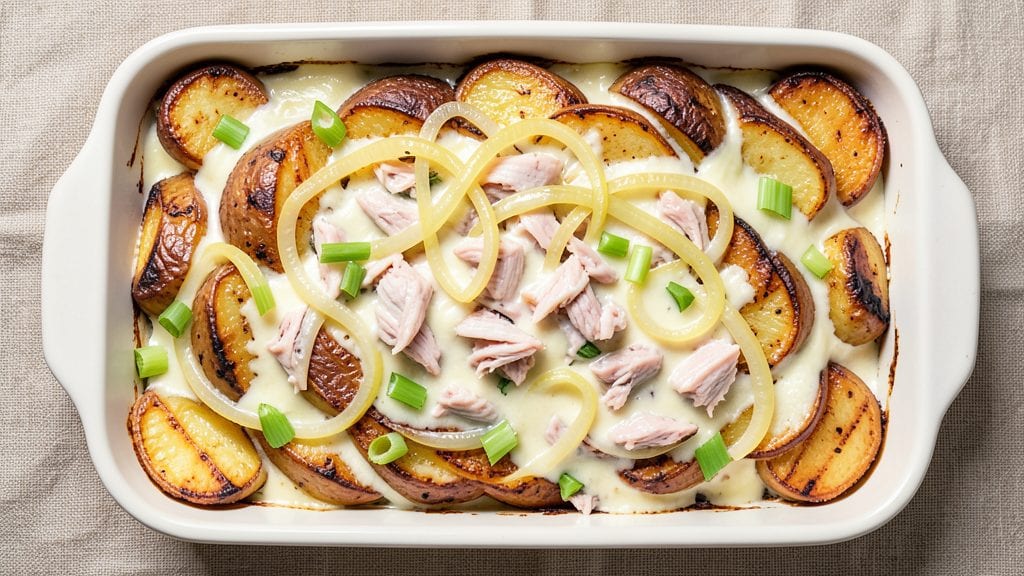
This tuna casserole no-soup recipe delivers all the comforting flavors of classic casseroles—creamy, crispy, and satisfying—without a single drop of soup.
After years of perfecting this dish, I’ve developed a method that layers tender potatoes, flaky tuna, and a rich cream sauce, all topped with a golden, crackly crust that makes it feel like a restaurant-worthy meal.
The secret lies in the right balance of ingredients and baking time, ensuring every bite is tender yet crispy at the edges.
What sets this recipe apart is its simplicity and foolproof technique. You’ll start by sautéing onions and celery for depth of flavor, then layer everything in a baking dish—no soup needed. The cream sauce binds everything together, while the crispy top adds texture that turns this into a standout dish.
It’s the kind of meal that feels indulgent but comes together in under an hour, making it perfect for busy weeknights or family dinners.
The result is a creamy, hearty casserole with a crispy golden crust that holds up beautifully, even when serving a crowd. The potatoes stay tender, the tuna remains flaky, and the sauce is rich without being heavy.
This recipe is versatile too—add peas, mushrooms, or even a sprinkle of cheese for extra flavor. It’s comfort food at its finest, with minimal effort and maximum satisfaction.
Ready to make dinner feel like a celebration? This tuna casserole no-soup recipe is your go-to for a dish that’s as comforting as it is impressive. Let’s get started—your taste buds will thank you.
Ingredients for tuna casserole no soup
Pantry staples and fresh ingredients combine for a creamy, crispy tuna casserole without soup.
| Ingredient | Amount | Notes |
|---|---|---|
| Russet Potatoes 🥔 | 3 lb | Peeled, thinly sliced for even cooking |
| Flaked Tuna 🐟 | 2 cans | High-quality, drained well |
| Yellow Onion 🧅 | 1 whole | Finely diced for aromatic base |
| Celery Stalks 🥬 | 3 whole | Diced small for classic flavor |
| Heavy Cream 🥛 | 1 cup | Full-fat for rich, creamy texture |
| Mayonnaise 🥫 | ½ cup | For smooth, velvety sauce |
| Butter 🧈 | ½ cup | Melted, unsalted for crispy top |
| All-Purpose Flour 🌾 | ½ cup | For golden, crackly crust |
| Garlic Cloves 🧄 | 4 cloves | Minced for aromatic depth |
| Salt 🧂 | 1 ½ tsp | Kosher or sea salt preferred |
| Black Pepper 🌶️ | ½ tsp | Freshly ground for best flavor |
| Dried Parsley 🌿 | 1 tsp | For fresh, herbaceous finish |
| Breadcrumbs 🍞 | ½ cup | Panko for extra crispiness |
The potatoes are the foundation—Russet delivers that ideal fluffy texture. Grab the organic variety at Whole Foods if you want to splurge, but standard Russets work perfectly. Thinly slicing them ensures even cooking so every bite stays tender. The tuna should be high-quality, flaked—avoid the chunky kind, as it won’t blend smoothly into the creamy sauce. For the onion and celery, freshly diced is key; pre-chopped mixes often contain fillers that dilute flavor. If you're short on time, Trader Joe's pre-diced celery is a solid shortcut.
No heavy cream? Half-and-half plus a splash of milk works in a pinch, though the texture will be slightly lighter. Swap mayo for Greek yogurt if you prefer tangier flavor, but reduce by 1 tbsp to account for moisture. For the crispy top, butter and flour are non-negotiable—this is what creates that golden, crackly crust. If you don’t have panko, regular breadcrumbs toasted in the oven will do, though the texture won’t be quite as crisp. The garlic? Freshly minced makes all the difference, but jarred works if you're in a hurry (just drain it well).
This casserole reheats beautifully—350°F for 20-25 minutes until bubbly. Store leftovers in an airtight container for 4-5 days in the fridge, or freeze portions for up to 3 months. For meal prep, assemble the dish ahead of time and refrigerate overnight—the flavors meld even better. The crispy top can be remade by sprinkling extra breadcrumbs and baking for 5 minutes if you're reheating. Portion into individual containers for easy grab-and-go lunches all week.
Why You'll Love This Recipe
- One-Pan Magic: I swear by this for lazy nights—just dice the potatoes, sauté the onions and celery, dump everything in one pan, and let the oven do the work. No chopping boards left out for hours, no extra pots to wash.
- Creamy Crispy Contrast: That golden crust on top while the potatoes stay fluffy inside? It’s the heavy cream and tuna working together. Honestly, the first time I tried this, I almost didn’t add the cream—big mistake.
- Lunchbox Hero: Between us, this reheats like a dream. Pack the leftovers in a thermos, and it’s a solid lunch for work or school. My kids actually ask for it, which is saying something.
- Budget Win: Russets and canned tuna keep this dish cheap without sacrificing flavor. I’ll be real: it’s the kind of meal that stretches across three nights without feeling like a chore.
Step-by-step instructions for tuna casserole no-soup recipe
Here's how to create a creamy, comforting tuna casserole with a golden, crispy top—no soup needed.
Prepare the Potato Base
Peel the 3 lb russet potatoes and slice them into ¼-inch thick rounds for even cooking. Spread them out on a baking sheet and toss with 1 teaspoon salt—this helps draw out excess moisture before baking. Bake at 400°F for 20-25 minutes until the edges begin to soften but the centers remain slightly firm. You want them tender but not mushy, as they'll finish cooking in the oven later.
While the potatoes bake, finely dice the 1 whole yellow onion and 3 whole celery stalks into small, even pieces. Mince the 4 cloves garlic and set aside. These aromatics form the flavor foundation of the casserole, so take your time to get them uniformly diced. This ensures they cook evenly and don't create any bitter spots.
Build the Creamy Sauce Mixture
In a large mixing bowl, combine the 2 cans drained flaked tuna, 1 cup heavy cream, and 0.5 cup mayonnaise. Stir until the tuna is fully coated and the mixture is smooth. Add the diced onion, celery, minced garlic, 1.5 teaspoons salt, 0.5 teaspoon black pepper, and 1 teaspoon dried parsley. Mix well to distribute the flavors evenly throughout.
In a separate bowl, whisk together the 0.5 cup all-purpose flour and 0.5 cup melted butter until smooth. This creates a roux-like mixture that will thicken the sauce and add richness. The melted butter should be fully incorporated—no lumps—so the sauce remains velvety rather than grainy.
Assemble and Bake for Creamy Perfection
Preheat your oven to 375°F. In a 9x13-inch baking dish, layer half of the baked potatoes, followed by half of the tuna mixture. Repeat with the remaining potatoes and sauce, pressing down gently to ensure even distribution. The layers should be compact but not forced—this prevents the casserole from becoming watery during baking.
Sprinkle the 0.5 cup breadcrumbs evenly over the top of the casserole. This creates the crispy crust that sets this recipe apart from traditional soup-based versions. Bake uncovered for 25-30 minutes until the top is golden brown and the edges begin to bubble. The breadcrumbs should be crispy to the touch, while the center remains creamy and warm.
Rest and Serve for Maximum Comfort
Remove the casserole from the oven and let it rest for 10 minutes before serving. This allows the layers to set slightly, making it easier to slice without falling apart. The creamy sauce will thicken further as it cools, ensuring each bite delivers that rich, comforting texture.
Serve warm with a side of steamed green beans or a simple garden salad. The crispy breadcrumb topping contrasts beautifully with the creamy tuna mixture, while the tender potatoes provide hearty satisfaction. This no-soup version delivers all the classic comfort of tuna casserole without the watery element—just pure, creamy goodness.
Pro Tips For Making Tuna Casserole No Soup
- PARBOIL POTATOES FIRST: I learned this the hard way—skipping the parboil leads to dry, gummy potatoes. Cut them into ½-inch cubes, boil in salted water for 5 minutes, then drain. This keeps them tender without turning to mush when baked.
- DON’T SKIP THE SOAK: Soak flaked tuna in cold water for 10 minutes before mixing it in. This removes excess salt and fishy taste—trust me, your casserole will taste fresher. Drain well afterward.
- SAUTÉ ONIONS LOW AND SLOW: After chopping the onion and celery, cook them in butter on medium-low heat for 8-10 minutes. High heat burns them before they soften, and you’ll end up with bitter, charred bits in your casserole.
- USE HALF-AND-HALF FOR CREAM: I was skeptical until I tried it—swap heavy cream for a 50/50 mix with milk. It’s lighter, still rich, and prevents the casserole from feeling too heavy. (Your future self will thank you.)
Storing and reheating this recipe
Refrigerator Storage
Store your tuna casserole in an airtight container for up to 4-5 days in the fridge. I always use glass Pyrex dishes because they maintain temperature better than plastic and are easier to reheat.
Let the casserole cool completely before transferring—this prevents condensation from making the breadcrumb topping soggy. The flavors actually deepen overnight, so leftovers often taste even better the second day. 🥫
Freezer Prep Tips
For long-term storage, freeze portions in single-serving glass containers or heavy-duty freezer bags. I recommend leaving 1 inch of headspace to prevent expansion cracks. The crispy top will soften slightly after freezing, so I always add an extra ¼ cup breadcrumbs before reheating to restore that golden crunch.
Label with the date—this casserole keeps well for up to 3 months without losing texture. ❄️
Oven Reheating Method
My preferred way to reheat is in a 375°F oven for 20-25 minutes until bubbly. Cover loosely with foil during the first 10 minutes to prevent over-browning, then uncover to crisp the breadcrumb topping.
For extra moisture, add 2 tablespoons milk or cream before reheating—this helps restore the creamy texture. Stir halfway through for even heating. 🔥
Microwave Shortcut
For quick reheating, cover the casserole with a damp paper towel and microwave in 1-minute intervals on 50% power. Stir between each interval to redistribute heat evenly.
The microwave tends to dry out the breadcrumbs, so I always add 1 tablespoon cream and 1 tablespoon butter before reheating to compensate. This method works best for individual portions. ⚡
Reviving the Crispy Top
If the breadcrumb topping loses its crunch after reheating, sprinkle 2 tablespoons fresh breadcrumbs and broil for 2-3 minutes until golden. For extra richness, brush with melted butter before broiling.
This trick works wonders for restoring that satisfying texture without needing to remake the entire dish. The secret is speed—broil on high and watch closely to avoid burning. 💫
Meal Prep Strategy
Assemble the casserole ahead of time and refrigerate overnight before baking. This allows flavors to meld beautifully, and the potatoes will be even more tender. For meal prep, bake the full dish, then portion into individual containers with a sprinkle of extra breadcrumbs on top.
Reheat each serving separately for best results—this keeps the center creamy while crisping the edges. 📅
Nutrition facts
Frequently asked questions
Why does this recipe skip the traditional soup base?
This version eliminates soup to create a richer, creamier texture without watering down the flavors. The heavy cream and mayo mixture binds everything together while the crispy breadcrumb topping adds satisfying crunch. The potatoes stay tender, and the tuna remains flaky—just like classic versions, but with more concentrated flavor and better texture.
Can I use canned tuna in water instead of oil?
Yes, but drain it thoroughly and pat dry with paper towels to remove excess moisture. The sauce will still work, though oil-packed tuna adds subtle richness. For best results, use high-quality canned tuna in oil and reduce the mayo slightly to balance the fat content. The texture difference is minimal if you follow these adjustments.
How do I keep the breadcrumb topping extra crispy?
Bake the casserole uncovered for the full 25-30 minutes to allow moisture to evaporate. For extra crunch, toast the breadcrumbs in a dry pan for 2-3 minutes before sprinkling on top. Also, avoid opening the oven door during the last 10 minutes of baking—heat loss makes the topping soggy.
What can I add to make this dish more filling?
Try adding 1 cup frozen peas or ½ cup sliced mushrooms to the tuna mixture for extra volume. For protein, stir in ½ cup cooked chicken or ½ cup shredded cheese on top before baking. These additions bulk up the dish while keeping the creamy texture intact.
Is this recipe suitable for a casserole dish or only a baking pan?
This works perfectly in both! Use a 9x13-inch baking dish for the standard recipe, or transfer to a 7x11-inch casserole dish for smaller servings. If using a casserole dish, reduce baking time by 5-7 minutes and cover loosely with foil during the last 10 minutes to prevent over-browning. The crispy top still forms beautifully.