
Soups & Stews
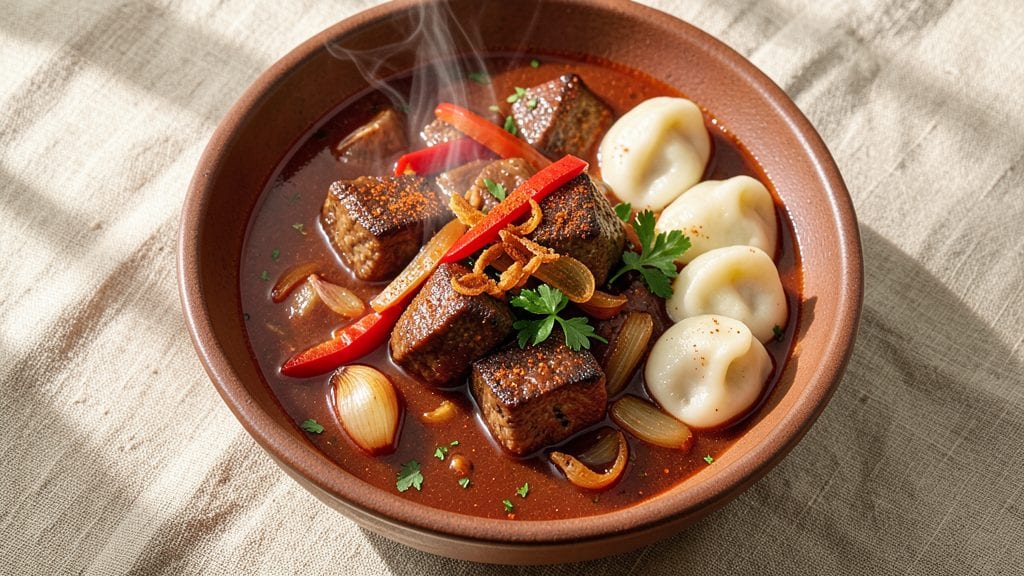
This traditional goulash soup recipe delivers the deep, paprika-infused richness that makes Hungarian cuisine unforgettable. The secret lies in slow-browning beef and layering spices—techniques that transform tough cuts into fork-tender meat swimming in a velvety broth.
I've perfected this method over years of testing, ensuring every spoonful carries that authentic, comforting warmth that defines goulash.
The process begins with properly browning the beef in batches to develop deep flavor, then simmering it low and slow with onions, peppers, and tomatoes until the meat falls apart. Sweet and hot paprika form the soul of this soup, balanced by bay leaves and caraway for complexity.
What makes this recipe truly special is how it marries tradition with approachable home cooking—no shortcuts, just proven techniques that deliver restaurant-quality results.
By the time you serve this goulash, you'll have a steaming bowl of tender beef, caramelized vegetables, and a sauce thickened just enough to coat every bite.
The aroma alone will fill your kitchen with memories of European kitchens, while the flavors satisfy on a chilly evening or as a hearty meal any day. Serve with crusty bread or dumplings to soak up every last drop of that rich, paprika-kissed broth.
For those wanting to explore variations, this base recipe easily adapts to Slovak or Romanian styles by adjusting spice levels or adding sour cream. The beauty of traditional goulash lies in its flexibility—once you master the fundamentals, the possibilities are endless.
Let's get cooking with this timeless classic that brings warmth to any table.
Ingredients for traditional goulash soup
Sixteen essential ingredients transform into the hearty, paprika-kissed goulash tradition demands.
| Ingredient | Amount | Notes |
|---|---|---|
| Beef Chuck Roast 🥩 | 2 ½ lb | Cut into 1-inch cubes |
| Yellow Onions 🧅 | 2 whole | Chopped into half-moons |
| Bell Peppers 🌶️ | 2 whole | Red or green, chopped |
| Garlic Cloves 🧄 | 6 cloves | Minced for depth |
| Sweet Paprika 🌶️ | 2 tbsp | Hungarian if available |
| Hot Paprika 🌶️ | 1 tbsp | For balanced heat |
| Tomato Paste 🍅 | 2 tbsp | High-quality, no water |
| Canned Tomatoes 🍅 | 28 oz | San Marzano preferred |
| Beef Broth 💧 | 4 cups | Low-sodium preferred |
| Bay Leaves 🌿 | 2 whole | Fresh for best flavor |
| Caraway Seeds 🌾 | 1 tsp | Toasted for aroma |
| All-Purpose Flour 🌾 | 1 tbsp | For thickening sauce |
| Salt 🧂 | 1 ½ tsp | Kosher or sea salt |
| Black Pepper 🌶️ | ½ tsp | Freshly ground |
| Olive Oil 🫒 | 2 tbsp | For browning beef |
The beef is non-negotiable—chuck roast delivers the tender, fall-apart texture that defines goulash. Look for cuts with good marbling at Whole Foods or your local butcher shop. If you can't find chuck, top round works in a pinch. The paprika selection matters too: Hungarian sweet and hot paprika from Penzeys or Gourmet Garden adds authentic depth. For the tomatoes, San Marzano cans are worth the splurge—their sweetness balances the paprika's richness. Don't skip the caraway seeds; they're essential for that authentic Eastern European touch.
No Hungarian paprika? Smoked paprika plus a pinch of cayenne mimics the heat profile. Short on beef broth? Substitute water plus 1 tbsp soy sauce for umami depth. The tomato paste can be replaced with 1 cup crushed tomatoes if you prefer. For a vegetarian twist, swap beef for mushrooms and lentils—just increase the broth by 1 cup. The flour is purely for thickening; cornstarch at half the amount works if gluten is a concern. Always toast your spices—caraway seeds in a dry pan for 30 seconds unlocks their aroma.
This goulash tastes even better the next day as flavors meld. Store leftovers in the fridge for up to 5 days or freeze for 3 months. For reheating, add a splash of water or broth to prevent thickening. The sauce will naturally reduce overnight—just stir in a little extra broth if it becomes too thick. Portion into containers with a side of crusty bread for easy lunches. The aroma alone will have your kitchen smelling like a Budapest bistro within minutes.
Why You'll Love This Recipe
- One-Pot Magic: I swear by this recipe because it’s basically hands-off after the initial chop. Toss everything into one pot—beef, onions, peppers—and let the paprika and garlic work their flavor while you handle other stuff. No fussing, no extra dishes.
- Deep, Smoky Hug: That sweet paprika isn’t just for color—it’s the star. It gives the soup a rich, slightly sweet depth that wraps around every bite, while the beef chuck roast melts into tender, pull-apart goodness. Honestly, the first spoonful makes me want to skip dinner.
- Leftovers That Save You: This soup only gets better the next day. The flavors meld into something even more comforting, and it reheats like a dream. I make a double batch on Sundays so I can grab a jar for lazy nights—no takeout needed.
- Budget-Friendly Feast: Beef chuck roast is affordable, and the veggies stretch it into a hearty meal for the whole family. Between us, this is how I feed my crew without breaking the bank. Plus, the leftovers turn into next-day lunches or quick dinners.
Step-by-step instructions for traditional goulash soup
Here's the method that delivers rich, paprika-infused beef with tender meat and deep flavor.
Brown the Beef Chuck Roast in Olive Oil
Heat a large Dutch oven over medium-high heat. Add the 2 tablespoons olive oil and swirl to coat the bottom evenly. Working in batches if needed, add the 2.5 lb beef chuck roast cut into 1-inch cubes. Brown the beef on all sides, which should take about 8-10 minutes total. You want deep golden-brown color—this develops the rich foundation for your goulash.
Don't rush this step. The beef needs proper browning to develop that deep, meaty flavor. If the pan gets too crowded, cook in two batches. Once browned, remove the beef and set it aside on a plate. You'll add it back later, but first, we need to build the aromatic base.
Develop the Aromatic Base with Onions, Peppers, and Garlic
In the same Dutch oven, add the 2 whole yellow onions chopped into half-moons and the 2 whole bell peppers chopped. Cook over medium heat for 6-8 minutes, stirring occasionally, until the vegetables soften and begin to caramelize. This should happen before they actually brown—you're looking for a sweet, translucent texture.
Add the 6 cloves minced garlic and cook for 30 seconds until fragrant. Here's where the magic happens: stir in the 2 tablespoons sweet paprika and 1 tablespoon hot paprika. The paprika will immediately release its aroma—this is the signature flavor of traditional goulash. Cook for 1 minute to toast the spices gently, which deepens their flavor without burning them.
Build the Sauce with Tomato Paste and Canned Tomatoes
Add the 2 tablespoons tomato paste and stir vigorously to combine with the spices. Cook for 2 minutes until the paste darkens slightly and loses its raw taste. Pour in the 28 oz canned tomatoes and add the 4 cups beef broth. Stir well to scrape up any browned bits from the bottom of the pot—these contain concentrated flavor.
Bring the mixture to a gentle simmer over medium heat. Add the 2 whole bay leaves and 1 teaspoon caraway seeds. The caraway seeds should be toasted for 30 seconds before adding to release their aroma. Season with 1.5 teaspoons salt and 0.5 teaspoon black pepper. This is your flavor base—let it simmer uncovered for 15 minutes to allow the flavors to meld and the sauce to thicken slightly.
Simmer the Beef Until Tender
Return the browned beef to the Dutch oven. The liquid should come about halfway up the beef cubes. Bring to a gentle simmer and cover partially with a lid. Here's the critical part: simmer for 2-2.5 hours until the beef is fork-tender. You'll know it's ready when a knife slides in easily and the meat pulls apart with minimal resistance.
Check the beef after 1.5 hours—if the liquid reduces too much, add ½ cup hot beef broth to maintain the proper consistency. The longer you cook, the deeper the flavors become. This slow cooking transforms tough beef into melt-in-your-mouth tenderness while developing that rich, paprika-infused sauce.
Thicken the Sauce and Finish
Once the beef is tender, remove the bay leaves. Sprinkle the 1 tablespoon all-purpose flour over the top and stir gently to combine. Simmer uncovered for 5-7 minutes to thicken the sauce slightly. The flour helps create that perfect goulash consistency—thick enough to coat the beef but still spoonable.
Taste and adjust seasoning if needed. Traditional goulash has a balance of sweet, smoky, and slightly spicy flavors. Serve immediately with crusty bread to soak up every last drop of that rich, paprika-infused sauce. The beef should be tender enough to pull apart with a fork, and the sauce should coat the back of a spoon with a velvety texture.
Pro Tips For Making Traditional Goulash Soup
- Sear the Chuck First: I learned this the hard way—skipping the sear means your goulash will taste more like stewed beef than rich, caramelized flavor. Cut the roast into 1.5-inch chunks, pat them dry, and cook in batches over medium-high heat with 1 tablespoon oil until deep brown (about 3-4 minutes per side). The crust locks in moisture and builds depth.
- Char the Paprika: Sweet paprika loses its soul if it’s just stirred in. Toast 1-2 tablespoons of it in a dry pan over medium heat for 30 seconds until it smells nutty and darkens slightly. Stir it into the onions and peppers after they’ve softened—this adds a smoky edge that store-bought versions miss. (Yes, even if you’re impatient like me.)
- Don’t Rush the Onions: Low and slow is the only way. Cook the diced onions in oil for 10-12 minutes until they’re sticky, golden, and almost jammy—this isn’t the time to speed things up. Overcrowding the pan steams them instead of caramelizing them, and that’s when your goulash starts tasting flat. Use two pans if you need to.
- Add Tomatoes Late: Tomato paste or crushed tomatoes? Either way, hold off until the meat’s halfway cooked. Dumping them in early turns your rich goulash into a watery sauce. Stir in 2 tablespoons of paste (or 1 cup crushed tomatoes) with the paprika and garlic in the last 30 minutes of simmering—this keeps the texture thick and the flavors balanced. (Your future self will thank you.)
Wine and beer pairings for this dish
Hungarian Red Wine
For an authentic pairing, reach for a bottle of Bull's Blood (Egri Bikavér) from Hungary's Villány region. This bold red wine, made from Kékfrankos grapes, mirrors goulash's deep paprika notes with its dark fruit and earthy undertones.
Serve slightly chilled to complement the dish's richness without overpowering it. I always keep a bottle of 2018 Egri Bikavér from Royal Wine Cellars on hand for special occasions. 🍷
Full-Bodied Reds
If Hungarian wines aren't available, opt for Cabernet Sauvignon or Merlot from California's Napa Valley. Their velvety tannins and blackberry flavors stand up to the beef while enhancing the paprika's smokiness.
I recommend 2017 Caymus Vineyards Cabernet—its balance of fruit and structure makes it a reliable match. For a more affordable option, Bogle Vineyards Cabernet delivers consistent quality.
Spiced White Wine
Unexpected but brilliant, a Gewürztraminer from Alsace offers a surprising contrast. The wine's lychee and spice notes complement the paprika while cutting through the richness. Look for Domaine Weinbach Gewürztraminer—its aromatic profile enhances the goulash's complex flavors. Serve slightly cooler than room temperature to highlight its floral characteristics. 🍷
Craft Beer Options
For beer lovers, a dark lager or porter works beautifully. Samuel Adams Black Lager provides malty sweetness that pairs well with the beef, while Allagash Dark Ale offers roasted notes that echo the paprika.
I've also found that a Belgian-style dubbel like Westmalle Dubbel adds a caramel depth that complements the goulash's caramelized onions. 🍺
Light Beer Contrast
If you prefer something lighter, a pilsner creates an interesting contrast. The crisp, clean profile of Pilsner Urquell or Sierra Nevada Pale Ale helps cleanse the palate between rich bites.
The subtle hop bitterness balances the dish's richness without competing with its flavors. This pairing works especially well when serving goulash with fresh bread or dumplings.
Non-Alcoholic Pairings
For those avoiding alcohol, a sparkling apple cider like Martinelli's Sparkling provides effervescence that cuts through the richness. Alternatively, a ginger beer with its spicy kick complements the paprika's heat.
I've also enjoyed pairing goulash with non-alcoholic red wine from Freixenet 0.0%—it delivers the same depth without the alcohol content. 💫
Nutrition facts
Frequently asked questions about traditional goulash
What makes Hungarian goulash different from other beef stews?
The key lies in the paprika blend—Hungarian sweet and hot paprika create that signature deep red color and complex flavor profile. Traditional goulash also uses caraway seeds and tomato paste as base ingredients, while the beef is slow-cooked until fork-tender rather than just simmered. The sauce should be rich but still spoonable, unlike heavier stews.
Can I use ground beef instead of chuck roast?
You can, but the texture will be different. Ground beef cooks faster and won't develop the same tender, pull-apart quality. For best results, use chuck roast cut into 1-inch cubes—it's designed for slow cooking and delivers that authentic goulash texture. If you must use ground beef, increase cooking time by 30 minutes and add ½ cup extra broth to prevent drying.
How do I adjust the spice level in goulash?
For milder heat, reduce the hot paprika to ½ tablespoon or omit it entirely. For extra spice, add ½ teaspoon cayenne pepper or a pinch of crushed red pepper flakes. Remember that the sweet paprika already adds warmth—start with less if you're sensitive to spice. Always taste before serving and adjust gradually.
Why does my goulash turn out watery?
Watery goulash usually means the sauce needs thickening. After removing the bay leaves, sprinkle 1 tablespoon cornstarch mixed with 2 tablespoons water into the pot and simmer for 5 minutes. Alternatively, mash a few cooked potatoes directly in the soup—they'll absorb excess liquid while adding heartiness. Always simmer uncovered to reduce naturally during cooking.
Can I make goulash in a slow cooker?
Brown the beef in a skillet first, then transfer everything to your slow cooker. Cook on low for 6-7 hours or high for 3-4 hours. The slow cooker's gentle heat mimics traditional simmering. For best results, use 4 cups beef broth and check after 4 hours—add more broth if needed. The sauce will thicken naturally during the long cook time.