
Soups & Stews
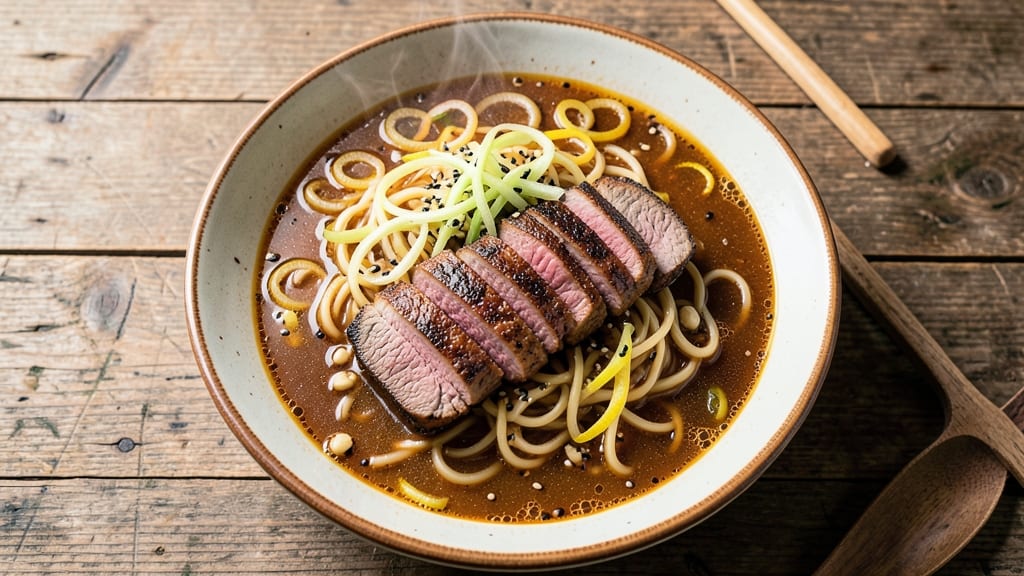
This beef noodle bowl soup recipe delivers restaurant-quality depth in a single pot, where tender beef and silky noodles float in a rich, aromatic broth. The foundation lies in a slow-simmered broth packed with umami from soy sauce, ginger, and star anky, while the beef breaks down into melt-in-your-mouth perfection.
I've perfected this one-pot method over countless weeknight dinners—it's the kind of meal that transforms a simple bowl into a comforting centerpiece.
The beauty of this recipe is in its balance: bold flavors from the broth, tender beef that practically falls apart, and silky noodles that absorb every drop of savory goodness. You'll start with a deep, caramelized broth base, then layer in thinly sliced beef that cooks just until fork-tender.
The egg noodles get just enough time to soften without turning mushy, ensuring each bite is perfectly textured. This method cuts prep time without sacrificing depth—ideal for busy evenings when you still want something special.
What you'll end up with is a steaming bowl of harmony—where each component plays its part. The broth carries layers of ginger-spiced warmth, the beef offers juicy richness, and the noodles provide comforting chew.
Garnish with green onions and sesame seeds for freshness and crunch, then serve with a drizzle of chili oil if you like a hint of heat. The aroma alone will have everyone gathering around the table, and the first bite delivers on that promise of restaurant-quality comfort.
Perfect for feeding a family, meal prepping for the week, or impressing guests with minimal effort. The recipe scales easily, and leftovers taste even better the next day as the flavors meld further. Let's create this one-pot masterpiece that brings warmth and satisfaction to any dinner table.
Ingredients for beef noodle bowl soup
Rich broth, tender beef, and silky noodles—here's what you need for a restaurant-quality beef noodle bowl.
| Ingredient | Amount | Notes |
|---|---|---|
| Chuck Roast 🥩 | 1 ½ lb | Thinly sliced against grain |
| Egg Noodles 🍜 | 8 oz | Fresh or dried, medium width |
| Yellow Onion 🧅 | 1 whole | Thinly sliced, white and yellow parts |
| Fresh Ginger Root 🌿 | 2 tbsp | Finely grated, peeled |
| Garlic Cloves 🧄 | 6 cloves | Minced, not pressed |
| Soy Sauce 🍶 | ½ cup | Light or all-purpose |
| Star Anise Pods 🌟 | 2 whole | Lightly crushed |
| Cinnamon Stick 🌳 | 1 whole | 2-inch length |
| Vegetable Oil 🫒 | 2 tbsp | Neutral high smoke point |
| Dried Shiitake Mushrooms 🍄 | 4 whole | Rehydrated, sliced |
| Green Onions 🧅 | 3 whole | Thinly sliced, white and green parts |
| Sesame Seeds 🌰 | 1 tbsp | Toasted lightly |
| Chili Oil 🌶️ | 2 tbsp | Optional, for serving |
| Water 💧 | 6 cups | Filtered preferred |
| Salt 🧂 | 1 ½ tsp | Diamond Crystal kosher salt |
The chuck roast is the star—look for well-marbled cuts at Whole Foods or your local butcher shop. Thinly slicing it against the grain ensures tender bites. Costco often has pre-sliced chuck for quick prep, but slicing yourself makes all the difference. Fresh ginger and garlic? Trader Joe's sells pre-peeled ginger root, but whole roots last longer. For shiitake mushrooms, dried are more flavorful than fresh—just soak them in hot water for 20 minutes before slicing. The star anise and cinnamon stick add depth without overpowering; grab them in the spice aisle or Asian market.
No fresh ginger? Powdered works at half the amount, but it lacks that bright punch. Skip the star anise? 1 tsp ground coriander mimics its earthiness. For the soy sauce, Kikkoman is reliable, but Lee Kum Kee adds extra umami. The egg noodles can be fresh or dried—just adjust cooking time. Fresh noodles soften in 2-3 minutes, while dried need 8-10. The chili oil is optional but worth it if you love heat; La Choy makes a great jarred version. Prefer no oil? A dash of Sriracha works too.
This soup tastes even better the next day as flavors meld. Store leftovers in airtight containers for 4-5 days in the fridge or freeze for 3 months. For meal prep, portion into bowls with noodles on top—keeps everything separate until reheating. The broth reduces overnight, so add a splash of water when reheating. Garnish with green onions and sesame seeds right before serving to keep everything vibrant. Double the recipe for a crowd—it scales perfectly.
Why You'll Love This Recipe
- Slow-Cooker Magic: I swear, throw in chuck roast, a handful of ginger, and some onions, then walk away. By dinner, you’ve got melt-in-your-mouth beef that practically shreds itself—no standing over a stove required.
- Umami Bomb: That chuck roast? It’s the star—deep, rich, and packed with flavor after hours of simmering. Add fresh garlic and ginger, and suddenly your bowl tastes like a cozy night in, not just another weeknight dinner.
- Lunchbox Hero: Between us, this soup is perfect for packing leftovers. The noodles stay al dente, the beef stays tender, and it reheats like it was just made. My kids actually finish their lunches—shocking, I know.
- Budget Win: Chuck roast is affordable, and a big batch stretches across meals. Honestly, I’ve fed my whole family for days with one recipe, plus it’s the kind of dish that makes grocery night feel like a victory.
Step-by-step instructions for beef noodle bowl soup
Here's how to build a deeply flavorful broth and tender beef in one pot.
Sear and Slice the Chuck Roast
Pat the 1.5 lb chuck roast completely dry with paper towels—this ensures maximum browning. Heat 2 tablespoons vegetable oil in a large Dutch oven over medium-high heat until shimmering. Add the beef in a single layer and sear undisturbed for 4-5 minutes per side until deeply browned, developing that rich Maillard crust we crave.
Here's the thing—don't cut the beef yet. Once it's browned, remove it from the pot and let it rest for 5 minutes. This resting period makes slicing against the grain effortless. Using a sharp knife, slice the beef thinly against the grain into ¼-inch strips. You'll want to work quickly so the meat doesn't cool too much.
Build the Aromatic Base
In the same Dutch oven (those browned bits are flavor gold), add 1 whole yellow onion sliced into ¼-inch strips and 2 tablespoons finely grated fresh ginger root. Cook for 5-6 minutes until the onions soften and turn translucent. Add 6 minced garlic cloves and cook for another 30 seconds until fragrant—this is where the foundation of your soup's depth begins.
Stir in 2 whole star anise pods (lightly crushed) and 1 whole 2-inch cinnamon stick. These spices will infuse the broth with warm, earthy notes. Add 6 cups water and bring to a rolling boil. Once boiling, reduce heat to low, add the sliced beef back to the pot, and skim off any foam that rises to the surface. This step ensures a clean, clear broth.
Simmer the Beef Until Tender
Partially cover the Dutch oven and let the beef simmer gently for 1 hour and 15 minutes. You'll know it's ready when the beef is fork-tender—it should pull apart easily with minimal resistance. If the liquid reduces too much, add ½ cup hot water to maintain the proper consistency. The beef should be submerged, but if it's not, add just enough water to cover it by ½ inch.
Here's where patience pays off. The longer the beef simmers, the more it breaks down into tender, flavorful strands. After 1 hour and 15 minutes, remove the beef with a slotted spoon and set it aside. Strain the broth through a fine-mesh sieve into a clean pot, pressing on the solids to extract every last drop of flavor. Discard the star anise and cinnamon stick—they've done their job.
Prepare the Shiitake Mushrooms and Season the Broth
While the broth simmers, prepare the 4 whole dried shiitake mushrooms by soaking them in 1 cup hot water for 20 minutes until softened. Drain, reserving the soaking liquid, and slice them into ¼-inch strips. In the same pot, heat 1 tablespoon vegetable oil over medium heat and sauté the mushrooms for 4-5 minutes until they release their moisture and turn golden brown.
Return the strained broth to the pot and add the ½ cup reserved mushroom soaking liquid, ½ cup soy sauce, and 1.5 teaspoons salt. Bring to a gentle simmer and add the cooked beef back into the broth. Let it simmer for another 10 minutes to reabsorb the flavors. Taste and adjust the seasoning—you might need a touch more soy sauce or salt to balance the flavors.
Cook the Noodles and Assemble the Bowls
Bring a separate pot of salted water to a boil and cook the 8 oz egg noodles according to package instructions until al dente—they should have a slight bite to them. Drain and rinse briefly under cold water to stop the cooking process. Toss the noodles with 1 tablespoon toasted sesame seeds to add a nutty crunch.
To assemble each bowl, divide the cooked noodles among 4 bowls. Ladle the hot beef broth over the noodles, ensuring each serving has an even distribution of beef and mushrooms. Garnish with thinly sliced green onions and a drizzle of 2 tablespoons chili oil for a spicy kick. Serve immediately while the broth is steaming hot—this is when all the flavors come together in perfect harmony.
Pro Tips For Making Beef Noodle Bowl Soup
- SEAR THE CHUCK ROAST: Chuck roast releases more flavor when it hits 375°F in a hot pan—don’t rush this. I used to walk away while it sizzled, and the meat ended up gray instead of golden. Let it sit undisturbed for 3-4 minutes per side until it’s deep brown, then add your onions and garlic. That crust? It’s what makes the broth sing later.
- GRATE GINGER FINE: Skip the microplane if you’re in a hurry, but don’t just chop it—you’ll taste it. Use the largest holes on a box grater and press hard; you want a paste, not chunks. This isn’t a garnish, it’s the backbone of your broth’s warmth. (Yes, even if you’re impatient like me.)
- SALT THE NOODLES AFTER COOKING: Tossing egg noodles in salted water? You’re missing the point. They’ll absorb flavor better if you finish them in the hot broth at the end, then season with a pinch of salt right in the bowl. Trust me, the difference is noticeable—like the gap between dry pasta and restaurant-quality noodles.
- REST THE MEAT BEFORE SLICING: Cutting that chuck roast fresh out of the pot turns it into a mushy pile. Tent it with foil and let it sit for 10 minutes—this keeps slices clean and juicy. I learned this the hard way after serving shredded beef that fell apart at the first stir. (Your future self will thank you.)
Common mistakes when making this recipe
Overcooking the Beef
This is my biggest rookie mistake—letting the beef simmer too long turns it into tough, stringy shreds instead of tender strands. The goal is 1 hour and 15 minutes max at a gentle simmer (190-200°F).
I learned this the hard way when I walked away for a quick errand and came back to rubbery beef. Use a meat thermometer to check: the beef should reach 195°F internal temperature—any hotter and it'll dry out. 🌡️
Skipping the Sear
If you skip searing the beef, your broth will lack that deep, caramelized richness from the Maillard reaction. Those browned bits on the bottom of the pot? That's where all the flavor lives.
I once made this soup without searing, and while it was still good, it tasted flat compared to when I took the extra 10 minutes to get that perfect crust. Use a large Dutch oven to give the beef enough space to brown properly without steaming.
Ignoring the Resting Time
After searing, the beef needs that 5-minute rest before slicing—it's non-negotiable. I'll admit, I've been guilty of slicing immediately, and the results are always less tender. This resting period lets the meat fibers relax and makes slicing against the grain effortless.
Pro tip: Use a sharp chef's knife and slice at a 45-degree angle for uniform strips. If the beef cools too much while resting, just pop it back in the pot for 2-3 minutes to warm through.
Using Too Much Water
Starting with 6 cups of water gives you enough liquid to work with, but adding more dilutes the flavor. I've made this mistake by doubling the water thinking "more is better," only to end up with a weak, watery broth.
The key is to maintain just enough liquid to cover the beef by ½ inch. If it reduces too much, add hot water gradually—never cold—to maintain temperature. Remember, you're building layers of flavor, not just making soup.
Overcooking the Noodles
Noodles should be al dente with a slight bite, not mushy. I've ruined perfect bowls by overcooking the noodles, which turn to glue in the broth. Follow package instructions closely—usually 8-10 minutes for dried egg noodles.
For fresh noodles, 2-3 minutes is perfect. Always rinse them briefly under cold water after cooking to stop the cooking process immediately. Tossing with sesame seeds right away adds texture and prevents sticking. 🍜
Neglecting the Aromatics
The ginger, garlic, star anise, and cinnamon stick are what give this soup its complex depth. I've made the mistake of rushing through this step, and the broth suffers.
Cook the onions until they're truly soft and translucent (5-6 minutes), then let the garlic and spices bloom for at least 30 seconds. These aromatics need time to release their flavors. Don't skip the star anise and cinnamon—they add warmth without overpowering.
If you're short on time, you can toast the whole spices in the dry pot for 30 seconds before adding water to intensify their flavor.
Nutrition facts
Frequently asked questions
Can I use ground beef instead of chuck roast for this recipe?
Ground beef won't give you the same tender, melt-in-your-mouth texture since it lacks the connective tissue that breaks down during long simmering. For best results, stick with chuck roast—it's perfect for this dish. If you're short on time, try thinly sliced flank steak as a substitute, but it won't be as forgiving with overcooking.
How do I make this recipe vegetarian?
Swap the beef for 12 oz extra-firm tofu or mushrooms like shiitake or portobello. Press and pan-fry the tofu until crispy, or use king oyster mushrooms sliced lengthwise. Boost umami with 1 tbsp soy sauce and 1 tsp mushroom powder in the broth. The noodles and broth will still shine with these plant-based swaps!
Why does my broth taste too salty?
This usually happens when using salty soy sauce or adding too much salt at once. Start with ½ cup soy sauce and taste before adding more. If needed, dilute with ½ cup hot water to balance the flavor. For extra depth without saltiness, add 1 tbsp fish sauce or ½ tsp MSG—they add umami without overpowering.
Can I make this soup in an Instant Pot?
Yes! Sear the beef in the Instant Pot first, then add all broth ingredients and cook on high pressure for 35 minutes. Quick-release the pressure, strain the broth, and finish by sautéing mushrooms. The noodles should be cooked separately—Instant Pot broths can be thinner, so reduce by 10-15 minutes on the stove after pressure cooking.
How do I store leftovers?
Store in airtight containers for up to 4 days in the fridge. Reheat gently on the stove with a splash of water to restore broth consistency. For freezing, portion into bowls with noodles on top—this keeps components separate. Thaw overnight in the fridge and reheat slowly to prevent soggy noodles. Leftovers often taste better as flavors meld!