
Soups & Stews
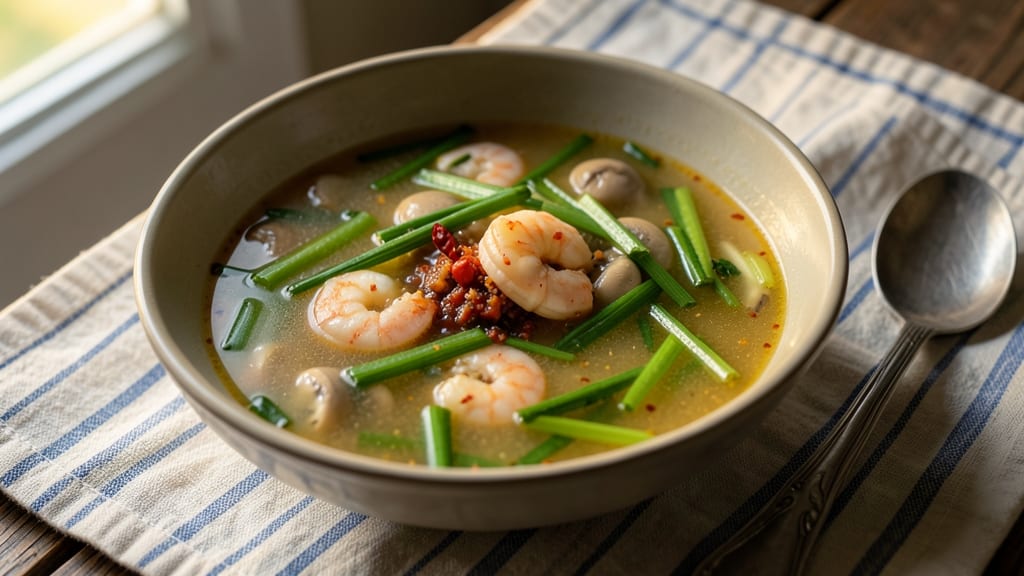
This Tomyam soup recipe delivers the signature tangy, spicy, and aromatic flavors of Thailand in every steaming bowl, using fermented shrimp paste and a precise balance of herbs.
Growing up in Cincinnati, I never imagined I'd master a dish this complex, but the first time I tasted authentic Tom Yum at Portland's Thai Kitchen, I was hooked. The secret lies in the broth—where lemongrass, galangal, and kaffir lime leaves infuse the water with layers of citrusy, peppery depth.
The recipe begins with a foolproof broth that simmers for just 15 minutes, allowing the aromatic ingredients to release their essence without overpowering the delicate shrimp. I've tested this method countless times, and the key is using fresh galangal (or ginger in a pinch) and never overcooking the herbs.
The fermented shrimp paste adds that unmistakable umami punch, while Thai chilies bring the signature heat. For those new to Thai cooking, don't be intimidated—the flavors come together effortlessly once you understand the balance.
What you'll end up with is a restaurant-quality soup that's bright, complex, and perfectly balanced—tangy from the lime, spicy from the chilies, and rich from the shrimp. The broth should be clear but deeply aromatic, with shrimp that's tender yet firm enough to hold its shape.
This version stays true to traditional Tom Yum Nam Pla while being approachable for home cooks. Serve it piping hot with fresh cilantro and lime wedges for that final burst of freshness.
While this recipe focuses on the shrimp version, the same technique works for Tom Yum Goong (with shrimp) or even a vegetarian adaptation using mushrooms. The method scales perfectly for a crowd, and leftovers reheat beautifully—just add a splash of water to restore the broth's depth.
Whether you're hosting a dinner party or simply craving a taste of Thailand, this soup delivers every time. Let's get cooking!
Ingredients for tomyam soup
Four aromatic herbs, two bold pastes, and shrimp that sings with Thai heat.
| Ingredient | Amount | Notes |
|---|---|---|
| Lemongrass Stalks 🌿 | 4 whole | Bruised and cut into 2-inch pieces |
| Galangal Slices 🍃 | 3 whole | Peeled, about 2-inch slices |
| Kaffir Lime Leaves 🍋 | 4 whole | Bruised for aroma |
| Thai Chilies 🌶️ | 3 whole | Stems removed, roughly chopped |
| Fish Sauce 🐟 | 3 tbsp | Red Boat preferred |
| Fermented Shrimp Paste 🦐 | 2 tbsp | Nam Pla brand recommended |
| Shrimp 🍤 | 1 lb | Medium, peeled, deveined |
| Lime Juice 🍋 | ½ cup | Freshly squeezed |
| Coconut Milk 🥥 | ½ cup | Full-fat for creaminess |
| Mushrooms 🍄 | ½ lb | Straw or oyster, sliced |
| Garlic Cloves 🧄 | 4 cloves | Minced for depth |
| Sugar 🍬 | 1 tbsp | White or brown |
| Fresh Cilantro 🌿 | ¼ cup | Chopped for garnish |
| Lime Wedges 🍋 | 4 whole | For serving |
| Water 💧 | 4 cups | Filtered preferred |
The galangal and lemongrass are non-negotiable here—they’re the soul of the broth. Asian markets have the freshest galangal, but if you can’t find it, ginger works in a pinch (though it won’t be exactly the same). Look for bright green lemongrass with no brown spots, and break the stalks to release their oils. Kaffir lime leaves? Freeze any extras—they’ll last months and keep that citrusy aroma. For fermented shrimp paste, Nam Pla is the gold standard, but any good-quality brand will do. The shrimp should be medium-sized—too small, they’ll overcook.
No coconut milk? Light coconut cream works, or even a splash of cream if you’re in a bind. The mushrooms add texture—straw mushrooms are traditional, but shiitake or oyster are great swaps. Short on Thai chilies? Bird’s eye chilies or serrano peppers bring the heat, but adjust to taste. The fish sauce is where the umami magic happens—Red Boat is my go-to, but any reputable brand (like Tiparos) will work. And if you’re feeling fancy, toast the garlic in the broth for an extra layer of flavor—just don’t burn it.
This soup tastes even better the next day, so make a double batch if you can. Store the broth separately if reheating—just add a splash of water to restore its clarity. Freezes beautifully for up to 3 months, though the texture of the shrimp might change slightly. Serve with those lime wedges and a generous sprinkle of cilantro—trust me, it makes all the difference. Leftovers? Add a little water and a pinch of fish sauce to revive the broth’s depth.
Why You'll Love This Recipe
- No Chopping Chaos: I swear by this recipe when I’m too tired to dice anything—just bruise the lemongrass, slice the galangal (or skip it if you’re new), and toss in whole kaffir lime leaves. The broth builds flavor without fuss, and honestly? The soup tastes better for it.
- Umami Bomb: That fish sauce and Thai chilies—oh man, the balance is chef’s kiss. The galangal adds a peppery kick, lemongrass brings citrusy depth, and the lime leaves? They infuse the broth with a bright, almost floral note that makes every sip feel like a hug.
- Lunchbox Hero: Between us, this soup is my go-to for meal prep. It reheats like a dream, keeps for days in the fridge, and I’ll pack it cold in jars for work—just add rice or noodles when I’m ready. My kids even ask for it, and they’re hard to please.
- Pantry Stretch: I make this when I’m low on fresh ingredients because it thrives on bold flavors, not a grocery haul. Fish sauce and chilies are cheap staples, and if I forget galangal, I’ll swap in ginger—still hits the spot. Budget-friendly doesn’t mean boring, especially when the taste is this solid.
Step-by-step instructions for tomyam soup
Here's how to build this aromatic Thai broth from scratch—bold flavors develop as you go.
Build the Aromatic Base
In a medium pot, combine the 4 cups water, 4 whole lemongrass stalks, 3 whole galangal slices, and 4 whole kaffir lime leaves. Bring to a boil over medium-high heat, then immediately reduce to a simmer. Let it cook uncovered for 10 minutes—this draws out the essential oils that give tomyam its signature depth.
Here's the thing—don't rush this step. The galangal and lemongrass need time to infuse the water completely. You'll know it's ready when the liquid smells intensely herbal and slightly citrusy. If you smell any bitterness from the galangal, strain it out immediately—this is the moment that matters.
Add Fermented Shrimp Paste and Chilies
While the base simmers, use a spoon to press the 2 tbsp fermented shrimp paste into the bottom of the pot. This creates a flavor bomb that will dissolve into the broth. Immediately add the 3 whole thai chilies (leave them whole if you prefer milder heat) and the 4 cloves minced garlic. Simmer for 5 minutes—this allows the shrimp paste to develop its umami complexity without overpowering.
Watch carefully here. The shrimp paste should dissolve completely but not brown. If you see any dark spots forming, stir gently to prevent burning. The broth should now have a deep, savory aroma with a hint of funk—this is the foundation of your soup's character.
Incorporate Mushrooms and Shrimp
Add the 0.5 lb sliced mushrooms and simmer for 4-5 minutes until they soften and release their moisture. Then add the 1 lb shrimp and cook for just 2 minutes—they should turn opaque but remain tender. The key is timing: overcooking shrimp turns them rubbery, and we want them to stay delicate.
Here's where it gets fun—the mushrooms should be tender but still hold their shape, and the shrimp should curl slightly at the edges. If you're using straw mushrooms, they'll absorb the broth beautifully; oyster mushrooms add a meatier texture. Either works, but don't skip this step—it builds the soup's body.
Balance with Coconut Milk and Lime
Reduce heat to low and stir in the 0.5 cup coconut milk and 1 tbsp sugar. The sugar isn't just for sweetness—it helps balance the acidity from the lime juice we're about to add. Let it simmer for 3 minutes, then add the 0.5 cup lime juice. Taste immediately—this is your quality control moment.
The soup should now have a perfect balance: tangy from the lime, creamy from the coconut, and funky from the shrimp paste. If it's too acidic, add a pinch more sugar. If it needs more depth, add 1 tbsp fish sauce (you have 2 tbsp total). The coconut milk should be fully incorporated but not broken—stir gently to maintain its creaminess.
Finish and Serve
Divide the soup among bowls and garnish each serving with 0.25 cup chopped fresh cilantro and a whole lime wedge. Serve immediately with steamed jasmine rice—this is traditional, but I like to offer crusty bread on the side too. The aroma alone will draw everyone to the table.
Real talk: the first time you make this, you might think it's too intense. That's normal—tomyam soup is meant to be bold. Let it sit for 10 minutes before tasting again; the flavors will mellow slightly and come together beautifully. The shrimp should be hot but not scalding, and the broth should coat the back of your throat with every sip.
Pro Tips For Making Tomyam Soup
- Bruise the Galangal: Slap the galangal slices hard with the flat side of your knife before slicing—this releases oils that make the soup’s earthy depth sing. I learned this the hard way after making a batch that tasted flat until I tried it.
- Simmer Low and Slow: Once the broth starts bubbling, drop the heat to a whisper—just enough to keep it moving. Tomyam needs time to marry flavors, not burn. I used to rush it, and the result was bitter.
- Toast the Kaffir Lime: Lightly char the lime leaves over a flame or in a dry pan for 10 seconds—they’ll darken slightly and add a smoky note. Skip this, and your soup stays one-dimensional.
- Balance the Fish Sauce: Taste as you go, but don’t overdo it—start with 2 tablespoons, then adjust. Too much turns your fragrant broth into a salty punch. My first batch was a lesson in restraint.
Essential equipment for tomyam soup
Must-Have Pot
Start with a heavy-bottomed stockpot—I swear by my All-Clad 3-quart pot—to maintain even heat distribution while simmering the aromatic base. The depth matters too: a 3-4 quart pot gives you room to work without boiling over when adding shrimp.
If you're cooking for a crowd, scale up to a 5-6 quart Dutch oven like my Le Creuset—it handles the coconut milk beautifully without scorching. 🌡️
Herb Bruiser Tool
Bruising lemongrass and galangal releases their essential oils, but doing it properly requires the right tool. I use a mortar and pestle (like the Kuhn Rikon) for galangal—just press firmly to break the fibers without pulverizing.
For lemongrass, a rolling pin works, but my secret weapon is a heavy-duty meat mallet (I keep one in my kitchen for this exact purpose). Pro tip: Freeze kaffir lime leaves in ice cube trays if you can't use them all—they bruise more easily when frozen. 🍃
Precision Thermometer
A digital instant-read thermometer (I love the Thermoworks Thermapen) ensures your broth stays at 195-205°F—the sweet spot for developing those complex Thai flavors without overcooking. For shrimp, aim for 145°F internal temp—any hotter and they turn rubbery.
I also use a laser thermometer (like the Kizen) to check the heat of fresh chilies if you're adjusting spice levels. Safety first: never guess with seafood temps! 🌡️
Fish Sauce Dispenser
Fish sauce is the flavor glue in tomyam, but measuring 1 tbsp at a time gets messy fast. I keep a small squeeze bottle (like the OXO Good Grips) filled with Red Boat fish sauce in my fridge—it lets me add precise amounts without spills.
For fermented shrimp paste (Nam Pla), a small silicone scraper helps scrape out every last bit from the container. Trust me, those last drops make all the difference in depth. 🦐
Strainer Set
You'll need two strainers: a fine-mesh sieve (for removing galangal and lemongrass after simmering) and a slotted spoon (to fish out whole chilies if you prefer milder heat). My OXO Good Grips collapsible strainer is a game-changer—it fits in my sink and handles the herbs without clogging.
For the final broth, I strain through a cheesecloth-lined colander to catch any lingering bits that might make the soup cloudy. 🧼
Garnish Tools
Fresh cilantro and lime wedges elevate tomyam from good to restaurant-quality. Keep a sharp pair of kitchen shears (I use Mercer Culinary) for chopping cilantro quickly, and a microplane for zesting lime rinds if you want extra brightness.
For serving, I arrange lime wedges on a small wooden board—it adds that authentic Thai street-food presentation. Don't skip the garnish; it's the final flavor pop! 🍋
Nutrition facts
Frequently asked questions
Can I substitute ginger for galangal in this recipe?
You absolutely can! If you can't find galangal, use 1 tbsp freshly grated ginger per 2-inch slice of galangal called for. While ginger won't replicate galangal's unique peppery, citrusy flavor exactly, it'll still give your broth depth. For best results, toast the ginger lightly in a dry pan first to enhance its aroma before adding to the broth.
How spicy is this tomyam soup, and can I adjust it?
The recipe includes 3 whole Thai chilies for a medium heat level—enough to feel the kick but not overwhelming. For milder heat, remove the seeds and membranes first, or use just 1-2 chilies. If you love spice, add 1 extra chili or a pinch of chili flakes at the end. Always taste before serving, as heat preferences vary!
What's the difference between tomyam and tom yum?
Tomyam (or Tom Yam) is the Thai name for this sour-sweet soup style, while tom yum refers to the specific version with shrimp or fish. The key difference is that tomyam nam pla uses fermented shrimp paste (nam pla) for umami, while tom yum goong uses shrimp. This recipe is actually a hybrid—both styles share the same aromatic base but differ in protein.
Can I make this soup vegetarian?
Yes! Swap the shrimp for 0.5 lb firm tofu or mushrooms (like shiitake or oyster). For umami depth, add 1 tbsp soy sauce or mushroom powder when building the broth. The fermented shrimp paste can be omitted, but if you want that funky flavor, use vegetarian fish sauce (like Veganam) instead. The broth technique remains exactly the same.
Why did my broth turn cloudy?
Cloudiness usually means starches from the mushrooms or overcooked herbs released too much fiber. To fix it, strain the broth through a cheesecloth-lined colander or fine-mesh sieve. For next time, simmer mushrooms separately for 2-3 minutes before adding to the broth, and remove galangal/lemongrass immediately after the initial 10-minute infusion. The broth should be clear but still aromatic.