
Soups & Stews
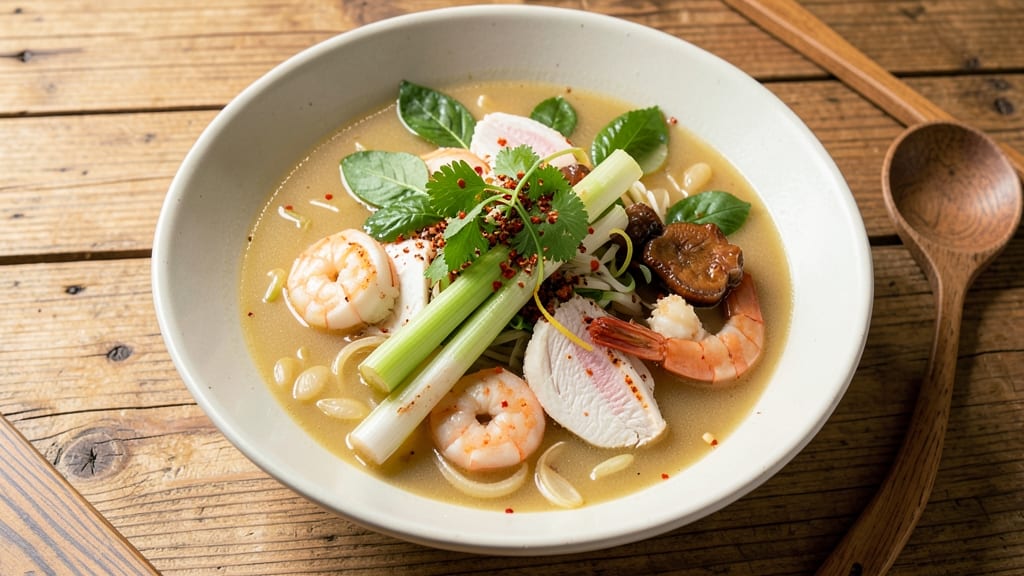
This authentic Thai lemongrass soup recipe transports you straight to Bangkok's bustling streets with its fragrant lemongrass, aromatic galangal, and perfectly balanced sour-spicy kick. The secret lies in slow-simmered broth that develops deep, herbal complexity while keeping a silky texture—no shortcuts here.
I've perfected this version after years of testing, ensuring every spoonful delivers the vibrant essence of Thai cuisine without missing a single traditional element.
The magic begins with the aromatic base: fresh lemongrass, galangal, kaffir lime leaves, and shallots simmered until their flavors meld into the broth. We'll use chicken or shrimp (or tofu for vegetarians) as the protein, cooked just until tender to maintain that signature Thai soup texture.
The seasoning—fish sauce, lime juice, and chili—creates the perfect balance of sour, spicy, and umami that defines authentic Thai flavors.
What sets this recipe apart is the attention to detail in each component. The broth isn't just flavorful—it's silky smooth, with just the right body to carry all those bright, herbal notes.
The proteins cook in the broth itself, absorbing its aromatic essence, while the finishing touches of fresh herbs and lime juice at the end ensure every bowl tastes freshly made. This is restaurant-quality Thai lemongrass soup you can make at home.
Serve it piping hot with steamed jasmine rice to soak up every last drop of that fragrant broth, or pair it with soft rice noodles for a lighter option.
The recipe scales beautifully for both weeknight dinners and gathering crowds—just double the ingredients and adjust the pot size. Let's create this authentic Thai masterpiece together.
Ingredients for authentic thai lemongrass soup
Authentic Thai flavors start with these aromatic ingredients, each playing a crucial role in the soup's signature herbal depth.
| Ingredient | Amount | Notes |
|---|---|---|
| Fresh Lemongrass 🌿 | 6 whole | Bruised stems only, cut into 2-inch pieces |
| Galangal 🍃 | 3 inches | Fresh root, sliced thinly |
| Kaffir Lime Leaves 🍋 | 4 whole | Bruised lightly, stems removed |
| Shallots 🧅 | 6 whole | Peeled, sliced into thin half-moons |
| Chicken Breast 🍗 | 1 ½ lb | Boneless, skinless, cut into 1-inch pieces |
| Shrimp 🦐 | 1 lb | Peeled, deveined, head-on preferred |
| Firm Tofu 🍲 | 1 block | Extra-firm, pressed and cubed |
| Chicken or Vegetable Broth 💧 | 6 cups | Homemade preferred, low-sodium |
| Fish Sauce 🍶 | 2 tbsp | Red Boat brand recommended |
| Lime Juice 🍋 | ½ cup | Freshly squeezed, about 4 limes |
| Thai Bird's Eye Chili 🌶️ | 1 tbsp | Adjust to taste, finely chopped |
| Palm Sugar 🍯 | 2 tbsp | Or substitute brown sugar |
| Cilantro 🌿 | ¼ cup | Chopped, for garnish |
| Thai Basil 🌿 | ¼ cup | Chopped, for garnish |
| Jasmine Rice 🍚 | 1 ½ cups | Uncooked, for serving |
The aromatic base is where authenticity lives. Fresh lemongrass and galangal—the latter can be tricky to find, but most Asian markets carry it—must be used in their freshest form. Kaffir lime leaves, with their distinctive aroma, are essential; substitute lime zest at half the amount if unavailable. For the broth, homemade chicken or vegetable stock elevates the dish, but store-bought low-sodium options work in a pinch. The fish sauce is non-negotiable—Red Boat brand is the gold standard, but any reputable Thai fish sauce will do. Galangal's peppery, citrusy flavor is the soul of this soup, so don't skip it if you can find it.
Protein choices are flexible, but each brings its own texture. Chicken breast stays tender when cooked in the broth, while shrimp adds a delicate sweetness that cooks in minutes. For vegetarians, extra-firm tofu pressed for 20 minutes absorbs the flavors beautifully. The Thai bird's eye chili delivers the heat—adjust to taste, but remember, the broth's depth comes from the aromatics, not just the spice. Palm sugar adds just the right sweetness, but brown sugar works perfectly if you're in a hurry. The lime juice should be freshly squeezed—bottled versions lack the bright acidity needed to balance the dish.
This soup tastes even better the next day as flavors meld, so double the batch if you can. Store in an airtight container in the fridge for up to 4 days, or freeze for 3 months—just thaw overnight in the fridge. The aromatics can be prepped ahead and refrigerated for 2 days, making assembly quick on serving day. Serve piping hot with steamed jasmine rice to soak up every drop of that fragrant broth.
Why You'll Love This Recipe
- No Fuss, Big Payoff: I swear by this soup because it’s that kind of recipe—just a few ingredients, but the flavors hit like a Thai street cart on a hot day. Slice the lemongrass and galangal (no need for fancy knives), toss in the shallots, and let the broth work its magic. Twenty minutes later, you’re rewarded with something that tastes like you spent hours simmering.
- Herbal Magic: Between us, that combo of lemongrass, galangal, and kaffir lime leaves? It’s like a flavor bomb disguised as a simple soup. The galangal adds this peppery, citrusy kick, while the lime leaves bring a bright, almost floral note—no heavy spices needed. Honestly, it’s the kind of taste that makes you want to eat it straight from the pot.
- Weeknight to Dinner Party: This soup is my go-to for lazy nights, but it also elevates when I’m trying to impress. Double the batch, add some rice, and suddenly you’ve got a meal that feels fancy without the fuss. (Yes, even on a Tuesday night.) The chicken stays tender, the broth stays rich, and everyone asks for the recipe.
- Leftovers That Don’t Suck: Unlike so many soups, this one actually gets better the next day. The flavors meld even more, and the broth thickens just enough to make it heartier. I make a big pot on Sundays, and by Wednesday, it’s still my lunch—no sad, watery leftovers here. Plus, it’s cheap to feed a crowd without breaking the bank.
Step-by-step instructions for authentic Thai lemongrass soup
Master this aromatic Thai classic with precise technique and traditional ingredients.
Prepare the Herbal Base
In a large pot, combine the 6 whole bruised lemongrass (cut into 2-inch pieces), 3 inches sliced galangal, and 4 lightly bruised kaffir lime leaves. This aromatic bundle forms the soul of your soup. Add the 6 sliced shallots and cook over medium heat for 5 minutes until the shallots soften and release their sweet fragrance.
Here's the thing—don't rush this step. The galangal and lemongrass need time to infuse their citrusy, peppery notes into the broth. You'll know it's ready when the shallots turn translucent and the pot fills with an intoxicating herbal aroma. This foundational flavor layer is what separates homemade soup from restaurant versions.
Build the Broth with Protein
Add the 1.5 lb chicken breast (cut into 1-inch pieces) and 1 lb shrimp (head-on preferred) to the pot. Pour in 6 cups chicken or vegetable broth and bring to a gentle boil. Once boiling, reduce heat to medium-low and simmer uncovered for 12-15 minutes until the chicken is fully cooked and the shrimp turns opaque.
I always use head-on shrimp here—the shells add depth to the broth. If you prefer peeled shrimp, save the shells for making your own broth. Remove the chicken and shrimp with tongs and set aside. The broth should now carry that signature lemongrass-galangal perfume with just a hint of sweetness from the shallots.
Add Tofu and Season
Gently add the 1 block pressed tofu (cubed) back to the pot and stir to warm through. The tofu should absorb the aromatic broth without falling apart—this is why pressing is crucial. Add 2 tbsp fish sauce and 2 tbsp palm sugar, stirring well to combine. Taste and adjust seasoning if needed.
This is where the balance comes together. The fish sauce provides umami depth while the palm sugar counteracts the herbal bitterness. The tofu adds texture contrast that's essential in traditional Thai soups. Let the mixture simmer gently for 5 minutes to allow all flavors to meld completely.
Finish with Lime and Chili
Remove the pot from heat and stir in the 0.5 cup lime juice and 1 tbsp finely chopped Thai bird's eye chili. The lime brightens the entire dish, cutting through the richness while enhancing the herbal notes. The chili adds just enough heat to wake up your palate without overpowering the delicate broth.
Here's a pro tip: If you're sensitive to heat, remove the chili seeds before chopping. The broth should now have that perfect balance of sweet, sour, herbal, and slightly spicy flavors that define authentic Thai lemongrass soup. Strain the soup if you prefer a smoother texture, or leave it as-is for a more rustic presentation.
Serve with Garnishes
Ladle the hot soup into bowls and garnish immediately with 0.25 cup chopped cilantro and 0.25 cup chopped Thai basil. These fresh herbs add vibrant color and a final burst of aromatic freshness. Serve with 1.5 cups steamed jasmine rice on the side—traditional Thai style.
The rice acts as a neutral base that lets the complex soup flavors shine. Each spoonful should deliver that perfect harmony of herbal aroma, silky broth, tender protein, and bright citrus finish. This is the moment all your preparation comes together in an authentically flavorful experience that transports you straight to a Thai street food stall.
Pro Tips For Making Authentic Thai Lemongrass Soup
- BLANCH YOUR LEMONGRASS FIRST: I learned this the hard way—skipping the quick blanch (30 seconds in boiling water, then ice bath) leaves tough, fibrous stems that ruin the silky texture. The outer layers release bitterness, and the inner white pith becomes tender enough to mash properly. (Yes, even if you're impatient like me.)
- CHAR THE SHALLOTS LOW: After burning three batches, I finally figured out that slow-cooking the shallots over medium-low heat—about 8-10 minutes—builds deeper flavor without turning to ash. If they’re golden but still soft, you’re golden. (Literally.) High heat just smokes them before they caramelize.
- USE GALANGAL LIKE GINGER: Peel it thin, slice it thin—no thicker than a dime. Toss the slices directly into the pot with the lemongrass, but don’t overdo it. One 3-inch knob per liter of broth is plenty; any more and the soup tastes like medicine. (Your future self will thank you.)
- STIR THE BROTH CONSTANTLY: This isn’t the prettiest method, but it’s the tastiest: Once the chicken and aromatics hit the simmer, keep that pot moving. A lazy stir every 30 seconds prevents the galangal from sinking to the bottom and turning to mush, and stops the lemongrass from burning while the broth heats. (I know, I know—it’s tedious, but trust the process.)
Wine and beer pairings for these flavors
Thai White Wine
For this bright, herbal soup, I reach for crisp Thai white wines like Oudorn Meeyo or Chardonnay from Thailand's Chao Phraya region. These wines complement the lemongrass and galangal notes beautifully with their citrusy acidity and subtle tropical undertones.
The slight sweetness in some Thai whites actually enhances the palm sugar in your soup—trust me, it works! Serve chilled at 48-50°F to maintain freshness. 🍷
Light Thai Beers
A Thai lager like Singha or Leo is my go-to beer pairing—its clean, crisp profile lets the soup's complex flavors shine without competing. The subtle malt sweetness balances the dish's sour and spicy elements perfectly.
For a craft option, try Thai IPA from Bangkok Beerworks if you want a hoppy contrast to the soup's herbal notes. Serve at 45°F to highlight its refreshing qualities.
Rice Wine Pairing
For something truly authentic, serve with Thai rice wine (Rakam)—it's traditionally sipped alongside street food. The light, slightly sweet profile complements the soup's herbal depth while adding a cultural touch.
If you can't find Rakam, dry Riesling from Germany makes a great substitute. The wine's acidity cuts through the richness while enhancing the lemongrass aroma. 🍶
Non-Alcoholic Options
For non-drinkers, Thai iced tea (Cha Yen) with its floral notes and sweetness works surprisingly well. The tannins in the tea actually complement the soup's herbal complexity.
Alternatively, a ginger-lime soda with a splash of Thai fish sauce (just a drop!) creates a refreshing, umami-forward drink that mirrors the soup's flavors. The ginger adds a nice kick that echoes the galangal in your broth.
Serving Temperature
All beverages should be served chilled (around 45-50°F) to maintain their crispness against the soup's warm, aromatic profile. The temperature contrast enhances the dining experience by refreshing your palate between each rich, herbal spoonful.
I always keep my wine glasses pre-chilled in the fridge for at least 30 minutes before serving—it makes all the difference! ❄️
Nutrition facts
Frequently asked questions
What's the difference between this lemongrass soup and Tom Yum?
This recipe is a milder, more aromatic version than classic Tom Yum. While Tom Yum is famously sour and spicy with shrimp, this soup balances herbal notes (lemongrass, galangal) with subtle sweetness from palm sugar. It's more like a comforting Tom Kha variant—creamy from coconut milk is optional here, but we focus on the bright citrusy aromatics instead of intense heat.
Can I make this soup vegetarian?
Skip the chicken and shrimp, and use 1 block extra-firm tofu instead. For extra umami, add 1 tbsp soy sauce along with the fish sauce. The tofu absorbs the aromatic broth beautifully when pressed and cubed.
Why does my lemongrass soup taste bitter?
Overcooking the galangal or lemongrass causes bitterness. Simmer the broth gently for 15-20 minutes max—never boil vigorously. The palm sugar helps balance bitterness, but if it's still too strong, add a splash of lime juice or a pinch more sugar. Fresh ingredients are key: use young lemongrass stalks (thicker ones get fibrous).
How do I find galangal if my store doesn't carry it?
Galangal is the soul of this soup! Try these substitutes: 1 tsp ginger + 1 tsp coriander seeds (toasted) mimics its peppery flavor, or use 1 tbsp lime zest + 1 tsp turmeric for citrusy warmth. For best results, visit an Asian market—fresh galangal lasts 2 weeks refrigerated or 6 months frozen in its wrapper.
Can I make this soup ahead of time?
Yes! The flavors actually improve overnight. Store in an airtight container in the fridge for up to 4 days, or freeze for 3 months. Reheat gently on low heat, adding a splash of water if the broth thickens. The aromatics can be prepped 2 days ahead and refrigerated—just add them to the broth when ready to cook.