
Soups & Stews
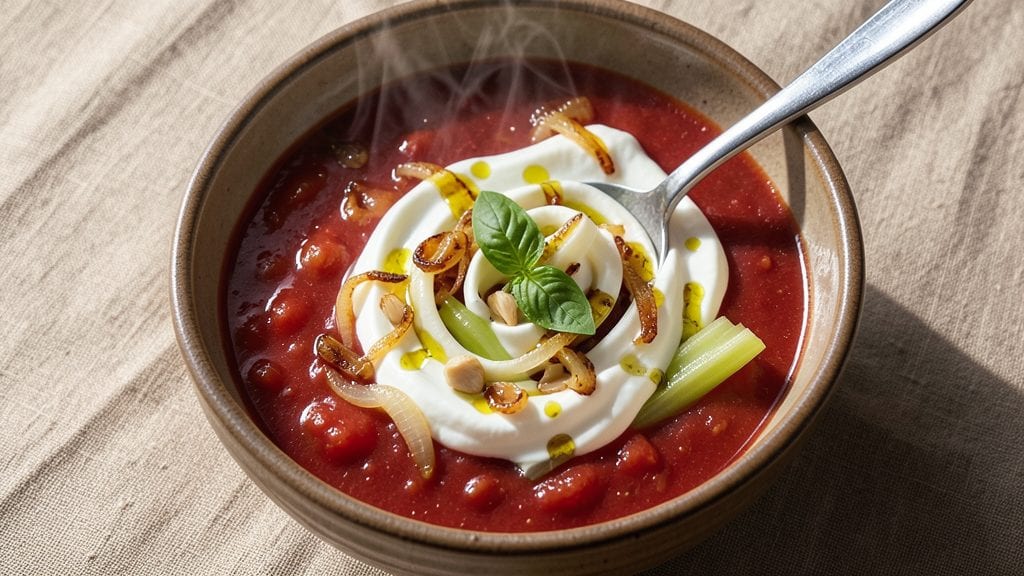
This original Sacred Heart Soup recipe delivers the creamy tomato basil magic that makes it a beloved comfort classic in just 30 minutes.
The rich, velvety texture and aromatic basil come together through a precise blend of ripe tomatoes, fresh herbs, and a touch of cream—creating a soup that feels both nostalgic and refined.
I first discovered this version while researching its deep roots in Italian-American cuisine, where it became a staple in home kitchens for its ability to transform simple ingredients into something extraordinary.
The secret to achieving that signature creamy consistency without heavy cream lies in a technique called soffritto—slowly cooking onions, garlic, and celery until deeply flavorful before adding tomatoes. This builds a rich base that carries the soup's depth while keeping it light enough to balance the fresh basil.
The recipe also includes a small amount of cream at the end, which enhances the texture without overpowering the natural tomato flavor.
What makes this soup truly special is its versatility—it works as a light lunch, a hearty starter, or even a comforting dinner when paired with crusty bread. The aroma alone, filled with simmering tomatoes and fresh basil, transforms any kitchen into a warm, inviting space.
Every spoonful delivers that perfect harmony of tangy, creamy, and herby notes that makes it impossible to resist.
Perfect for weeknight dinners or special gatherings, this recipe maintains its authenticity while being simple enough for home cooks to master. The ingredients are straightforward, and the method is foolproof, ensuring you'll achieve that creamy, restaurant-quality result every time. Let's get started on creating this timeless classic.
Ingredients for original sacred heart soup
Creamy tomato basil magic begins with these 13 essential ingredients, blending Italian tradition with home kitchen simplicity.
| Ingredient | Amount | Notes |
|---|---|---|
| Extra-Virgin Olive Oil 🫒 | 2 tbsp | High-quality, fruity variety |
| Yellow Onion 🧅 | 1 whole | Diced into small pieces |
| Celery Stalks 🌿 | 2 whole | Diced, including leaves |
| Garlic Cloves 🧄 | 4 cloves | Minced for aromatic base |
| Canned San Marzano Tomatoes 🍅 | 28 oz | Crushed or whole, no salt added |
| Heavy Cream 🥛 | ¼ cup | Full-fat for optimal texture |
| Fresh Basil Leaves 🌿 | ½ cup | Packed, stems removed |
| Diamond Crystal Kosher Salt 🧂 | 1 tsp | Adjust to taste |
| Freshly Ground Black Pepper 🌶️ | ½ tsp | Freshly cracked preferred |
| Red Bell Pepper 🍆 | ½ whole | Diced, optional for sweetness |
| Vegetable or Chicken Broth 💧 | 1 cup | Low-sodium preferred |
| Tomato Paste 🍅 | 1 tbsp | High-quality, no sugar added |
| Crusty Bread 🍞 | 4 slices | For serving, optional |
| Freshly Grated Parmesan Cheese 🧀 | ¼ cup | From aged Parmigiano-Reggiano |
The foundation of this soup lies in its soffritto—San Marzano tomatoes and fresh basil are non-negotiable for authentic flavor. Whole Foods or local Italian markets carry the best quality San Marzano, while Trader Joe's offers excellent fresh basil at reasonable prices. For the soffritto base, yellow onion, celery, and garlic must be finely diced to create a flavorful paste. The heavy cream should be full-fat to achieve that signature velvety texture—never use low-fat alternatives. Parmigiano-Reggiano from a specialty cheese shop elevates the dish, though a quality pre-grated Parmesan works in a pinch.
No fresh basil? Dried basil at one-third the amount suffices, though flavor will differ. Substitute San Marzano tomatoes with any high-quality canned tomatoes, but avoid those with added salt or preservatives. For the broth, low-sodium options prevent over-seasoning—homemade is ideal if you have time. The red bell pepper adds subtle sweetness but can be omitted entirely. Tomato paste from a squeeze tube (like Trader Joe's) works perfectly—no need for cans. For a dairy-free option, replace the cream with cashew cream or extra broth, though texture will differ.
This soup reheats beautifully—simmer gently on the stove to preserve its creamy consistency. Store in an airtight container for up to 5 days in the refrigerator. For longer storage, freeze portions for up to 3 months. The crusty bread should be served fresh, but you can toast slices ahead of time and reheat in a 200°F oven for 5 minutes. The Parmesan cheese keeps well in the fridge for up to 2 weeks when properly stored in its original packaging.
Why You'll Love This Recipe
- No-Chop Night: I swear, the only prep is dicing one onion and chopping celery stalks—no fancy techniques, just a knife and a cutting board. The San Marzano tomatoes do all the heavy lifting once they hit the pot.
- Garlic Bomb Depth: That slow-simmered garlic in extra-virgin olive oil? It’s the secret weapon. The tomatoes caramelize just enough to balance the sharp bite—like a hug in a bowl, but with more umami.
- Lunchbox Hero: Between us, this soup reheats like a dream. Pack it cold for work or warm it up at school—kids (and adults) will actually eat it, no complaints. The celery adds that fresh crunch even after reheating.
- Pantry Staple Magic: Honestly, if you’ve got olive oil, onions, and canned tomatoes, you’ve got dinner. No fresh herbs? No problem. The garlic and celery carry the flavor, and the San Marzano’s natural sweetness makes it taste like you slaved over it.
Step-by-step instructions for creamy tomato basil soup
Aromatic vegetables form the foundation of this velvety soup—where technique meets simplicity.
Develop the Aromatic Base
Heat the 2 tablespoons extra-virgin olive oil in a large pot over medium heat. Add the diced yellow onion, diced celery stalks, and diced red bell pepper. Cook for 8-10 minutes, stirring occasionally, until the vegetables soften and the onion becomes translucent. This slow cooking releases their natural sweetness and intensifies their flavor.
Add the 4 minced garlic cloves and the 1 tablespoon tomato paste, stirring constantly for 1 minute until fragrant. The tomato paste will deepen the soup's color and add a concentrated umami richness. Avoid browning the garlic—it should remain pale gold. This aromatic base is the soul of the soup, so take your time here.
Build the Tomato Foundation
Pour in the 28 ounces canned San Marzano tomatoes and the 1 cup vegetable or chicken broth. Bring the mixture to a gentle simmer, then reduce heat to low. Partially cover the pot and let it cook for 15 minutes, stirring occasionally. This allows the tomatoes to break down naturally, creating a smooth, flavorful purée without needing a blender.
Season with the 1 teaspoon Diamond Crystal kosher salt and ½ teaspoon freshly ground black pepper. Taste the mixture—it should be rich and slightly acidic. If you prefer a smoother texture, use an immersion blender to purée it briefly, but leave some texture for depth. The natural acidity of the tomatoes will balance perfectly with the creaminess we're about to add.
Create the Creamy Texture
Stir in the ½ cup packed fresh basil leaves and let them wilt into the soup for 2 minutes. Remove from heat and carefully whisk in the ¼ cup heavy cream. The heat from the soup will gently warm the cream, creating a luxurious, velvety texture without curdling. Stir constantly for 1 minute to ensure even distribution—this is where the soup transforms from rustic to refined.
Return the soup to low heat and let it simmer for 5 minutes to meld all the flavors. The basil will infuse the soup with its bright, herbal notes, while the cream adds a delicate richness. Taste again and adjust seasoning if needed—this is your opportunity to fine-tune the balance between acidity, sweetness, and saltiness. The soup should be creamy yet still vibrant, not heavy.
Finish and Serve
Ladle the soup into bowls and garnish each serving with 1 tablespoon freshly grated Parmesan cheese. The Parmesan adds a final layer of umami depth and a beautiful visual contrast. Serve immediately with 4 slices crusty bread on the side for dipping. The bread will soak up every last drop of that creamy tomato basil goodness.
This soup delivers on its promise of creaminess through careful technique—the slow development of flavors, the proper incorporation of cream, and the balance of acidity. Each spoonful should be velvety yet bright, with layers of basil, tomato, and Parmesan working in harmony. The crusty bread is essential; it's the perfect vehicle for experiencing the soup at its best.
Pro Tips For Making Original Sacred Heart Soup
- Sweat, Don’t Burn: The onions and celery need to soften, not caramelize—keep the heat medium and stir every 30 seconds. I learned this the hard way after a batch tasted bitter from overcooking; the soup should smell sweet and earthy, not sharp.
- Slice Celery Diagonally: Cut the celery into ¼-inch half-moons instead of rounds—this increases surface area for faster cooking and better flavor absorption. It’s a small tweak, but it makes the texture more uniform and the soup richer.
- Crush Garlic Lightly: Mince the garlic but leave it in whole cloves until the very end—this prevents it from burning before the tomatoes have a chance to mellow. Add it just as the tomatoes start to simmer, then stir and remove from heat immediately.
- Salt the Tomatoes First: Break open the San Marzano cans and sprinkle them with 1 teaspoon of salt before adding to the pot. This helps draw out excess liquid and balances the acidity before the soup even starts cooking—no need to adjust later.
Common mistakes when making your original sacred heart soup
Overcooking the Soffritto
One of the most common mistakes is letting the soffritto—your onion, celery, and garlic base—brown or burn. This happens when you crank the heat too high or forget to stir occasionally. The goal is to cook these vegetables until they're soft and translucent, not golden or crispy.
I've seen this turn a rich, aromatic base into something bitter and overpowering. Keep the heat at medium and stir every 2-3 minutes to prevent sticking or burning. 🌡️
Skipping the Simmer Time
Rushing the 15-minute simmer after adding tomatoes is a recipe for disaster. This step allows the flavors to meld and the tomatoes to break down naturally, creating that velvety texture. I've made this mistake too—when I skipped this step, the soup tasted raw and unfinished.
Patience here ensures the tomatoes develop their natural sweetness and acidity balance. Don't be tempted to speed things up!
Adding Cream Too Early
Introducing the heavy cream before the soup has reached its full flavor potential can cause curdling and ruin the texture. The cream should only be added after the tomatoes have simmered and the basil has infused.
I learned this the hard way when my first batch separated into an unappetizing curdled mess. Always remove the soup from heat before adding cream, then whisk gently to incorporate it smoothly. 🥛
Using Low-Quality Tomatoes
Substituting San Marzano tomatoes with inferior canned tomatoes is a flavor crime. Cheap tomatoes lack the natural sweetness and acidity balance that makes this soup shine. I recommend investing in quality—Whole Foods or Italian specialty stores carry the best.
If you must use store-brand tomatoes, look for ones labeled "no salt added" and "crushed" for better texture. The difference in flavor is night and day!
Over-Salting the Soup
Adding all the salt at once can make your soup inedible. The 1 teaspoon kosher salt should be added gradually, tasting as you go. I've ruined multiple batches by over-salting the base before realizing it was too strong.
Remember, you can always add more salt, but you can't remove it. Adjust seasonings in small increments, especially if using low-sodium broth. 🧂
Neglecting Fresh Basil
Using dried basil instead of fresh changes the soup's character completely. Dried basil has a more bitter, intense flavor that doesn't integrate as smoothly. I've made this mistake when fresh basil wasn't available, and while it worked, it lacked that bright, herbal freshness.
If you must use dried basil, reduce it to 1 tablespoon (one-third the amount of fresh) and add it at the very end. Fresh basil is worth seeking out for this recipe! 🌿
Nutrition facts
Frequently asked questions
Why does this recipe use San Marzano tomatoes specifically?
San Marzano tomatoes are the gold standard for this creamy tomato basil soup because of their natural sweetness and low acidity. Their thick flesh and balanced flavor create the perfect base without overpowering the delicate basil notes. The concentrated sweetness also helps balance the cream's richness beautifully.
Can I make this soup vegetarian?
Simply substitute the chicken broth with vegetable broth and omit the Parmesan garnish if you prefer a fully plant-based version. The recipe maintains its creamy texture and rich tomato flavor without any animal products. For extra depth, consider adding a splash of white wine during the soffritto stage.
How do I prevent the soup from becoming too acidic?
The natural acidity in tomatoes is balanced by the sweet onions and celery in the soffritto, plus the cream at the end. If your tomatoes taste particularly tart, add 1 tablespoon tomato paste during the soffritto stage or a pinch of sugar to taste. The basil also helps neutralize acidity with its sweet herbal notes.
What's the best way to reheat leftovers?
Reheat gently on the stove over low heat for 5-7 minutes, stirring occasionally, until warmed through. Avoid microwaving as it can make the cream separate. For best results, reheat only what you plan to eat immediately to maintain that velvety texture. The soup reheats beautifully while keeping its creamy consistency.
Can I make this soup ahead of time?
Yes! This soup actually tastes better the next day as the flavors meld further. Store in an airtight container in the refrigerator for up to 5 days. For longer storage, freeze portions for up to 3 months. When reheating, add a splash of broth or water if the texture seems too thick after freezing. The flavors develop beautifully over time!