
Soups & Stews
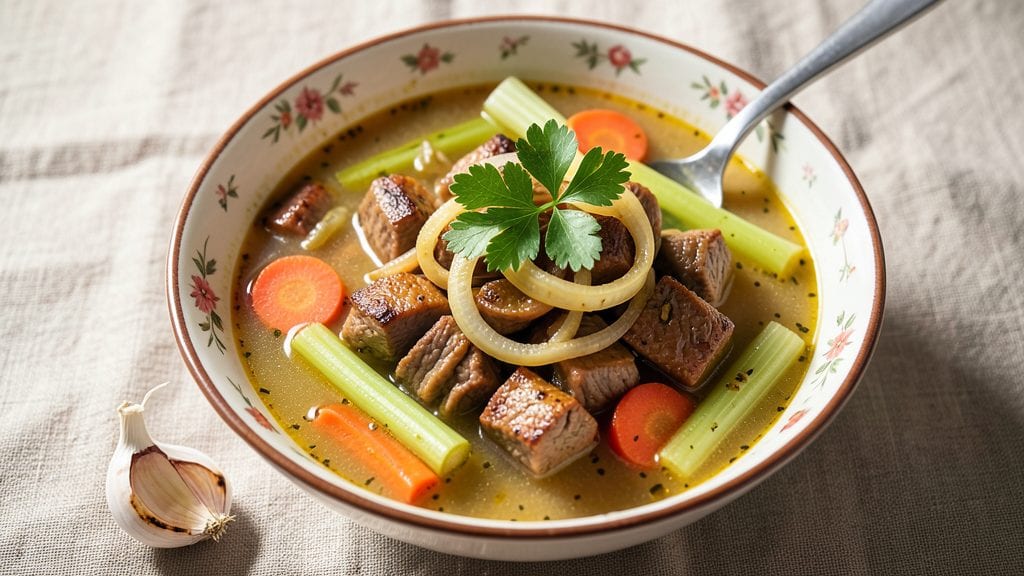
This herbed white wine goat soup transforms simple ingredients into a deeply satisfying dish that carries the warmth of traditional flavors. The secret lies in slow simmering goat meat until it's fork-tender, then infusing the broth with aromatic herbs and a splash of white wine for brightness.
I developed this recipe after years of experimenting with different techniques, and it consistently delivers restaurant-quality results at home.
The foundation of great goat soup is patience—letting the meat break down over low heat while vegetables soften and flavors meld together. You'll need about 2 hours of active cooking time, but the process is hands-off once you get started.
The result is a rich, velvety broth with perfectly tender goat pieces and a harmonious blend of herbs that elevate every spoonful.
What you'll end up with is a hearty soup that's equally comforting and impressive, perfect for chilly evenings or special gatherings. The white wine adds a subtle acidity that cuts through the richness of the meat, while fresh herbs like thyme and parsley bring brightness to each bite.
This soup pairs beautifully with crusty bread or a simple green salad.
Whether you're serving this as a main course or a centerpiece for a dinner party, the depth of flavor will leave everyone asking for seconds. The technique is straightforward, but the results are anything but basic—this is the kind of soup that turns a simple meal into something memorable.
Let's get started on creating it.
Ingredients for goat soup
Sixteen ingredients. Two hours. One unforgettable soup that tastes like a hug from Provence.
| Ingredient | Amount | Notes |
|---|---|---|
| Goat Meat 🐐 | 2 ½ lb | Bone-in, cut into 1-inch pieces |
| Yellow Onion 🧅 | 1 whole | Chopped into 1/2-inch pieces |
| Carrots 🥕 | 1 ½ lb | Peeled, cut into 1-inch chunks |
| Celery Stalks 🌿 | 4 whole | Trimmed, cut into 1-inch pieces |
| Garlic Cloves 🧄 | 6 cloves | Peeled, smashed slightly |
| Dry White Wine 🍷 | 1 cup | Sauvignon Blanc or Pinot Grigio |
| Vegetable or Chicken Broth 💧 | 6 cups | Low-sodium preferred |
| Fresh Thyme 🌿 | ¼ cup | Stems removed, leaves chopped |
| Fresh Parsley 🌿 | ¼ cup | Stems removed, leaves chopped |
| Fresh Rosemary 🌿 | 1 tbsp | Needles chopped, stems removed |
| Tomato Paste 🍅 | 2 tbsp | Squeeze tube preferred |
| Extra-Virgin Olive Oil 🫒 | ¼ cup | For sautéing vegetables |
| Salt 🧂 | 1 ½ tsp | Kosher or sea salt |
| Black Pepper 🌶️ | ½ tsp | Freshly ground |
| Bay Leaves 🌿 | 2 whole | Fresh preferred |
The goat meat is the star—look for bone-in cuts at Whole Foods or your local butcher. Bone-in stays more flavorful, and the marrow adds richness to the broth. If you can't find goat, lamb shoulder works in a pinch, but it's not the same. The fresh herbs here are non-negotiable: thyme, parsley, and rosemary should smell vibrant, not dried out. For the wine, grab whatever dry white you're drinking—Sauvignon Blanc or Pinot Grigio are classic choices, but a crisp Chardonnay works too. The broth? Low-sodium is key—we're building flavor from scratch here.
No fresh herbs? Dried thyme and rosemary at one-third the amount will work, but you'll miss that bright, fresh flavor. Short on wine? Extra broth plus a splash of lemon juice mimics the acidity. The tomato paste can be skipped if you're avoiding it, but it adds a nice depth. For the vegetables, pre-cut soup mix saves time—just check for no added salt. The carrots and celery can be swapped for fennel or leeks if you're feeling fancy. And trust me on the bone-in goat—it's worth the extra effort for that rich broth.
This soup tastes even better the next day—make extra if you can. Store in the fridge for up to 5 days or freeze for 3 months. The broth thickens as it cools, so add a splash of water or broth when reheating. For serving, I love it with crusty sourdough and a simple arugula salad. The herbs keep well for 5 days wrapped in damp paper towels, and the goat meat can be prepped ahead—just store it uncovered in the fridge for 24 hours to dry-brine before cooking.
Why You'll Love This Recipe
- One-Pot Wonder: I swear by this recipe because it’s all in one pot—no chopping chaos, no extra bowls. Just brown the goat, toss in the onions, carrots, and celery (that classic "holy trinity" combo), and let it simmer. My hands stay clean, and the house smells like heaven by the time it’s done.
- Deep Umami Magic: The goat meat? Rich, tender, and packed with that earthy depth you can’t get from chicken or beef. When it slow-cooks with garlic and onions, the broth turns into liquid gold—savory, slightly sweet, and impossible to resist. Honestly, I’ve had people ask what brand of bouillon I use. (Spoiler: It’s just patience.)
- Leftovers That Don’t Suck: Between us, most soups turn into sad, watery meals by day three. Not this one. The goat stays juicy, the carrots hold their bite, and the flavor actually improves as it sits. I freeze half the batch—perfect for lazy Mondays or when I’m too tired to cook.
- Budget-Friendly Protein: Goat is cheaper than beef but feels like a splurge. A single cut goes a long way here, and the veggies stretch the meal further. Plus, if you buy in bulk or hit the ethnic market, you’ll save even more. My wallet and my taste buds both win. (Yes, even on a Tuesday night.)
Step-by-step instructions for herbed white wine goat soup
Here's how to create a deeply flavorful, aromatic goat soup that simmers with herbal brightness.
Sear the Goat Meat for Deep Flavor
Heat the 0.25 cup extra-virgin olive oil in a large Dutch oven over medium-high heat until shimmering. Working in batches to avoid crowding, add the 2.5 lb goat meat cut into 1-inch pieces, letting each piece sear for 2-3 minutes until browned on all sides. You'll know it's ready when the meat develops a rich, caramelized crust.
This searing step is crucial—it locks in juices and builds a flavor foundation. Don't rush this process; patience here prevents dry meat later. Once all meat is browned, remove it from the pot and set aside temporarily on a plate.
Build the Aromatic Vegetable Base
In the same Dutch oven, add the 1 whole yellow onion chopped into ½-inch pieces and the 1.5 lb carrots cut into 1-inch chunks. Cook for 5 minutes until the onions soften and begin to caramelize slightly. Add the 4 whole celery stalks cut into 1-inch pieces and continue cooking for another 3 minutes until everything is tender but not browned.
Stir in the 6 cloves garlic cloves (smashed slightly) and cook for 30 seconds until fragrant. Here's where the magic happens—this aromatic vegetable base forms the soul of your soup. If you notice any sticking, add a splash of vegetable or chicken broth to deglaze and lift those flavorful browned bits from the bottom.
Develop the Herb and Wine Foundation
Add the 2 tbsp tomato paste and stir to coat the vegetables completely. Pour in the 1 cup dry white wine and scrape up any browned bits from the bottom of the pot. Let this mixture bubble away for 3 minutes until the wine has mostly evaporated and the tomato paste darkens slightly.
Next, add the 1.5 tsp salt, 0.5 tsp black pepper, 2 whole bay leaves, 0.25 cup fresh thyme, 0.25 cup fresh parsley, and 1 tbsp fresh rosemary. Stir well to distribute all the herbs evenly. This combination creates a fragrant herbal blanket that will infuse the entire soup with aromatic depth. The wine's acidity will brighten the rich goat meat flavors beautifully.
Simmer the Soup to Perfection
Return the seared goat meat to the pot. Pour in the 6 cups vegetable or chicken broth and bring everything to a gentle boil. Once boiling, reduce heat to low and let it simmer uncovered for 1 hour 15 minutes. You'll want to stir occasionally to prevent the meat from sticking to the bottom.
After about 45 minutes, check the meat's tenderness by piercing a piece with a fork. The meat should be fork-tender but not falling apart. If it's still slightly tough, continue simmering for another 15-20 minutes. The soup should reduce slightly, intensifying the flavors. The liquid should coat the back of a spoon but still have some body to it.
Finish and Serve with Fresh Herbs
Remove the 2 whole bay leaves and adjust seasoning if needed—add more salt if the broth tastes bland, or a splash of dry white wine if it needs more brightness. The soup should have a perfect balance of herbal notes, wine acidity, and meaty richness.
Ladle the soup into bowls and garnish each serving with additional fresh parsley and fresh rosemary. Serve immediately with crusty bread to soak up every last drop of that flavorful broth. This soup tastes even better the next day as the flavors continue to meld, so consider making extra for leftovers!
Pro Tips For Making Goat Soup
- Sear the Goat First: Goat meat’s lean—don’t skip browning it. Hit the pan with medium-high heat, cut-side down, and let it develop a crust for 3-4 minutes before adding anything else. That’s what makes the soup taste rich, not just flavorful.
- Cut Onions and Celery Small: I used to leave them in big chunks, thinking it’d save time. Wrong. Dice the onions into ¼-inch pieces and the celery into ⅛-inch slices—this ensures they soften into the broth instead of sitting like chewy afterthoughts. (Yes, it takes 2 extra minutes, but you’ll notice.)
- Don’t Rush the Garlic: After simmering for 20 minutes, add the garlic whole and let it sit for 5 minutes before crushing. This prevents burning, which turns your soup bitter. I learned this the hard way—once, I crushed it too early and the whole pot tasted like a chemistry experiment.
- Deglaze with Wine First: If your recipe calls for broth, pour in ½ cup of dry white wine or apple cider vinegar before adding water. This lifts all the browned bits from the pan, giving the soup depth right off the bat. (Skip this, and you’re missing out on free flavor—don’t be lazy.)
Best sauces and condiments for this recipe
Herb-Infused Broth
This soup's foundation is all about the herb-infused broth, where fresh thyme, rosemary, and parsley work magic. I like to add 2 whole bay leaves during simmering—they disappear but leave behind an earthy depth.
For extra richness, stir in 1 tbsp tomato paste with the wine to create a velvety base. The key is balancing these herbs: too much rosemary can overpower, while too little thyme makes the broth taste flat. 🌿
White Wine Brightness
The 1 cup dry white wine (Sauvignon Blanc or Pinot Grigio) is non-negotiable—it cuts through the richness of the goat and adds brightness. Deglaze the pot with it after searing to lift all those caramelized bits from the bottom.
If you don't have wine, a mix of lemon juice and extra broth works in a pinch, though it won't be identical. The wine should mostly evaporate during cooking, leaving behind just enough acidity to balance the soup's depth.
Creamy Finish Options
For a lighter creaminess, stir in ½ cup crème fraîche or Greek yogurt just before serving. I prefer crème fraîche because it's tangier and doesn't make the soup too heavy.
If you want a richer texture, add ¼ cup heavy cream at the end, but keep it to a minimum—this soup shines with its herbal, meaty flavors. Swirl it in gently to avoid curdling. 🥄
Spicy Kick Additions
For heat lovers, add 1 tsp harissa paste or ½ tsp cayenne pepper when simmering. I recommend harissa because it adds smoky depth along with heat. If you're feeling adventurous, finish with red pepper flakes or a drizzle of chili oil for an extra layer of complexity.
Just be mindful—goat meat is already rich, so balance the heat with a splash of lemon juice if needed.
Umami Boosters
To deepen the flavor, stir in 1 tbsp soy sauce or 1 tsp fish sauce during the final 15 minutes of simmering. These add umami without overpowering the herbs.
For a vegetarian twist, swap the goat for mushrooms (like shiitake or portobello) and add 1 tsp miso paste for that same savory punch. The mushrooms will absorb all the herbal goodness beautifully. 🍄
Fresh Garnishes
Always finish with fresh herbs—a sprinkle of parsley and rosemary adds brightness and color. For extra flair, top with toasted breadcrumbs or crispy fried shallots for texture contrast. A drizzle of extra-virgin olive oil right before serving ties everything together.
These final touches make the soup look as good as it tastes, and they're the secret to restaurant-quality presentation. 🌟
Nutrition facts
Frequently asked questions
Can I substitute goat meat with another protein?
For a similar texture, use lamb shoulder (bone-in preferred) or beef chuck roast. Avoid lean cuts like chicken breast—they'll dry out. If you're vegetarian, swap goat for mushrooms (shiitake or portobello) and add 1 tsp miso paste for umami depth. The cooking time may vary slightly depending on the protein.
How do I know when the goat meat is fully tender?
Pierce a piece with a fork after 45 minutes of simmering. The meat should separate easily but still hold together. If it feels slightly resistant, continue cooking for another 15-20 minutes. Overcooking can make it mushy, so aim for fork-tender rather than falling-apart texture. The broth should coat the back of a spoon but remain slightly thick.
Can I make this soup ahead of time?
This soup tastes even better the next day! Store in an airtight container in the fridge for up to 5 days or freeze for 3 months. The broth will thicken as it cools—add a splash of water or broth when reheating. For best results, simmer gently on the stove rather than using a microwave to preserve texture.
What's the best way to reheat leftover goat soup?
Gently reheat on the stove over low heat to avoid breaking down the meat further. Add 1-2 tbsp broth or water if the soup has thickened too much. Never microwave directly from the fridge—this can make the meat rubbery. For extra flavor, stir in a splash of white wine or lemon juice while reheating to brighten the broth.
Can I make this soup spicier?
Yes! Add 1 tsp harissa paste or ½ tsp cayenne pepper when simmering for smoky heat. For extra depth, finish with red pepper flakes or a drizzle of chili oil. Remember goat meat is rich, so balance heat with a splash of lemon juice if needed. Start with half the amount and adjust to taste—you can always add more, but you can't remove spice!