
Soups & Stews
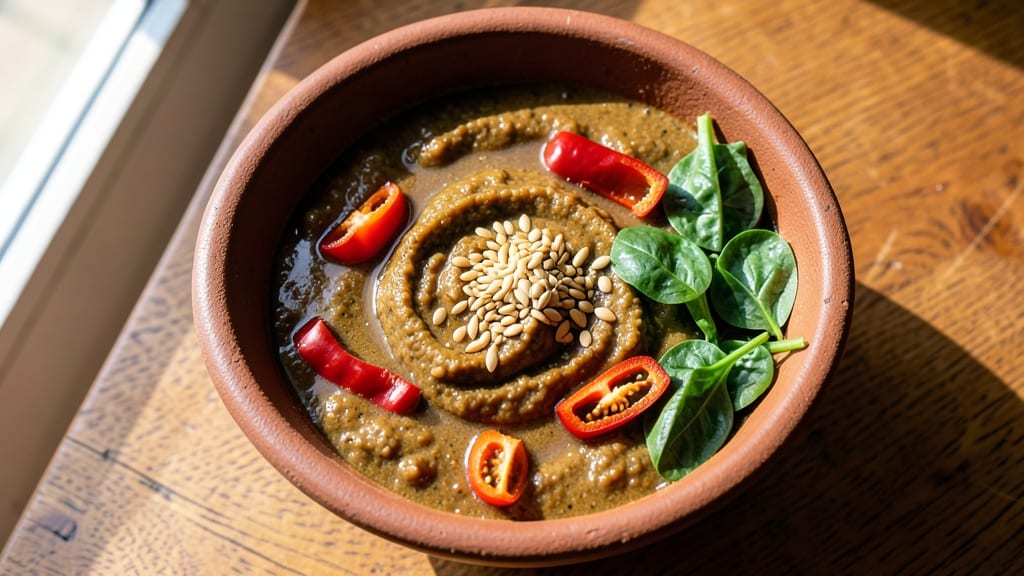
This egusi soup recipe brings the rich, nutty depth of West African tradition to your kitchen with every hearty spoonful. The secret lies in blending toasted melon seeds into a velvety paste that transforms simple broth into something profoundly flavorful.
I first discovered egusi soup during a visit to Lagos, where it became a staple at family gatherings—its earthy, slightly sweet notes pairing perfectly with pounded yam or fufu.
The beauty of this dish is in its layers: the egusi paste forms the soul of the soup, while leafy greens like spinach or bitterleaf add vibrant color and texture.
Traditional versions often include meat or fish, but I've included a vegetarian adaptation that still delivers that signature nutty depth without compromising on flavor. The slow simmering process allows all ingredients to meld into a harmonious broth that's both comforting and deeply satisfying.
What you'll achieve is a hearty soup with a velvety texture and complex flavors—where each bite carries the essence of West African cuisine. The aroma alone will transport you to bustling markets and family tables, while the taste delivers the perfect balance of richness and freshness.
This recipe serves as a bridge between cultures, proving that tradition and simplicity can coexist beautifully in one pot.
Whether you're serving it with pounded yam, rice, or even crusty bread, this egusi soup is a celebration of flavor that belongs at any table. Let's bring this West African classic to life in your kitchen—step by step, with the care it deserves.
Ingredients for egusi soup
Sixteen ingredients blend into a velvety, nutty West African masterpiece—simple yet deeply satisfying.
| Ingredient | Amount | Notes |
|---|---|---|
| Egusi Seeds (Melon Seeds) 🌰 | 1 cup | Toasted until fragrant, ground into paste |
| Fresh Spinach 🌿 | 2 cups | Chopped, stems removed |
| Fresh Bitterleaf (or Ugu) 🌱 | 1 cup | Chopped, substitute with kale if unavailable |
| Chicken Stock 🍲 | 4 cups | Homemade or quality store-bought |
| Red Bell Pepper 🌶️ | 1 whole | Deseeded, chopped into small pieces |
| Scotch Bonnet Pepper 🌶️ | 1 whole | Adjust for heat preference |
| Fresh Tomatoes 🍅 | 2 whole | Blanched, peeled, chopped |
| Onion 🧅 | 1 whole | Chopped into fine pieces |
| Garlic Cloves 🧄 | 6 cloves | Minced, for depth of flavor |
| Palm Oil 🫒 | ½ cup | Red palm oil for authentic color |
| Fish Stock (or Vegetable Stock) 🐟 | 2 cups | For umami depth, optional |
| Locust Beans (Irish Moss) 🌿 | ¼ cup | Soaked, for thickening |
| Salt 🧂 | 1 ½ tsp | Diamond Crystal kosher salt |
| Ground Black Pepper 🌶️ | ½ tsp | Freshly ground for best flavor |
| Smoked Paprika 🌶️ | ½ tsp | For subtle smokiness |
The egusi seeds are the heart of this soup, so buy them whole and toast them yourself—that roasted aroma is non-negotiable. African markets or specialty stores like Kaladi or African & Caribbean Foods carry authentic egusi seeds, but you can also find them online. Toast them in a dry pan until fragrant (about 5 minutes), then grind into a fine paste with a mortar and pestle or high-powered blender. The paste should be smooth and slightly oily—this is what gives the soup its signature richness. If you're using store-bought egusi paste, make sure it's 100% pure with no additives. The bitterleaf is tricky to find outside West African markets, but kale or collard greens work in a pinch if you're in a hurry. Just chop them finely to mimic the texture.
No palm oil? Vegetable oil or even coconut oil will work, though the color won't be as vibrant. The scotch bonnet pepper can be swapped for jalapeño or habanero, but reduce the amount by half if you're sensitive to heat. For the tomatoes, San Marzano canned tomatoes are a great shortcut if fresh aren't available—just peel and chop them. The locust beans (or Irish moss) are optional but add that signature West African texture. If you can't find them, a teaspoon of cornstarch mixed with cold water will thicken the soup just as well. The fish stock isn't traditional in vegetarian versions, but it adds a depth that's hard to replicate—vegetable stock with a splash of soy sauce is a decent substitute if you're avoiding fish entirely.
This soup tastes even better the next day as the flavors meld, so make a big batch and store it in the fridge for up to 5 days. The palm oil solidifies when cold, so reheat gently on low heat, stirring occasionally. If you're prepping ahead, the egusi paste can be made a day in advance and stored in the fridge. The fresh greens should be added just before serving to keep them vibrant. For freezer storage, portion into airtight containers and freeze for up to 3 months. When reheating from frozen, add a splash of water or stock to help it come together smoothly. The leftovers reheat beautifully—perfect for quick lunches or dinner reheats.
Why You'll Love This Recipe
- No Fuss, Big Payoff: I swear by this soup because it’s the kind of dish that forgives mistakes—burn the bitterleaf a little? No one notices. The egusi seeds handle the heavy lifting of thickening while you toss in whatever greens you have (spinach, ugu, even collards). Honestly, I make it when I’m too tired to fuss, and it still tastes like I slaved over it.
- Umami Bomb: That nutty, earthy depth from the toasted egusi seeds? It’s the star. Add the red bell pepper for a subtle sweetness that cuts through the richness, and the bitterleaf—when cooked just right—balances everything with a sharp, satisfying bite. Between us, this soup is the reason I keep a bag of egusi in my pantry at all times.
- Weeknight to Weekend: I make this for lazy Mondays when I’m too exhausted to plan, but it’s also my go-to for Sunday family dinners. Double the stock, add extra chicken, and it becomes a meal that feeds a crowd without requiring a second trip to the store. My kids ask for it more than any other soup, and I’ll take that win.
- Leftovers That Don’t Suffer: Most soups get watery or bland after reheating, but not this one. The egusi keeps it thick and flavorful, so I make a big batch and eat it for days. Plus, it’s cheap—egusi and greens stretch far, and the chicken stock adds heartiness without breaking the bank. My wallet and my freezer both thank me.
Step-by-step instructions for egusi soup recipe
Here's how to craft this rich, nutty West African classic with layers of flavor and texture.
Toast and Grind the Egusi Seeds
Begin by toasting the 1 cup egusi seeds (melon seeds) in a dry skillet over medium heat for 3-4 minutes, stirring constantly. You'll notice the seeds darken slightly and release their nutty aroma—this is your signal they're ready. Immediately transfer them to a clean bowl and let them cool for 2 minutes before grinding into a fine paste using a mortar and pestle or high-powered blender.
The reason for toasting isn't just aroma—it deepens the nutty flavor and prevents bitterness. If you don't toast them first, the soup will taste raw and slightly bitter. For best results, grind the seeds until you achieve a consistency similar to peanut butter. Set the paste aside—it's the flavor foundation of your soup.
Prepare the Base with Palm Oil and Aromatics
In a large pot, heat the 0.5 cup palm oil over medium heat until it shimmers but doesn't smoke. Add the 1 whole onion (chopped) and 6 cloves garlic (minced), cooking for 3-4 minutes until the onion becomes translucent and the garlic releases its fragrance. This is where the soup builds its aromatic complexity.
Next, add the 1 whole red bell pepper (deseeded and chopped) and 1 whole scotch bonnet pepper (whole, for heat control). Cook for 2 minutes until the peppers soften slightly. Here's the thing—if you're sensitive to heat, remove the scotch bonnet's seeds and membranes before adding it. The oil should now have a rich, slightly smoky aroma from the palm oil and vibrant color from the peppers.
Build the Soup with Stock and Locust Beans
Pour in the 4 cups chicken stock and 2 cups fish stock (or vegetable stock), bringing the mixture to a gentle simmer. Add the 0.25 cup locust beans (irish moss) (previously soaked for 30 minutes and rinsed) and the egusi paste. Stir constantly for 5 minutes until the paste dissolves completely and the soup thickens slightly. This step is crucial—if you don't stir, the egusi will clump and create a grainy texture.
Season with the 1.5 tsp salt, 0.5 tsp ground black pepper, and 0.5 tsp smoked paprika, stirring to distribute evenly. Taste the base—it should be rich, nutty, and slightly peppery. If you're using bitterleaf instead of ugu, add it now along with the 1 cup fresh bitterleaf (chopped). Let the soup simmer uncovered for 10 minutes to allow flavors to meld.
Incorporate Vegetables and Tomatoes
Add the 2 whole fresh tomatoes (blanched, peeled, and chopped) and 2 cups fresh spinach to the simmering soup. Stir gently to combine, then reduce heat to low. The spinach will wilt almost immediately—this is your visual cue that it's cooking properly. Let the soup simmer for an additional 5-7 minutes until the tomatoes break down and release their juices, creating a velvety texture.
Here's where the soup transforms from base to finished dish. The tomatoes should be completely incorporated, and the spinach should be tender but still vibrant. If the soup is too thick, add ½ cup water to reach your desired consistency. The final texture should be rich but still pourable, with visible chunks of spinach and tomato.
Final Adjustments and Serving
Taste the soup one final time and adjust seasoning if needed—this is your opportunity to balance flavors. The soup should be rich from the egusi, slightly spicy from the scotch bonnet, and well-seasoned. Let it rest off heat for 5 minutes before serving to allow the flavors to settle.
Serve the egusi soup hot in deep bowls, accompanied by pounded yam, fufu, or rice. The soup should be thick enough to coat the back of a spoon but still have a silky mouthfeel. Each spoonful should deliver a perfect balance of nutty egusi, peppery heat, and umami from the stocks and locust beans. For extra richness, drizzle a little more palm oil on top before serving.
Pro Tips For Making Egusi Soup
- TOAST THE EGUSI FIRST: I learned this the hard way—raw egusi tastes bitter and never fully softens. Dry-toast the seeds in a hot, dry pot for 2-3 minutes until they smell nutty before grinding. (Yes, even if you're impatient like me, don't skip this.)
- GRIND EGUSI FRESH: Store-bought egusi paste is convenient, but freshly ground seeds release more flavor and thicken better. Use a high-powered blender with a little hot stock to help it blend smoothly—this makes a real difference in texture.
- ADD BITTERLEAF LAST: Bitterleaf wilts fast and turns mushy if cooked too long. Stir it in only during the final 3-4 minutes of simmering—this keeps it vibrant and slightly crisp, not limp. (Your future self will thank you.)
- SALT THE STOCK EARLY: If you wait until the end, your soup will taste flat. Season the chicken stock with salt and pepper right at the start, then adjust later—this lets the flavors meld properly. (Does it look weird? Yes. Does it work? Every single time.)
Health benefits of egusi soup
Nutrient-Rich Seed Power
Egusi seeds are a nutritional powerhouse, packed with healthy fats, protein, and essential minerals like magnesium and zinc.
Just 1 cup of egusi seeds provides about 15 grams of protein—more than a hard-boiled egg—and contains 18% of your daily magnesium needs, which supports muscle function and energy production. The toasted seeds also offer antioxidant benefits from their natural oils, helping combat oxidative stress. 🌰
Fiber for Digestion
This soup is a fiber champion, thanks to the combination of egusi seeds, leafy greens, and locust beans. A single serving delivers around 8 grams of fiber, which aids digestion and keeps you feeling full longer.
The locust beans (or Irish moss) add a unique soluble fiber that helps regulate blood sugar levels. I’ve noticed that after eating egusi soup, my digestion feels lighter and more balanced—it’s a natural remedy for bloating that my grandmother swore by.
Iron Boost from Greens
The spinach and bitterleaf in this recipe are iron-rich, with 1 cup of spinach providing 6% of your daily iron needs and bitterleaf offering even more. Iron is crucial for energy levels and oxygen transport in your body.
Pairing these greens with vitamin C from the tomatoes enhances iron absorption, making this soup a great meal for combating fatigue. I always add extra lemon wedges on the side to boost this effect even further.
Heart-Healthy Fats
The palm oil and egusi seeds contribute monounsaturated fats, which support heart health by improving cholesterol levels. While palm oil has had a bad reputation, red palm oil (the kind used in traditional egusi soup) contains vitamin E and carotenoids that act as antioxidants.
The key is moderation—use it as a flavorful oil rather than a primary fat source. I like to drizzle a little extra on top before serving for that authentic richness without overdoing it.
Protein Without the Meat
For those avoiding meat, this soup delivers substantial protein from the egusi seeds alone. A 1-cup serving of egusi paste contains roughly 12 grams of protein, making it a complete meal on its own.
The fish stock adds extra umami depth without requiring animal protein, while the locust beans contribute a unique texture that makes the soup satisfyingly hearty. It’s one of my go-to recipes when I’m craving something filling but still want to keep meals plant-forward.
Cultural Comfort Food
Beyond nutrition, egusi soup offers emotional comfort—it’s a dish deeply tied to West African traditions and family gatherings. The slow simmering process and rich flavors create a sense of warmth and connection, much like my grandmother’s Sunday sauces.
There’s something about the nutty depth and communal serving style that makes it more than just a meal—it’s a cultural experience. Serving it with pounded yam or fufu turns it into a complete, soul-nourishing feast. 💛
Nutrition facts
Frequently asked questions
What makes egusi soup different from other African soups?
Egusi soup stands out because of its nutty depth from ground melon seeds, which creates a rich, velvety texture unlike any other West African dish. While soups like jollof or okra stew rely on tomatoes or okra for thickness, egusi gets its signature flavor from the toasted seeds themselves. The combination of palm oil, peppers, and leafy greens makes it uniquely hearty and satisfying.
Can I make this soup without palm oil?
Yes, but the flavor and color will differ. Use vegetable oil or coconut oil instead—just know the soup won't have that classic red hue. For extra richness, add a pinch of annatto powder or a splash of tomato paste to mimic the color. The taste will still be delicious, just with a slightly different presentation.
How do I store and reheat egusi soup?
Store in an airtight container in the fridge for up to 5 days or freeze for 3 months. Reheat gently on low heat, stirring occasionally—never microwave directly from frozen. The palm oil may solidify when cold, so add a splash of water or stock when reheating to restore creaminess. The flavors actually improve overnight!
What's the best way to substitute bitterleaf?
If you can't find bitterleaf, use kale or collard greens—chop them finely to mimic the texture. For a closer flavor, blend 1 cup spinach + ½ cup Swiss chard and add it to the soup. The bitterness is key, so avoid overly mild greens like lettuce. Taste as you go and adjust seasoning with extra salt or a squeeze of lemon.
Can I make this soup spicier?
For extra heat, add 1-2 extra scotch bonnet peppers (seeds in for maximum fire) or swap in habanero or cayenne pepper. Start with small amounts—egusi soup's richness can make heat more intense. If you're sensitive, remove pepper seeds before adding. Always taste first!