
Soups & Stews
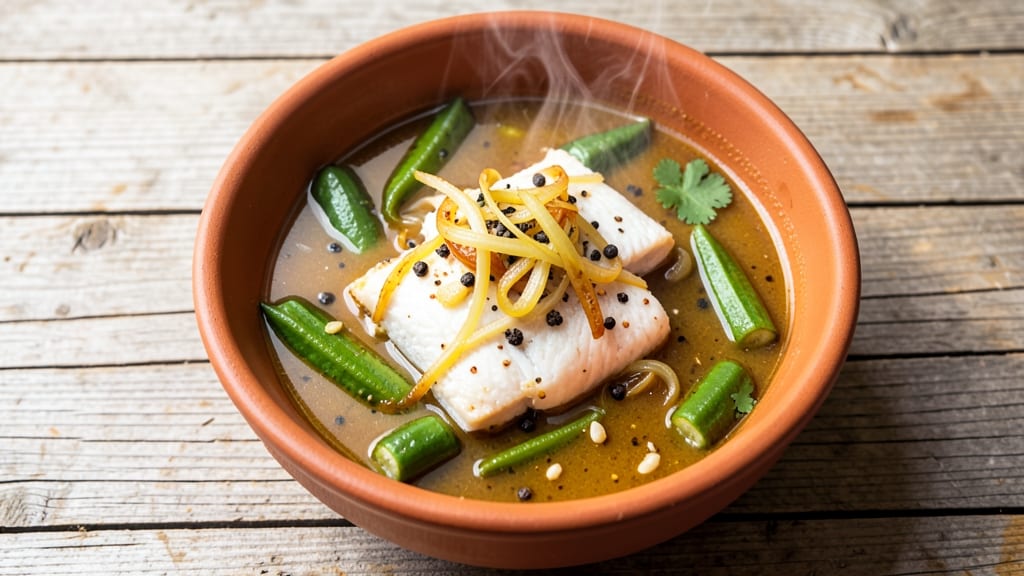
This West African fish soup recipe brings the vibrant flavors of coastal communities to your kitchen, where rich palm oil meets fresh okra and aromatic spices. 🌟 The dish is a celebration of tradition, combining tender fish, hearty vegetables, and a deeply flavorful broth that simmers for hours to develop its signature depth.
What sets this recipe apart is the balance of earthy thyme, fragrant bay leaves, and the unmistakable richness of palm oil—a staple in West African cuisine that gives the soup its distinctive golden hue and complex taste.
The foundation of this recipe lies in its slow-simmered broth, where onions, garlic, and ginger form the aromatic base before introducing the spices. Fresh okra is added later to thicken the soup naturally, creating a velvety texture that perfectly complements the flaky fish.
The result is a dish that’s both comforting and sophisticated, perfect for family gatherings or special occasions. Whether you're serving it with jollof rice or crusty bread, this soup delivers a taste of West Africa that’s impossible to resist.
What makes this recipe truly special is its ability to adapt while staying true to its roots. You can use white fish like tilapia or cod, or opt for local varieties like snapper or mackerel, depending on what’s available.
The spices—thyme, bay leaves, and a pinch of nutmeg—are essential, but you can adjust the heat level with scotch bonnet peppers if you prefer a spicier version. The key is patience; letting the soup simmer allows the flavors to meld into a harmonious, deeply satisfying dish.
Once complete, the soup will be a symphony of textures and flavors—tender fish, silky okra, and a broth that’s rich yet light. Serve it in a large bowl or shallow dish, garnished with fresh cilantro or a drizzle of extra palm oil for an added touch of elegance.
This is more than just a recipe; it’s a taste of home, a connection to culture, and a dish that will leave everyone asking for seconds.
Ingredients for african fish soup
Rich palm oil, aromatic spices, and tender fish create this soulful West African masterpiece.
| Ingredient | Amount | Notes |
|---|---|---|
| Fresh White Fish Fillets 🐟 | 2 lb | Tilapia or cod preferred |
| Yellow Onions 🧅 | 2 whole | Medium size, chopped |
| Garlic Cloves 🧄 | 6 cloves | Minced for aromatic base |
| Fresh Ginger 🌿 | 2 tbsp | Grated, for depth of flavor |
| Palm Oil 🫒 | ½ cup | Rich, authentic flavor |
| Fresh Okra 🌱 | 1 lb | Trimmed, sliced into rounds |
| Fresh Thyme 🌿 | ¼ cup | Leaves only, chopped |
| Bay Leaves 🍃 | 2 whole | For aromatic depth |
| Ground Nutmeg 🌶️ | ¼ tsp | Freshly grated preferred |
| Scotch Bonnet Peppers 🌶️ | 1 whole | Adjust for heat preference |
| Fresh Cilantro 🌿 | ¼ cup | Chopped, for garnish |
| Sea Salt 🧂 | 1 ½ tsp | Kosher or sea salt |
| Black Peppercorns 🌶️ | ½ tsp | Freshly cracked |
| Vegetable Stock 💧 | 4 cups | Homemade or quality store-bought |
| Lemon Juice 🍋 | 2 tbsp | Freshly squeezed |
The palm oil is non-negotiable here—look for unrefined red palm oil at specialty stores like Whole Foods or African markets for that authentic flavor and color. If you can't find it, coconut oil is a decent substitute, though it lacks the same depth. Fresh okra is best, but frozen works in a pinch—just thaw and drain well. The fish should be firm, with no fishy odor, and tilapia or snapper are ideal choices. For the spices, Penzeys or bulk bins at natural food stores carry the best quality thyme and bay leaves—avoid pre-ground nutmeg, which loses potency quickly.
No palm oil? Coconut oil or olive oil will work, though the flavor won't be identical. Fresh thyme is ideal, but dried thyme at one-third the amount gets you close. If scotch bonnet peppers are too spicy, jalapeños or serrano peppers are great substitutes. The okra can be swapped for eggplant or zucchini if needed, though the texture will differ slightly. For the stock, homemade vegetable stock elevates the dish, but low-sodium store-bought is fine in a pinch. The ginger should be freshly grated—pre-minced jars lack the same punch.
This soup tastes even better the next day as flavors meld. Store leftovers in the fridge for up to 4 days, or freeze for 3 months in airtight containers. The broth thickens as it cools, so add a splash of water or stock when reheating. For serving, keep the garnish simple—fresh cilantro and extra palm oil add that final touch of elegance. Double the recipe if you're feeding a crowd; it reheats beautifully and freezes well for future meals.
Why You'll Love This Recipe
- One-Pot Magic: I swear by this recipe because it’s one pot—no chopping chaos, no extra dishes. Just a single pot where onions caramelize in palm oil while garlic and ginger sizzle into something aromatic. Honestly, I’ve made it on nights when I was too tired to wash another pan.
- Rich, Deep Umami: That palm oil isn’t just for color—it’s the soul of the dish. The way it clings to the fish, carrying layers of garlic, ginger, and onions, creates a flavor so satisfying it feels like a hug in a bowl. Between us, it’s the kind of taste that makes you close your eyes mid-bite.
- Weeknight to Weekend: This soup is my go-to for lazy Mondays and Sunday dinners with company. Add leafy greens for a quick fix, or serve it with rice for a full meal—it stretches effortlessly. My roommates joke that I only make it when I’m feeling generous, but let’s be real: it’s just that adaptable.
- Leftovers That Don’t Suck: Most fish soups turn rubbery the next day, but not this one. The palm oil keeps it rich, and the broth stays tender. I’ve reheated portions for days, and it’s still the star of my lunch—no sad, watery leftovers here. Budget-friendly? Absolutely. Reliable? Even more so.
Step-by-step instructions for West African spice simmer
Here's the authentic method to create a rich, aromatic fish soup with perfect texture and depth.
🍳 Step 1: Build the Spiced Palm Oil Base
Heat the 0.5 cup palm oil in a large pot over medium heat until shimmering but not smoking. Add the 2 whole yellow onions (chopped) and cook for 5 minutes until softened and translucent. This slow cooking develops their sweetness.
Add the 6 cloves garlic cloves (minced), 2 tbsp fresh ginger (grated), and 1 whole scotch bonnet peppers (seeds removed if less heat is desired). Cook for 2 minutes until fragrant—you should smell the garlic and ginger immediately. Here's the thing: don't let this burn. If it darkens too quickly, reduce heat slightly and stir constantly.
🥘 Step 2: Develop the Aromatic Spice Blend
Stir in the 0.25 cup fresh thyme (chopped), 2 whole bay leaves, and 0.25 tsp ground nutmeg. Cook for 1 minute until the spices release their essential oils and the mixture becomes deeply aromatic. This is where the soup gets its authentic West African character.
Add the 1 lb fresh okra (trimmed and sliced into rounds) and cook for 3-4 minutes until slightly softened. The okra will release its natural thickening properties as it cooks. If the mixture starts to stick, add ¼ cup vegetable stock to deglaze and keep everything moving.
🍳 Step 3: Simmer the Flavor Base
Pour in the 4 cups vegetable stock and bring to a gentle simmer. Add the 1.5 tsp sea salt and 0.5 tsp black peppercorns (cracked). Let the soup simmer uncovered for 15 minutes to allow the flavors to meld together. You'll notice the okra begins to break down slightly, releasing its natural starches that will thicken the soup.
Here's where it gets good: taste the soup at this stage. It should be rich with spice notes but not overly salty. If needed, adjust seasoning now—it's easier to fix before adding the fish. The soup should smell like a warm market in West Africa, with layers of thyme, nutmeg, and the subtle heat of the Scotch bonnet.
🔪 Step 4: Add the Fish and Finish
Gently add the 2 lb fresh white fish fillets to the simmering soup. The fish should be added carefully to avoid breaking the fillets. Simmer for 8-10 minutes until the fish is cooked through and flakes easily with a fork. You'll know it's done when the edges become opaque and the center is just firm to the touch.
Remove the fish from the pot and set aside. Stir in the 2 tbsp lemon juice to brighten the flavors and balance the richness. Return the fish to the soup and let it absorb the citrus notes for 2 minutes. The lemon juice also helps cut through the richness of the palm oil.
🍽️ Step 5: Serve with Fresh Herbs
Remove the 2 whole bay leaves from the soup. Ladle the soup into bowls, making sure each serving has a generous piece of fish. Garnish each serving with 0.25 cup fresh cilantro (chopped) just before serving. The cilantro adds a bright, fresh contrast to the rich, spiced soup.
Serve immediately with warm crusty bread or steamed rice to soak up the delicious broth. The fish should be tender but not falling apart, and the soup should coat the back of a spoon with a velvety texture. Each bite should deliver layers of flavor: the richness of palm oil, the heat of Scotch bonnet, the earthiness of okra, and the bright finish of lemon.
Pro Tips For Making African Fish Soup
- Bloom the Palm Oil First: Heat that oil slow on low—just until it shimmers like melted butter—before tossing in onions. I used to rush it, and the soup always tasted raw and bitter. Let it perfume the pot for 3-4 minutes, or the ginger and garlic will fight for flavor instead of blending.
- Salt the Fish After Browning: Season the fish fillets only after they’ve developed a light crust in the oil. Adding salt too soon makes them release moisture and turn rubbery. A pinch of salt after searing? That’s what locks in tenderness.
- Don’t Overcrowd the Pot: Work in batches if needed—fish needs room to cook, not steam. I learned this the hard way when my first batch turned mushy. Keep the heat medium-high and let each piece sizzle for 2-3 minutes before adding more.
- Toast the Ginger-Root First: Peel and roughly chop the ginger, then fry it in the palm oil for 30 seconds before adding onions. This deepens its flavor without bitterness. (Yes, it’ll darken—don’t panic, it’s not burning.)
Make-ahead tips for this dish
Broth Prep Ahead
Make the flavor base 2 days ahead by sautéing onions, garlic, ginger, and spices in palm oil, then storing in an airtight container in the fridge. This concentrated mix keeps for 5 days—just reheat gently before adding stock and okra.
I love this shortcut because it cuts 30 minutes off cooking day. 🌶️
Okra Prep Shortcut
Slice okra 1 day ahead and store in a bowl of cold water in the fridge. The water prevents browning and keeps it crisp. Drain and pat dry right before adding to the soup—this ensures it thickens properly without turning mushy.
Trust me, this small step makes a huge difference in texture. 🥗
Fish Prep Tips
Clean and portion fish 1 day ahead, then store in the fridge with a sprinkle of ½ tsp salt and ¼ tsp black pepper. This keeps it fresh and prevents drying out.
For extra convenience, wrap fillets in plastic wrap and freeze for up to 3 months—just thaw overnight in the fridge before adding to the soup. 🐟
Freezer-Friendly Broth
After simmering the broth (before adding fish), let it cool completely, then transfer to freezer-safe containers or heavy-duty bags. Label with the date—it keeps for 3 months.
When reheating, thaw overnight in the fridge, then warm on the stovetop with ½ cup stock to restore consistency. This is perfect for busy weeknights! ❄️
Make-Ahead Serving
Cook the entire soup 2 days ahead (even with fish) and reheat gently on the stove. The flavors deepen overnight, and reheating is a breeze—just add ¼ cup water if the broth thickens too much.
Serve with pre-cooked rice or warmed bread to save even more time. This is my go-to for family gatherings where I can focus on hosting instead of cooking. 💫
Garnish Prep
Chop cilantro 1 day ahead and store in an airtight container with a damp paper towel to maintain freshness. Keep the lemon juice separate until ready to serve—this prevents the herbs from turning bitter. A quick sprinkle right before serving adds that bright, fresh finish everyone loves. 🍋
Nutrition facts
Frequently asked questions
What type of fish works best for this West African soup?
White fish like tilapia, cod, or snapper are ideal—they stay tender and absorb the rich flavors beautifully. For a more robust taste, try mackerel or sea bass, but avoid delicate fish like flounder, which can turn mushy. The key is firm, fresh fillets with minimal odor.
Can I make this soup without palm oil?
Yes, but the flavor will differ. Substitute with coconut oil (for a similar richness) or olive oil (for a milder taste). For authenticity, seek out unrefined red palm oil at specialty stores—it’s worth the effort for that signature golden hue and depth. If using olive oil, add an extra pinch of nutmeg to compensate for the missing earthy notes.
How do I adjust the heat level in this recipe?
Remove the scotch bonnet pepper seeds for milder heat, or use jalapeños instead. For extra spice, add ½ tsp cayenne pepper or a dash of hot sauce at the end. Pro tip: Taste the broth before adding fish—you can always adjust, but removing heat later is trickier than adding more!
Why does my okra turn mushy?
Overcooking or adding okra too early causes mushiness. Slice okra just before cooking (or store it in cold water overnight) and add it after the spices but before the stock. Simmer for only 3-4 minutes—it’ll thicken the soup naturally without losing texture. If it’s still too soft, strain some broth and reduce it to a thicker consistency.
What’s the best way to serve this soup?
Pair it with steamed jollof rice, crusty bread, or fufu (a West African staple) to soak up the rich broth. For extra flair, drizzle with a little more palm oil or serve with a side of spicy pepper sauce. The soup tastes even better the next day, so make extra—it reheats beautifully!