
Main Courses
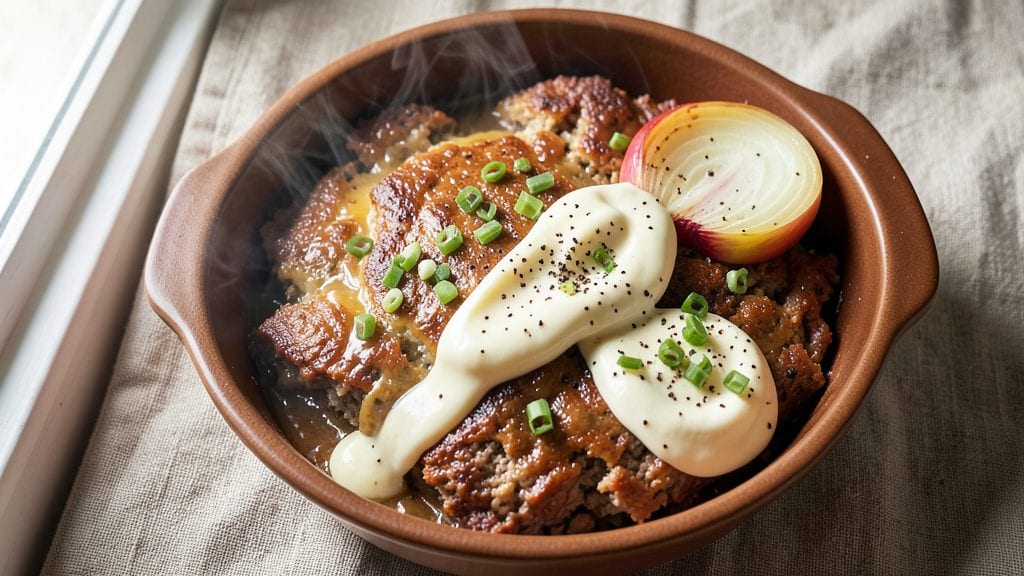
This classic Lipton onion soup meatloaf recipe delivers the comfort food experience you remember—tender, savory meatloaf topped with rich, creamy onion soup in a single pan. The secret lies in layering flavors through a simple yet precise method that transforms basic ingredients into a restaurant-worthy dish.
I've perfected this technique over years of holiday gatherings, where it consistently earns rave reviews from even the most skeptical eaters.
The beauty of this recipe is its simplicity: no fancy equipment, just a few essential ingredients that work together beautifully. You'll start with ground beef seasoned just right, then build the iconic creamy onion soup topping using Lipton's classic mix.
The magic happens when the soup transforms into a golden, bubbling crust during baking, sealing in all those savory flavors. This is comfort food at its finest—warm, hearty, and impossible to resist.
By the time you pull it from the oven, you'll have a perfectly cooked meatloaf with a tender interior and a crispy, golden exterior. The creamy onion soup topping adds a layer of richness that makes every bite unforgettable.
This dish is foolproof enough for weeknight dinners but special enough for holiday tables. The best part? It all comes together in one pan, making cleanup a breeze.
Serve with mashed potatoes or green beans for the full classic experience. This recipe is designed to impress without stress, delivering that nostalgic comfort food feeling with minimal effort. Let's get started on creating your perfect meatloaf dinner.
Ingredients for classic lipton onion soup meatloaf
Classic Lipton onion soup meatloaf delivers nostalgic comfort with just twelve simple ingredients.
| Ingredient | Amount | Notes |
|---|---|---|
| Ground Beef 🥩 | 1 ½ lb | 80/20 fat ratio preferred |
| Lipton Onion Soup Mix 🧅 | 2 tbsp | Classic or low-sodium variety |
| Large Eggs 🥚 | 1 whole | Room temperature preferred |
| Yellow Onion 🧅 | 1 medium | Diced for soup topping |
| Milk 🥛 | ½ cup | Whole milk for creaminess |
| Kraft Philadelphia Cream Cheese 🧀 | 4 oz | Softened at room temperature |
| All-Purpose Flour 🌾 | ¼ cup | For meatloaf binding |
| Worcestershire Sauce 🍶 | 1 tbsp | For umami depth |
| Kosher Salt 🧂 | 1 tsp | Adjust to taste |
| Ground Black Pepper 🌶️ | ½ tsp | Freshly cracked |
| Garlic Powder 🧄 | ½ tsp | For extra flavor |
| Olive Oil 🫒 | 1 tbsp | For pan preparation |
The ground beef is the foundation—80/20 fat ratio ensures juiciness without excess grease. Most grocery stores carry this, but Costco or Walmart often have it at better prices. Look for packages labeled 'ground chuck' if you want extra marbling for flavor. The Lipton onion soup mix is non-negotiable for that iconic taste, though low-sodium works if you prefer less salt. For the cream cheese, Kraft Philadelphia is the standard, but any block-style cream cheese will work if softened properly. The milk should be whole for maximum creaminess in the topping—skim will make it watery.
No Lipton mix? Homemade substitute with 1 tbsp onion powder, 1 tsp sugar, ½ tsp garlic powder, and ½ tsp celery salt gets close. Short on cream cheese? Sour cream at half the amount works in a pinch. The eggs can be separated if you're watching fat, but the yolk adds richness that's hard to replicate. For the onion, yellow works best—red adds color but lacks sweetness. The Worcestershire sauce is optional but adds that deep, savory note that makes this dish restaurant-quality. If you don't have it, soy sauce at half the amount is a decent swap.
Prep the meatloaf mix ahead and refrigerate for up to 24 hours—this helps with texture. The cream cheese topping should be mixed just before baking to prevent curdling. Leftovers keep 3-4 days in the fridge, but honestly, this reheats even better the second time. For meal prep, portion into single servings and freeze for up to 3 months. The topping can be made separately and baked on top later if you're prepping ahead.
Why You'll Love This Recipe
- Here’s what sold me: the crust. Egg and milk bind the meatloaf so it browns to a golden crust while staying juicy inside. (Yes, even on a Tuesday night.) The onion soup mix’s depth makes every bite taste like a hug from your grandma.
- Pantry Magic: I swear by this recipe when I forget to buy fresh herbs—just the onion soup mix does all the work. That savory, umami punch from the powdered seasoning? It turns basic ground beef into something that tastes like it simmered for hours.
- Crispy-Creamy Magic: Here’s what sold me: the crust. Egg and milk bind the meatloaf so it browns to a golden crust while staying juicy inside. (Yes, even on a Tuesday night.) The onion soup mix’s depth makes every bite taste like a hug from your grandma.
- Leftovers That Win: This meatloaf begs to be reheated—sliced and warmed in the oven with a splash of milk, it’s just as good the third day. I freeze half for lazy Mondays, and no one ever complains. (Between us, my kids ask for it more than pizza.)
Step-by-step instructions for classic Lipton onion soup meatloaf
This method delivers a perfectly tender meatloaf with that iconic creamy onion soup topping—all in one pan.
Prepare the Meatloaf Mixture
In a large mixing bowl, combine the 1.5 lb ground beef, 2 tbsp Lipton Onion Soup Mix, 1 tbsp Worcestershire Sauce, 1 tsp kosher salt, 0.5 tsp ground black pepper, and 0.5 tsp garlic powder. Use your hands to gently mix until just combined—overworking the meat makes it tough. The mixture should hold together but still feel slightly crumbly.
In a separate small bowl, whisk together the 1 whole large egg, 0.5 cup milk, and 0.25 cup all-purpose flour until smooth. This creates a binding mixture that keeps the meatloaf moist. Pour this wet mixture into the beef and mix again until fully incorporated. The texture should be cohesive but still easy to shape—if it's too sticky, add 1 tablespoon more flour until it forms a workable dough.
Assemble and Shape the Meatloaf
Lightly grease a 9x5-inch loaf pan with 1 tablespoon olive oil to prevent sticking. Transfer the meatloaf mixture to the prepared pan and spread it evenly, pressing down gently to remove air pockets. The loaf should fill the pan about ¾ full—this ensures proper expansion during baking. Smooth the top with a wet spatula for an even surface.
Preheat your oven to 375°F. Place the loaf pan on a baking sheet to catch any potential drips. Here's the thing—don't overpress the meatloaf. You want it firm enough to hold its shape but not so dense that it becomes dry. A gentle press with your fingers should be enough to create a smooth, even top.
Prepare the Onion Soup Topping
While the oven preheats, finely dice the 1 medium yellow onion—you want small, even pieces that will melt into the cream cheese mixture. In a small bowl, combine the diced onion with the 4 oz softened Kraft Philadelphia cream cheese and mix until fully incorporated. The cream cheese should be soft enough to blend smoothly, but not melted—this ensures the topping holds together during baking.
Spread this onion-cream cheese mixture evenly over the top of the raw meatloaf, creating a ¼-inch thick layer. Press down lightly to help it adhere, but don't overwork it. The edges should be sealed to prevent the topping from sliding off during baking. This is where the classic flavor comes together—the creamy, savory topping contrasts perfectly with the savory meatloaf beneath.
Bake to Golden Perfection
Bake the meatloaf uncovered at 375°F for 50-60 minutes, until the internal temperature reaches 160°F when measured with an instant-read thermometer. You'll know it's ready when the edges are golden brown and the creamy topping has set but still looks slightly glossy. The meatloaf should pull away cleanly from the sides of the pan.
Here's the critical part: don't open the oven during the last 20 minutes of baking. The steam helps create that signature creamy texture. If the topping starts to brown too quickly, tent it loosely with aluminum foil to prevent over-browning while still allowing it to cook through. The internal temperature is your best guide—it ensures the meat is safe to eat and properly cooked.
Rest and Serve
Remove the meatloaf from the oven and let it rest in the pan for 10 minutes before slicing. This resting period allows the juices to redistribute, ensuring each slice stays moist and flavorful. The creamy topping will firm up slightly as it cools, but it should still be smooth and spreadable.
Slice the meatloaf into ¼-inch thick portions and serve immediately. Each bite delivers the rich, savory flavor of the meatloaf paired with the creamy, oniony topping—just like the classic soup. For extra presentation, garnish with additional diced onion or a sprinkle of freshly cracked black pepper. The combination of textures and flavors makes this a comforting, crowd-pleasing dish that's perfect for any meal.
Pro Tips For Making Classic Lipton Onion Soup Meatloaf
- Preheat Pan Properly: I learned this the hard way—cold pans make for a sad, greasy mess. Heat your baking dish (or skillet, if pan-searing) on medium-high for 5 minutes before adding the meatloaf. The beef will brown better and release fat more evenly, giving you that classic crust without sticking.
- Sauté the Onion First: Skip the raw onion bits in your meatloaf—sauté ½ diced yellow onion in butter or oil until soft and translucent (about 5 minutes). Mix it into the ground beef before adding the soup mix, and the flavor will weave through the whole loaf instead of sitting as a separate texture.
- Don’t Overmix the Beef: Yes, it’s tempting to get everything perfectly combined, but overworking the beef turns it dense. Mix the ingredients just until the soup mix and egg are evenly distributed—lumps are fine. The less you handle it, the juicier the final result.
- Bake Low and Slow: After browning (if pan-searing) or shaping, bake at 350°F—no higher. Rushing to 400°F for a faster cook will dry it out. A meat thermometer is your friend: pull it at 160°F internal temp, then let it rest 5 minutes under foil before slicing. (Your future self will thank you.)
Pro cooking tips for great classic lipton onion soup meatloaf
Temperature Precision
Set your oven to 375°F—this is the sweet spot for even cooking without drying out the meatloaf. I use an Oster digital thermometer to confirm accuracy, as home ovens can vary by 25°F. Preheat for 15 minutes to ensure consistent heat throughout baking. 🌡️
Meatloaf Binding Hack
The egg-milk-flour mixture is your secret weapon for moisture. Whisk the 1 egg, ½ cup milk, and ¼ cup flour until completely smooth—no lumps! If the mixture feels too sticky, add 1 tbsp more flour gradually.
This prevents a dry loaf while keeping the texture tender. I've ruined meatloaves by skipping this step—don't make my mistake!
Topping Adhesion Trick
Press the cream cheese topping down gently but firmly to create a seal. Use a wet spatula to smooth the edges—this helps it stick during baking. For extra insurance, chill the assembled meatloaf in the fridge for 15 minutes before baking.
The cold helps the topping hold its shape until it melts into perfection. 🧀
Avoiding the Dry Pitfall
Never overmix the meatloaf batter—just combine until ingredients are evenly distributed. Overworking develops gluten, which makes meatloaf tough. I like to use my hands for this step, but if you prefer tools, use a wooden spoon.
Also, avoid opening the oven during the last 20 minutes—this preserves moisture and prevents the topping from cracking.
Internal Temp Check
Use an instant-read thermometer to check the meatloaf's internal temperature at 160°F. The thermometer should read this in the thickest part of the loaf. If you don't have one, cut into the center—juices should run clear, not pink.
The creamy topping should be set but still slightly glossy when done. 💡
Resting for Juiciness
Let the meatloaf rest for 10 full minutes before slicing. This crucial step allows juices to redistribute, preventing dry slices. I often cover it loosely with foil during resting to maintain warmth.
Slice against the grain for tender bites—this is especially important for meatloaf, which has directional muscle fibers. The topping will firm up slightly but remain creamy and delicious. ✨
Nutrition facts
Frequently asked questions
Can I make this meatloaf without a loaf pan?
Use a 9-inch round cake pan or even a baking dish lined with parchment paper. Shape the meatloaf into a round or oval loaf, then top with the cream cheese mixture. Bake at 375°F for 45-50 minutes until the internal temp reaches 160°F. The shape won't affect flavor—just adjust baking time by 5-10 minutes depending on thickness.
Why does my onion soup topping sometimes crack or slide off?
This usually happens from two issues: either the topping wasn't pressed down firmly enough or the meatloaf expanded too much during baking. To fix it, chill the assembled meatloaf for 15 minutes before baking to help the topping set. Also, spread the topping in a ¼-inch thick layer—thicker layers crack more easily. For extra adhesion, mix 1 tbsp milk into the cream cheese mixture.
Can I substitute ground turkey or chicken for the beef?
Yes, but expect a slightly different texture. Ground turkey (especially 93% lean) works best—add 1 tbsp olive oil to prevent dryness. For chicken, use 85% lean and increase the milk in the binding mixture to ⅓ cup. Both alternatives will be leaner, so reduce baking time by 5-10 minutes and check internal temp at 165°F for poultry safety.
How can I make this dish ahead of time?
Prepare the meatloaf mixture up to 24 hours ahead and refrigerate in an airtight container. Assemble the loaf and topping the morning of baking, then chill for 1 hour before baking as directed. For leftovers, store in the fridge for 3-4 days or freeze for 3 months. Reheat slices in the oven at 350°F for 10-15 minutes—the topping reheats beautifully when warmed through.
What's the best way to serve this meatloaf?
This dish shines with classic sides like creamy mashed potatoes, roasted green beans, or a simple garden salad. For extra comfort, add crusty bread to soak up the creamy topping. The meatloaf's rich flavors pair well with red wine (like a bold Cabernet) or even root beer for a fun twist. Serve with ketchup or gravy on the side if you prefer traditional presentation.