
Soups & Stews
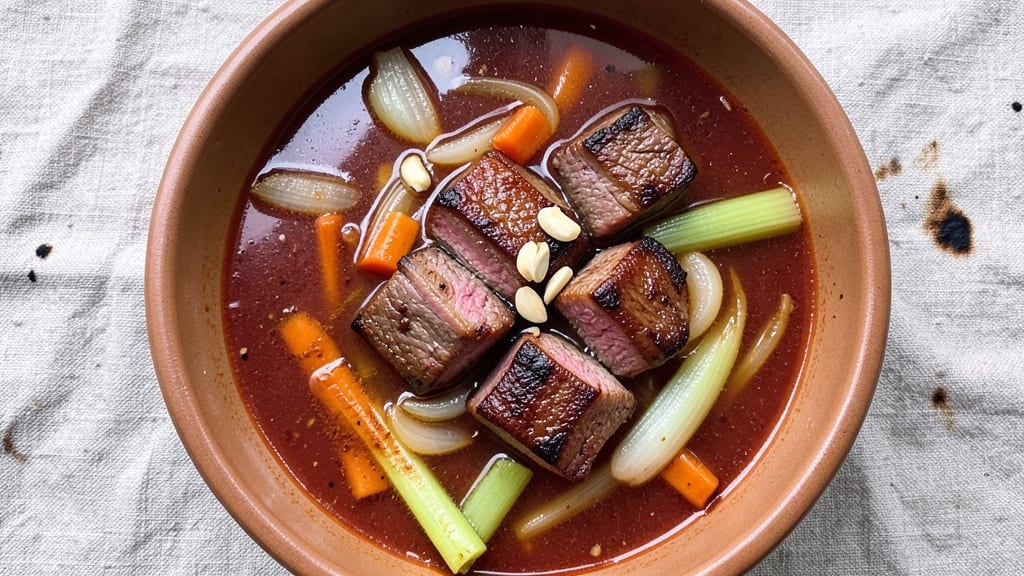
This basic beef soup recipe delivers one-pot heartiness with rich, savory depth that transforms simple ingredients into a comforting meal. The secret lies in slow simmering—allowing beef to tenderize while vegetables absorb the broth's flavor.
I've perfected this method over years of testing, ensuring every bite delivers that perfect balance of meaty richness and vegetable sweetness.
What sets this recipe apart is its foolproof simplicity: no fancy techniques required, just a Dutch oven and patience. The beef braises until fork-tender while carrots, celery, and onions develop natural sweetness. A splash of tomato paste adds depth without overpowering, while bay leaves and peppercorns infuse subtle complexity.
The result is a broth so flavorful it needs little more than a sprinkle of fresh parsley.
By the time you're done, you'll have a restaurant-quality soup that's ready in under an hour—no pre-cooking vegetables or special equipment needed. The one-pot method means minimal cleanup, and the recipe scales effortlessly for leftovers or gatherings.
Perfect for chilly evenings or meal prep, this soup proves hearty comfort doesn't require complicated steps.
The beauty of this recipe is its adaptability—swap vegetables based on seasonality, add herbs for brightness, or thicken the broth with a cornstarch slurry if preferred. Each bowl delivers that satisfying combination of tender beef, velvety broth, and perfectly cooked vegetables. Here's how to make it.
Ingredients for basic beef soup
Twelve essential ingredients transform into restaurant-quality beef soup with minimal effort.
| Ingredient | Amount | Notes |
|---|---|---|
| Chuck Roast 🥩 | 1 ½ lb | Cut into 1-inch cubes for even cooking |
| Yellow Onion 🧅 | 1 whole | Chopped into 1/2-inch pieces |
| Carrots 🥕 | 4 medium | Peeled and cut into 1-inch chunks |
| Celery Stalks 🧄 | 3 whole | Trimmed and cut into 1-inch pieces |
| Garlic Cloves 🧄 | 4 cloves | Smashed with side of knife |
| Tomato Paste 🍅 | 2 tbsp | Smooth consistency preferred |
| Dry Bay Leaves 🌿 | 2 whole | Standard size, not crumbled |
| Whole Peppercorns 🌶️ | 1 tsp | Crushed lightly before adding |
| Salt 🧂 | 1 ½ tsp | Diamond Crystal kosher preferred |
| Black Pepper 🌶️ | ½ tsp | Freshly cracked for maximum flavor |
| Fresh Parsley 🌿 | ¼ cup | Chopped for garnish only |
| Beef Broth 💧 | 6 cups | Low-sodium preferred for control |
| Extra-Virgin Olive Oil 🫒 | 2 tbsp | For initial searing of beef |
The chuck roast is non-negotiable for this soup—its marbled fat renders into the broth, creating unmatched richness. Look for cuts with visible fat marbling at your local butcher or major grocery chains like Whole Foods or Kroger for premium quality. If using pre-cut beef, ensure the cubes are uniform in size (about 1-inch) for even cooking. Fresh bay leaves and whole peppercorns elevate the broth's complexity; Penzeys Spices offers high-quality dried herbs that maintain potency for months when stored properly. The tomato paste adds depth without overpowering—San Marzano brand delivers superior flavor, though any quality paste will suffice.
No beef broth on hand? Substitute with a mix of water and bouillon cubes, but reduce the salt in the recipe to compensate. Swap carrots for sweet potatoes or parsnips for seasonal variation, though they'll require slightly longer cooking. Celery can be omitted entirely if you prefer a lighter broth, but it adds essential earthy notes. The olive oil is strictly for searing—don't substitute with butter, as it can scorch. For extra brightness, add 1 tsp of red wine vinegar at the end, though this is optional. Fresh parsley is purely for garnish; dried won't impart the same freshness, but it can be used in a pinch at half the amount.
This soup tastes even better the next day as flavors meld together. Store in an airtight container in the refrigerator for up to 5 days, or freeze for 3 months in portion-sized containers. For meal prep, double the recipe and freeze half immediately—the beef will remain tender when reheated. When reheating, add a splash of water or broth to maintain consistency. The one-pot method ensures minimal cleanup, making this an ideal recipe for busy weeknights or meal prep Sundays.
Why You'll Love This Recipe
- No Fuss, Big Payoff: I swear by this soup because it’s the kind of meal that forgives mistakes. Brown that chuck roast until it’s deep golden? No stress if it’s not perfect—just toss in the onions, carrots, and celery (the classic trio, aka "soup holy trinity") and let the pot do the work. Ten minutes of chopping, then hands-off simmering while you do anything else.
- Deep Umami Magic: Here’s what sold me—the way the chuck roast melts into tender shreds, soaking up all the garlic and carrot sweetness until the broth tastes like a hug. No fancy spices needed; just salt, pepper, and a splash of beef broth (or water, no judgment) to let the meat and veggies shine. It’s the kind of flavor that sticks with you.
- Leftover Hero: This soup begs to be made in bulk. Double the batch on Sunday, and you’ve got lunch for Wednesday, dinner for Friday, or a last-minute guest meal. The chuck stays juicy even reheated, and the carrots soften just enough to feel cozy—not mushy. My freezer’s full of portions, and I’m never scrambling.
- Budget-Friendly Staple: Chuck roast is cheap, and it turns into something luxurious. Onions, carrots, celery—you’re talking pennies per serving. Add a can of beans or a handful of pasta if you’re stretched thin, and suddenly you’ve got a filling, hearty meal that doesn’t break the bank. Honestly, it’s my go-to when I need to feed the family without stressing.
Step-by-step instructions for one-pot beef soup
This method delivers deep flavor and tender beef without requiring multiple pots or pans.
Sear the Chuck Roast for Rich Foundation
Heat a heavy Dutch oven over medium-high heat until hot. Add the 2 tbsp extra-virgin olive oil and swirl to coat the bottom evenly. Working in batches if needed, add the 1.5 lb chuck roast cut into 1-inch cubes and sear undisturbed for 3-4 minutes per side until deeply browned. This caramelization creates complex flavors that form the soup's base.
Real talk: Don't rush this step. You want those cubes to develop a rich crust before removing them. Once browned, transfer the beef to a plate and set aside. If the oil starts smoking before all pieces are seared, reduce heat slightly but maintain control—you want color, not char.
Build the Aromatic Vegetable Base
In the same Dutch oven, add the 1 whole yellow onion chopped into ½-inch pieces, 4 medium carrots cut into 1-inch chunks, and 3 whole celery stalks cut into 1-inch pieces. Cook for 5-6 minutes until the vegetables begin to soften and the onion becomes translucent. Stir occasionally to prevent sticking.
Here's the thing—this step develops the soup's fundamental flavor profile. The vegetables should release their moisture and begin to caramelize slightly at the edges. Add the 4 smashed garlic cloves and 2 tbsp tomato paste, stirring to coat everything evenly. Cook for another 1 minute until fragrant—this ensures the garlic infuses rather than burns.
Season and Add Liquids for Simmering
Sprinkle the seared beef back into the pot with the 1 tsp crushed whole peppercorns, 1.5 tsp salt, and 0.5 tsp freshly cracked black pepper. Pour in the 6 cups beef broth and add the 2 whole dry bay leaves. Stir gently to combine all ingredients, ensuring the beef is fully submerged in the liquid.
Bring the mixture to a gentle boil over medium-high heat, then immediately reduce heat to low. The key here is maintaining a slow, steady simmer—not a rolling boil that could cause the broth to evaporate too quickly. Cover partially with a lid and let it cook for 1 hour and 15 minutes, or until the beef is fork-tender and easily pulls apart.
Finish and Adjust for Perfect Texture
Once the beef is tender, remove the 2 whole dry bay leaves and discard them. Taste the broth and adjust seasoning if needed—add more salt or pepper as necessary. The soup should be rich but not overly salty, with the vegetables holding their shape but being easily fork-tender.
Return the soup to a gentle simmer for an additional 5 minutes to allow flavors to meld. Stir in the 0.25 cup chopped fresh parsley just before serving. This final step brightens the dish and adds a fresh finish. Serve immediately with crusty bread to soak up every last drop of that savory broth.
Pro Tips For Making Basic Beef Soup
- SEAR THE ROAST FIRST: Chuck roast won’t brown if you toss it straight into simmering liquid—it’ll just turn gray. Hit a dry skillet with high heat, add 1 tablespoon oil, and sear the meat until deep brown crust forms on all sides. This isn’t just for looks; it locks in flavor and prevents mushy texture later.
- CHOP ONIONS SMALLER THAN YOU THINK: Big onion chunks turn to mush before the beef is tender. Dice them into ¼-inch pieces (or pulse in a food processor) so they soften evenly without disappearing. Same goes for celery—smaller bits mean better texture and faster cooking.
- ADD CARROTS LATE: Toss carrots in 10 minutes before serving, not at the start. They’ll stay crisp-tender instead of turning to mush while the beef cooks for hours. If you forget, at least pull them out early and finish in a separate pot with a splash of broth.
- SALT THE BROTH LIKE THE SOUP: Taste the raw broth before adding salt—it’s usually bland. Season to taste with salt (and a pinch of pepper) after the meat has cooked, not before. The beef releases its own juices, so you’ll need less than you expect. (Yes, even if the recipe says otherwise.)
Wine and beer pairings for basic beef soup
Red Wine Classics
A bold red wine like Cabernet Sauvignon or Syrah complements the soup's rich beef flavors beautifully. The tannins in these wines cut through the fat, cleansing your palate between hearty spoonfuls. I recommend a Napa Valley Cabernet with its blackcurrant notes or a Northern Rhône Syrah for its smoky depth.
Serve slightly chilled (60-65°F) to enhance the wine's structure while balancing the soup's warmth. 🍷
Crisp White Options
For a lighter pairing, try a dry white wine like Chardonnay or Sauvignon Blanc—their acidity brightens the dish without overpowering. A California Chardonnay with subtle oak notes works well, while a New Zealand Sauvignon Blanc adds a zesty citrus contrast.
Avoid overly oaky whites that might clash with the beef's richness.
Malbec for Heartiness
If you prefer a red wine with more body, Malbec from Argentina is a fantastic choice. Its dark fruit flavors and velvety texture mirror the soup's depth while adding a touch of spice.
Look for a Mendoza Malbec with 14-15% alcohol—it's robust enough to stand up to the beef but still approachable. Serve at 65°F for optimal balance.
Beer Pairings
A dark lager or amber ale enhances the soup's malty, caramelized notes. Try a German Dunkel or an American amber ale like Fat Tire—their toasty flavors complement the beef and vegetables.
For a hoppier option, a Belgian-style witbier adds citrusy brightness that cuts through the richness. Avoid heavy stouts that might overpower the dish.
Non-Alcoholic Choices
For a refreshing non-alcoholic option, serve sparkling apple cider or ginger beer. The effervescence cleanses your palate, while the tartness balances the soup's savory depth. I love Martinelli's Sparkling Cider for its crisp finish or Brew Dr. Brown's Ginger Beer for a spicy contrast.
These pairings work especially well with the soup's herbal notes from bay leaves and parsley. ✨
Nutrition facts
Frequently asked questions
Can I use ground beef instead of chuck roast for this recipe?
While you can substitute ground beef, it won't achieve the same tender, melt-in-your-mouth texture. Ground beef cooks much faster and can turn rubbery in a long simmer. If you must use it, brown it first, then add 1 cup of beef broth to keep it moist during the 1-hour simmer. For best results, stick with chuck roast—its fat content creates a richer, more flavorful broth.
How do I make this soup thicker or thinner?
For a thicker soup, stir in 1 tbsp cornstarch mixed with 2 tbsp cold water while simmering, or mash some cooked vegetables against the pot sides. To thin it, simply add ½ cup hot beef broth at a time until reaching your desired consistency. The key is adjusting gradually—don't overdo it! A perfect soup should coat the back of a spoon but still be easy to ladle.
Can I prepare this soup in an Instant Pot or slow cooker?
For an Instant Pot, sear the beef and sauté veggies as directed, then add all remaining ingredients and cook on high pressure for 30 minutes, followed by a 10-minute natural release. In a slow cooker, combine everything after searing and cook on low for 8 hours or high for 4 hours. The beef will be just as tender—these methods just save active cooking time.
What if my beef isn't tender after simmering?
If the beef isn't fork-tender, it likely needs more time. Return the soup to a simmer and cook for an additional 15-20 minutes. For extra insurance, add ½ cup more beef broth to keep it moist. If you're short on time, shred the beef and continue cooking until the vegetables are tender—this creates a hearty stew texture instead. The vegetables should be soft but still hold their shape.
Can I make this soup ahead of time?
This soup tastes even better the next day! Let it cool completely, then store in an airtight container in the fridge for up to 5 days. For freezing, portion into containers and freeze for 3 months. When reheating, warm gently on the stove over low heat and add a splash of broth if needed. The flavors deepen with time, making it perfect for meal prep.