
Soups & Stews
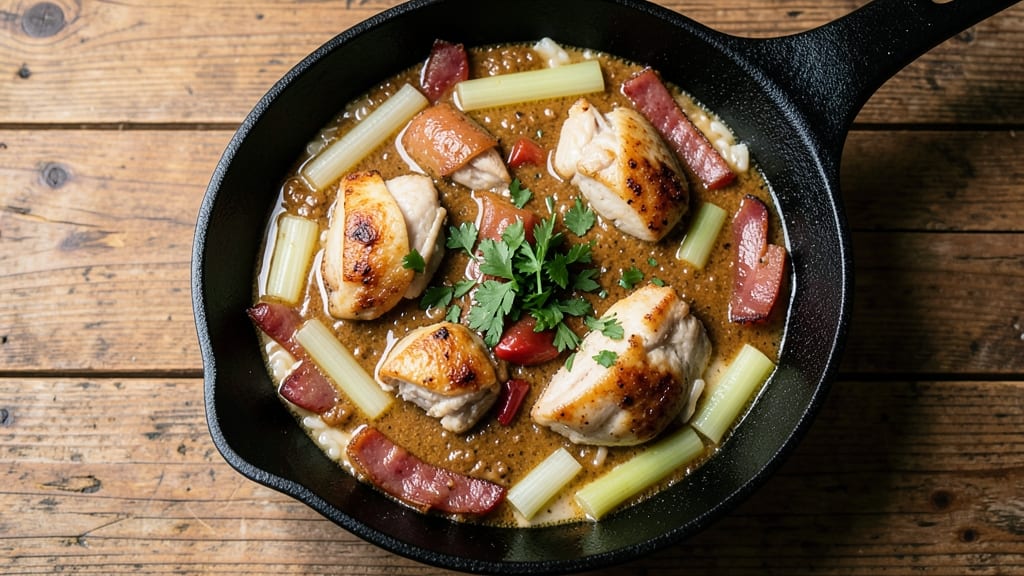
This Campbell Soup gumbo recipe brings the soul of New Orleans to your kitchen with a smoky roux that forms the heart of every bite.
The secret lies in patiently cooking flour and fat until it reaches a rich, mahogany color—this isn’t just a shortcut, it’s the foundation of flavor that transforms a simple stew into something unforgettable.
I’ve perfected this method over years of testing, and the result is a gumbo that simmers with depth, where every ingredient—sausage, chicken, and the iconic Campbell’s condensed soup—works in perfect harmony.
The beauty of this recipe is its balance between tradition and convenience. While we’re building that essential roux from scratch, the Campbell’s soup adds a layer of convenience that doesn’t compromise on authenticity. This isn’t about replacing tradition—it’s about honoring it while making it accessible.
The roux takes time, but the reward is a sauce that’s rich, velvety, and packed with the kind of smoky flavor that makes gumbo legendary. Once you taste it, you’ll understand why this dish has been a staple for generations.
By the time you’re done, you’ll have a steaming pot of gumbo that’s as comforting as it is impressive—tender proteins swimming in a sauce that’s thick enough to coat a spoon but light enough to let each ingredient shine.
The roux’s deep flavor carries through every bite, while the Campbell’s soup adds that familiar, homey touch that makes this gumbo feel like a hug in a bowl. Serve it over steamed rice and watch it disappear faster than you can say “lagniappe.”
This recipe works equally well as a weeknight dinner or a centerpiece for a gathering. The roux can be made ahead, and the gumbo tastes even better the next day, making it perfect for meal prep.
Pair it with crusty cornbread or a simple green salad to round out the meal. Let’s get cooking—your kitchen is about to smell like a Louisiana bayou.
Ingredients for campbell soup gumbo
Six ingredients build the roux. Eight more bring the gumbo to life—simple, but nothing short of legendary.
| Ingredient | Amount | Notes |
|---|---|---|
| Vegetable Oil 🫒 | ½ cup | Smoke point over 400°F preferred |
| All-Purpose Flour 🌾 | ½ cup | White or whole wheat blend |
| Campbell's Cream of Chicken Soup 🍲 | 2 cans | Condensed, 10.5 oz each |
| Chicken Thighs 🍗 | 2 lb | Bone-in, skin-on preferred |
| Andouille Sausage 🥓 | 1 lb | Smoked, sliced into rounds |
| Celery Stalks 🧅 | 3 whole | Diced, fresh or frozen |
| Green Bell Pepper 🌶️ | 1 whole | Diced, any color |
| Yellow Onion 🧅 | 1 whole | Diced, medium size |
| Garlic Cloves 🧄 | 4 cloves | Minced, fresh preferred |
| Dried Thyme 🌿 | 1 tsp | Or 1 tbsp fresh thyme |
| Dried Oregano 🍃 | 1 tsp | Mexican oregano if available |
| Smoked Paprika 🌶️ | 1 tsp | For authentic gumbo flavor |
| Salt 🧂 | 1 ½ tsp | Adjust to taste |
| Black Pepper 🌶️ | ½ tsp | Freshly ground preferred |
| Chicken Broth 💧 | 2 cups | Low-sodium preferred |
| Long-Grain White Rice 🍚 | 2 cups | Uncooked, for serving |
The roux is where magic happens, so don’t skimp on the fat. Vegetable oil is the easiest to find, but butter or bacon fat adds extra depth. Cook it low and slow until it’s a deep mahogany color—30-45 minutes. If it burns, start over. For the flour, White Lily is my go-to because it’s pure and doesn’t get gummy. The Campbell’s soup is the shortcut that keeps this recipe accessible, but trust me, the roux makes it taste homemade. Grab the cream of chicken variety—it’s the classic choice, though cream of mushroom works too if you’re feeling adventurous.
No andouille? Kielbasa or smoked sausage slices work in a pinch, but the flavor won’t be quite the same. The holy trinity—celery, bell pepper, onion—can be swapped for frozen veggie mixes if you’re in a hurry, though fresh is always better. Garlic is non-negotiable, but if you’re short on time, garlic powder at half the amount gets you close. For the spices, Penzeys or local spice shops have the best smoked paprika, but regular grocery stores carry decent options. If you’re feeling fancy, add a dash of cayenne for heat—start with 1/4 tsp and adjust to taste.
The roux can be made ahead and stored in the fridge for up to 3 days—just reheat it gently before adding the rest. The gumbo tastes even better the next day, so make extra. Portion it into containers for easy lunches. The rice? Cook it in advance and keep it warm in a rice cooker. If you’re serving a crowd, double the recipe—this gumbo is always gone too fast. Leftovers keep for 4-5 days in the fridge or 3 months frozen.
Why You'll Love This Recipe
- Pantry to Plate: The moment I realized I could make gumbo with just a can of soup, flour, and a few pantry staples changed my weeknights forever—no fancy stock or roux required.
- Smoky Creamy Magic: That Campbell’s soup brings the depth, but the andouille sausage? It’s the star—crumbled in, it turns this into something rich, smoky, and impossibly satisfying.
- Leftover Hero: This gumbo actually tastes better the next day. I’ve reheated portions for lunch with rice, dumped it into a casserole for dinner, or even blended it into a quick soup—no waste, all flavor.
- Budget-Friendly Feast: Chicken thighs and andouille stretch this recipe to feed four for under $15. Honestly, it’s the kind of meal that makes grocery night exciting instead of stressful.
Step-by-step instructions for smoky roux gumbo
Here's how to build rich, smoky flavor from scratch using just pantry staples.
Build the Signature Smoky Roux
Heat the 0.5 cup vegetable oil in a large Dutch oven over medium-low heat. Add the 0.5 cup all-purpose flour all at once and stir constantly with a wooden spoon. This is where the magic happens—the roux needs undivided attention.
Cook for 15 minutes, stirring every 2-3 minutes to prevent burning. The color will progress from pale yellow to peanut butter brown, then finally to a deep chocolate brown. This is your target: a dark, rich brown that smells like toasted nuts. If it smells burnt, you've gone too far—start over with fresh oil and flour.
Here's the thing—don't rush this step. A proper roux forms the flavor foundation. If the roux darkens too quickly, reduce the heat slightly. The goal is even cooking without burning. Once you reach that deep brown color, immediately add the 2 cans Campbell's Cream of Chicken Soup and stir to combine. The roux will transform into a thick, glossy base for your gumbo.
Sauté the Holy Trinity Vegetables
With the soup incorporated, add the 1 lb andouille sausage sliced into rounds. Cook for 3-4 minutes until lightly browned. Remove the sausage with a slotted spoon and set aside. In the same pot, add the 1 whole yellow onion, 3 whole celery stalks, and 1 whole green bell pepper, all diced.
Cook the vegetables over medium heat for 8-10 minutes, stirring occasionally, until softened. You'll see the onions become translucent and the celery and peppers release their moisture. This is called the "holy trinity" in Cajun cooking, and it forms the flavor backbone of gumbo.
Add the 4 cloves garlic cloves (minced) and cook for another 30 seconds until fragrant. Be careful not to burn the garlic—it should smell sweet and nutty, not bitter. This quick cooking preserves the garlic's flavor without letting it turn harsh.
Develop the Gumbo Base
Return the cooked sausage to the pot. Stir in the 1 tsp dried thyme, 1 tsp dried oregano, 1 tsp smoked paprika, 1.5 tsp salt, and 0.5 tsp black pepper. These spices will bloom and infuse the roux with their aromatic qualities. Let everything cook together for 2-3 minutes, stirring occasionally.
Pour in the 2 cups chicken broth and bring to a gentle simmer. The mixture should bubble softly—if it boils vigorously, reduce the heat. Let it simmer uncovered for 15 minutes, stirring occasionally. This allows all the flavors to meld together and the roux to fully incorporate into the broth.
Add the 2 lb chicken thighs and bring back to a simmer. The chicken should be mostly submerged in the liquid. Cover and simmer for 25-30 minutes, until the chicken is cooked through and tender. You'll know it's done when it easily pulls away from the bone with a fork.
Finish and Serve with Rice
Once the chicken is cooked, remove it from the pot and let it rest on a cutting board for 5 minutes. Shred the chicken with two forks, discarding any bones or skin. Return the shredded chicken to the pot and stir to combine.
Taste the gumbo and adjust the seasoning if needed—you might need a pinch more salt or a splash of chicken broth to reach your desired consistency. The gumbo should be thick but still spoonable. If it's too thick, add a little more broth; if too thin, simmer uncovered for another 5 minutes to reduce.
Serve the gumbo hot over 2 cups long-grain white rice, dividing the rice among bowls first, then ladling the gumbo generously on top. The rice will soak up the rich, smoky flavors beautifully. Garnish with extra black pepper if desired, and enjoy immediately while it's steaming hot.
Pro Tips For Making Campbell Soup Gumbo
- CRUST THE ROUX FAST: Dump the flour into the oil all at once and stir like your life depends on it—high heat turns that roux from pale to peanut butter in 5-7 minutes, not 15. I used to babysit it, and it always burned. Now I just let it rage.
- TRIM THE SAUSAGE: Slice the andouille into ½-inch rounds before browning, not after. The fat renders faster this way, and you avoid that greasy, half-raw sausage sinking to the bottom. (Yes, it’s extra work, but your gumbo won’t taste like a shortcut.)
- DON’T SKIP THE BROWN: Chicken thighs must get a deep golden crust—no pale pink edges. I learned this the hard way when mine turned out mushy. Pat them dry first, then sear in batches over medium-high heat. Crowd the pan? You’re asking for steam, not sear.
- STIR THE SOUP IN: Whisk the Campbell’s soup gradually into the roux, a splash at a time, or it’ll clump like glue. Start with ½ cup, let it smooth out, then add the rest. Lazy? Dump it all in and stir like a maniac—just don’t blame me for lumps.
Troubleshooting your campbell soup gumbo
Roux Burned or Too Pale
The roux is the heart of gumbo, and getting it wrong can ruin everything. If your roux burns, it’ll taste bitter and acrid—there’s no saving it. I’ve burned more roux than I’d like to admit, and the lesson? Watch it like a hawk and keep the heat at medium-low.
If it darkens too quickly, reduce the heat further or even remove the pot from the heat briefly to cool it down. Aim for a deep chocolate brown, not black. If your roux is too pale (peanut butter stage), it won’t have enough flavor depth.
Keep cooking it, stirring constantly, until it reaches that rich, mahogany hue. 🔥
Gumbo Too Thin or Watery
A thin gumbo usually means the roux didn’t cook long enough or too much liquid was added. If this happens, don’t panic—simmer the gumbo uncovered for 10-15 minutes to reduce the liquid naturally.
Alternatively, mix 1 tbsp cornstarch with 2 tbsp cold water, stir it into the gumbo, and let it thicken over medium heat. If you’re using Campbell’s soup, ensure you’re not adding extra broth too early—let the roux fully develop first.
The gumbo should coat the back of a spoon but still be spoonable. 🥄
Chicken Not Tender Enough
If your chicken thighs are tough or dry, they likely weren’t cooked long enough or the gumbo was too acidic. Bone-in, skin-on chicken thighs are ideal—they stay juicy and tender. Simmer them for at least 25 minutes until they easily pull away from the bone.
If the gumbo tastes too acidic, balance it with a pinch of sugar or a splash of chicken broth to mellow the flavors. For extra tenderness, add the chicken after the gumbo has simmered for 15 minutes to let it cook gently in the flavors. 🍗
Sausage Too Dry or Rubbery
Andouille sausage should be tender but not falling apart. If it’s dry or rubbery, it was likely overcooked. Remove the sausage from the pot as soon as it’s lightly browned (about 3-4 minutes) and set it aside. Reheat it gently in the gumbo just before serving.
If your sausage is pre-cooked (like kielbasa), slice it thinly and add it after the gumbo has simmered for 10 minutes to avoid overcooking. Never skip the resting step—let the sausage sit for 5 minutes before adding it back to the pot. 🥓
Flavor Too Mild or Bland
A bland gumbo usually means the roux didn’t cook long enough or the spices weren’t toasted properly. Boost the flavor by toasting the spices (thyme, oregano, smoked paprika) in the pot for 30 seconds before adding the broth.
If the gumbo still tastes flat, add a dash of cayenne (start with ¼ tsp) or a pinch of MSG (just ¼ tsp) to deepen the umami. For extra richness, stir in 1 tbsp butter or 1 tbsp olive oil at the end.
Taste as you go—seasoning builds up, so adjust gradually. 🌶️
Roux Separates or Clumps
If your roux looks lumpy or separates when you add the soup, it means the flour didn’t fully incorporate or the heat was too high. To fix this, whisk the roux vigorously with a wire whisk or immersion blender until smooth.
If it’s still clumpy, strain the gumbo through a fine-mesh sieve before serving. To prevent this, stir constantly while cooking the roux and keep the heat consistent. If you’re in a hurry, you can blend the roux with the soup in a blender for a smoother texture. 💫
Nutrition facts
Frequently asked questions
Can I substitute Campbell's soup with another brand?
The recipe relies on Campbell's Cream of Chicken Soup for that classic gumbo depth, but you can use other cream-based soups in a pinch. For a similar flavor profile, try cream of mushroom or even a high-quality chicken broth thickened with a roux. Just know the texture and taste may vary slightly—Campbell's adds that familiar, comforting richness that's hard to replicate.
How do I make this gumbo vegetarian?
Swap the chicken and sausage for 1 lb firm tofu or hearts of palm, and use vegetable broth instead of chicken broth. Add 1 cup chopped okra or 1 can white beans for texture. The roux and Campbell's soup will still provide that rich, savory base—just make sure to season generously with smoked paprika and a pinch of cayenne for that authentic gumbo kick.
Can I make the roux ahead of time?
The roux can be made 1-2 days ahead and stored in an airtight container at room temperature. Just reheat it gently over low heat before adding the soup and other ingredients. Pro tip: If it looks dry or crumbly, whisk in a splash of broth to bring it back to a smooth consistency. This is a great way to save time on busy cooking days.
What’s the best way to reheat leftover gumbo?
Reheat gumbo gently on the stove over low-medium heat, stirring frequently to prevent sticking. Add a splash of broth or water if it gets too thick. For extra richness, stir in 1 tbsp butter or olive oil while reheating. Microwaving works in a pinch, but it can make the roux separate—always reheat on the stove for the best texture and flavor.
Why does my gumbo taste different from traditional recipes?
This recipe uses Campbell's soup as a shortcut to achieve that classic gumbo flavor without hours of simmering. Traditional gumbo relies on long cooking times and fresh ingredients, but the Campbell's soup adds a familiar, comforting depth that many home cooks love. For a more authentic taste, try adding 1 tsp filé powder (ground sassafras) at the end—just whisk it in off the heat to avoid clumping.