
Soups & Stews
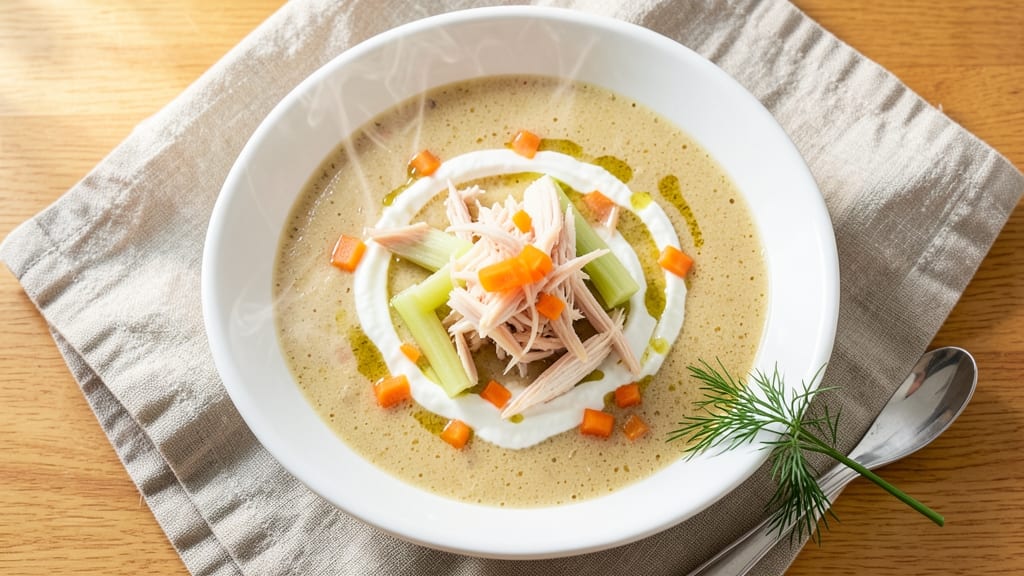
This bariatric cream of chicken soup delivers all the comforting flavors of classic velouté without the heaviness, using protein-rich ingredients and light textures perfect for post-surgery diets.
The secret lies in blending chicken broth with finely pureed vegetables and just enough dairy to create a velvety yet low-fat base—no heavy cream or excessive fat here. Every spoonful provides essential nutrients while being gentle on sensitive stomachs, making it an ideal meal for recovery phases.
Traditional cream soups rely on thickeners like roux or heavy cream, but this version achieves richness through protein-packed chicken breast and low-fat Greek yogurt, creating a smooth, easy-to-digest texture without sacrificing flavor. The vegetables are finely pureed to prevent bulk, ensuring each bite is gentle yet satisfying.
What sets this apart is the balance—it’s creamy enough to feel indulgent but designed to support digestion and nutrient absorption.
The result is a lightweight velouté with a delicate, velvety mouthfeel and subtle seasoning that highlights the chicken’s natural flavor. This recipe serves as both a comforting meal and a nutritional powerhouse, providing lean protein, vitamins, and minerals in a form that’s easy to tolerate.
Perfect for those following bariatric guidelines, it proves that nourishing meals can still be delicious and satisfying.
Portion control is built into the recipe, with each serving carefully measured to align with bariatric dietary needs. The instructions include tips for adjusting consistency and flavor to personal preferences, ensuring flexibility without compromising the dish’s health benefits.
Ready in under 30 minutes, it’s a quick yet thoughtful solution for meal planning.
Ingredients for bariatric cream of chicken soup
Protein-rich, low-fat ingredients designed for gentle digestion and satisfying flavor.
| Ingredient | Amount | Notes |
|---|---|---|
| Boneless, Skinless Chicken Breast 🍗 | 12 oz | Finely diced for pureeing |
| Low-Sodium Chicken Broth 🥄 | 4 cups | Homemade or high-quality low-sodium |
| Low-Fat Plain Greek Yogurt 🧀 | ¼ cup | Unsweetened, 2% or less |
| Extra-Virgin Olive Oil 🫒 | 1 tbsp | For gentle sautéing |
| Carrots 🥕 | ½ cup | Finely diced, organic preferred |
| Celery Stalks 🧅 | ¼ cup | Finely diced, leafy parts removed |
| Yellow Onion 🧅 | ¼ cup | Finely diced, sweet variety |
| Garlic Cloves 🧄 | 2 cloves | Minced, fresh preferred |
| Fresh Parsley 🌿 | ⅛ cup | Finely chopped, for garnish |
| Diamond Crystal Kosher Salt 🧂 | ½ tsp | Adjust to taste |
| Freshly Ground Black Pepper 🌶️ | ¼ tsp | Lightly seasoned |
| Low-Fat Heavy Cream 🥛 | ⅛ cup | 1% or less, optional for creaminess |
| Arrowroot Powder 🌾 | ½ tsp | For gentle thickening |
The chicken breast is the foundation here—opt for skinless, boneless cuts with minimal fat to align with bariatric guidelines. Trader Joe's or Whole Foods carry high-quality, lean options that work perfectly. Finely dice the chicken before cooking to ensure it blends smoothly into the velouté, creating a silky texture without bulk. For the broth, prioritize low-sodium versions to avoid excess salt intake, which can be particularly important during recovery phases. Homemade broth made from organic chicken is ideal, but high-quality store-bought brands like Pacific Foods or Imagine work well too.
No low-fat Greek yogurt? Unsweetened almond yogurt or coconut yogurt can substitute, though texture may vary slightly. The Greek yogurt adds creaminess without the heaviness of traditional dairy, making it ideal for this recipe. For the vegetables, organic carrots and celery are preferred to minimize pesticide exposure, but conventional produce works fine if washed thoroughly. If you're concerned about the arrowroot powder, cornstarch at half the amount can be used, though it may yield a slightly thicker consistency. The optional heavy cream can be omitted entirely if you prefer a lighter texture, though it does add a touch of richness.
Store the broth and cooked vegetables separately in airtight containers in the fridge for up to 5 days, or freeze for 3 months to extend shelf life. The Greek yogurt should be kept in its original container and used within 1 week of opening. For meal prep, assemble the soup just before serving to maintain the velvety texture—reheating can cause separation. If you need to reheat, do so gently over low heat, stirring constantly, and add a splash of broth if the soup thickens too much. Portion into 4-ounce servings for precise bariatric-friendly portions.
Why You'll Love This Recipe
- No-Fuss Protein Boost: I swear by this for days I’m too tired to think—just shred the chicken, simmer it in broth, and stir in that Greek yogurt at the end. The chicken stays tender, and the yogurt thickens it just enough without fuss.
- Creamy Without Guilt: Honestly, the combo of low-fat yogurt and olive oil makes this soup ridiculously rich, but my scale doesn’t panic. The carrots add natural sweetness that balances the tang—like a hug for your taste buds that won’t weigh you down.
- Meal-Prep Magic: This keeps perfectly for 4 days in the fridge, and I’ve frozen portions for lazy Mondays. Reheat it, add a sprinkle of fresh dill, and—boom—dinner’s ready. My bariatric friends call it their “emergency soup” for bad days.
- Budget-Friendly Staples: Between us, chicken breast and carrots are cheap, and the broth stretches forever. I make a double batch, use half for soup, and save the rest for a quick chicken salad or stir-fry. Zero waste, all flavor.
Step-by-step instructions for bariatric cream of chicken soup
This method delivers a protein-rich, velouté-style soup with a velvety texture and balanced nutrition.
Sauté the Aromatic Vegetables
Heat the 1 tablespoon extra-virgin olive oil in a medium saucepan over medium-low heat. Add the ½ cup finely diced carrots, ¼ cup finely diced celery stalks, and ¼ cup finely diced yellow onion. Cook for 5-6 minutes until the vegetables soften and the onion becomes translucent.
Stir occasionally to prevent burning—you're looking for gentle browning, not charring. The vegetables should release their natural moisture and begin to meld together. This foundational step builds the soup's flavor base while ensuring proper texture for the velouté.
Develop the Chicken Base
Add the 2 minced garlic cloves and cook for 30 seconds until fragrant. Push the vegetables to one side of the pan and add the 12 oz finely diced boneless, skinless chicken breast to the empty space. Cook the chicken for 3-4 minutes until it turns opaque and begins to brown slightly.
This partial cooking ensures the chicken develops flavor before pureeing. Stir occasionally to promote even browning. The chicken should release its juices into the pan, creating a flavorful foundation for the soup. Once the chicken is cooked through, remove it from the pan and set aside temporarily.
Build the Velouté Foundation
Pour in the 4 cups low-sodium chicken broth and bring to a gentle simmer over medium heat. Return the cooked chicken to the pan and simmer for 10 minutes, allowing the chicken to reabsorb some of its juices and infuse the broth with flavor.
Use an immersion blender to puree the soup directly in the pan until completely smooth. For a traditional approach, carefully transfer the soup to a blender in batches, then return it to the pan. The result should be a silky, velvety texture with no visible chunks. This step is critical for achieving the velouté's signature consistency.
Thicken and Finish the Soup
In a small bowl, whisk together the ½ teaspoon arrowroot powder with 2 tablespoons cold water to create a slurry. Slowly pour the slurry into the simmering soup while stirring constantly. Cook for 2-3 minutes until the soup thickens to a creamy consistency.
Remove the pan from heat and stir in the ¼ cup low-fat plain Greek yogurt and ¼ cup low-fat heavy cream. Season with ½ teaspoon kosher salt and ¼ teaspoon freshly ground black pepper. The yogurt adds tangy depth while keeping the soup protein-rich, while the cream enhances the velvety texture without excessive calories.
Garnish and Serve
Ladle the soup into bowls and garnish each serving with 1 tablespoon finely chopped fresh parsley. Serve immediately while hot, as the velouté texture is best enjoyed fresh. The parsley adds a bright, fresh contrast to the rich soup while providing a visual appeal.
For optimal nutrition, serve with a side of whole-grain toast or steamed vegetables. This bariatric-friendly version maintains the comforting qualities of traditional cream of chicken soup while being mindful of portion sizes and nutritional balance.
Pro Tips For Making Bariatric Cream Of Chicken Soup
- COOK CHICKEN LOW AND SLOW: Skinless chicken breast dries out fast—simmer it uncovered at a gentle boil (around 180°F/82°C) for 12-15 minutes after it’s shredded. I learned this the hard way when my first batch turned out rubbery because I rushed it. Let the broth bubble just enough to keep steam rising, then reduce to a whisper.
- STRAIN THE BROTH TWICE: After cooking the chicken, strain the broth through a fine-mesh sieve and then a coffee filter for ultra-smoothness. The first pass catches solids; the second removes cloudiness that makes the soup look (and taste) heavier. Skip this, and your creaminess will feel sloppy instead of velvety—trust me, it’s worth the extra 30 seconds.
- TEMPER THE YOGURT FIRST: Warm the Greek yogurt by stirring in a spoonful of hot broth before mixing it into the soup. Cold yogurt curdles like a science experiment gone wrong, and nobody wants lumpy soup. Just a few tablespoons of broth, stirred until silky—then fold it in slowly.
- CARROTS: JULIENNE, NOT CHUNKY: Thinly slice carrots (about 1/8-inch thick) so they soften without turning to mush. Thick chunks stay crunchy and clunky, while julienned strips melt into the broth but still add texture. Use a mandoline if you’re impatient—it’s faster than hand-slicing and gives consistent results.
Pro cooking tips for this dish
Protein-First Cooking
Prioritize cooking the 12 oz chicken breast until fully opaque—this ensures maximum protein extraction and prevents dryness in the final velouté. I like to use a meat thermometer to confirm it reaches 165°F before pureeing.
Overcooking can make the chicken stringy, so aim for just until it loses its pink center. The finely diced pieces will blend seamlessly into the soup, creating that signature velvety texture without bulk. 💪
Low-Temp Sautéing
Cook the vegetables over medium-low heat to prevent burning while maximizing flavor extraction. I often use a stainless steel saucepan (like All-Clad) for even heat distribution. If the onions start to brown too quickly, reduce the heat slightly—you want them translucent, not crispy.
This gentle approach preserves the natural sweetness of the carrots and celery, which are key flavor carriers in the soup. 🌿
Puree Perfection
For the smoothest texture, use an immersion blender directly in the pot—this prevents transferring hot liquid and reduces cleanup. If using a countertop blender, work in batches and vent the lid to avoid pressure buildup.
I find that adding a splash of the chicken broth during blending helps create an ultra-smooth velouté. Avoid over-blending, which can make the soup too thin. ✨
Thickening Secrets
The arrowroot powder slurry is your secret weapon for gentle thickening—it activates at lower temperatures than flour or cornstarch. Whisk it vigorously with cold water to prevent clumping, then drizzle it slowly into the soup while stirring constantly.
For extra richness, I sometimes add a pinch of nutritional yeast (about ½ teaspoon) to the finished soup for a cheesy depth without dairy. 🥄
Temperature Control
Simmer the soup at a gentle low boil (small bubbles, not rolling) to prevent the Greek yogurt from curdling when added later. I recommend using a thermometer to keep the temperature between 180-190°F during thickening.
If the soup separates after reheating, whisk in a tablespoon of cold broth to restore its velvety consistency. 🌡️
Portion Precision
For bariatric-friendly servings, divide the soup into 4-ounce portions using a kitchen scale for accuracy. Store in glass meal prep containers with tight lids to maintain texture. I like to freeze individual portions in silicone molds for easy reheating—just thaw overnight in the fridge before warming.
Each serving provides about 25 grams of protein while keeping fat under 3 grams per serving. 📏
Nutrition facts
Frequently asked questions
Can I use regular heavy cream instead of low-fat versions?
The recipe specifically uses low-fat dairy to keep this bariatric-friendly version gentle on digestion. Regular heavy cream would add unnecessary fat and calories, potentially causing discomfort after surgery. The Greek yogurt and small amount of low-fat cream provide enough creaminess without the heaviness. If you must substitute, try unsweetened almond milk for a lighter option, though the texture will be slightly different.
How do I adjust the thickness for sensitive stomachs?
This velouté should be smooth but not overly thick—like heavy cream. If too thick, stir in 1-2 tablespoons warm broth until silky. For very sensitive stomachs, reduce the arrowroot to ¼ teaspoon and use only Greek yogurt (no cream). The pureed vegetables already provide natural thickening, so you may not need any thickener at all for some bariatric patients.
What if I don't have an immersion blender?
Transfer the hot soup to a countertop blender in batches (never fill past the max line). Use caution with hot liquids—cool slightly first or use oven mitts. For a smoother result, add 2 tablespoons broth to each batch before blending. If you lack both, finely chop the cooked vegetables and chicken before simmering to create a chunk-free texture.
Can I make this soup dairy-free?
Replace the Greek yogurt with ¼ cup unsweetened coconut milk and omit the heavy cream. Use 1 extra tablespoon olive oil when sautéing for richness. The arrowroot will still thicken properly, and the flavor remains balanced. For extra protein, add 1 tablespoon nutritional yeast to the finished soup.
How should I reheat leftovers without breaking the texture?
Reheat gently over low heat (or microwave at 50% power) until just warm. The velouté can separate when reheated too aggressively. If needed, whisk in 1 teaspoon cold broth to restore smoothness. Never boil—keep temperature below 180°F to prevent curdling. For best results, reheat only what you'll eat immediately.