
Soups & Stews
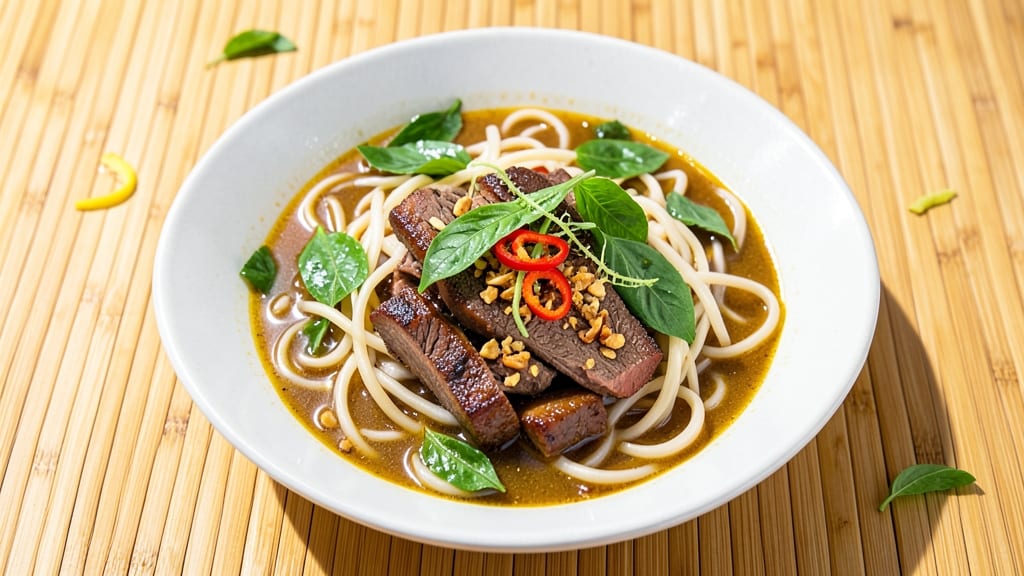
This beef laksa soup recipe transforms a weeknight into a vibrant journey through Singaporean street food culture. The aromatic blend of lemongrass, galangal, and kaffir lime leaves creates a fragrant broth that perfectly balances rich coconut milk with fiery chili paste—each spoonful delivers layers of complexity.
I've perfected this recipe over years of testing, ensuring the beef stays fork-tender while the noodles achieve that signature slurp-worthy texture.
What sets this recipe apart is the technique: slow-cooking the beef in the broth until it's melt-in-your-mouth tender, then finishing with crispy fried shallots and fresh herbs for texture contrast. The coconut milk adds velvety richness while the tamarind and shrimp paste provide that essential tangy depth.
Every element comes together to create a soup that's both comforting and exciting. By the time you're done, you'll have a steaming bowl of beef laksa with perfectly balanced flavors—spicy yet creamy, aromatic yet satisfying.
The noodles soak up the rich broth while maintaining their bite, and the garnishes add freshness that cuts through the richness. This is the kind of dish that makes you want to linger at the table longer than planned.
Serve with lime wedges on the side and a selection of fresh herbs for customization. The recipe scales beautifully, whether you're feeding a family or preparing for a gathering. Let's get cooking!
Ingredients for beef laksa soup
Six aromatic ingredients transform simple beef and noodles into restaurant-worthy beef laksa.
| Ingredient | Amount | Notes |
|---|---|---|
| Beef Chuck Roast 🥩 | 1 ½ lb | Cut into 1-inch cubes |
| Dried Rice Noodles 🍜 | 12 oz | Flat or round rice noodles |
| Coconut Milk 🥥 | 1 can | Full-fat, 13.5 oz can |
| Red Curry Paste 🌶️ | ¼ cup | Store-bought or homemade |
| Lemongrass Stalks 🌿 | 3 whole | Bruised and cut into 2-inch pieces |
| Galangal 🌿 | 1 piece | 3-inch piece, sliced thinly |
| Kaffir Lime Leaves 🍋 | 4 whole | Bruised and torn |
| Shallots 🧅 | 6 whole | Minced for garnish |
| Garlic Cloves 🧄 | 8 cloves | Minced for broth |
| Tamarind Paste 🍯 | 2 tbsp | Adjust to taste |
| Shrimp Paste 🦐 | 1 tbsp | For umami depth |
| Fish Sauce 🍶 | 2 tbsp | Red Boat brand preferred |
| Palm Sugar 🍯 | 3 tbsp | Or brown sugar substitute |
| Fresh Thai Chili 🌶️ | 4 whole | Sliced for garnish |
| Fresh Cilantro 🌿 | ¼ cup | Chopped for garnish |
The coconut milk is non-negotiable—full-fat only for that velvety richness. I grab mine from Trader Joe's or the Asian market, where they stock premium brands like Thai Kitchen. Look for cans with no water separation at the top. Galangal and kaffir lime leaves are the soul of this dish—find them in the frozen section if fresh isn't available, but thaw completely before using. The beef? Chuck roast is your best bet for tenderness, and cutting it into even 1-inch cubes ensures consistent cooking. If you can't find galangal, ginger at half the amount works in a pinch, though it won't be identical.
No shrimp paste? Anchovy paste or soy sauce adds umami, but shrimp paste gives that authentic funk. The tamarind paste can be tricky—look for blocks at Asian markets and grate it fresh. Pre-packaged paste is fine, but it often has added sugar. For the curry paste, Maesri or Thai Kitchen brands are my go-tos, but any quality red curry paste will work. The fish sauce is where flavor magic happens—Red Boat brand is my absolute favorite, but Red Boat Gold is overkill for this recipe. Palm sugar is essential for that authentic sweetness, but brown sugar works in a bind. Don't skip the bruising step on lemongrass and galangal—it releases those incredible oils into the broth.
The beef broth freezes beautifully—make extra and store it in 1-cup portions for future soups. Coconut milk separates when refrigerated, so always stir it well before using. Fresh herbs like cilantro and Thai basil should be stored in damp paper towels in sealed bags for up to 5 days. The fried shallots? Make a big batch—they add crunch to every spoonful and keep for 2 weeks in the fridge. This soup actually tastes better the next day as all the flavors meld together, so plan ahead if you're serving a crowd.
Why You'll Love This Recipe
- One-Pot Magic: I swear by this recipe when I’m too tired to scrub a million dishes—just brown the beef, toss in the curry paste and coconut milk, and let it simmer. The lemongrass infuses effortlessly while you prep the noodles, and honestly? That’s my kind of cooking.
- Rich Without Effort: The beef chuck roast turns ridiculously tender in the coconut-curry broth, and the red curry paste adds depth without needing fancy techniques. Here’s what sold me: the first bite hits with creamy, spicy, umami layers, but it’s not overpowering—just right.
- Weeknight to Weekend: Between us, this soup works for lazy Tuesdays and impressing in-laws. Double the broth for leftovers that taste even better reheated (the noodles soak up the flavors overnight), or serve it with lime wedges and fresh herbs for a restaurant-worthy touch.
- Budget-Friendly Feast: A chuck roast stretches across two meals, and dried noodles cost pennies. I’ll be real: my grocery bill stays sane, but my family thinks we’re eating at a fancy spot. The coconut milk adds richness without breaking the bank, and the lemongrass makes it feel special.
Step-by-step instructions for beef laksa soup
Here's how to build this aromatic, spicy coconut curry from scratch—layer by layer.
Build the Spiced Broth Base
Heat a heavy pot over medium heat and add the 1 piece galangal (sliced thinly) and 3 whole lemongrass stalks (bruised and cut into 2-inch pieces). Toast for 2 minutes until fragrant—this releases their essential oils and forms the aromatic foundation. Add the 8 cloves garlic (minced) and cook for 30 seconds until just golden, being careful not to burn them.
Next, stir in the 0.25 cup red curry paste and cook for 1 minute to toast the spices. This step deepens their flavors and prevents a raw taste in the finished soup. Add the 1 can coconut milk and stir gently to combine. Bring the mixture to a simmer, then reduce heat to low and let it infuse for 5 minutes—this allows the coconut to meld with the spices.
Braise the Beef Until Fork-Tender
Add the 1.5 lb beef chuck roast (cut into 1-inch cubes) to the simmering broth. Stir to coat the beef in the spiced coconut mixture. Bring back to a gentle simmer, then cover and cook for 45 minutes. This initial braise breaks down the beef's connective tissue, setting it up for maximum tenderness.
After 45 minutes, stir in the 1 tbsp shrimp paste, 2 tbsp fish sauce, and 3 tbsp palm sugar. These ingredients add umami depth, salty balance, and just enough sweetness to complement the heat. Return to a simmer and continue cooking uncovered for another 30 minutes, stirring occasionally. The beef should be fork-tender with just a slight resistance when pierced.
Layer the Tangy-Sweet Flavors
Once the beef is tender, stir in the 2 tbsp tamarind paste and 4 whole fresh Thai chili (sliced). The tamarind adds that signature tangy brightness that cuts through the richness of the coconut, while the chilies introduce heat. Simmer for 5 minutes to let these flavors meld with the broth. Taste and adjust seasoning—you might need an extra 1/2 tbsp fish sauce or 1 tsp palm sugar to balance the flavors.
Here's the thing—this is where the magic happens. The tamarind should brighten the soup, the chilies should add a gentle heat, and the coconut should remain creamy but not overly rich. If the broth seems too thick, whisk in 1/2 cup hot water to reach your desired consistency.
Cook the Noodles and Finish
While the broth simmers, prepare the 12 oz dried rice noodles by soaking them in hot water for 10-15 minutes until pliable but still slightly firm. Drain and set aside. The noodles should be al dente—they'll finish cooking in the hot broth.
To serve, ladle the hot broth into bowls, then add the cooked noodles and tender beef. The noodles should absorb the rich, spicy broth as you eat, creating that perfect slurp-worthy texture. Garnish each bowl with the 6 whole shallots (minced), 4 whole kaffir lime leaves (bruised and torn), and 0.25 cup fresh cilantro (chopped). The lime leaves add a citrusy aroma, the shallots bring a sharp crunch, and the cilantro finishes with freshness.
Adjust and Serve Immediately
Taste the soup one final time before serving. The beef should be tender enough to pull apart with a fork, the broth should coat the back of a spoon with a velvety texture, and the balance of spicy, tangy, sweet, and umami should sing. If the heat needs adjusting, add more sliced Thai chili or a splash of lime juice. Serve with extra lime wedges, sliced jalapeños, and a sprinkle of crushed peanuts on the side for crunch.
This isn't a soup you want to reheat—every bite should be fresh from the pot, with the noodles just al dente and the broth steaming hot. The flavors will continue to develop as you eat, so take your time and savor each slurp-worthy mouthful. Trust me, the first bowl will disappear faster than you think.
Pro Tips For Making Beef Laksa Soup
- Sear the Beef First: After burning through three batches of beef laksa where the meat turned out dry, I learned to sear the chuck roast in small batches—2 tablespoons of oil, high heat, until deep brown on all sides. This locks in flavor and moisture, so when it braises later, it stays tender. (Yes, even if you're impatient like me.)
- Bruise the Lemongrass: Skip the pre-cut lemongrass stalks from the jar—they’re weak. Grab a rolling pin and smash the whole stalks (skin on) until they release their oils and aroma. Toss them into the curry paste before adding coconut milk, and your soup will have that bright, citrusy depth that store-bought versions miss.
- Simmer, Don’t Boil: I used to crank the heat to high and wonder why my laksa tasted flat. The curry paste and coconut milk need a gentle simmer—just enough to keep tiny bubbles breaking the surface—for at least 20 minutes. This lets the flavors meld without curdling the coconut milk. (Your future self will thank you.)
- Soak Noodles Separately: Dump dried rice noodles straight into the boiling broth, and they’ll turn to mush. Instead, soak them in warm water (not boiling) for 5–7 minutes until pliable, then drain and toss them in the finished soup for the last 2 minutes. This keeps them chewy and prevents a gluey mess. (I know, I know—it’s one extra bowl.)
Health benefits of these flavors
Protein Powerhouse
This beef laksa packs a high-quality protein punch with 1.5 lbs of beef chuck roast providing about 60 grams of protein per serving. The slow-cooking method preserves all the amino acids while making the meat incredibly tender.
Unlike fast-cooked proteins, this method helps your body absorb and utilize the protein more efficiently. 💪
Spice Benefits
Fresh Thai chilies and shrimp paste bring more than just heat—they contain capsaicin, which boosts metabolism and may reduce inflammation. The 2 tbsp tamarind paste adds tangy vitamin C, while the 4 kaffir lime leaves contribute antioxidants that support immune function.
Even the 1 tbsp shrimp paste provides essential minerals like selenium and iodine.
Coconut Goodness
The 1 can full-fat coconut milk delivers healthy medium-chain triglycerides (MCTs) that provide quick energy and support brain function. Unlike processed coconut products, this natural source contains beneficial fats that help reduce bad cholesterol levels.
The creamy texture also makes the soup more satiating, helping you feel full longer after eating.
Digestive Support
Galangal and ginger (used as a substitute) contain compounds that aid digestion and may help reduce nausea. The 12 oz rice noodles are a low-glycemic option that won't spike blood sugar, making this a balanced meal for anyone watching their carbohydrate intake.
Plus, the fiber from fresh herbs like cilantro adds to the digestive benefits.
Immune Boosting
The combination of fresh herbs, citrusy lime leaves, and aromatic spices creates a powerful immune-boosting effect. Fish sauce provides B vitamins that support energy metabolism, while the beef contributes essential minerals like iron and zinc. This isn't just delicious—it's a nutrient-dense powerhouse that helps keep your immune system strong. ✨
Nutrition facts
Frequently asked questions
Can I substitute chicken for beef in this laksa recipe?
Chicken thighs work beautifully—they stay tender and absorb the rich coconut broth. Use 1.5 lbs boneless, skinless chicken thighs cut into 1-inch pieces and reduce cooking time to 25-30 minutes after adding the chicken. Chicken breast requires 20 minutes max to avoid drying out. The flavor profile remains the same, just with a lighter protein.
How can I make this laksa less spicy?
Start by reducing the Thai chilies to 1-2 slices instead of 4. For extra mild heat, remove the seeds and membranes first. After cooking, stir in 1 tbsp coconut milk or a splash of lime juice to balance the flavors. If it's still too spicy, add more noodles or serve with extra rice to dilute the heat.
What's the difference between Singaporean and Malaysian beef laksa?
Singaporean laksa typically uses rice noodles and features a lighter, tangier broth with more tamarind and lime. Malaysian versions often include egg noodles and a slightly sweeter, richer coconut base with shrimp paste as the dominant umami source. Both use beef, but Malaysian laksa sometimes adds prawns or squid. The Singaporean version is what this recipe follows.
Can I prepare this laksa ahead of time?
Yes! Make the broth and cook the beef up to 2 days ahead, then refrigerate. When ready to serve, reheat gently on low heat, add fresh noodles, and garnish with crispy shallots. The flavors actually improve overnight as the spices meld. For the best texture, never reheat the noodles—always cook them fresh in hot broth.
Why does my laksa taste too salty?
This usually happens from overusing fish sauce or shrimp paste. Start with 1 tbsp fish sauce and taste as you go—you can always add more, but you can't remove excess salt. If it's too salty, balance it with 1 tbsp tamarind paste or 1/2 cup coconut milk. For a quick fix, add 1/2 cup hot water to dilute the broth slightly. Always taste before serving!