
Soups & Stews
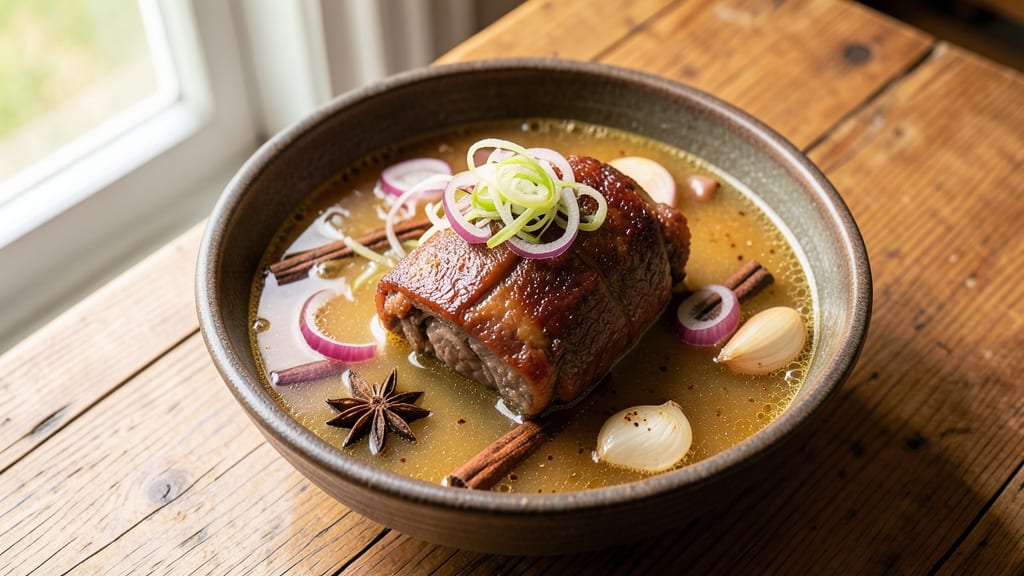
This beef knuckle soup recipe delivers melt-in-your-mouth meat and deep, savory broth that transforms tough cuts into luxurious comfort. The secret lies in slow-simmering—extracting collagen and flavor over hours until the meat falls apart with gentle pressure.
I developed this version after years of perfecting the balance between rich broth and tender protein, inspired by both Chinese and Korean traditions where knuckle soup is a centerpiece dish.
The process begins with parboiling the knuckle to remove impurities, then building layers of aromatic spices—star anise, cinnamon, and ginger—that infuse the broth with warmth. A Dutch oven or pressure cooker ensures even cooking, while constant skimming removes impurities for crystal-clear soup. The result?
A velvety broth so rich it clings to every spoonful, with meat so tender it dissolves at the first touch. What makes this recipe stand out is its versatility—serve it as a hearty main with steamed rice or as a healing broth with pickled vegetables.
The slow cooking transforms tough connective tissue into gelatinous richness, creating a soup that feels both indulgent and nourishing. Perfect for cold evenings or when you crave a meal that simmers with care. With precise timing and traditional techniques, this isn’t just soup—it’s a celebration of patience and flavor.
Ready to make the most of your beef knuckle? Let’s begin.
Ingredients for beef knuckle soup
Six pounds of rich beef knuckle and aromatic spices transform into velvety soup worth the wait.
| Ingredient | Amount | Notes |
|---|---|---|
| Beef Knuckle 🥩 | 4 lb | Bone-in, with connective tissue |
| Yellow Onion 🧅 | 2 whole | Chopped, for aromatics |
| Fresh Ginger 🧄 | 2 oz | Peeled, sliced into 1/4-inch pieces |
| Garlic Cloves 🧄 | 8 cloves | Smashed, for depth of flavor |
| Star Anise 🌿 | 4 whole | For aromatic warmth |
| Cinnamon Sticks 🌿 | 2 whole | For subtle sweetness |
| Dried Bay Leaves 🍃 | 2 whole | For earthy complexity |
| Dried Red Chili Peppers 🌶️ | 2 whole | For gentle heat |
| Soy Sauce 🥢 | ½ cup | Kosher salt-reduced for balance |
| Sesame Oil 🫒 | 2 tbsp | Toasted, for finishing |
| Green Onions 🧅 | ¼ cup | Sliced, for garnish |
| Kosher Salt 🧂 | 2 tbsp | Diamond Crystal preferred |
| Black Peppercorns 🌶️ | 1 tbsp | Freshly cracked |
| Water 💧 | 8 cups | For initial parboiling |
| Steamed White Rice 🍚 | 3 cups | Cooked, for serving |
The beef knuckle is the star—look for thick, marbled cuts with visible connective tissue at Costco or your local butcher. Whole knuckles (4-6 lbs total) yield the most gelatinous broth, but pre-cut pieces work too if you're short on time. The ginger and garlic should be freshly peeled—no pre-minced jars here. For spices, Penzeys or bulk bins at Whole Foods offer the best quality, but regular grocery store brands like McCormick work fine for occasional use. Star anise and cinnamon sticks can be found in the international aisle if your store doesn't stock them near other spices.
No star anise? 1 tsp ground anise seed works in a pinch, though it lacks the same depth. Swap the chili peppers for 1 tbsp gochugaru (Korean red pepper flakes) if you want more authentic heat. The soy sauce should be low-sodium—regular brands pack too much salt and can overpower the delicate broth. For a quicker prep, pre-chop the onions and ginger while the knuckle parboils. The rice? Jasmine or short-grain absorbs the broth beautifully, but any white rice will do. If you're making this ahead, freeze the broth separately—it keeps for 3 months and reheats like a dream.
This soup tastes even better the next day as the flavors meld. Store the meat and broth separately—the broth will last 5 days in the fridge, while the meat stays fresh for 3 days. For serving, I like to reheat the broth first, then add the meat back in for 10 minutes to warm through. Garnish with green onions and a drizzle of sesame oil just before eating. The meat should fall apart with gentle pressure—if it's still tough after 5 hours, extend the simmer to 7 hours. Patience is key here; every extra minute builds more gelatinous richness.
Why You'll Love This Recipe
- One-Pot Wonder: I swear by this recipe because it’s mostly hands-off after the initial chop. Toss the knuckle in with onions, ginger, and star anise, then let it slow-simmer—no stirring every five minutes like some soups demand. (Yes, even on a Tuesday night.)
- Deep Umami Magic: That beef knuckle? It melts into the broth like a dream, turning into fall-off-the-bone tenderness while the ginger and garlic build layers of warmth. Honestly, the star anise gives it this subtle, earthy depth that makes it taste like you simmered it for hours—even if it’s ready in three.
- Leftovers That Shine: This soup gets better the next day. The flavors meld into something richer, and reheating it is just dump-and-warm. Between us, I make a big batch, freeze half, and pull it out for lazy Sundays or when company drops by unexpectedly.
- Budget Feast: A single beef knuckle stretches to feed four (or five if you’re feeding teenagers). The ingredients are cheap but pack serious flavor—no need for fancy broth or expensive cuts. It’s my go-to for stretching meals without sacrificing taste.
Step-by-step instructions for beef knuckle soup
Transform tough beef knuckle into melt-in-your-mouth perfection with this slow-simmered method.
Parboil the Beef Knuckle
Fill a large stockpot with the 8 cups water and bring to a rolling boil over high heat. Add the 4 lb beef knuckle, reduce heat to medium-low, and let it simmer gently for 30 minutes. This initial parboil helps tenderize the connective tissue and removes impurities that can make the broth cloudy later.
Here's the thing—you'll see foam rise to the surface. Skim this off with a ladle every 5 minutes to ensure a clear, clean broth. After 30 minutes, drain the water and return the knuckle to the now-empty pot. This step is crucial for developing deep flavor without dilution.
Build the Aromatic Base
In the same pot, add the 2 whole chopped yellow onion, 2 oz sliced fresh ginger, 8 smashed garlic cloves, 4 whole star anise, 2 whole cinnamon sticks, 2 whole dried bay leaves, and 2 whole dried red chili peppers. These aromatics create the complex flavor foundation that defines this soup.
Toast the spices over medium heat for 2-3 minutes until you smell their essential oils release. This step unlocks their full potential. Then pour in the 0.5 cup soy sauce and add the 2 tbsp kosher salt and 1 tbsp freshly cracked black peppercorns. Stir everything together, making sure the knuckle is well-coated with these flavorful elements.
Slow-Simmer for Maximum Tenderness
Add 6 cups fresh water to the pot (enough to cover the knuckle by 2 inches). Return to a simmer over low heat—this is where patience pays off. Cover the pot and cook for 3 hours, then carefully remove the knuckle and strain the broth through a fine-mesh sieve into a clean pot.
Discard the solids and return the strained broth to the pot with the knuckle. This two-step process ensures you capture all the gelatinous goodness from the connective tissue while keeping the broth crystal clear. The knuckle should now be fork-tender when pierced with a sharp knife.
Finish and Serve
Return the broth to a gentle simmer and cook uncovered for 15 minutes to reduce slightly and intensify flavors. Remove the knuckle, shred the meat using two forks, and return it to the pot. Stir in the 2 tbsp toasted sesame oil and adjust seasoning with additional salt if needed.
Ladle the hot soup over the 3 cups steamed white rice and garnish with the 0.25 cup sliced green onions. The contrast of tender beef against fluffy rice creates the perfect balance. Serve immediately while the broth is steaming hot—each spoonful should deliver rich, umami-packed goodness with just the right amount of gentle spice.
Pro Tips For Making Beef Knuckle Soup
- BLISTER THE KNUCKLE FIRST: Skip the slow start—sear the beef knuckle in a dry pot until the fat renders and the meat turns deep brown. I used to rush this, but those 10 minutes of high heat (yes, even if you're impatient) lock in flavor and prevent the broth from tasting flat. Once it’s golden, add water and aromatics—no need to pre-cook the onions or ginger separately.
- GRATE GINGER FINE: Star anise and garlic cloves get all the love, but fresh ginger is the real workhorse here. Use a microplane or the smallest holes on a grater—you want it almost paste-like, not chunky. I learned this the hard way when my soup tasted underwhelming because the ginger never dissolved properly. A splash of cold water helps it blend into the broth faster.
- DON’T BOIL THE STAR ANISE: Star anise needs just enough heat to perfume the broth, not simmer violently. Drop it in with the garlic and onions, then keep the liquid at a gentle bubble—think "barely moving" rather than "rolling boil." After 20 minutes, fish it out before it turns bitter. (Yes, even if you forget, it’s salvageable, but your soup will taste cleaner if you don’t.)
- SALT THE WATER LATE: Wait until the knuckle has simmered for at least 1.5 hours before adding salt—this lets the collagen break down properly without the meat toughening up. I was skeptical until I tried it: the broth develops depth without the knuckle turning rubbery. Add a teaspoon of salt per quart of water, then adjust at the end.
Flavor customization for these flavors
Spice Level Control
Adjust the heat to your preference by modifying the chili peppers. For mild heat, reduce to 1 dried red chili pepper or swap for ½ tsp gochugaru (Korean red pepper flakes).
If you love spice, add 1 tbsp fresh red chili flakes or 1-2 slices of fresh Thai bird’s eye chili during the final 15 minutes of simmering.
I often keep a small bowl of gochugaru on the table for guests to add to their bowls—it’s a great way to personalize each serving. 🌶️
Umami Boosters
Deepening the umami flavor transforms this soup from good to extraordinary. Add 1 tbsp fish sauce (like Red Boat) along with the soy sauce for an authentic Southeast Asian touch. For a vegetarian-friendly boost, stir in 1 tbsp mushroom powder or 2 dried shiitake mushrooms during the simmer.
I also love adding 1 tsp oyster sauce in the last 10 minutes—it adds a luxurious depth without overpowering. 💫
Sweet-Savory Balance
Add a touch of sweetness to complement the savory broth. Stir in 1 tbsp honey or 1 tsp brown sugar during the final 15 minutes of cooking. For a more complex flavor, try 1 tbsp light soy sauce swapped for 1 tbsp dark soy sauce—it adds a caramelized note.
I’ve also experimented with 1 tbsp grated daikon radish or 1 tbsp apple cider vinegar for brightness, especially if the soup feels too heavy. 🍯
Herbaceous Finishes
Fresh herbs elevate the soup’s aroma and add a bright contrast to the rich broth. Garnish with 2 tbsp chopped cilantro or 1 tbsp chopped Thai basil for a fresh, slightly peppery note.
If you love earthy flavors, add 1 tbsp toasted sesame seeds or 1 tsp fried shallots for crunch.
I often finish with a drizzle of chili oil (mix 2 tbsp neutral oil with 1 tsp red chili flakes and toast in a pan until fragrant) for a smoky, spicy kick. ✨
Regional Twists
Transform this soup into a Korean galbitang by adding 1 tbsp gochujang (Korean chili paste) and 1 tsp toasted sesame seeds to the broth. For a Chinese tangyuan-style soup, stir in ½ cup lotus root slices and 1 tsp rock sugar during the final simmer.
If you’re feeling adventurous, try a Vietnamese-inspired version by adding 1 stalk lemongrass (bruised) and 1 tbsp fish sauce—it adds a citrusy brightness that cuts through the richness. 🗺️
Texture Enhancements
Add texture to balance the silky broth. Toss in ½ cup cooked shiitake mushrooms or ½ cup thinly sliced napa cabbage during the final 20 minutes of cooking. For a heartier bowl, serve with ½ cup chewy tapioca pearls or ½ cup soft tofu cubes (poached in the broth).
I also love adding 1 cup baby bok choy or 1 cup spinach just before serving—it wilts beautifully in the hot broth. 🥬
Nutrition facts
Frequently asked questions
How do I choose the best beef knuckle for soup?
Look for cuts with visible marbling and connective tissue—these release the most gelatin for rich broth. A 4-6 lb whole knuckle yields the best results, but pre-cut pieces work too. Ask your butcher to trim excess fat while keeping the membrane intact. The knuckle should feel firm and smell fresh, with no off-odors.
Can I use a pressure cooker to speed up the cooking time?
After parboiling, pressure cook the knuckle with aromatics on high pressure for 90 minutes, then reduce to low pressure for 30 minutes. This cuts cooking time by half while still delivering tender meat. Just strain the broth carefully—pressure cooking can make it slightly cloudier.
Why does my broth turn cloudy even after skimming?
Cloudiness often comes from fat emulsifying or undissolved proteins. Simmer uncovered for 15 extra minutes to let fat rise, then carefully spoon it off. For crystal-clear broth, strain through a cheesecloth-lined sieve after simmering. Cold broth also clarifies—chill overnight and skim off solidified fat before reheating.
What if my beef knuckle isn't tender after 5 hours?
Extend simmering by 1-2 more hours—connective tissue needs time to break down. If the broth tastes too diluted, reduce it uncovered for 20 minutes to intensify flavors. For stubborn toughness, add 1 tbsp baking soda to the water during parboiling (neutralizes acids that toughen meat).
How can I make this soup gluten-free?
Simply replace the soy sauce with ½ cup tamari or coconut aminos (both gluten-free). Check all spice blends for hidden wheat—stick to single-ingredient spices. For extra umami, add 1 tbsp nutritional yeast during the final simmer. The broth will still be rich and flavorful without gluten.