
Soups & Stews
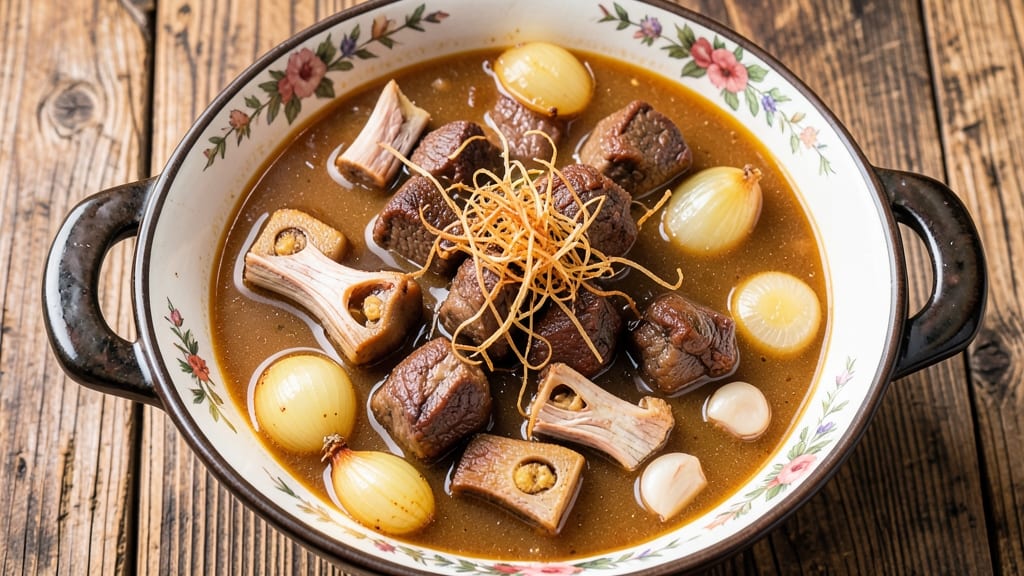
This beef bulalo soup recipe delivers the deep, savory richness of Filipino comfort food in every spoonful—where tender beef shank and marrow bones melt into a velvety broth infused with ginger, garlic, and aromatic spices.
The secret lies in slow simmering, transforming tough cuts into melt-in-your-mouth perfection while vegetables absorb the broth's essence. I’ve perfected this version to balance traditional techniques with modern convenience, ensuring restaurant-quality results at home.
The magic happens in the broth, where beef marrow bones release their gelatinous richness over hours of gentle simmering. Potatoes, cabbage, and string beans soften just enough to soak up the flavor, while a touch of vinegar brightens the dish at the end.
Unlike quick soups, bulalo demands patience—its reward is a bowl so hearty it feels like a hug in liquid form. This isn’t just soup; it’s a celebration of Filipino home cooking.
What sets this recipe apart is the foolproof method for extracting maximum flavor from the bones without overcooking the beef. The result? A broth so velvety it coats your spoon, with beef so tender it falls apart at the touch.
Serve it with steamed rice to soak up every last drop, or pair it with crusty bread for dipping. The aroma alone will have your kitchen—and your guests—ready for seconds.
Perfect for family gatherings, holiday meals, or cozy weeknight dinners, this bulalo adapts easily to dietary preferences. For a lighter touch, reduce the oil slightly, or add a splash of coconut milk for extra creaminess.
The key is letting the broth work its magic—no shortcuts, just pure, slow-simmered satisfaction. Let’s get cooking.
Ingredients for beef bulalo soup
Here's the heart of Filipino comfort—rich beef, marrow bones, and aromatic vegetables simmered to perfection.
| Ingredient | Amount | Notes |
|---|---|---|
| Beef Shank 🥩 | 3 lb | Cut into 2-inch pieces |
| Beef Marrow Bones 🦴 | 2 lb | Split for maximum marrow |
| Yellow Onions 🧅 | 2 whole | Sliced into wedges |
| Garlic Cloves 🧄 | 8 cloves | Minced for depth of flavor |
| Fresh Ginger 🌿 | ½ cup | Grated finely (about 2 oz) |
| Vegetable Oil 🫒 | ½ cup | For initial searing |
| Green Cabbage 🥬 | 1 lb | Cut into wedges (about 2 cups) |
| Russet Potatoes 🥔 | 2 lb | Peeled, cut into chunks |
| String Beans 🌱 | 1 lb | Trimmed and cut into 2-inch pieces |
| Canned Tomato Sauce 🍅 | 15 oz | San Marzano preferred |
| White Vinegar 💧 | 2 tbsp | For brightness at the end |
| Bay Leaves 🌿 | 2 whole | For aromatic depth |
| Salt 🧂 | 2 tsp | Kosher or sea salt |
| Black Peppercorns 🌶️ | 1 tsp | Crushed for warmth |
| Soy Sauce 🍜 | 2 tbsp | For umami depth |
The beef shank and marrow bones are non-negotiable for that signature bulalo richness. Look for well-marbled shank at Filipino markets or your local butcher—they'll know exactly what you need. If you can't find marrow bones, beef knuckle bones work in a pinch, though they won't be as flavorful. Fresh ginger and garlic? Buy them whole—they keep longer and you can grate/mince exactly what you need. The cabbage should be firm and heavy for its size, indicating freshness. For the tomato sauce, San Marzano cans are worth the splurge—they're sweeter and less acidic than regular brands.
No marrow bones? Substitute with extra beef shank or even chicken thighs—just know the broth might be slightly lighter. Fresh ginger too strong? Use half the amount of powdered ginger, but it won't be the same. The soy sauce can be swapped for coconut aminos if you're avoiding soy. For a lighter version, reduce the oil to 2 tbsp and add 1 cup coconut milk at the end. The potatoes and string beans should be firm when raw—they'll soften perfectly during simmering. If you can't find string beans, green beans or snap peas work too, though they'll cook faster.
This soup tastes even better the next day as flavors meld. Store in an airtight container in the fridge for up to 5 days, or freeze for 3 months. I always make a double batch—one for dinner, one for leftovers. The broth thickens as it cools, so add a splash of water when reheating. For serving, keep the broth hot and the vegetables separate until the last minute so they stay crisp. Pair with steamed rice and extra vinegar on the side for dipping.
Why You'll Love This Recipe
- One-Pot Magic: I swear by this recipe—just toss everything into a pot, add water, and let it slow-simmer. No chopping like a pro, no fancy techniques. The marrow bones and shank do all the work while you sip coffee.
- Deep Umami Bomb: That ginger and garlic? They’re the secret weapons here. The marrow bones melt into the broth, turning it into this rich, velvety gold that makes every spoonful feel like a hug.
- Leftovers That Shine: Between us, this soup only gets better the next day. The flavors meld into something even richer, and it reheats like a dream. Pack it for lunch or freeze portions—no one will guess it’s reheated.
- Budget-Friendly Feast: You’re getting a whole meal for pennies. Beef shank and marrow bones stretch across multiple servings, and the onions/garlic add layers of flavor without breaking the bank. My wallet thanks me every time.
Step-by-step instructions for slow-simmered beef bulalo soup
Here's how to build rich, marrow-infused broth and tender meat that falls apart with every spoonful.
Sear the Beef for Deep Flavor
Heat a large Dutch oven over medium-high heat and add the 0.5 cup vegetable oil. Working in batches, add the 3 lb beef shank cut into 2-inch pieces and sear until deep golden brown on all sides—about 4-5 minutes per batch. This step develops the Maillard reaction that creates that irresistible meaty depth.
Remove the seared beef and set aside. In the same pot, add the 2 lb beef marrow bones split open to expose the marrow, and sear for 2-3 minutes per side until nicely browned. The marrow will render slowly during cooking, creating the signature richness of bulalo.
Build the Aromatic Base
In the same Dutch oven, add the 2 whole yellow onions sliced into wedges and cook for 5 minutes until softened and lightly caramelized. Add the 8 cloves minced garlic and 0.5 cup finely grated fresh ginger, cooking for another 1-2 minutes until fragrant—you should smell that bright, zesty aroma.
Pour in the 15 oz canned tomato sauce and scrape up all those browned bits from the bottom of the pot. This deglazing captures all the flavor you worked so hard to create. Let it simmer for 3-4 minutes until the raw tomato smell disappears and the mixture thickens slightly.
Simmer the Broth and Vegetables
Add 8 cups water to the pot (enough to cover everything by about 2 inches) along with the 2 whole bay leaves, 2 tsp salt, 1 tsp crushed black peppercorns, and 2 tbsp soy sauce. Return the seared beef and marrow bones to the pot. Bring to a gentle boil, then reduce heat to low and let it simmer uncovered for 1 hour.
After the initial hour, add the 2 lb russet potatoes cut into chunks and the 1 lb string beans trimmed and cut into 2-inch pieces. The potatoes will take about 30-40 minutes to become fork-tender, while the string beans will soften in about 20 minutes. Keep the broth at a gentle simmer—you want the vegetables to cook through without falling apart.
Finish with Cabbage and Vinegar
When the potatoes are nearly tender (about 10 minutes before they're fully done), add the 1 lb green cabbage cut into wedges. The cabbage cooks quickly and will wilt beautifully in the rich broth. Let everything simmer together for another 10-15 minutes until the cabbage is tender but still holds its shape.
Remove the pot from heat and stir in the 2 tbsp white vinegar. This brightens the flavors and cuts through the richness of the marrow. Let the soup rest for 5 minutes before serving—this allows the flavors to meld and the broth to thicken slightly. Taste and adjust seasoning if needed, adding more salt or vinegar as desired.
Serve with Crusty Bread
Ladle the bulalo into bowls, making sure each serving gets a generous portion of beef, marrow bones, and vegetables. The broth should be rich and flavorful, with visible marrow fat floating on top—a sign of a properly made bulalo. Serve immediately with warm crusty bread to soak up every last drop of that delicious broth.
This soup tastes even better the next day as the flavors continue to develop. Store leftovers in the refrigerator for up to 3 days, or freeze for up to 3 months. The key to great bulalo is patience—don't rush the simmering process, and let the flavors build gradually for that restaurant-quality result.
Pro Tips For Making Beef Bulalo Soup
- SEAR THE BONES FIRST: I learned this the hard way—skipping the sear means flavor stuck in the pot instead of the broth. Get those marrow bones and shank deep brown in a hot pan (no oil needed) before adding liquid. The crust locks in richness, and that’s where bulalo’s depth starts.
- CHAR THE ONIONS LOW: High heat burns onions to ash; low and slow caramelizes them into sweet, jammy layers. Slice onions thick (½-inch), cook them in the same pot over medium-low for 15 minutes—stir occasionally—until they’re golden, not black. This isn’t the prettiest method, but it’s the tastiest.
- SKIP THE CROWDED POT: Overloading the pot with too many bones or shank at once means the broth won’t simmer hard enough to extract collagen. Start with half the bones, sear them, then add liquid and cook uncovered until the broth reduces by 20%. Only then add the rest—this guarantees a rich, gelatinous finish.
- GRATE THE GINGER FINE: Sounds weird, but it works: using a microplane or the smallest holes of a box grater for ginger means it dissolves completely into the broth instead of lurking as chunks. No one wants to bite into a surprise ginger surprise in bulalo. (Yes, even if you’re impatient like me.)
Essential equipment for great beef bulalo soup
Dutch Oven Essentials
A 5-7 quart Dutch oven is your secret weapon for bulalo—its heavy construction retains heat evenly while allowing the broth to develop depth. I swear by the Lodge 5.5-Quart Enamel Dutch Oven for its durable enamel coating that prevents flavor transfer.
If you're on a budget, the Amazon Basics 5-Quart works beautifully for occasional use. The key is a tight-fitting lid to trap steam and maximize flavor extraction from the bones. 🔥
Meat Thermometer
Invest in a digital instant-read thermometer to track beef doneness without guessing. The ThermoWorks Smoke or Meater models give precise readings—aim for 195-205°F for beef that falls apart effortlessly.
I place the probe in the thickest part of the shank, avoiding bone contact. For marrow bones, they don't need precise temps—they're about flavor infusion, not doneness.
Large Skimmer
A slotted skimmer with a long handle becomes your best friend when removing vegetables. The OXO Good Grips 10-Inch is my go-to—it lets you lift cabbage and potatoes without losing broth.
Use it to skim any foam that rises to the surface during the initial simmer, keeping your broth crystal clear. The long handle also helps you avoid steam burns when working with a hot Dutch oven.
Chef's Knife
A sharp 8-inch chef's knife is non-negotiable for chopping onions, ginger, and garlic efficiently. I recommend the Wüsthof Classic for its balanced weight and razor-sharp edge. For the beef shank, a heavy-duty cleaver helps when cutting through tough connective tissue.
Keep your knives sharp—dull blades make prep frustrating and increase safety risks. A honingu stone keeps them in top condition.
Fine-Mesh Strainer
A fine-mesh strainer (like the OXO Good Grips Collapsible) helps when you want to strain the broth for serving separately. I use it to remove bay leaves and any large vegetable pieces if you prefer a smoother texture.
For the marrow bones, I leave them in the soup—they're part of the experience! The collapsible design saves space in your drawer when not in use.
Wooden Spoon
A heat-resistant wooden spoon (preferably hickory or maple) is perfect for stirring the broth without scratching your Dutch oven's enamel. The Ozeri Wooden Spoon has a sturdy handle that won't overheat.
Avoid metal utensils when stirring the simmering soup—they can react with the acidity and affect flavor. Wood also helps prevent burning when scraping the bottom of the pot during deglazing.
Nutrition facts
Frequently asked questions
Why do marrow bones make bulalo taste different?
The marrow bones release their rich, gelatinous fat during slow simmering, creating that signature velvety texture and depth of flavor. Unlike regular bones, marrow provides a luxurious mouthfeel and unmatched richness that defines authentic bulalo. The fat renders slowly, enriching the broth without making it greasy.
Can I make bulalo without a Dutch oven?
Yes, but your results may vary. Use a heavy-bottomed pot with a tight lid to mimic the Dutch oven's heat retention. A 6-quart stockpot works in a pinch, though you'll need to stir more frequently to prevent scorching. The key is maintaining a gentle simmer—never a rolling boil—to preserve the broth's richness.
How do I know when the beef is tender enough?
Use a fork to test the beef shank—it should pierce easily with minimal resistance. For precise results, insert a meat thermometer into the thickest part of the shank (avoiding bone). The ideal internal temperature is 195-205°F, where the collagen breaks down completely for fork-tender meat. The marrow bones don't need precise timing—they're about flavor infusion, not doneness.
What if my broth turns out too greasy?
Skimming excess fat during simmering is key! Use a large spoon to remove foam and fat that rises to the surface, especially during the first 30 minutes of cooking. For a lighter broth, chill the soup overnight—the fat solidifies on top and can be easily spooned off before reheating. A splash of vinegar at the end also helps balance richness.
Can I substitute beef shank with chicken or pork?
While traditional bulalo uses beef, you can adapt it! For chicken, use bone-in thighs and drumsticks (simmer for 45-60 minutes) and reduce soy sauce to 1 tbsp. For pork, opt for pork knuckle or trotter (simmer 2-3 hours) and add 1 tsp sugar to balance flavors. The broth will be lighter, but the technique remains the same—slow simmering is essential.