
Soups & Stews
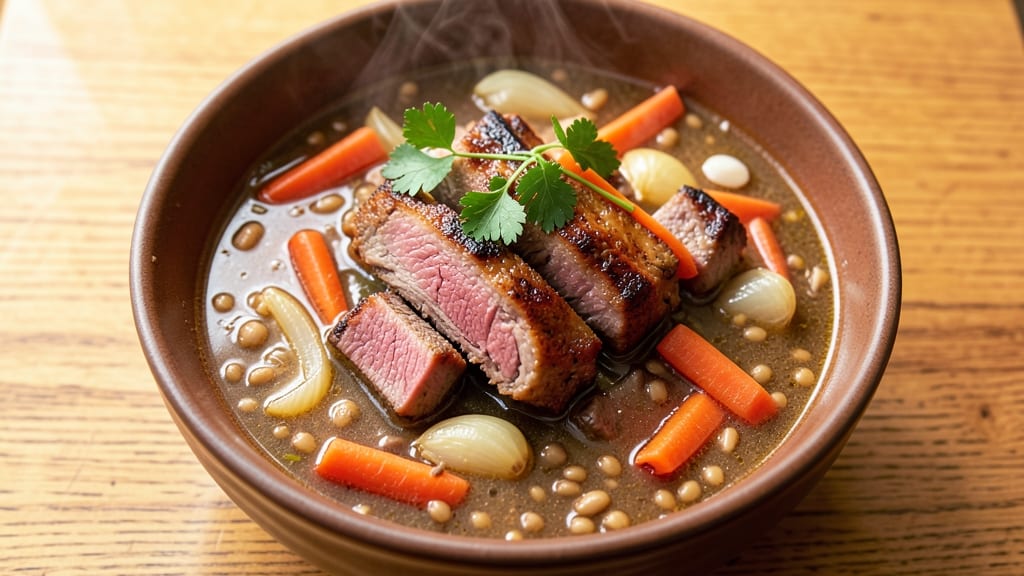
Transforming leftover prime rib into this beef barley soup is the ultimate way to elevate humble leftovers into a restaurant-worthy meal. The rich, deep flavor of prime rib infuses the broth, creating a hearty soup that feels like a celebration on a chilly evening.
What starts as a simple idea—using what you already have—becomes a deeply satisfying dish when you follow this precise method for balancing textures and flavors.
The secret lies in the slow simmering process, which allows the prime rib to break down into tender, flavorful pieces while the barley absorbs the savory broth. Carrots and onions add natural sweetness and depth, while a touch of thyme and bay leaf ties everything together with aromatic warmth.
This isn’t just soup—it’s a way to turn last night’s dinner into tonight’s centerpiece without extra effort.
By the time you serve this soup, you’ll have a bowl that’s velvety with prime rib richness, hearty with chewy barley, and brightened by the natural sweetness of the vegetables.
The aroma alone will draw everyone to the table, and the first spoonful delivers on that promise of comfort and indulgence. It’s the kind of meal that makes leftovers feel intentional and delicious.
Perfect for a cozy weeknight dinner or a gathering with friends, this soup transforms scraps into something extraordinary. The method is straightforward, but the result is anything but ordinary—proof that great cooking starts with what you already have. Let’s create this flavorful upgrade together.
Ingredients for beef barley soup recipe with leftover prime rib
Six ingredients transform humble leftovers into restaurant-worthy beef barley soup.
| Ingredient | Amount | Notes |
|---|---|---|
| Leftover Prime Rib 🥩 | 1 ½ lb | Trimmed of excess fat |
| Yellow Onions 🧅 | 2 large | Chopped into half-moons |
| Carrots 🥕 | 3 medium | Peeled and cut into chunks |
| Pearl Barley 🌾 | 1 cup | Rinsed before cooking |
| Beef Broth 💧 | 6 cups | Low-sodium preferred |
| Garlic Cloves 🧄 | 4 cloves | Minced for depth |
| Fresh Thyme 🌿 | 1 tbsp | Leaves only, chopped |
| Bay Leaves 🌿 | 2 whole | Remove before serving |
| Tomato Paste 🍅 | 2 tbsp | For richness |
| Red Wine 🍷 | ½ cup | Dry red variety |
| Olive Oil 🫒 | 2 tbsp | For sautéing |
| Salt 🧂 | 1 ½ tsp | Adjust to taste |
| Black Pepper 🌶️ | ½ tsp | Freshly cracked |
| Fresh Parsley 🌿 | ¼ cup | Chopped for garnish |
The prime rib is the star here—look for leftover pieces with good marbling for maximum flavor. Costco or Whole Foods often have excellent prime rib cuts if you need to buy fresh. For the barley, pearl barley is the classic choice, but you can swap in pot barley if that's what you've got. The carrots should be firm and bright orange—organic ones often have better flavor. If you're using pre-chopped veggies from the store, rinse them well to remove any excess starch that can make your soup cloudy.
No red wine? Dry white wine or extra beef broth works in a pinch. Fresh thyme is ideal, but dried thyme at one-third the amount gets you close. The tomato paste can be from a tube or a can—just make sure it's San Marzano if you're splurging. For the broth, low-sodium is key unless you're okay with adjusting the salt later. The onions? Sweet yellows or reds both work, but yellows have a slightly sharper bite that stands up well to the richness of the prime rib. If you're feeling fancy, caramelize those onions first—worth the extra time.
This soup tastes even better the next day as the flavors meld. Store in an airtight container in the fridge for up to 5 days, or freeze for 3 months. I like to make a double batch because it reheats beautifully and makes great lunches. The barley gets softer with reheating, so I often add a splash of broth when warming it up. For serving, a sprinkle of fresh parsley and a drizzle of olive oil takes it from homey to impressive—trust me on this.
Why You'll Love This Recipe
- No Chopping Needed: I swear by this trick—just dice up that leftover prime rib into bite-sized chunks (no fancy slicing required) while the onions caramelize. The barley softens as it simmers, so you’re basically hands-off after the initial 10 minutes.
- Deep Umami Magic: That prime rib? It’s the secret weapon here. Shredding it directly into the broth releases all its rich, fatty flavor, while the onions and carrots caramelize into something sweet and savory. Honestly, the first spoonful always makes me pause.
- Weeknight to Party Fix: Same soup, two lives. Toss it together for a lazy Tuesday dinner, or double the batch and serve it in a bread bowl at your next dinner party. The barley thickens over time, so it’s just as good reheated as it is fresh.
- Zero Waste, Double Payoff: You’re already paying for prime rib—might as well stretch it. This recipe turns scraps into a hearty meal, and the leftovers? Even better the next day. I’ll be real: my freezer’s always stocked with this because it’s the ultimate budget hack.
Step-by-step instructions for beef barley soup with leftover prime rib
Transforming prime rib leftovers into hearty, flavorful soup is easier than you think.
Sear the Leftover Prime Rib for Deep Flavor
Cut the 1.5 lb leftover prime rib into 1-inch cubes—this ensures even cooking and easy eating. Heat 2 tablespoons olive oil in a large Dutch oven over medium-high heat until shimmering. Working in batches if needed, add the prime rib cubes and sear for 3-4 minutes per side until deep golden brown and slightly crispy.
Here's the thing—searing develops the Maillard reaction, which creates that rich, caramelized depth of flavor. Don't rush this step; you want those cubes to develop a nice crust. Once browned, remove the meat and set aside temporarily—it'll finish cooking in the soup.
Build the Aromatic Base with Onions, Carrots, and Garlic
In the same Dutch oven, add the 2 large yellow onions and 3 medium carrots (already chopped). Cook for 5-6 minutes, stirring occasionally, until the onions soften and the carrots begin to caramelize slightly. This process should take about half the cooking time of the prime rib.
Add the 4 minced garlic cloves and cook for 30 seconds until fragrant—you'll know it's ready when the kitchen fills with that unmistakable garlic aroma. Stir in 2 tablespoons tomato paste and cook for another 1 minute, allowing it to darken slightly. This step forms the flavor foundation of your soup.
Deglaze and Simmer the Soup
Pour in the 0.5 cup red wine and scrape up any browned bits from the bottom of the pot with a wooden spoon. This deglazing step captures all those flavorful bits that would otherwise go to waste. Let the wine simmer for 2-3 minutes until it reduces by half.
Add the 6 cups beef broth, 1 cup rinsed pearl barley, 1 tablespoon chopped fresh thyme, 2 whole bay leaves, 1.5 teaspoons salt, and 0.5 teaspoon black pepper. Bring to a gentle boil, then reduce heat to low and let it simmer uncovered for 45 minutes. This slow cooking time allows the barley to absorb the broth and become tender.
Finish with Prime Rib and Fresh Herbs
Return the seared prime rib cubes to the pot and simmer for an additional 15-20 minutes, or until the meat is tender and easily pierced with a fork. The soup should have a rich, velvety texture with the barley fully cooked and the prime rib falling apart slightly.
Remove the 2 bay leaves before serving. Stir in the 0.25 cup chopped fresh parsley just before serving—this adds a bright, fresh contrast to the rich, savory flavors. Taste and adjust seasoning if needed, remembering that the prime rib already adds significant saltiness.
Serve Warm with Crusty Bread
Ladle the soup into bowls and serve immediately. The prime rib should be tender and flavorful, the barley creamy and satisfying, and the broth rich and aromatic. Garnish each serving with a sprinkle of fresh parsley for a pop of color and freshness.
This soup is even better the next day, as the flavors continue to meld and deepen. Pair it with a crusty baguette to soak up every last drop of that delicious broth—trust me, you'll want to.
Pro Tips For Making Beef Barley Soup Recipe With Leftover Prime Rib
- Slice Thin, Slice Even: Cut your leftover prime rib against the grain into ½-inch strips—thinner than you’d think. I used to leave chunks too big, and they’d turn to mush while the barley stayed al dente. Uniform slices melt into the broth without fight.
- Toast the Barley First: Dry-toast the pearl barley in a separate pot with a knob of butter for 3-4 minutes until it smells nutty. Skipping this step leaves the soup tasting flat; the barley soaks up flavor instead of just water. (Yes, even if you’re impatient like me.)
- Simmer, Don’t Boil: Keep the soup at a gentle simmer—tiny bubbles, occasional swirls—after adding barley. I learned this the hard way when I cranked the heat and ended up with mushy carrots and barley that tasted like glue.
- Use the Juices: Don’t toss the prime rib juices from the leftover roast—strain them into the broth. That golden, fatty drippings add depth the store-bought broth can’t match. (Your future self will thank you.)
Regional styles of this dish
Classic French Approach
In France, this soup is often called "soupe au bœuf et orge perlé" and takes a refined approach using dry white wine instead of red for a lighter touch. French chefs traditionally add mushrooms (like cremini or button) and a splash of cognac to deepen the flavor profile.
I’ve made this version with 1 cup sliced mushrooms sautéed with the onions and a 2 tbsp cognac deglazed after the wine—it adds a luxurious depth that feels like a bistro experience. 🍷
Southern U.S. Heartiness
Southern cooks elevate this soup with smoked paprika and andouille sausage—a perfect match for prime rib’s richness. Swap the red wine for ½ cup beef broth and add ½ lb sliced andouille with the prime rib cubes.
A dash of smoked paprika (about ½ tsp) and a pinch of cayenne give it that familiar Southern kick. Serve with cornbread instead of crusty bread for the ultimate comfort combo. 🌶️
German-Style Rustic Twist
German households often use dark rye bread for soaking up the broth and add apples to balance the richness. Toss in 1 medium apple (peeled and diced) with the carrots and onions, and finish with 1 tsp caraway seeds while simmering.
The apples add a subtle sweetness that cuts through the prime rib’s intensity, and the caraway gives it that classic German flavor. This version is a game-changer for apple lovers. 🍏
Italian-Inspired Upgrade
For an Italian touch, replace the barley with ½ cup ditalini pasta (tiny tube pasta) and add 1 cup canned diced tomatoes with the broth. Stir in 1 tsp dried oregano and ½ tsp red pepper flakes for a Mediterranean flair.
The pasta absorbs the broth differently than barley, creating a lighter but equally satisfying texture. Garnish with grated Parmesan for an extra layer of umami. 🧀
Modern Shortcut Version
Short on time? Use instant barley (like Quick Grits-style pearl barley) to cut cooking time by half. Sauté the prime rib, then add 1 cup instant barley directly to the simmering broth and cook for just 20 minutes instead of 45.
This version is perfect for weeknights when you still want that rich, hearty flavor without the long wait. 💡
Nutrition facts
Frequently asked questions
Can I use regular barley instead of pearl barley?
Yes, you can substitute pot barley or regular barley for pearl barley, but cooking times will differ. Pearl barley has a smoother texture and cooks in about 45 minutes, while regular barley needs 1-1.5 hours to become tender. If you're short on time, try instant barley (like Quick Grits-style) which cuts cooking time to 20 minutes!
What if my leftover prime rib is too fatty?
Trim any visible fat from the prime rib cubes before searing to keep the soup rich but not greasy. If you notice excess fat floating after simmering, carefully spoon it off while the soup is still hot. The fat adds flavor, but too much can make the broth unappealing. For extra insurance, chill the soup in the fridge and skim off the hardened fat from the top before reheating.
Can I make this soup in a slow cooker?
Sear the prime rib first, then transfer everything (including the seared meat) to a 6-quart slow cooker. Cook on low for 6-7 hours or high for 3-4 hours, stirring occasionally. The slow cooker's gentle heat ensures tender meat and perfectly cooked barley without watching the stove. Just add fresh parsley at the end to keep it bright.
Why does my soup taste bland?
Prime rib is naturally rich, but if your soup tastes flat, it might need more acidity or depth. Try adding 1 extra tablespoon of red wine or a splash of lemon juice at the end. For umami, stir in 1 teaspoon Worcestershire sauce or a dash of fish sauce. If the seasoning feels off, taste as you go—prime rib is salty, so you might need less added salt.
How do I store and reheat leftovers?
Let the soup cool completely, then store it in an airtight container in the fridge for up to 5 days. For reheating, warm it gently on the stove over medium-low heat, stirring occasionally, until steaming hot. Add a splash of broth or water if it's too thick. The flavors actually improve overnight as everything melds together!