
Soups & Stews
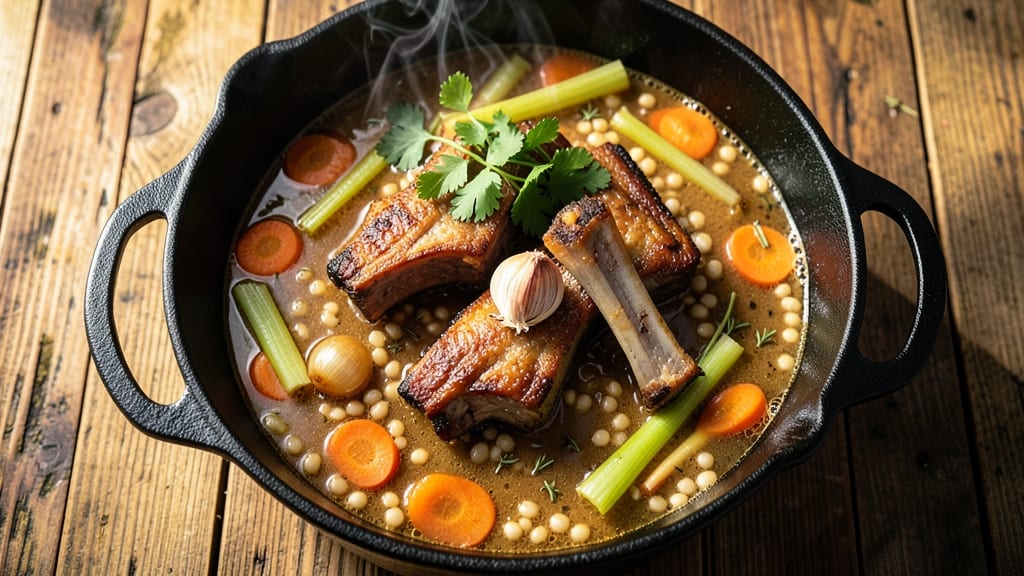
This beef barley soup recipe with prime rib bones delivers the kind of rich, meaty depth that transforms a simple soup into a hearty centerpiece. The secret lies in using prime rib bones—not just for flavor, but for that unmistakable beefy richness that simmers into a velvety broth.
I developed this version after years of testing, balancing traditional techniques with modern shortcuts so you get restaurant-quality results without hours of prep.
The prime rib bones are the star here, providing both structure and flavor as they break down into tender meat while infusing the broth with layers of umami.
Barley adds a satisfying chew and earthy sweetness that pairs perfectly with the beef, while aromatic vegetables like carrots and celery build a flavor foundation. What makes this recipe truly special is how the bones transform into fork-tender meat that practically melts in your mouth.
By the time you're done, you'll have a steaming bowl of soup where every spoonful delivers tender beef, hearty barley, and a broth so rich it feels like a hug in liquid form. The aroma alone will have everyone gathering around the table, and the leftovers?
Even better the next day. This is comfort food at its finest, with just enough depth to impress even skeptical guests.
Serve with crusty bread for soaking up every last drop of that flavorful broth, or garnish with fresh parsley for a pop of color. Whether you're making it for a cozy family dinner or a gathering of friends, this soup delivers satisfaction in every bite.
Let's get started on creating something truly special.
Ingredients for beef barley soup recipe with prime rib bones
Prime rib bones and hearty barley make this soup rich, meaty, and deeply satisfying.
| Ingredient | Amount | Notes |
|---|---|---|
| Prime Rib Bones 🦴 | 2 lb | With meat still attached |
| Yellow Onion 🧅 | 1 whole | Chopped, medium size |
| Carrots 🥕 | 4 medium | Peeled and chopped |
| Celery Stalks 🌿 | 4 whole | Chopped, including leaves |
| Barley 🌾 | 1 cup | Pearl barley, rinsed |
| Garlic Cloves 🧄 | 6 cloves | Minced, fresh preferred |
| Tomato Paste 🍅 | 2 tbsp | Smooth, not chunky |
| Beef Bouillon Cube 🥄 | 2 cubes | High-quality, no MSG |
| Dried Thyme 🌿 | 1 tsp | Or 1 tbsp fresh |
| Black Peppercorns 🌶️ | 1 tsp | Freshly cracked |
| Bay Leaves 🍃 | 2 whole | Fresh preferred |
| Fresh Parsley 🌿 | ¼ cup | Chopped, for garnish |
| Olive Oil 🫒 | 2 tbsp | Extra-virgin for richness |
| Water 💧 | 8 cups | Or low-sodium broth |
| Salt 🧂 | 1 ½ tsp | Kosher or sea salt |
Prime rib bones are the game-changer here—ask your butcher for the marrow-rich ends if possible. They're often marked down and deliver incredible flavor. I usually grab mine from Whole Foods or my local specialty butcher shop, but most grocery stores carry them too. Look for bones with good meat still attached, not just bare bones. The barley? Pearl barley works best—it's chewier than steel-cut and holds up to long simmering. If you can't find it, bulgur wheat is a decent sub, but the texture will be different. For the bouillon cubes, Knight's or House Foods are my go-tos—they've got great flavor without MSG.
No prime rib bones? Beef shank or oxtail works in a pinch, though the texture will be slightly different. Fresh thyme is ideal but dried works at one-third the amount. If you're using water instead of broth, add an extra bouillon cube or splash of Worcestershire sauce for depth. The tomato paste can be skipped if you're sensitive to acidity, but it adds a nice richness. For the carrots and celery, baby carrots or pre-chopped celery from the salad bar save time. And if you're short on fresh parsley, dried oregano at half the amount gives a similar earthy note.
This soup tastes even better the next day—make a double batch if you can. Store leftovers in the fridge for 4-5 days or freeze for 3 months. I like to portion it into containers with a layer of broth on top to prevent a skin from forming. For serving, keep the broth warm on the stove and the barley/veggies in a separate pot—reheat quickly so the barley doesn't turn mushy. The bones? Save any leftover meat for sandwiches or salads—it's perfect cold too.
Why You'll Love This Recipe
- No-Chop Sides: I swear by this trick—just roughly chop the carrots and celery into ½-inch pieces. The prime rib bones do all the work while you sip wine and pretend you’re a French chef.
- Rich Without Effort: That marrow from the prime rib bones? It melts into the broth like liquid gold. No fancy reductions, just deep, savory flavor from the bones simmering with barley—minimal work, maximum payoff.
- Leftovers That Shine: This soup only gets better the next day. The barley softens perfectly, the broth thickens, and I’ve never met a reheated bowl that wasn’t devoured. (Yes, even my picky dad finishes his.)
- Budget Beef Luxe: Prime rib bones are the secret weapon—cheaper than steak but packed with flavor. A single batch feeds four, and the leftovers stretch into lunches. Fancy dinner for half the cost? Done.
Step-by-step instructions for beef barley soup with prime rib bones
Here's how to transform prime rib bones into a deeply flavorful soup that's hearty enough for winter.
Brown the Prime Rib Bones and Build the Flavor Base
Preheat your oven to 425°F. Pat the 2 lb prime rib bones dry with paper towels and place them in a large Dutch oven. Heat 2 tbsp olive oil over medium-high heat until shimmering, then add the bones in a single layer. Let them sear undisturbed for 5-6 minutes until deeply browned on all sides.
This browning step is everything—it develops the Maillard reaction that creates that rich, meaty depth in your soup. I like to flip them carefully with tongs, turning them so each side gets that perfect caramelization. Once browned, remove the bones and set them aside on a plate.
Sauté the Vegetables and Aromatics
In the same Dutch oven, add the chopped yellow onion, carrots, and celery stalks (including leaves). Cook over medium heat for 8-10 minutes, stirring occasionally, until the vegetables soften and the onion becomes translucent. This is where the sweetness of the carrots and the earthiness of the celery really start to develop.
Add the minced garlic cloves and cook for another 30 seconds until fragrant—this is your signal that the garlic is ready and won't taste bitter. Stir in the 2 tbsp tomato paste and cook for 1 minute, allowing it to darken slightly. This step creates the foundation for your soup's rich, savory flavor.
Deglaze and Simmer the Broth
Pour in the 8 cups water, scraping up any browned bits from the bottom of the Dutch oven with a wooden spoon. This deglazing step captures all the flavor you've built so far. Add the 2 beef bouillon cubes, 1.5 tsp salt, 1 tsp dried thyme, 1 tsp black peppercorns, and 2 whole bay leaves. Bring the mixture to a boil over high heat, then return the prime rib bones to the pot.
Reduce the heat to low and let the soup simmer uncovered for 1.5 hours. You'll notice the broth gradually deepens in color and flavor. Skim off any foam that rises to the surface with a spoon—this keeps your soup clear and prevents a bitter taste. The bones should be falling off easily by this point, releasing all their marrow and collagen into the broth.
Add Barley and Finish Cooking
Stir in the 1 cup rinsed barley and continue simmering for another 30-40 minutes, until the barley is tender but still has a slight bite. The soup should be thickened slightly from the barley absorbing the liquid, but it should still be ladle-friendly. Taste and adjust the seasoning if needed—you might need a pinch more salt or a crack of pepper to balance the flavors.
Remove the prime rib bones and discard them. If you're feeling ambitious, you can shred any remaining meat from the bones and return it to the soup for extra richness. The soup should now have a beautiful, rustic color and a depth of flavor that comes from hours of slow simmering.
Serve with Fresh Herbs
Ladle the soup into bowls and garnish each serving with 0.25 cup chopped fresh parsley. The parsley adds a bright, fresh note that cuts through the richness of the soup. Serve immediately with crusty bread to soak up every last drop of that flavorful broth.
This soup tastes even better the next day as the flavors continue to meld, so make extra if you can. The barley will soften further, and the broth will deepen even more, making it a perfect comfort food for chilly evenings.
Pro Tips For Making Beef Barley Soup Recipe With Prime Rib Bones
- BLISTER THE BONES FIRST: I learned this the hard way—skipping the char on prime rib bones means you’re missing out on deep, smoky flavor. Sear them over high heat until they’re blackened in spots (about 5-7 minutes per side) before adding liquid. The crust breaks down into the broth, adding richness that no store-bought stock can match.
- SWEAT, DON’T SAUTEER VEGETABLES: Onions, carrots, and celery should glisten, not brown. Cook them low and slow with a splash of water or broth, covered, for 10 minutes. Browning them too fast turns them bitter—this soup is about tender, sweet vegetables, not caramelized bits.
- SKIP THE BARLEY WASH: Rinse pearl barley before cooking? That’s a rookie move. The starch on barley thickens the broth naturally as it cooks—it’s what gives this soup its satisfying body. Just measure it dry and let it soak up the liquid over time.
- ADD BARLEY LATE: Barley needs 45-60 minutes to soften, but adding it too early turns it mushy. Toss it in with the carrots and celery in the last 30 minutes of simmering—this keeps it chewy and hearty, not gluey. (Yes, even if you’re impatient like me.)
Flavor customization for this dish
Rich Umami Boost
Add 1 tbsp soy sauce or 1 tsp fish sauce when deglazing the Dutch oven for deeper umami. I love using Red Boat fish sauce—its clean, salty profile enhances the beef without overpowering.
For a vegetarian-friendly boost, try 1 tbsp miso paste (white or red) stirred in during the final 10 minutes of simmering. 🌟
Herb Variations
Swap thyme for 1 tsp smoked paprika and ½ tsp dried rosemary for a smoky twist. Fresh herbs like 1 sprig rosemary or 2 sprigs thyme tied in cheesecloth add complexity.
If you prefer warmth, add ½ tsp ground coriander with the bouillon cubes—it pairs beautifully with the beef and barley.
Spice Level Control
For mild heat, add ½ tsp crushed red pepper flakes when simmering. For a kick, stir in 1 tsp hot sauce (like Cholula) or 1 sliced jalapeño (seeds removed) with the vegetables.
If you love depth, try ½ tsp ground cumin with the tomato paste—it adds earthy warmth that balances the richness. 🌶️
Creamy Texture Options
Stir in ½ cup heavy cream or ½ cup coconut milk during the last 10 minutes of cooking for a velvety finish. For a lighter option, blend 1 cup broth separately and swirl it back in.
I also like adding ½ cup mashed potatoes (made from leftover roasted potatoes) for a rustic creaminess without dairy.
Vegetable Swaps
Replace carrots with sweet potatoes (peeled and cubed) for natural sweetness. Swap celery for leeks (white and light green parts only) for a milder, slightly sweeter flavor. Add 1 diced fennel bulb with the onions—its licorice notes complement the beef beautifully.
For extra heartiness, include ½ cup chopped mushrooms (cremini or shiitake) when sautéing the vegetables.
Nutrition facts
Frequently asked questions
Why do prime rib bones make this soup so much richer than regular beef broth?
The marrow inside prime rib bones releases during simmering, creating a naturally rich, velvety texture that's impossible to replicate with store-bought broth. The bones also break down into tender meat, adding layers of beefy flavor that infuse the broth over 1.5 hours of slow cooking. This is why traditional recipes always use bones—they're the secret to that restaurant-quality depth.
Can I use pearl barley substitutes if I'm short on time?
Yes! For a quicker option, try bulgur wheat (cooks in 10 minutes) or instant rice, though the texture will be softer. If you want a chewier bite like pearl barley, couscous works well—just cook it separately and stir it in at the end. For a gluten-free option, quinoa adds protein and holds up nicely to the broth.
How do I prevent the barley from turning mushy during simmering?
Start with 1 cup rinsed barley and simmer for exactly 30-40 minutes—no longer! Overcooking is the #1 cause of mushiness. For extra insurance, add the barley during the last 30 minutes of simmering (after the bones have released their flavor). If your barley still feels undercooked, it means your broth wasn't hot enough—keep the heat at a gentle simmer, not a boil.
What's the best way to store leftovers and reheat them?
Store in airtight containers with a layer of broth on top to prevent a skin from forming. Leftovers keep for 4-5 days in the fridge or 3 months in the freezer. To reheat, warm the broth separately and stir it back into the barley/vegetables—this keeps everything tender. Never microwave directly from the fridge, as the uneven heating can make the barley rubbery.
Can I make this soup in a slow cooker instead of a Dutch oven?
Brown the bones and vegetables in a skillet first, then transfer everything to a 6-quart slow cooker. Add water and simmer on low for 8 hours or high for 4-5 hours. The slow cooker's gentle heat makes the bones extra tender, but you'll need to check the barley frequently after 3 hours to prevent overcooking. The flavor will be even deeper from the extended simmer!