
Soups & Stews
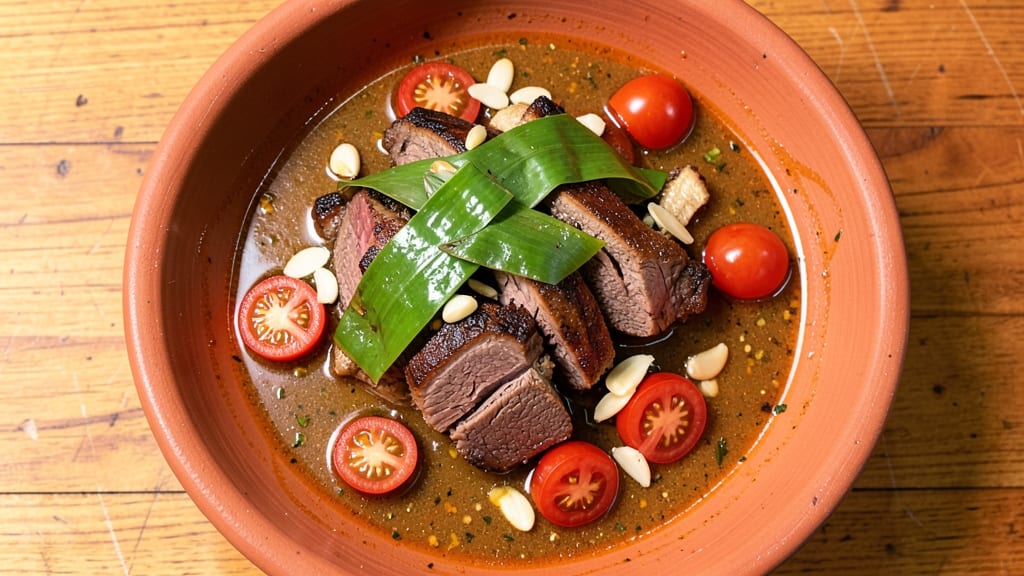
This Banga soup recipe Cameroon brings the heart of West African cuisine to your kitchen with its rich, smoky depth and tender meat stewed with plantains and leafy greens. 🌟 The dish is a celebration of Cameroon's culinary heritage, where slow-cooked flavors transform simple ingredients into something extraordinary.
What makes Banga soup truly special is its ability to feed a crowd while keeping prep manageable—perfect for gatherings or family dinners.
The soul of this recipe lies in its layers of flavor: smoky plantains caramelize beautifully, while meat—traditionally goat or beef—becomes fork-tender as it simmers. Leafy greens like banga leaves or spinach add a vibrant touch, balancing the richness with earthy freshness.
The secret? A blend of aromatic spices and a long, slow cook that lets every ingredient meld into harmony.
By the time you serve this Banga soup, you’ll have a dish that’s both hearty and deeply satisfying—ideal for pairing with fufu, garri, or rice. The aroma alone will draw everyone to the table, while the first bite delivers that perfect balance of smoky, savory, and slightly sweet.
This is more than a recipe; it’s an experience of Cameroon’s vibrant culinary traditions.
Whether you’re cooking for a special occasion or simply craving a taste of West Africa, this Banga soup delivers restaurant-quality results at home. Let’s get started on creating a dish that’s as rich in flavor as it is in cultural pride.
Ingredients for banga soup recipe cameroon
Sixteen ingredients blend West African flavors into this crowd-pleasing Banga soup.
| Ingredient | Amount | Notes |
|---|---|---|
| Beef Chuck Roast 🥩 | 2 ½ lb | Traditional for rich flavor |
| Green Plantains 🍌 | 3 whole | Unripe for smoky texture |
| Banga Leaves 🌿 | 2 cups | Or sub spinach if unavailable |
| Fresh Tomatoes 🍅 | 4 medium | Ripe but firm preferred |
| Fresh Ginger 🧄 | 2 tbsp | Grated, aromatic base |
| Garlic Cloves 🧄 | 6 cloves | Peeled, aromatic foundation |
| Red Palm Oil 🫒 | ½ cup | Essential for authentic color |
| Fresh Red Bell Pepper 🌶️ | 1 whole | Diced for vibrant color |
| Onions 🧅 | 2 large | Yellow or red preferred |
| Ground Black Pepper 🌶️ | 1 tsp | Freshly ground preferred |
| Salt 🧂 | 1 ½ tsp | Adjust to taste |
| Dried Thyme 🌿 | 1 tsp | Earthy depth of flavor |
| Bay Leaves 🌿 | 2 whole | For aromatic complexity |
| Vegetable Oil 🫒 | ¼ cup | For initial searing |
| Water 💧 | 4 cups | For simmering broth |
The beef is the foundation—chuck roast delivers the best texture and flavor when slow-cooked. Look for pieces with good marbling at local African markets or well-stocked grocery stores like Whole Foods. If you can't find banga leaves, spinach or collard greens work perfectly, though they'll have a slightly different texture. The plantains must be green and firm; ripe ones will turn mushy during cooking. For the palm oil, African markets or specialty stores carry it, but Trader Joe's sometimes stocks it too—just check the spice aisle.
No palm oil? Olive oil or vegetable oil will work, though the color and flavor will differ slightly. Fresh ginger and garlic are non-negotiable for authentic flavor—dried won't cut it. The tomatoes can be swapped for tomato paste (2 tbsp) if fresh isn't available. For the bell pepper, red or yellow works best—green will make the soup less vibrant. If you're short on time, pre-cut frozen onions save chopping effort without sacrificing flavor. The thyme and bay leaves can be swapped for 1 tsp each of dried oregano and basil if needed, though fresh is always better.
This soup tastes even better the next day as flavors meld. Store in an airtight container in the fridge for up to 4 days or freeze portions for 3 months. The plantains can be peeled and sliced ahead, then refrigerated for 2 days before cooking. For serving, keep the meat warm in the broth and reheat the plantains separately—they absorb moisture quickly. Leftovers make fantastic lunches, especially when paired with fufu or garri for that authentic Cameroonian experience.
Why You'll Love This Recipe
- One-Pot Magic: The beef chuck roast and banga leaves simmer together—no extra pots, no fuss. I just brown the meat, toss in the chopped plantains and tomatoes, add the leaves, and let it bubble. That’s it. The ginger and garlic mingle into the broth while you’re chopping, so by the time you’re done, the house smells like a Cameroonian feast.
- Ginger-Garlic Bomb: Between us, the ginger and garlic in this soup are next-level. They don’t just flavor the broth—they seep into the beef, making every bite taste like it’s been kissed by something magical. And the banga leaves? Earthy, slightly bitter, but in the best way—like a hug for your taste buds.
- Leftovers That Beg: This soup tastes even better the next day. Honestly, I make a double batch on Sundays because by Wednesday, I’m already craving it. The beef gets more tender, the plantains soften just right, and the flavors meld into something deeper. It’s my go-to for lazy nights when I don’t want to cook but still want to eat like I did.
- Budget Feast for Many: A single beef chuck roast and a bundle of banga leaves stretch to feed four—or even six if you’re serving with rice or fufu. The plantains add sweetness without costing much, and tomatoes bulk it up. It’s the kind of dish where you spend less but feel like you’re celebrating. (Yes, even on a Tuesday night.)
Step-by-step instructions for Banga soup Cameroon
Transform simple ingredients into a rich, smoky stew with this traditional Cameroon technique.
🔥 Step 1: Sear the Beef Chuck Roast
Heat the 0.25 cup vegetable oil in a large pot over medium-high heat. Pat the 2.5 lb beef chuck roast dry with paper towels—this ensures a proper sear. Place the meat in the pot and brown it on all sides for 8-10 minutes, turning occasionally. You're looking for a deep golden crust that releases easily from the pan.
Once the beef is well-seared, remove it from the pot and set it aside. The goal here is to develop deep flavor through the Maillard reaction. If you see any browned bits sticking to the bottom, don't scrape them out—leave them for the sauce. This step forms the flavor foundation of your Banga soup.
🍳 Step 2: Build the Aromatic Base
In the same pot, add 2 tablespoons fresh ginger and 6 cloves garlic cloves, mincing them directly into the hot oil. Sauté for 2 minutes until fragrant and just beginning to color. Add 2 large onions, diced into ¼-inch pieces, and cook for 5 minutes until translucent.
Stir in 1 whole fresh red bell pepper, diced, and cook for another 3 minutes until softened. Here's where the flavors start to meld—don't rush this step. The vegetables should release their natural juices and develop a slightly caramelized edge. This aromatic base forms the flavor backbone of your soup.
🥘 Step 3: Develop the Smoky Color
Add 0.5 cup red palm oil to the pot and stir well to combine. Increase heat to medium-high and let it simmer for 5 minutes, stirring occasionally. The palm oil will darken significantly, giving your soup its characteristic rich color and subtle smokiness. This step is crucial for authentic flavor—don't skip it.
Add 4 medium fresh tomatoes, chopped, and cook for 5 minutes until they break down into a thick paste. Stir in 1.5 teaspoons salt, 1 teaspoon dried thyme, and 1 teaspoon ground black pepper, along with the 2 whole bay leaves. The mixture should smell intensely aromatic at this point—this is your cue that the flavors are developing properly.
🍳 Step 4: Simmer with Plantains and Banga Leaves
Return the seared beef to the pot and add 4 cups water. Bring to a boil, then reduce heat to low-medium and cover partially. Let it simmer for 1.5 hours, stirring occasionally, until the beef is fork-tender. The liquid should reduce slightly but remain saucy.
Peel and slice the 3 whole green plantains into ½-inch thick rounds and add them to the pot. Stir in the 2 cups banga leaves (or spinach if substituting). Simmer uncovered for another 30-40 minutes until the plantains are tender and the leaves wilt completely. The soup should have a thick, stew-like consistency with the plantains absorbing the rich flavors.
⏰ Step 5: Final Adjustments and Resting
Remove the bay leaves and adjust seasoning if needed—taste and add more salt or pepper as required. Let the soup rest for 10 minutes before serving. This resting period allows the flavors to meld completely and the plantains to absorb all the rich broth.
Serve the Banga soup hot, with each bowl containing tender beef, smoky plantains, and vibrant greens. The deep red palm oil color will make your soup visually stunning, while the complex flavors of ginger, garlic, and thyme create a truly authentic Cameroon dining experience.
Pro Tips For Making Banga Soup Recipe Cameroon
- BLANCH THE BANGA LEAVES: Toss the leaves in boiling water for 30 seconds first—this softens them and cuts the bitterness. I learned this the hard way after serving a batch that tasted like grass. Use a colander and work in batches so they don’t steam instead of blanch.
- SEAR THE BEEF IN BATCHES: Don’t crowd the pan or the meat will steam instead of brown. Cut the chuck roast into 2-inch chunks and sear in two rounds if needed—golden crust is non-negotiable for flavor. A hot, dry skillet (no oil needed) works best; just let the beef’s fat render first.
- PEEL GINGER LIKE AN ONION: Skip the grating—peel the ginger like an onion, then slice thinly. This keeps the heat balanced without overpowering the soup. I used to grate it raw, and it turned the broth into a spicy muddle. A sharp knife works faster and gives cleaner pieces.
- ADD PLANTAINS LAST MINUTE: Toss the green plantains into the simmering broth only in the final 10 minutes. They’ll soften perfectly without turning to mush. I once added them early and ended up with a watery, flavorless side—now I treat them like potatoes.
Essential equipment for perfect results
Large Pot Essentials
You’ll need a large, heavy-bottomed pot with at least 8-quart capacity to handle the beef, plantains, and broth without boiling over. I recommend a Dutch oven (like Lodge 6.5-quart) for even heat distribution and easy stirring.
If you don’t have one, a stainless steel stockpot with a tight-fitting lid works too. The pot should have a long handle for safety when transferring to the table. 🌡️
Palm Oil Crucial
The ½ cup red palm oil is non-negotiable for authentic flavor and color. While Trader Joe’s or Whole Foods sometimes carry it, check the African grocery aisle for better quality. If unavailable, olive oil can substitute, but the dish will lack depth.
Store palm oil in a cool, dark place—it solidifies at room temperature, so microwave it for 20 seconds to soften before measuring. 🫒
Knife and Cutting Tools
A sharp chef’s knife (like Victorinox 8-inch) is essential for dicing onions, peppers, and tomatoes efficiently. For the plantains, a serrated knife helps slice through their tough skin cleanly.
Keep a cutting board (preferably bamboo or plastic to prevent slipping) and a peeler for the plantains. Prep all vegetables in ¼-inch pieces for even cooking. ✨
Measuring and Spices
Use a digital kitchen scale for precise measurements of the beef (2.5 lbs) and palm oil (½ cup). For spices, a small spice grinder ensures freshness—ground black pepper and dried thyme should be freshly ground.
A mortar and pestle can also work for mincing garlic and ginger if you prefer texture. Store spices in airtight containers to preserve flavor. 🌿
Serving Essentials
Serve Banga soup in deep, wide bowls (like ceramic or stoneware) to showcase the rich colors. Keep a ladle (preferably stainless steel) for easy serving. For sides, have fufu or garri ready—use a wooden spoon to shape fufu or a small bowl for individual servings.
A tongs helps transfer plantains and meat without breaking them. 🍽️
Nutrition facts
Frequently asked questions
Can I substitute beef with another protein in Banga soup?
Traditional Banga soup uses goat, but you can swap beef for chicken thighs (bone-in for flavor) or fish like tilapia. For vegetarian versions, use mushrooms or tofu—just increase simmering time to 20-25 minutes to tenderize. The key is maintaining the soup's rich, hearty texture.
What if I can't find banga leaves? What are good substitutes?
No problem! Use spinach, collard greens, or kale—they work equally well. For a closer texture, try bitterleaf (nchuanwu) if available at African markets. Just adjust cooking time: wilt greens for 15-20 minutes less than banga leaves. The soup's flavor remains authentic.
How do I make Banga soup less spicy?
Reduce or omit the red bell pepper entirely—it's the main source of heat. For milder flavor, add 1 extra tomato or ½ cup coconut milk at the end to balance spice. Always taste before serving! Adjust salt and pepper separately to maintain depth.
Can I prepare Banga soup ahead of time?
Yes! This soup tastes even better the next day. Store in an airtight container in the fridge for up to 4 days or freeze for 3 months. Reheat gently on low heat, adding 2 tbsp water if too thick. The plantains will soften further—serve with fresh fufu or garri.
What's the best way to serve Banga soup?
Pair it with fufu, garri, or rice to soak up the rich broth. For an authentic touch, serve in shared bowls with a communal spoon. Garnish with fresh cilantro and extra black pepper. The smoky plantains and tender meat make every bite satisfying!