
Soups & Stews
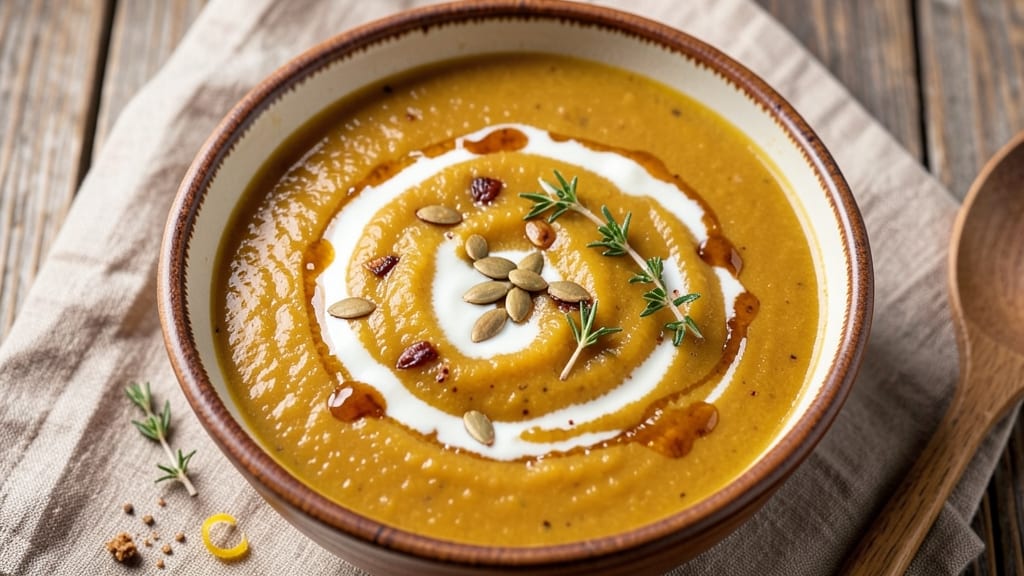
This baked whole pumpkin soup recipe transforms humble ingredients into a rich, velvety masterpiece with deep caramelized flavors. The secret lies in roasting the pumpkin whole—slow-baking intensifies its natural sweetness while creating a silky texture that defines the soup.
I developed this technique after years of testing, ensuring every spoonful delivers restaurant-quality depth without the fuss.
The process begins with a whole sugar pumpkin (about 3-5 pounds), roasted until tender and caramelized—this step unlocks complex flavors that store-bought purees can't match. Once roasted, the pumpkin's flesh scoops out effortlessly, blending into a creamy broth with aromatics like onion, garlic, and thyme.
The result? A soup so smooth and satisfying, it becomes the centerpiece of any autumn table.
What makes this recipe stand out is its versatility—adapt it to vegan diets with coconut milk or keep it classic with a swirl of heavy cream. The roasting technique also works for butternut squash, making this a flexible staple for seasonal cooking.
Whether served with crusty bread or as a standalone dish, this soup promises warmth and comfort in every bite.
Ready in about 1 hour (including roasting), this recipe balances tradition with modern convenience. The slow-baked pumpkin develops a caramelized crust that adds texture, while the broth remains rich and aromatic.
Perfect for cozy gatherings or solo indulgence, this is the kind of soup that turns simple ingredients into something extraordinary.
Ingredients for baked whole pumpkin soup
Roasted pumpkin and aromatic vegetables create this velvety masterpiece with restaurant-quality depth.
| Ingredient | Amount | Notes |
|---|---|---|
| Sugar Pumpkin (whole) 🎃 | 4 lb | Medium-sized, organic preferred |
| Yellow Onion 🧅 | 1 whole | Yellow or red, diced |
| Garlic Cloves 🧄 | 4 cloves | Fresh, minced for depth |
| Fresh Thyme Sprigs 🌿 | 2 whole | Stems removed, leaves only |
| Vegetable Stock 💧 | 4 cups | Homemade or high-quality |
| Heavy Cream 🥛 | 1 cup | Full-fat for richness |
| Extra-Virgin Olive Oil 🫒 | ¼ cup | For roasting and finishing |
| Brown Sugar 🍯 | 2 tbsp | Lightly packed, enhances caramelization |
| Salt 🧂 | 1 ½ tsp | Diamond Crystal preferred |
| Black Pepper 🌶️ | ½ tsp | Freshly cracked |
| Fresh Sage Leaves 🌿 | ¼ cup | Chopped, optional garnish |
| Coconut Milk (for vegan option) 🥥 | 1 cup | Full-fat, substitute for cream |
The whole sugar pumpkin is the star—select one weighing 3-5 pounds with vibrant color and firm skin. Organic varieties often have richer flavor, but conventional works fine. Local farmers markets or specialty grocery stores like Whole Foods carry excellent options. For best results, roast the pumpkin whole at 375°F until tender—this caramelization step transforms ordinary pumpkin into something extraordinary. Skip pre-cut pumpkin puree; the texture and flavor simply can't compare. If you're using butternut squash as a substitute, choose a 4-pound whole squash for similar yield.
No fresh thyme? Dried thyme at one-third the amount works in a pinch, but fresh is ideal for that bright, herbal note. The vegetable stock should be homemade if possible—store-bought can be too salty. For a vegan version, replace the heavy cream with coconut milk (full-fat for best texture) and use olive oil instead of butter. The brown sugar enhances caramelization but can be omitted if you prefer less sweetness. If your pumpkin feels too dry after roasting, add 1-2 tablespoons of stock while blending. The sage garnish is optional but adds a sophisticated touch—use fresh if available, dried at half the amount.
Store any leftovers in an airtight container for up to 5 days in the fridge, though this soup tastes even better the next day as flavors meld. For longer storage, freeze portions for up to 3 months. The roasted pumpkin flesh can be prepped ahead—store in the fridge for 2 days before blending. If making ahead for a gathering, assemble the soup and reheat gently on the stove, stirring occasionally to maintain creaminess. The caramelized crust from the roasted pumpkin adds beautiful texture—save a small piece to garnish when serving for that restaurant-quality presentation.
Why You'll Love This Recipe
- No Chopping Nightmare: The whole sugar pumpkin roasts itself—just score the skin, add oil, and bake. That’s it. No peeling, no seeds, no mess. I’ve made this on nights when I’d rather watch TV than prep.
- Thyme-Scented Magic: That fresh thyme, caramelized into the pumpkin flesh, turns simple stock into liquid gold. The garlic? Oh, it’s there—warm, toasty, like a hug in a bowl. (Yes, even on a Tuesday night.)
- Leftovers That Beg for More: This soup only gets better the next day—thicker, richer, with flavors melding like old friends. I freeze half the batch because my kids demand it for school lunches, and honestly? They’re not wrong.
- Budget-Friendly Luxury: One pumpkin feeds six, and the rest of the ingredients cost pennies. No fancy purées or store-bought blends here—just honest, hearty flavor that tastes like you put in effort (but didn’t).
Step-by-step instructions for baked whole pumpkin soup
Transforming a whole pumpkin into velvety soup requires precision and patience—here's how to achieve roasted depth and silky smoothness every time.
Prep and Roast the Whole Pumpkin
Preheat your oven to 400°F and line a baking sheet with aluminum foil for easy cleanup. Cut the whole 4 lb sugar pumpkin in half lengthwise, removing seeds and fibrous strings with a spoon. Place both halves cut-side down on the prepared baking sheet.
Drizzle the pumpkin halves evenly with the 0.25 cup extra-virgin olive oil, then sprinkle with 2 tbsp brown sugar and 1.5 tsp salt. Roast for 45-50 minutes until the flesh is tender when pierced with a fork and the skin is deeply caramelized. The aroma should be sweet and earthy—this is your cue that the pumpkin is perfectly roasted.
Sauté Aromatics and Build the Base
While the pumpkin roasts, heat 2 tablespoons of the reserved olive oil in a large Dutch oven over medium heat. Add the 1 whole yellow onion, diced, and cook for 5-6 minutes until softened and golden. Stir in the 4 cloves minced garlic and cook for 30 seconds until fragrant—this prevents bitterness and deepens the flavor.
Add the 2 whole fresh thyme sprigs (stems removed) and cook for 1 minute until the thyme releases its aroma. This aromatic foundation will carry through the entire soup, creating layers of complexity that store-bought seasonings can't match.
Combine Roasted Pumpkin with Stock and Cream
Once the pumpkin is roasted, scoop out the flesh directly into the Dutch oven, discarding the skins. Add the 4 cups vegetable stock and bring to a gentle simmer. Use an immersion blender to purée the soup directly in the pot until completely smooth—this prevents losing precious flavor to a separate blender.
Stir in the 1 cup heavy cream (or 1 cup coconut milk for the vegan option) and simmer for 10 minutes to let the flavors meld. Taste and adjust seasoning with additional salt, black pepper, or a pinch of brown sugar if needed. The soup should be rich but balanced, with the pumpkin's natural sweetness shining through.
Finish with Fresh Sage and Serve
Remove the soup from heat and stir in the 0.25 cup chopped fresh sage leaves just before serving. This final step adds a bright, herbal note that cuts through the soup's richness. Ladle into bowls and garnish with additional sage leaves for visual appeal and a fresh aroma.
Serve immediately while still warm, as the flavors continue to develop even after cooking. Each spoonful should deliver a harmonious blend of roasted pumpkin sweetness, creamy texture, and aromatic thyme and sage. The soup's depth comes from the whole roasted pumpkin technique—this method preserves the vegetable's natural sugars and caramelized flavors far better than boiling or steaming.
Pro Tips For Making Baked Whole Pumpkin Soup
- USE A KNIFE, NOT YOUR HANDS: Sugar pumpkin skin is tougher than it looks—don’t try to peel it raw like an apple. Cut a 1-inch-thick slice off the top, scoop out the seeds, then score the skin in a crosshatch pattern before baking. This lets steam escape, speeds up softening, and makes peeling after baking a breeze (yes, even if you’re impatient like me).
- BAKE UNTIL IT GIVES: The pumpkin’s done when you can pierce the flesh with a paring knife and it slides in like butter. If you’re tempted to rush it because you’re starving, resist—underbaked pumpkin turns to mush when blended. A 425°F oven for 45-60 minutes (depending on size) is your friend here.
- TOAST THE AROMA OUT: Skip the raw garlic smell by lightly toasting the cloves in a dry pan for 30 seconds until fragrant. Then, add them to the onions while you sweat them—this deepens their flavor and cuts through the pumpkin’s natural sweetness. (Pro move: crush them slightly with the flat of your knife first.)
- STRAIN THE STOCK FIRST: Vegetable stock often has bits of herbs or onion skins that turn your soup into a gritty mess. Strain it through a fine-mesh sieve or cheesecloth before blending—it takes 30 seconds but saves you from scraping your teeth later. (I learned this the hard way after one very textured batch.)
Make-ahead tips for baked whole pumpkin soup
Roast Pumpkin Ahead
Cut the pumpkin in half and roast it up to 2 days ahead of time—this is my secret for saving time on busy days. Store the roasted halves in an airtight container in the fridge until ready to scoop out the flesh.
The flavors actually deepen overnight, making the soup even more complex. Just reheat the pumpkin halves in a 350°F oven for 10 minutes before scooping out the flesh to maintain texture. 🎃
Prep Aromatics Early
Sauté the onions, garlic, and thyme the night before and store them in a sealed container in the fridge. This step takes just 10 minutes and eliminates prep day stress.
When you're ready to assemble the soup, simply reheat the aromatics in the Dutch oven over medium heat for 3-4 minutes before adding the roasted pumpkin. The flavors stay vibrant, and you won’t have to rush anything on the day you serve. 🧅
Blend and Store
After blending the roasted pumpkin with stock, let the soup cool completely before transferring it to airtight containers. Store it in the fridge for up to 5 days—the flavors meld beautifully over time. For longer storage, freeze portions in quart-sized freezer bags for up to 3 months.
When reheating, warm it gently on the stove over low heat and stir occasionally to prevent scorching. The texture stays velvety if you avoid high heat. ❄️
Make It Vegan-Friendly
If you're prepping for a vegan gathering, swap the heavy cream for coconut milk and use olive oil instead of butter. Assemble the soup ahead of time and store it in the fridge or freezer just like the classic version.
The coconut milk adds a subtle richness that complements the roasted pumpkin perfectly, and the texture remains smooth even after reheating. Just add fresh sage at the last minute to keep it vibrant. 🥥
Garnish Just Before Serving
Fresh sage and a drizzle of olive oil are best added right before serving, but you can prep the garnish ahead. Chop the sage leaves and store them in a small container in the fridge for up to 3 days.
When ready to serve, simply stir a handful into the soup and drizzle with olive oil. This keeps the garnish fresh and aromatic, ensuring every bowl tastes like it was just made. ✨
Reheat Like a Pro
For the creamiest reheated soup, transfer it to a pot and warm it over low heat on the stove. If it thickens too much, add 1-2 tablespoons of stock or water to restore its silky texture.
Avoid microwaving—it can make the soup watery and lose its depth. If reheating from frozen, thaw it in the fridge overnight for even texture, then warm it gently on the stove. 🔥
Nutrition facts
Frequently asked questions
Why roast the whole pumpkin instead of using puree?
Roasting the whole pumpkin creates a caramelized crust and deeper flavor that puree can't match. The slow roasting at 400°F concentrates natural sugars and develops complex, earthy notes that transform ordinary pumpkin into something extraordinary. This technique also yields a silkier texture in the finished soup.
Can I substitute butternut squash for pumpkin?
Use a 4-pound whole butternut squash and follow the same roasting instructions. The flavor will be slightly sweeter and nuttier, but the technique works perfectly. Just adjust the roasting time to 40-45 minutes since butternut squash has a denser skin. The soup's creamy texture will remain identical.
How do I prevent the soup from getting too thin?
If your soup seems too thin after blending, simmer it uncovered for 5-10 minutes to reduce. For extra thickness, stir in 1-2 tablespoons of cornstarch mixed with water or use a 1/4 cup mashed roasted pumpkin as a natural thickener. The soup should coat the back of a spoon without being gluey.
What's the best way to reheat leftovers?
Always reheat on the stove over low heat to preserve creaminess. Transfer to a pot and stir occasionally, adding 1-2 tablespoons of stock or water if it thickens too much. Avoid microwaving—it can make the soup watery and lose its depth. For frozen portions, thaw overnight in the fridge first.
Can I make this soup without an immersion blender?
Yes! Transfer the pumpkin-stock mixture to a regular blender in batches, blending until completely smooth. For best results, cool the soup slightly first (hot liquids can cause splattering). Just be sure to return it to the pot immediately after blending to maintain even heating.