
Soups & Stews
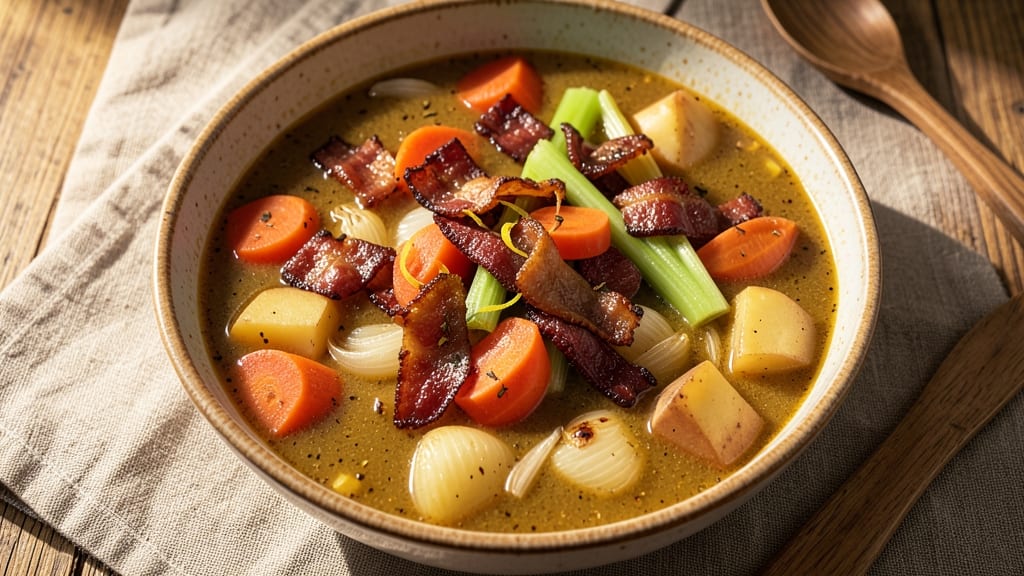
This bacon and vegetable soup recipe transforms humble ingredients into a deeply satisfying bowl of smoky, savory goodness that warms the soul on chilly days. The secret lies in rendering bacon until crispy—those golden, salty bits infuse the broth with unmistakable flavor—while tenderizing root vegetables through slow simmering.
I developed this version after realizing how much richer homemade soup tastes compared to store-bought, with layers of caramelized onions and herbs that elevate every spoonful.
The beauty of this recipe is its balance: hearty enough to stand alone but flexible enough to adapt to what you have on hand. Sautéing the bacon first creates a flavorful base, while adding potatoes, carrots, and celery later ensures they cook through without turning mushy.
A splash of apple cider vinegar at the end brightens the broth, cutting through the richness while adding subtle depth that makes this soup truly memorable.
What you'll end up with is a steaming bowl of soup where each bite delivers crispy bacon edges, tender vegetables, and a broth so flavorful it disappears quickly. The aroma alone—smoky bacon mingling with caramelized onions and simmering herbs—will have your kitchen smelling like a home-cooked comfort meal.
This is the kind of recipe that gets better with leftovers, as flavors meld and intensify overnight.
Perfect for weeknight dinners or meal prep, this soup scales beautifully for crowds. The technique is straightforward but yields restaurant-quality results, proving that homemade always tastes better. Let's get started—your taste buds (and freezer) will thank you.
Ingredients for bacon and vegetable soup
Six ingredients transform into smoky, hearty soup that tastes even better the next day.
| Ingredient | Amount | Notes |
|---|---|---|
| Thick-Cut Bacon 🥓 | 12 oz | Cut into 1/2-inch pieces |
| Yellow Onion 🧅 | 1 whole | Large, thinly sliced |
| Carrots 🥕 | 3 medium | Peeled, cut into 1-inch chunks |
| Celery Stalks 🧅 | 3 whole | Trimmed, cut into 1-inch pieces |
| Russet Potatoes 🥔 | 2 lb | Peeled, cut into 1-inch cubes |
| Garlic Cloves 🧄 | 4 cloves | Minced for depth |
| Chicken Broth 💧 | 6 cups | Low-sodium preferred |
| Apple Cider Vinegar 🍏 | 1 tbsp | For brightness |
| Fresh Thyme 🌿 | 2 tsp | Leaves only, chopped |
| Bay Leaves 🌿 | 2 whole | For aromatic depth |
| Salt 🧂 | 1 ½ tsp | Kosher or sea salt |
| Black Pepper 🌶️ | ½ tsp | Freshly ground |
| Olive Oil 🫒 | 2 tbsp | For cooking bacon |
The bacon is non-negotiable here—thick-cut gives you those coveted crispy edges that crumble into the broth. Costco or Trader Joe's sell the best pre-cut pieces, but grab a whole package if you want to control the thickness. Look for bacon with good marbling; it renders better and adds more flavor. The potatoes are the workhorses, so Russets are ideal—they hold up to long simmering without turning to mush. If you're short on time, Yukon Golds work too, but they'll break down faster. For the broth, low-sodium is key—you'll be adding plenty of salt later.
No thick-cut bacon? Regular bacon cut into 1/2-inch pieces works in a pinch, but you'll lose some crispiness. Swapping potatoes? Sweet potatoes add natural sweetness, but they'll turn mushy faster. The celery can be subbed with leeks or fennel for a different flavor profile. Fresh thyme wilt fast, so dried thyme at one-third the amount is fine if you're in a bind. For extra depth, add a splash of Worcestershire sauce (check for vegetarian-friendly versions if needed). The vinegar is crucial—apple cider vinegar has the best balance, but white vinegar works too.
This soup tastes even better the next day as flavors meld. Store in an airtight container for 4-5 days in the fridge, or freeze for up to 3 months. The bacon bits stay crispy if you freeze the soup in portions—just reheat gently and add a splash of water if it's too thick. For meal prep, double the batch and freeze half. Reheat on the stove over medium-low heat, stirring occasionally, until piping hot. The aroma alone will have everyone gathering around the pot.
Why You'll Love This Recipe
- One-Pan Magic: I swear by this recipe—just toss everything in one pot, let the bacon render its smoky magic, and walk away. No chopping boards to scrub, no extra dishes, and zero stress.
- Smoky-Sweet Crunch: That first bite of crispy bacon mixed with tender carrots? It’s the kind of contrast that makes you pause mid-sip. The potatoes soak up all the salty, savory goodness while the celery adds a fresh bite—no blandness here.
- Weeknight Hero: Between us, this is my go-to when I’m too tired to think. Toss in whatever veggies I have (even frozen ones work), and boom—dinner’s ready before the kids start asking, "What’s for dinner?"
- Leftovers That Don’t Suck: Honestly, I make a double batch because the flavor only gets better the next day. The potatoes stay creamy, the bacon stays crispy (if you’re lucky), and it reheats like a dream—way better than takeout.
Step-by-step instructions for bacon and vegetable soup
Here's how to build a rich, smoky soup where crispy bacon meets tender vegetables in perfect harmony.
Cook the Bacon Until Crispy
In a large Dutch oven, heat the 2 tablespoons olive oil over medium heat. Add the 12 oz thick-cut bacon, cut into ½-inch pieces, and cook undisturbed for 5-6 minutes until the edges turn deep golden brown. This is where all that smoky flavor develops—don't rush it.
Once the bacon is golden and crispy, use a slotted spoon to transfer it to a paper towel-lined plate, leaving the rendered fat in the pot. You should have about ¼ cup of bacon fat remaining—this is liquid gold for building flavor. If you're worried about excess fat, you can drain all but 2 tablespoons into a small bowl and reserve it for later use.
Sauté the Vegetable Base
Reduce the heat to medium-low and add the 1 whole yellow onion, sliced, along with the 3 medium carrots and 3 whole celery stalks, both cut into 1-inch chunks. Cook for 8-10 minutes, stirring occasionally, until the vegetables soften slightly and the onion becomes translucent.
Here's the thing—you want the vegetables to release their natural juices and start caramelizing just a bit. This creates a deeper flavor foundation for the soup. If the vegetables stick to the pot, add 1-2 tablespoons of the reserved bacon fat or a splash of chicken broth to deglaze and keep everything moving.
Add Potatoes and Aromatics
Push the vegetables to one side of the pot and add the 2 lb russet potatoes, cut into 1-inch cubes, to the empty space. Stir gently to coat them with the bacon fat and vegetable juices. Cook for 3-4 minutes until the potatoes begin to soften slightly.
Add the 4 cloves minced garlic, 2 teaspoons chopped fresh thyme, 2 whole bay leaves, 1.5 teaspoons salt, and 0.5 teaspoon black pepper. Stir everything together and cook for an additional 1-2 minutes until the garlic is fragrant but not browned—this prevents bitterness. The thyme and bay leaves will infuse the soup with their earthy, aromatic qualities, so don't skip this step.
Simmer the Soup to Perfection
Pour in the 6 cups chicken broth and the 1 tablespoon apple cider vinegar. Stir well to combine, then bring the mixture to a gentle boil over medium-high heat. Once boiling, reduce the heat to low and let it simmer uncovered for 20-25 minutes, stirring occasionally, until the potatoes are fork-tender and the carrots and celery are completely soft.
You'll know it's ready when the potatoes can be easily pierced with a fork and the flavors have melded together beautifully. The vinegar adds a subtle tang that brightens the rich, smoky flavors of the bacon and vegetables. If the soup starts to look too thick, add ½ cup of water or broth to reach your desired consistency.
Finish and Serve
Remove the bay leaves from the soup—they've done their job and can be a bit fibrous if left in. Return the crispy bacon to the pot and stir to distribute it evenly throughout the soup. Taste and adjust the seasoning if needed, adding more salt or black pepper as necessary.
Ladle the soup into bowls and serve immediately while it's hot. The contrast of the crispy bacon against the silky vegetable broth is what makes this soup truly special. Pair it with crusty bread or a simple green salad to round out the meal. The leftovers actually taste even better the next day as the flavors continue to develop.
Pro Tips For Making Bacon And Vegetable Soup
- Cook Bacon Low and Slow: I used to rush this step, and the bacon ended up greasy but barely crispy—wasteful and disappointing. For this soup, render the thick-cut bacon on medium-low heat (not high) until the fat is golden and the edges are just starting to crisp, about 10-12 minutes. That slow cook turns the fat into liquid gold without burning, and the bacon stays chewy, not tough.
- Cut Potatoes Uniformly: I learned this the hard way—uneven potato chunks mean some get mushy while others stay raw. For this soup, slice the Russets into ½-inch cubes (yes, even the ends) so they cook at the same rate. If you’re impatient like me, parboil them for 3 minutes first, then finish in the soup to lock in texture.
- Don’t Crowd the Pot: After burning three batches of onions, I finally figured out: the pot needs breathing room. When sautéing onions, carrots, and celery, work in batches if needed—overcrowding steams the veggies instead of browning them. A hot, slightly crowded pot is the fastest way to turn your mirepoix into sad, gray mush.
- Save the Bacon Fat: This isn’t the prettiest method, but it’s the tastiest. After rendering the bacon, pour the fat through a fine-mesh strainer into a measuring cup—you’ll need about ¼ cup for the soup. That fat carries more flavor than butter ever could, and it’s already seasoned. (Yes, even if you’re lazy about skimming later.)
Flavor customization for this bacon and vegetable soup
Spicy Kick
For a bold twist, stir in ½ teaspoon of smoked paprika with the bacon fat before adding the vegetables. This adds a deep, earthy heat that complements the smoky bacon beautifully. If you love spice, add ½ teaspoon cayenne pepper or 1 teaspoon chipotle powder when you incorporate the broth.
For a sweeter heat, toss in 1 diced jalapeño pepper with the potatoes—it softens as it cooks but keeps the broth lively. 🌶️
Herb Variations
Swap out the thyme for other aromatic herbs to change the flavor profile entirely. Try 1 teaspoon of fresh rosemary for a piney, woodsy note that pairs perfectly with the bacon’s smokiness. For a brighter finish, add 1 teaspoon of fresh parsley or dill at the end, just before serving.
A mix of ½ teaspoon each of thyme and sage gives a rustic, savory depth that feels like a hug in a bowl.
Umami Boost
Elevate the soup’s depth with umami-rich ingredients. Stir in 1 tablespoon of soy sauce or 1 teaspoon of miso paste when adding the broth for a savory punch.
For a meatier flavor without extra bacon, add 1 tablespoon of Worcestershire sauce or ½ cup of mushrooms (cremini or shiitake), finely chopped. These ingredients add complexity that makes the soup taste even more luxurious. ⚡
Sweet and Tangy
Balance the richness with a touch of sweetness and acidity. Add 1 tablespoon of honey or maple syrup when you incorporate the vinegar to mellow out the heat and add a subtle caramel note.
For a tangy twist, swap the apple cider vinegar for 1 tablespoon of lemon juice—it brightens the broth and cuts through the bacon’s fat beautifully. A splash of tomato paste (1 tablespoon) also adds a deep, fruity sweetness that rounds out the flavors.
Creamy Texture
If you love creaminess, stir in ½ cup of heavy cream or coconut milk after removing the soup from heat. For a lighter option, blend 1 cup of the soup until smooth, then stir it back in for a velvety texture without overpowering the flavors.
A sprinkle of grated Parmesan cheese on top adds a salty, nutty finish that ties everything together. This works especially well if you’re serving the soup as a starter or light lunch.
Global Twists
Give your soup an international flair by adding regional spices. For a French bistro vibe, include ½ teaspoon of Dijon mustard with the broth. A Mediterranean touch comes from adding ½ teaspoon of dried oregano and a pinch of cinnamon—trust me, it works!
For a Mexican-inspired bowl, swap the thyme for ½ teaspoon of cumin and a pinch of chili powder, then top with crumbled cotija cheese and fresh cilantro. These variations keep the soup exciting and adaptable to any craving. 🗺️
Nutrition facts
Frequently asked questions
Can I use turkey bacon instead of regular bacon?
Yes, turkey bacon works perfectly and keeps the dish lighter! Just cook it for 2-3 minutes less than regular bacon since it's leaner. The flavor will be slightly milder, so you might want to add an extra ½ teaspoon of smoked paprika or a pinch of garlic powder to enhance the smokiness.
How do I make this soup in a slow cooker?
Start by cooking the bacon in a skillet first to render the fat, then transfer everything (bacon, veggies, and aromatics) to your slow cooker. Add the broth and vinegar, then cook on low for 6-7 hours or high for 3-4 hours. The slow cooking will make the vegetables extra tender and the flavors even more developed.
Why does my soup turn out watery?
This usually happens if you overfill the pot with broth or if the vegetables release too much liquid. Start with 5 cups of broth instead of 6, and simmer uncovered for 15-20 minutes to reduce the liquid naturally. If it's still too thin, remove the lid and cook for another 5-10 minutes to evaporate excess moisture.
Can I make this soup vegetarian?
Swap the bacon for smoked tofu or tempeh, cut into small cubes, and cook it with the vegetables. Use vegetable broth instead of chicken broth, and add 1 teaspoon of liquid smoke or ½ teaspoon of smoked paprika to mimic the bacon's smoky flavor. The soup will still be hearty and delicious.
How long can I store leftovers?
Store leftovers in an airtight container in the fridge for 4-5 days. The flavors actually improve as they sit! For longer storage, freeze portions for up to 3 months. When reheating, warm gently on the stove over medium-low heat and add a splash of water or broth if needed to restore the right consistency.