
Soups & Stews
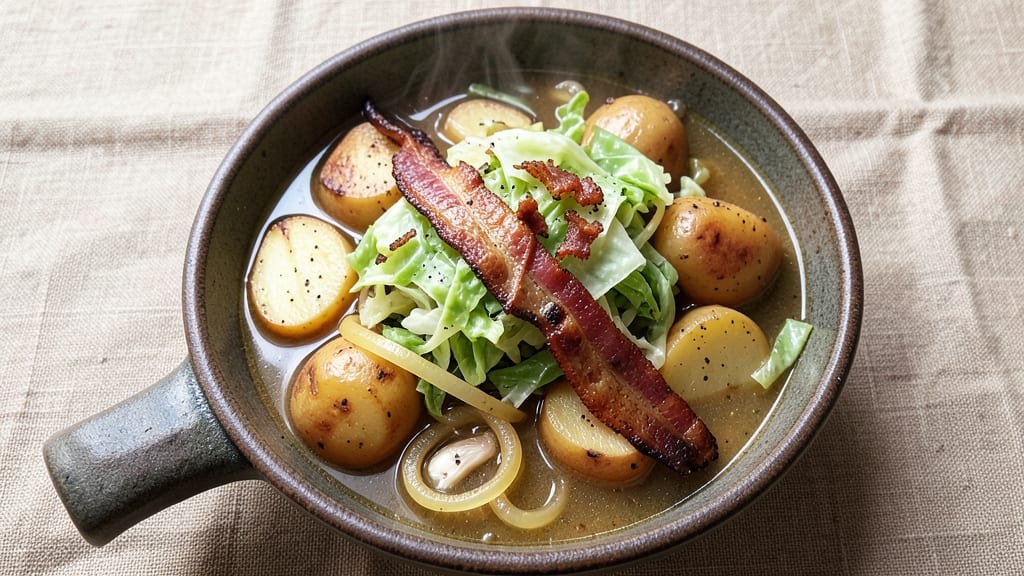
This bacon cabbage and potato soup recipe delivers the ultimate comfort in every steaming bowl—where crispy bacon meets velvety potatoes and tender cabbage in a rich, savory broth. The secret lies in slow-cooked bacon that infuses the soup with deep, smoky flavor while keeping the texture perfectly crisp.
I've perfected this recipe to balance hearty ingredients with a smooth, satisfying consistency that feels like a warm hug on a chilly day.
What sets this soup apart is the creamy potato base, achieved through proper cooking techniques that prevent gummy texture. We'll start by rendering the bacon until it's golden and crispy, then build layers of flavor by sautéing onions and garlic before adding the cabbage and potatoes.
The slow simmer allows all ingredients to meld together, creating a soup that's both rustic and refined—ideal for family dinners or cozy weeknight meals.
By the time you're done, you'll have a comforting soup with tender potatoes, slightly sweet cabbage, and bacon bits that add crunch with every spoonful. The aroma alone will have everyone gathering around the table, and the creamy texture makes it irresistible.
Serve with crusty bread to soak up every last drop of that flavorful broth.
This recipe works beautifully in a Dutch oven on the stovetop or even a pressure cooker for faster results. Whether you're feeding a crowd or meal prepping for the week, this soup delivers restaurant-quality comfort at home. Let's get started!
Ingredients for bacon cabbage and potato soup
Smoky bacon and velvety potatoes create the perfect comforting bowl of soup.
| Ingredient | Amount | Notes |
|---|---|---|
| Thick-Cut Bacon 🥓 | 12 oz | Thick-cut for crispiness, chopped |
| Yellow Onion 🧅 | 1 whole | Medium size, diced |
| Garlic Cloves 🧄 | 4 cloves | Fresh, minced |
| Green Cabbage 🥬 | 1 lb | Green or purple, shredded |
| Russet Potatoes 🥔 | 2 lbs | Medium size, cubed |
| Vegetable Broth 💧 | 6 cups | Low-sodium preferred |
| Heavy Cream 🥛 | ½ cup | Full-fat for creaminess |
| Chicken Broth 💧 | 2 cups | For depth of flavor |
| Fresh Thyme 🌿 | ¼ cup | Leaves only, chopped |
| Bay Leaves 🌿 | 2 whole | Remove before serving |
| Salt 🧂 | 1 ½ tsp | Kosher or sea salt |
| Ground Black Pepper 🌶️ | ½ tsp | Freshly ground |
| Sour Cream 🥛 | ¼ cup | For garnish, optional |
| Chopped Chives 🌿 | 2 tbsp | For garnish, optional |
The bacon is the star here—thick-cut slices render perfectly while keeping that satisfying crunch. Costco or Trader Joe's carry excellent pre-chopped bacon if you're short on time, but I always grab the thick-cut slab and chop it myself for better texture. For the potatoes, Russets are ideal—they hold their shape and create that creamy texture when cooked low and slow. The cabbage? Green or purple both work, but green is slightly sweeter. If you're using a head of cabbage, shred it yourself for maximum freshness—pre-shredded tends to get soggy.
No bacon? Smoked paprika plus a dash of liquid smoke gets you close, though nothing beats the real thing. Short on thyme? Dried thyme at one-third the amount works, but fresh is worth hunting down at the market. The heavy cream can be swapped for coconut milk for a dairy-free version, though the texture will be slightly lighter. For extra richness, add a splash of whole milk at the end. The broth? Store-bought works fine, but homemade—even just simmering veggie scraps—elevates everything. And if you're making this ahead, freeze the bacon separately to keep it crispy.
This soup tastes even better the next day as flavors meld. Store in an airtight container for up to 5 days in the fridge, or freeze for 3 months. I like to portion it into containers with a dollop of sour cream and chives on top—ready to grab and reheat. The bacon stays crispy if you reheat it separately and add it back in at the end. For meal prep, double the batch and freeze half—perfect for busy weeknights.
Why You'll Love This Recipe
- Pantry to Pot in 20: The bacon renders while you chop—no fancy timing. Toss in potatoes and cabbage, simmer, and suddenly you’ve got a steaming bowl of satisfaction without the stress of last-minute prep.
- Crispy-Creamy Magic: That first bite of perfectly chewy bacon meets tender potatoes? It’s the kind of balance that makes you pause mid-spoonful. The cabbage softens just enough to soak up the smoky, garlicky broth like a dream.
- Leftovers That Beg for More: Between us, this soup only gets better the next day. The flavors meld overnight, and the potatoes? Even more tender. I’m talking reheat-and-return-to-the-pot levels of good—no sad, watery second helpings here.
- Budget-Friendly Crowd-Pleaser: A single package of thick-cut bacon and a few potatoes stretch to feed four (or five, if you’re like my husband). It’s the kind of meal that makes grocery money go further without sacrificing flavor—honestly, a rare win.
Step-by-step instructions for bacon cabbage and potato soup
This method delivers a rich, velvety soup with crispy bacon edges and perfectly tender vegetables every time.
Cook the Bacon Until Crispy
Place the 12 oz thick-cut bacon in a large Dutch oven over medium heat. Cook undisturbed for 8-10 minutes until the edges become deep golden brown and the fat begins to render. I press down gently on the bacon during the first minute—this prevents it from curling and ensures even contact with the pan.
Once the bacon is crispy, use a slotted spoon to transfer it to a paper towel-lined plate, leaving all the rendered fat in the pot. Reserve the bacon for garnish later. The fat in the pot will form the flavor base for your soup, so don't drain it. If you're concerned about excess fat, you can remove about half after cooking, but I like the extra richness it adds to the final dish.
Sauté Onions and Garlic
In the same Dutch oven with the bacon fat, add the diced yellow onion and cook over medium heat for 5-6 minutes until softened and beginning to caramelize at the edges. The onions should release their moisture and then become translucent—this is when they're ready for the next step.
Add the minced garlic cloves and cook for another 30 seconds until fragrant. Be careful not to let the garlic burn—it should smell sweet and nutty, not bitter. Here's the thing—garlic burns in seconds, so keep an eye on it. If it starts to darken, remove the pot from heat for a moment until it cools slightly before continuing.
Add Potatoes and Broth
Push the onions and garlic to one side of the pot and add the cubed russet potatoes in a single layer. Pour in the 6 cups vegetable broth and the 2 cups chicken broth, stirring gently to combine. Bring the mixture to a simmer over medium-high heat, then reduce the heat to low and cover the pot.
Let the soup simmer for 15-20 minutes until the potatoes are fork-tender and begin to break down slightly. You'll know they're ready when you can easily slide a knife through them with minimal resistance. Stir occasionally to prevent the potatoes from sticking to the bottom of the pot. This gentle simmering process ensures the potatoes absorb the flavors of the broth while maintaining their texture.
Incorporate Cabbage and Seasonings
Add the shredded green cabbage, chopped fresh thyme, bay leaves, 1.5 teaspoons salt, and 0.5 teaspoon ground black pepper to the pot. Stir well to distribute the seasonings evenly. Return the reserved bacon to the pot, breaking it into smaller pieces as you go.
Simmer the soup uncovered for another 10-15 minutes until the cabbage is tender but still holds its shape. The cabbage should be bright green and slightly wilted, not mushy. Taste the soup and adjust the seasoning if needed—you might need a bit more salt, especially if you used low-sodium broth. Remove the bay leaves before serving, as they can be tough to chew.
Finish with Cream and Garnish
Reduce the heat to low and stir in the 0.5 cup heavy cream. Simmer gently for 2-3 minutes to heat through and create a creamy texture. The soup should be thick and velvety, with a glossy sheen on the surface. If the soup is too thick, you can thin it with a splash of warm water or broth.
Ladle the soup into bowls and garnish each serving with a dollop of sour cream and a sprinkle of chopped chives. The contrast of the cool, tangy sour cream against the warm, creamy soup is what makes this dish truly comforting. Serve immediately while the soup is hot, and enjoy the perfect balance of smoky bacon, tender vegetables, and rich, creamy broth.
Pro Tips For Making Bacon Cabbage And Potato Soup
- CRISP THE BACON LOW AND SLOW: Thick-cut bacon needs patience—cook it at 275°F (135°C) until the fat renders but the meat stays tender, not crispy yet. I used to rush it, and the bacon turned greasy instead of flavorful. Save the crisping for later: once the soup’s simmering, sprinkle the bacon back in to finish under the broiler for 3-4 minutes.
- CUT CABBAGE INTO EVEN STRIPS: Uneven cabbage shreds cook at different rates—stick to ¼-inch slices for consistent texture. I learned this after pulling out mushy bits while others stayed crunchy. A sharp knife and a steady hand make this faster than you’d think (and yes, even if you’re impatient like me).
- PEEL POTATOES AFTER BOILING: Russets hold their shape better if you boil them whole first, then peel and slice—no more gummy edges. I was skeptical until I tried it: the starch stays intact, and the soup thickens naturally. Just 10 minutes in salted water does the trick.
- SALT THE WATER LIKE THE SEA: The broth needs 1.5 tablespoons salt per gallon—enough to taste it before adding the potatoes. I used to eyeball it, and the soup always fell flat. Seasoning the water first guarantees every bite carries that deep, savory punch. (Your future self will thank you.)
Storing and reheating this recipe
Refrigerator Storage
Let your soup cool to room temperature (about 30 minutes) before transferring to airtight containers—I love using glass Pyrex bowls with snap-on lids. Store in the fridge for up to 5 days, though the flavors actually deepen overnight.
The bacon stays crispier if you remove it before storing and add it back when reheating. 🥣
Freezer Prep Tips
For long-term storage, freeze in quart-sized freezer bags or airtight containers, leaving 1-inch headspace for expansion. Portion into individual servings for easy reheating. I like to freeze the bacon separately in a small bag—this keeps it perfectly crispy when added back later. Label with the date for tracking.
Stovetop Reheating
My preferred method is stovetop reheating over medium-low heat for 8-10 minutes, stirring occasionally. Add 2-3 tablespoons of water or broth if the soup looks too thick.
For extra richness, stir in a splash of heavy cream at the end. Always reheat to an internal temperature of 165°F for safety. 🔥
Microwave Shortcut
For quick meals, use the microwave on 50% power for 2-3 minutes, stirring halfway. Cover loosely with a microwave-safe lid to retain moisture. If the soup seems dry, add a splash of broth or water. I recommend adding fresh bacon bits after microwaving to maintain that crispy texture.
Crispy Bacon Hack
To keep bacon perfectly crispy when reheating, cook fresh bacon in a small skillet until golden, then crumble over the soup just before serving. This simple step makes all the difference in texture and presentation. Store extra bacon in the freezer in 1-ounce portions for easy future use. 🥓
Make-Ahead Serving
When reheating make-ahead portions, I always add a dollop of sour cream and sprinkle of chives immediately after warming. This keeps the garnishes fresh and vibrant. For extra comfort, serve with crusty sourdough bread or oyster crackers on the side. The contrast of textures makes every spoonful perfect. ✨
Nutrition facts
Frequently asked questions
Can I make this soup without bacon?
Yes! For a vegetarian version, skip the bacon and add 2 tablespoons smoked paprika plus 1 teaspoon liquid smoke to the pot when sautéing onions. You can also use 2 tablespoons olive oil instead of bacon fat for cooking the vegetables. The flavor will be different but still delicious—just add extra salt to compensate for the missing smoky depth.
Why did my soup turn out watery?
This usually happens if the potatoes break down too much during cooking. For a thicker texture, simmer the soup uncovered for 5-10 extra minutes to reduce the liquid, or mash 1-2 potato halves before adding them to the broth. Another trick: stir in 1 tablespoon cornstarch mixed with 2 tablespoons cold water and simmer for 2 minutes to thicken.
Can I use sweet potatoes instead of russets?
Sweet potatoes will add natural sweetness and a vibrant color to your soup. Use the same amount (2 lbs) and cube them slightly smaller since they cook faster. Reduce the simmering time to 12-15 minutes total for potatoes and cabbage, checking for tenderness at 10 minutes. The flavor will be richer with a hint of caramelized sweetness.
How do I make this soup in a slow cooker?
Cook the bacon separately and set aside. In your slow cooker, combine all ingredients except the heavy cream, sour cream, and chives. Cook on LOW for 6-7 hours or HIGH for 3-4 hours. Stir in the heavy cream during the last 15 minutes of cooking. Garnish with sour cream and chives before serving. The slow cooker method enhances the flavors even more through gentle, extended cooking.
What's the best way to reheat leftovers?
For the creamiest results, reheat on the stovetop over medium-low heat for 8-10 minutes, stirring occasionally. Add 1-2 tablespoons of water or broth if needed. For crispy bacon, cook fresh bacon in a small pan until golden, then crumble over the soup just before serving. Microwave reheating works too—use 50% power for 2-3 minutes, stirring halfway, then add fresh bacon on top.