
Soups & Stews
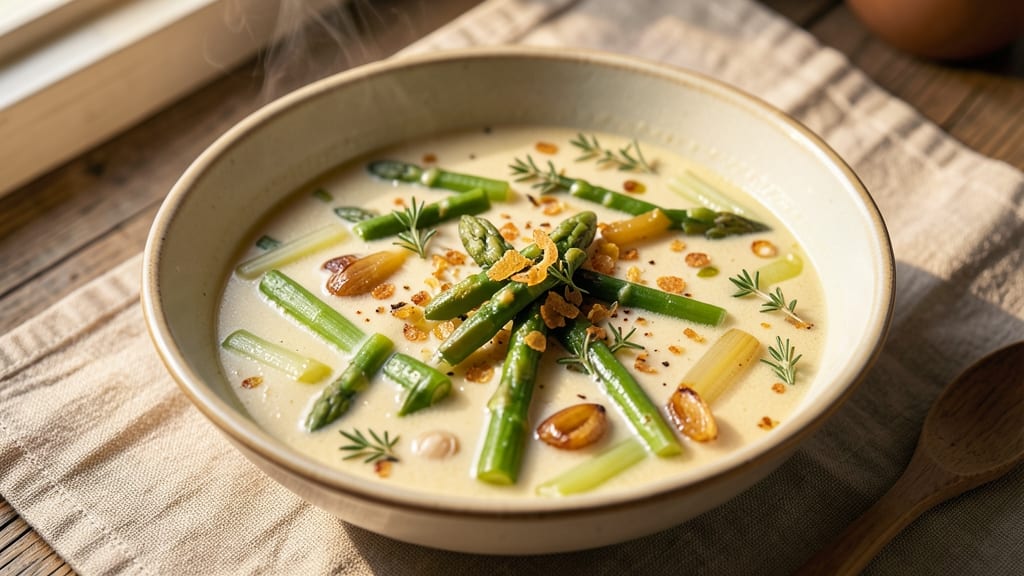
This asparagus celery soup recipe transforms simple spring vegetables into velvety comfort that warms the soul and satisfies cravings. The secret lies in slow-simmered aromatics and fresh herbs that blend into a silky texture—no heavy cream required.
I developed this version after realizing most recipes either taste too thin or rely on unnecessary richness.
What makes this soup special is the balance: crisp-tender celery and asparagus form the base, while garlic, onion, and thyme build depth without overpowering. The blender creates that signature restaurant-style smoothness, but the real magic happens during the simmering—where flavors meld into something greater than the sum of its parts.
Ready in just 30 minutes, it's perfect for weeknight dinners or meal prep.
Each spoonful delivers a harmonious blend of earthy celery, bright asparagus, and aromatic herbs—creamy without dairy, satisfying without heaviness. The subtle sweetness of caramelized onions and the peppery finish from fresh herbs elevate this beyond basic vegetable soup.
Serve with crusty bread or a sprinkle of toasted seeds for added texture and crunch.
This recipe works beautifully for dietary variations: swap chicken broth for vegetable broth for vegan, or add a splash of cream for extra richness. The technique is foolproof—no advanced skills needed, just patience for the flavors to develop. Let's create this comforting bowl of spring goodness.
Ingredients for asparagus celery soup
Twelve ingredients blend into velvety spring comfort—no dairy, no shortcuts, just pure flavor.
| Ingredient | Amount | Notes |
|---|---|---|
| Fresh Asparagus 🌱 | 1 lb | Trimmed, tough ends removed |
| Celery Stalks 🧅 | 3 whole | With leafy tops reserved |
| Yellow Onions 🧅 | 1 whole | Medium size, finely diced |
| Garlic Cloves 🧄 | 4 cloves | Fresh, minced |
| Fresh Thyme 🌿 | ¼ cup | Leaves only, finely chopped |
| Vegetable Broth 💧 | 4 cups | Low-sodium preferred |
| Extra-Virgin Olive Oil 🫒 | ¼ cup | For sautéing |
| Lemon Juice 🍋 | 1 tbsp | Freshly squeezed |
| Salt 🧂 | 1 tsp | Diamond Crystal preferred |
| Black Peppercorns 🌶️ | ½ tsp | Freshly cracked |
| Fresh Parsley 🌿 | ⅛ cup | Chopped, for garnish |
| Toasted Almonds 🥜 | ¼ cup | Sliced, for garnish |
The asparagus and celery form the heart of this soup, so choose fresh, crisp stalks—look for vibrant green asparagus with tightly closed tips and celery with a bright, crisp texture. Whole Foods or local farmers markets often carry the freshest spring produce. For the thyme, fresh is non-negotiable—dried lacks the bright aroma needed here. If using celery leafy tops, save them for garnish or add to the broth for extra depth. The vegetable broth should be low-sodium to avoid overpowering the delicate flavors of the vegetables.
No fresh thyme? Dried thyme at one-third the amount works, but the flavor won't be as vibrant. Substitute parsley for half the thyme if needed—it pairs beautifully. For a richer texture without dairy, blend in 2 tbsp of silken tofu after blending. The almonds can be swapped for toasted pumpkin seeds or walnuts for a different crunch. If you're short on time, pre-chopped frozen asparagus works in a pinch, though fresh is ideal. The lemon juice balances the earthiness—don't skip it, even if you're not a fan of citrus in soup.
This soup tastes even better the next day as flavors meld. Store in an airtight container in the fridge for up to 5 days, or freeze for 3 months in portion-sized containers. For meal prep, double the batch—it reheats beautifully. Garnish with a drizzle of extra-virgin olive oil and extra herbs just before serving to preserve freshness. The almonds and parsley keep best in the freezer if prepped ahead, so store them separately until ready to use.
Why You'll Love This Recipe
- I swear by this trick: buy pre-washed asparagus and pre-cut celery stalks—then it’s just a quick sauté of onions and garlic before tossing everything in. The thyme ties it all together without extra effort.
- No-Chop Shortcut: I swear by this trick: buy pre-washed asparagus and pre-cut celery stalks—then it’s just a quick sauté of onions and garlic before tossing everything in. The thyme ties it all together without extra effort.
- Earthy-Garlicky Magic: That first sip? Pure umami bomb. The roasted asparagus adds a caramelized sweetness, while the garlic and thyme make it taste like a hug from a French bistro. (Yes, even on a Tuesday night.)
- Meal Prep MVP: Doubles easily and keeps its texture for days—perfect for lunchboxes or reheating when you’re too tired to cook. I make a big batch on Sundays and freeze portions; it’s my secret weapon for lazy days.
Step-by-step instructions for asparagus and celery soup
Transform simple ingredients into a velvety, herb-infused soup that delivers restaurant-quality comfort.
Prepare the Vegetable Base
Heat the 0.25 cup extra-virgin olive oil in a large pot over medium heat. Add the 1 whole yellow onion and 3 whole celery stalks (with leafy tops reserved), cutting the celery into ½-inch pieces. Sauté for 5-6 minutes until the vegetables soften and the onion becomes translucent.
Add the 4 cloves garlic and 0.25 cup fresh thyme leaves, stirring constantly for 1 minute until the garlic releases its aromatic oils and the thyme becomes fragrant. You'll notice the kitchen fill with an earthy, herbal scent—this is your signal the aromatics are properly infused. Keep the heat at medium to prevent burning the thyme.
Incorporate the Asparagus
Trim the 1 lb fresh asparagus by snapping off the tough ends (about ½ inch from the base). Cut the asparagus into 1-inch pieces and add them to the pot. Stir to combine with the sautéed vegetables and cook for 3-4 minutes until the asparagus begins to soften slightly but remains vibrant green.
Pour in the 4 cups vegetable broth and bring the mixture to a gentle boil. Once boiling, reduce heat to medium-low and let it simmer uncovered for 15 minutes. This allows the flavors to meld and the vegetables to break down into a silky texture. Stir occasionally to prevent sticking, and watch for the soup to develop a rich, golden hue.
Blend to Silky Perfection
Use an immersion blender to purée the soup directly in the pot until completely smooth. Work in batches if needed, holding the blender at a slight angle and blending in 30-second bursts to avoid splattering. For a perfectly velvety texture, ensure no chunks remain—this is the hallmark of a professional-quality soup.
If you prefer a slightly chunkier texture, blend only half the soup at a time and return it to the pot. Taste and adjust seasoning with 1 tsp salt and 0.5 tsp freshly cracked black peppercorns. The soup should be well-seasoned but not overpowering—balance is key in this dish. Return the soup to a gentle simmer for 5 minutes to allow the flavors to settle.
Finish with Brightness and Garnish
Remove the pot from heat and stir in the 1 tbsp freshly squeezed lemon juice. This final touch brightens the soup and cuts through the richness, adding a refreshing contrast. The lemon juice should be incorporated evenly, and you'll notice the soup's color become slightly more vibrant.
Ladle the soup into bowls and garnish each serving with 0.125 cup chopped fresh parsley and 0.25 cup toasted sliced almonds. The parsley adds a fresh, herbal note, while the almonds contribute a delightful crunch that contrasts beautifully with the smooth soup. Serve immediately while still warm for the ultimate comforting experience.
Pro Tips For Making Asparagus Celery Soup
- CHAR THE ONIONS LOW: I used to rush this step and end up with bitter, caramelized chunks instead of sweet, translucent base. Sauté the onions over medium-low heat for 8-10 minutes—just until they’re soft and starting to turn golden, but not brown. This builds flavor without turning your soup into onion-flavored wallpaper.
- TRIM ASPARAGUS UNIFORMLY: Cut all asparagus spears to the same length (about 2-inch pieces) before cooking. I learned this the hard way—uneven pieces mean some burn while others stay raw. Also, snap off the woody ends instead of chopping; the break point tells you exactly where to stop.
- SALT THE WATER HARD: Your soup’s depth starts with the water. Use a full 2 teaspoons of salt per quart (yes, even if it seems excessive)—this seasoning carries through the entire dish. Skip this, and your soup will taste like it’s missing something, no matter how much you season at the end.
- BLEND IN STAGES: Don’t dump everything into the blender at once—it’ll turn into a gloppy mess. Start by blending half the soup until smooth, then add the rest gradually while tasting. This keeps the texture silky and lets you adjust consistency without ending up with a cement-like puree.
Make-ahead tips for this asparagus celery soup
Prep Ahead Components
Chop all vegetables the night before and store them in airtight containers in the fridge. I use glass Pyrex containers with snap-on lids for easy stacking.
The celery and onion stay crisp for 3 days this way, while asparagus holds up for 2 days if trimmed and stored in a sealed bag with a paper towel to absorb moisture. 🌱
Broth Prep Shortcut
Make a big batch of vegetable broth and freeze it in 1-cup portions using silicone molds for easy thawing. I keep a stash of low-sodium Swanson broth in my freezer—just grab one cube and thaw overnight in the fridge.
This saves 15 minutes of prep time while keeping the flavor consistent. ❄️
Blending Efficiency
If you're making multiple servings, blend the soup in 2 batches using a high-powered blender (like a Ninja BN600) for cleaner results. Divide the hot soup evenly, blend until smooth, then recombine.
For extra creamy texture without dairy, blend in 2 tbsp silken tofu during the second batch. This trick adds richness without altering the vegan nature of the dish. 💫
Freezer-Friendly Packaging
Portion the soup into quart-sized freezer bags, leaving 1-inch headspace for expansion. Lay them flat to freeze, then stack like pancakes to save space. Label with dates—they keep for 3 months without texture loss.
When ready to eat, thaw overnight in the fridge or reheat directly from frozen over low heat with ¼ cup water added to prevent scorching. 🔥
Garnish Assembly Line
Toast the almonds in a dry skillet over medium heat for 3-4 minutes until golden, then chop the parsley while they cool. Store both in separate small jars in the fridge for up to 5 days.
When serving, simply sprinkle over reheated soup—this keeps everything fresh-tasting and ready to go. ✨
Reheating Like a Pro
For best results, reheat soup on the stovetop over medium-low heat until just warm (165°F). Avoid microwaving as it can make the texture grainy. Stir in a splash of warm water or broth if needed to restore creaminess.
The lemon juice should be added fresh after reheating to preserve its bright flavor. 💡
Nutrition facts
Frequently asked questions
Can I make this soup without an immersion blender?
Yes! Transfer the hot soup to a regular blender in batches (don't fill past the max fill line), blending until smooth. Work quickly to avoid cooling too much. For extra safety, hold the lid down firmly with a kitchen towel while blending.
How can I make this vegan?
This recipe is already vegan-friendly! Just ensure your vegetable broth is plant-based and skip any optional dairy additions. For extra creaminess, blend in 2 tbsp silken tofu or ¼ cup cashew cream after blending. The lemon juice and herbs keep it bright and satisfying.
What if my soup tastes too thin?
Simmer uncovered for an extra 5-10 minutes to reduce the liquid naturally. For quicker results, stir in 1 tbsp cornstarch mixed with 2 tbsp cold water and simmer for 2 minutes until thickened. Avoid over-blending—smaller chunks help body the soup.
Can I use frozen asparagus instead of fresh?
Use 12 oz frozen asparagus (about 1 lb fresh equivalent) and add it directly to the pot after sautéing the aromatics. Frozen asparagus works best when thawed first—just run it under warm water for 30 seconds before chopping. The texture will be slightly softer but still delicious.
How do I store leftovers?
Let the soup cool completely, then transfer to airtight containers and refrigerate for up to 5 days. For freezing, portion into quart-sized bags with 1-inch headspace and freeze flat for 3 months. Thaw overnight in the fridge—never microwave directly from frozen.