
Soups & Stews
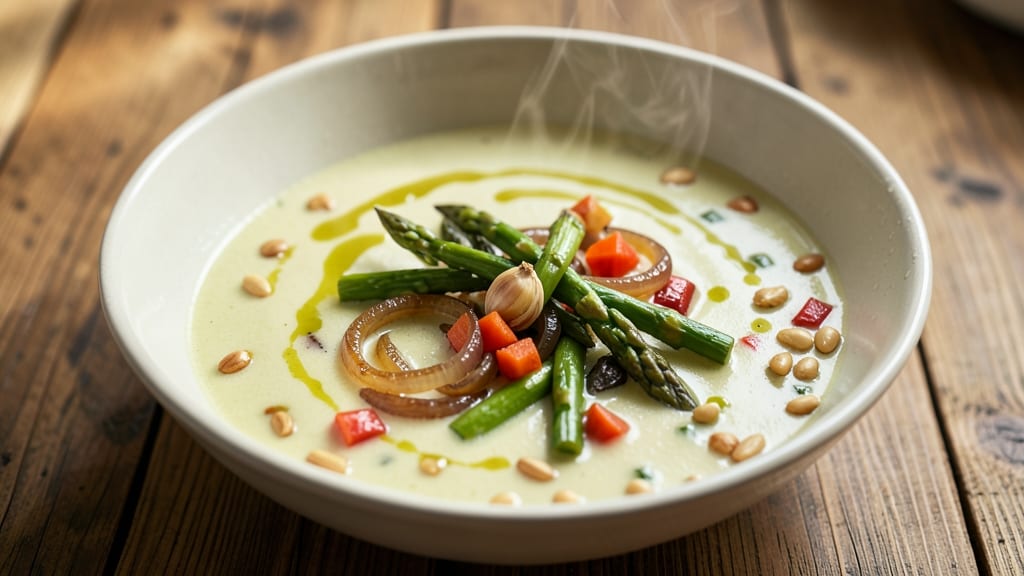
This asparagus soup recipe no dairy transforms humble spring asparagus into a rich, velvety masterpiece using roasted asparagus as the secret base. The technique creates depth without dairy—no heavy cream or butter needed.
I developed this version after realizing roasted asparagus purées into a naturally creamy, flavorful foundation that rivals traditional recipes.
The key lies in roasting the asparagus until tender and golden before blending it with aromatic vegetables and a touch of coconut milk for creaminess. This method eliminates the need for dairy while delivering that signature velvety texture.
The result is a soup that's equally satisfying as a light lunch or elegant starter, with a vibrant green hue that proves plant-based cooking can be luxurious.
What makes this recipe stand out is its foolproof technique—no special equipment required, just a few simple ingredients that come together in under an hour. The roasting step caramelizes the asparagus, adding natural sweetness that balances the soup's earthy flavors.
Each spoonful delivers a perfect harmony of textures and tastes, proving dairy-free soups can be just as indulgent.
The best part? This recipe scales effortlessly for gatherings while remaining impressive enough for dinner parties. Whether you're accommodating dietary restrictions or simply exploring plant-based cooking, this asparagus soup delivers restaurant-quality results at home. Ready to transform your spring produce into something extraordinary?
Ingredients for asparagus soup recipe no dairy
Roasted asparagus creates the velvety base—no dairy needed for rich, luxurious texture.
| Ingredient | Amount | Notes |
|---|---|---|
| Fresh Asparagus Spears 🌱 | 1 ½ lb | Trim tough ends, medium thickness |
| Yellow Onion 🧅 | 1 whole | Yellow or red, diced small |
| Garlic Cloves 🧄 | 4 cloves | Peeled, roughly chopped |
| Carrots 🥕 | 3 medium | Peeled, chopped into chunks |
| Celery Stalks 🧆 | 3 whole | Trimmed, chopped into 1-inch pieces |
| Extra-Virgin Olive Oil 🫒 | ½ cup | High-quality, fruity |
| Vegetable Broth 💧 | 4 cups | Low-sodium preferred |
| Full-Fat Coconut Milk 🥥 | 1 can (13.5 oz) | For creaminess, not water |
| Fresh Thyme Leaves 🌿 | 1 tbsp | Or 1 tsp dried thyme |
| Fresh Lemon Juice 🍋 | 2 tbsp | Bright, freshly squeezed |
| Diamond Crystal Kosher Salt 🧂 | 1 ½ tsp | Adjust to taste |
| Freshly Ground Black Pepper 🌶️ | ½ tsp | Freshly cracked |
| Nutritional Yeast 🧀 | 2 tbsp | For umami depth, optional |
The asparagus is the star. Look for bright green, firm stalks—avoid woody ends. Trader Joe's and Whole Foods carry excellent organic varieties. Roasting caramelizes natural sugars, creating depth that rivals dairy. For best results, trim ends at an angle—this prevents the stalks from rolling away during roasting. The onion, carrots, and celery form the aromatic base, so don't skip chopping them uniformly for even cooking. Fresh thyme from Penzeys adds complexity, but dried works in a pinch at one-third the amount.
No coconut milk? Cashew cream (blend soaked cashews with water) delivers similar richness. Substitute vegetable broth with mushroom broth for deeper umami. The nutritional yeast adds that savory depth—skip it if you prefer a cleaner flavor profile. For a lighter texture, reduce coconut milk to ½ cup and add ½ cup more broth. The lemon juice brightens the soup, so use freshly squeezed—bottled lacks the same vibrancy. If you're sensitive to sulfur compounds in asparagus, parboil the spears for 2 minutes before roasting to mellow their intensity.
Roasted asparagus keeps in the fridge for 4-5 days—blend fresh portions as needed. The finished soup reheats beautifully, though texture may slightly break down. For best results, reheat gently on low heat, stirring occasionally. Portion into glass jars for up to 5 days of fridge storage or 3 months frozen. Freeze in single portions for easy lunches—just thaw overnight in the fridge. The soup tastes even better the next day as flavors meld, so consider making a double batch for leftovers.
Why You'll Love This Recipe
- One-Pot Magic: I swear by this—just toss the chopped veggies (onion, carrots, celery) into a pot with garlic and water, let it simmer until the asparagus is tender. No straining, no extra bowls, no stress. The blender does all the heavy lifting after.
- Garlic-Kissed Depth: That slow caramelization of onion and garlic? It builds layers of flavor you won’t find in instant soups. The asparagus adds a bright, fresh finish—like a spring breeze in a bowl. Honestly, the first time I made it, I thought, "Why haven’t I done this sooner?"
- Lunchbox Hero: Between us, this soup is my go-to for meal prep. It reheats beautifully, keeps for days, and even tastes better the next day (yes, really). Pack it in a thermos for work, or serve it cold as a chilled soup—it’s that adaptable.
- Budget Brightener: Fresh asparagus might seem pricey, but you use far less than you’d think. The carrots and celery stretch it into a full bowl, and the flavor is so rich you won’t miss the dairy. My grocery bill thanks me every time.
Step-by-step instructions for velvety roasted asparagus base
Transform fresh asparagus into a rich, dairy-free foundation with this precise roasting technique.
Roast the Vegetable Base for Deep Flavor
Preheat your oven to 425°F and line a large baking sheet with parchment paper. Trim the tough ends from the 1.5 lb fresh asparagus spears and cut them into 2-inch pieces. Toss them with 0.25 cup of the extra-virgin olive oil, 0.75 tsp of the kosher salt, and 0.25 tsp of the black pepper until evenly coated.
Spread the asparagus in a single layer on the prepared baking sheet, leaving space between pieces. Roast for 15-18 minutes until the edges are deep golden brown and slightly charred. The asparagus should be tender when pierced with a fork but still hold its shape. Remove from the oven and set aside temporarily.
While the asparagus roasts, dice the 1 whole yellow onion into small pieces, peel and roughly chop the 4 cloves garlic, and chop the 3 medium carrots and 3 whole celery stalks into 1-inch chunks. These will form the aromatic base of your soup.
Build the Aromatic Foundation
Heat the remaining 0.25 cup extra-virgin olive oil in a large Dutch oven over medium heat. Add the diced onion and cook for 5-6 minutes until softened and translucent. Add the chopped carrots and celery, cooking for another 5 minutes until they begin to soften and release their juices.
Stir in the roughly chopped garlic and cook for 30 seconds until fragrant—don't let it brown or it will turn bitter. Add the roasted asparagus pieces to the pot along with the 4 cups vegetable broth. Bring the mixture to a gentle simmer and let it cook uncovered for 10 minutes to allow the flavors to meld.
Here's the thing—roasting the asparagus first develops a deep, nutty sweetness that forms the backbone of your soup. The caramelized edges and concentrated flavors create a velvety texture without dairy, all while keeping the soup vibrant and fresh.
Blend and Balance the Soup
Use an immersion blender to purée the soup directly in the pot until completely smooth. If you prefer to use a countertop blender, carefully transfer the hot mixture to the blender (working in batches if necessary) and blend until silky. Return the soup to the pot and stir in the 1 tbsp fresh thyme leaves and 2 tbsp nutritional yeast.
The nutritional yeast adds a cheesy depth without any dairy, while the thyme brings an earthy complexity. Keep the soup at a gentle simmer for 5 minutes to allow the flavors to integrate fully. This is where the magic happens—the umami from the yeast and the brightness from the roasted asparagus come together.
Taste and adjust the seasoning with the remaining 0.75 tsp kosher salt and 0.25 tsp black pepper as needed. The soup should be well-seasoned but not overpowering. Real talk: the roasted asparagus will have concentrated flavors, so go easy on additional salt.
Finish with Creaminess and Brightness
Reduce the heat to low and stir in the 1 can (13.5 oz) full-fat coconut milk and 2 tbsp fresh lemon juice. The coconut milk adds a luxurious creaminess without dairy, while the lemon juice brightens the entire dish. Let the soup simmer gently for 3-4 minutes to allow the coconut milk to meld into the base.
This is the moment that matters: the coconut milk should create a velvety texture, but the soup should still feel light and refreshing. If it's too thick, whisk in 2-3 tablespoons of hot vegetable broth to reach your desired consistency. The lemon juice should cut through the richness, balancing the flavors perfectly.
Strain the soup through a fine-mesh sieve into a clean pot if you prefer an ultra-smooth texture, or leave it as-is for a slightly rustic look. Serve immediately while still hot, garnished with additional fresh thyme leaves if desired.
Pro Tips For Making Asparagus Soup Recipe No Dairy
- CHAR THE ONIONS: Don’t just dice those onions—sauté them in 1 tablespoon of olive oil over medium heat until they’re deep golden, not just translucent. I learned this the hard way: pale onions make pale soup, and you’ll taste the difference in every spoonful.
- TRIM THOSE ASPARAGUS STALKS: Cut the tough ends off the asparagus spears, but don’t toss them. Chop them up and add them to the pot—they’re packed with flavor and thicken the soup naturally, saving you from having to use extra flour or cornstarch.
- LOW AND SLOW FOR CARROTS: Carrots and celery need time to break down—simmer them with the onions for at least 15 minutes before adding the asparagus. Rushing this step leaves them crunchy and underwhelming, and no one wants that in a creamy (or dairy-free) soup.
- BLEND IN BATCHES: If you’re using an immersion blender, work in two passes: first blend the base (onions, carrots, celery, garlic) until smooth, then add the asparagus and blend again. This keeps the texture consistent and prevents clumps—no one likes soup with mystery lumps.
Essential equipment for asparagus soup recipe no dairy
Immersion Blender
The Ninja Foodi immersion blender is my go-to for this recipe—it handles hot liquids safely and blends directly in the pot, eliminating transfer mess. The 240-watt motor purées soup smoothly without overheating.
For budget-friendly options, the Oster Classic works well too. Always ensure your blender has a heat-resistant cord—safety first! 💫
High-Quality Dutch Oven
A Lodge 5.5-quart enameled cast iron Dutch oven is perfect for building this soup's flavors. The heavy base distributes heat evenly, preventing scorching while the enameled surface makes cleanup a breeze.
If you don't own one, a stainless steel stockpot works too—just stir more frequently to avoid sticking. The Dutch oven's depth also helps control splatter when simmering.
Fine-Mesh Sieve
For an ultra-smooth texture, a Heston Blumenthal fine-mesh sieve removes any lingering fibrous bits from the roasted asparagus. The 0.025-inch mesh size catches even tiny particles while allowing the soup to pass through effortlessly.
If you're short on time, a cheesecloth-lined colander works in a pinch—just squeeze out excess liquid afterward.
Parchment Paper
Line your baking sheet with high-quality parchment paper like Rumpl parchment to prevent asparagus from sticking during roasting. The paper also makes cleanup effortless—just toss it after baking.
Avoid aluminum foil, which can react with acidic ingredients and leave a metallic taste. Pro tip: Cut the paper to fit your sheet perfectly to maximize oven space.
Measuring Spoons
Precision matters when balancing flavors, so invest in stainless steel measuring spoons like OXO Good Grips. The 1/8 tsp to 1 tbsp range lets you accurately measure spices and liquids.
For the nutritional yeast and thyme, a 1/4 tsp measure ensures you don't overpower the delicate asparagus flavors. Keep your spoons clean and dry to maintain accuracy over time.
Thermometer (Optional)
While not essential, a Thermoworks Smoke thermometer helps perfect the roasted asparagus by tracking internal temperature. Aim for 190-200°F—this ensures tender spears without overcooking. The probe also monitors broth temperature during simmering, preventing scorching. For a budget option, the Taylor Precision digital thermometer delivers reliable readings for under $20.
Nutrition facts
Frequently asked questions
Can I substitute coconut milk with another dairy-free option?
For a neutral flavor, use cashew cream (blend ½ cup soaked cashews with ½ cup water) or silken tofu (blend ½ cup silken tofu with ¼ cup water). For richer texture, try oat cream (blend ½ cup oats with 2 cups water, strain). Each adds a different mouthfeel—cashews are ultra-smooth, while oats add a subtle nuttiness.
Why does my soup turn out grainy even after blending?
Graininess usually means the asparagus wasn't soft enough before blending. Roast it 2-3 minutes longer until completely tender, or simmer the soup 5 extra minutes before blending. For stubborn fibers, strain through a fine-mesh sieve or cheesecloth after blending. The roasting step is critical—don't rush it!
How can I make this soup nut-free?
Replace coconut milk with ½ cup white beans (blended with ½ cup water) for creaminess, or use ½ cup potato purée (boil and mash 1 small potato, then blend). Add 1 tsp cornstarch to thicken if needed. The beans add subtle earthiness, while potatoes create a neutral, velvety base. Test consistency before serving!
Can I use frozen asparagus instead of fresh?
Fresh asparagus gives the best texture, but frozen works in a pinch. Thaw and pat dry before roasting, then add 1 extra minute to roasting time. Frozen asparagus may release more water, so reduce broth by ½ cup and adjust thickness with extra broth after blending. The flavor won't be as vibrant, but it's still delicious!
What's the best way to reheat leftovers?
Reheat gently on low heat with a splash of water or broth to prevent scorching. For best texture, warm to 165°F (about 3-5 minutes). Avoid microwaving—it can make the soup watery. Store in airtight containers for up to 5 days or freeze for 3 months. Thaw overnight in the fridge before reheating.