
Soups & Stews
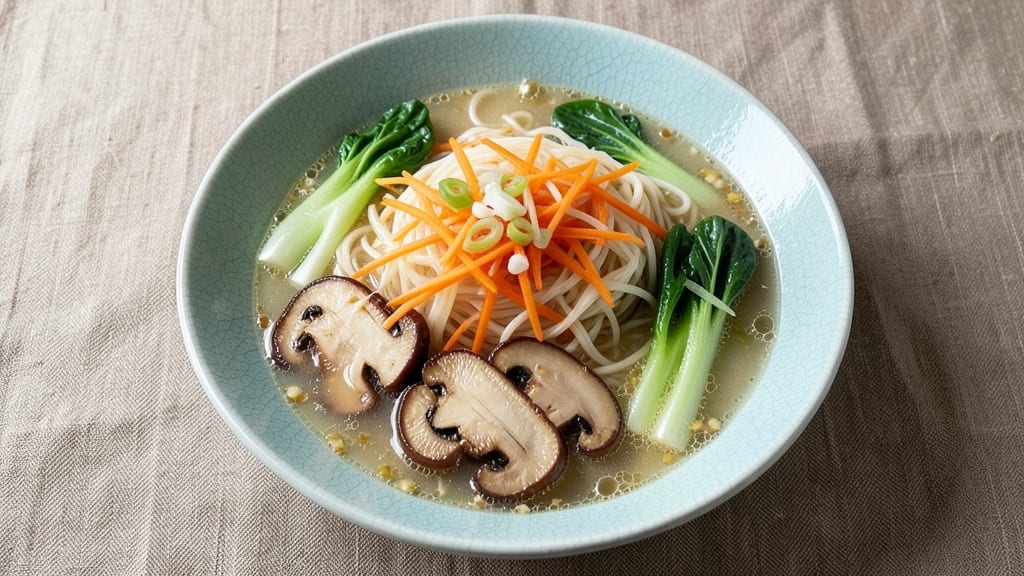
This Asian vegetable noodle soup recipe delivers restaurant-quality umami in every bowl—packed with silky rice noodles, vibrant vegetables, and a fragrant broth that simmers with depth.
The secret lies in layering flavors: toasted aromatics, fermented ingredients for umami, and a balance of fresh and cooked vegetables that transform simple ingredients into something extraordinary.
I developed this recipe after years of refining my vegetable broth technique, ensuring it's rich enough to stand alongside meat-based versions but with a purity that lets the vegetables shine.
The foundation is a vegetable broth built through slow simmering of mushrooms, ginger, garlic, and fermented black beans—key for that authentic umami without any meat.
While the broth works its magic on the stovetop, you'll stir-fry your vegetables in a hot wok (or deep skillet) to capture that signature wok hei—the smoky, aromatic breath that elevates home cooking.
The rice noodles cook in just minutes, absorbing the flavorful broth while maintaining their signature silky texture.
What you'll end up with is a bowl of soup that's visually stunning—golden broth dotted with bright vegetables, wispy noodles, and a garnish of fresh herbs and chili oil for brightness.
Every spoonful delivers a perfect harmony of textures: tender-crisp vegetables, silky noodles, and a broth so deeply flavorful it'll have you reaching for seconds. This recipe proves that vegetarian Asian noodle soup can be just as satisfying as its meat-based counterparts.
Perfect for weeknight dinners, meal prep, or serving guests, this soup adapts beautifully to seasonal vegetables. Double the broth for leftovers that taste even better the next day. Let's make this umami-packed bowl of comfort.
Ingredients for asian vegetable noodle soup
The perfect balance of fermented depth, wok-fried vegetables, and silky noodles transforms simple ingredients into restaurant-quality vegetable noodle soup.
| Ingredient | Amount | Notes |
|---|---|---|
| Dried Rice Noodles 🍜 | 8 oz | Thin or medium width preferred |
| Shiitake Mushrooms 🍄 | 8 oz | Fresh, stems removed |
| Baby Bok Choy 🥬 | 2 whole | Heads separated into leaves |
| Carrots 🥕 | 2 medium | Julienned into matchsticks |
| Green Onions 🧅 | 4 whole | White and green parts separated |
| Fresh Ginger 🧄 | 1 ½ inch | Peeled, thinly sliced |
| Garlic Cloves 🧄 | 6 cloves | Minced, not pre-minced |
| Fermented Black Beans 🫘 | ½ cup | Rinsed, Asian market preferred |
| Vegetable Broth 💧 | 4 cups | Homemade or low-sodium store-bought |
| Sesame Oil 🫒 | 1 tbsp | Toasted, for aroma |
| Coconut Aminos 🥄 | 2 tbsp | Or tamari for gluten-free |
| Chili Oil 🌶️ | 1 tbsp | Homemade or store-bought |
| Fresh Cilantro 🌿 | ¼ cup | Chopped, for garnish |
| Red Chili Flakes 🔥 | ½ tsp | Adjust to taste |
| Lime Wedges 🍋 | 2 whole | For serving |
The fermented black beans and shiitake mushrooms are the umami powerhouses here—Asian markets carry the best fermented beans, but any jarred variety works. For mushrooms, fresh is non-negotiable—dried lacks that meaty texture. The bok choy should be crisp, not wilted, and the carrots benefit from a quick soak if you're using organic (they can be sandy). Fresh ginger and garlic are essential for authentic flavor; pre-minced jars just don't cut it. If you're using pre-made vegetable broth, opt for a brand with low sodium—this dish needs the umami to shine.
No sesame oil? Toasted peanut oil works in a pinch, though the flavor will differ slightly. Short on fermented black beans? A dash of soy sauce or miso paste adds depth, but it's not the same—trust me on this. The coconut aminos can be swapped for tamari, but watch for gluten if that's a concern. For the chili oil, homemade is ideal (chili flakes + neutral oil), but store-bought is fine if you're in a hurry. The lime wedges should be freshly cut—bottled juice lacks that bright zing. And if you're using pre-cut vegetables, rinse them well to remove any residual sand or preservatives.
This broth keeps beautifully—reheat gently on the stove, adding a splash of water if it reduces too much. Portion into containers for easy meal prep, and it reheats just as well the next day. The rice noodles cook in minutes but can be prepped ahead by soaking them in warm water (they'll last 2-3 days in the fridge). For extra umami, toast the noodles in a dry pan for 30 seconds before adding to the broth—worth the extra minute for that nutty depth.
Why You'll Love This Recipe
- No-Soaking Needed: The dried rice noodles here soften in minutes—no pre-soaking, no fuss. Just toss them in boiling water, and they’re ready while you prep the shiitake and bok choy.
- Umami Bomb Combo: Shiitake mushrooms soak up the broth like a sponge, then burst with that deep, earthy flavor. Add the bok choy at the end, and you get that perfect crisp-tender bite—crunch meets comfort in every spoonful.
- Lunchbox Hero: Between us, this is my go-to for meal prep. The noodles hold up for days, and the veggies stay vibrant if you store it right. Pack it cold or reheat—either way, it’s a satisfying, no-fuss lunch.
- Pantry Magic: Carrots, mushrooms, and bok choy are all shelf-stable staples. Honestly, I’ve made this soup with whatever was lingering in my fridge, and it’s always spot-on. Budget-friendly? Absolutely. Reliable? Even more so.
Step-by-step instructions for Asian vegetable noodle soup
This method delivers a perfectly balanced soup with silky noodles and a rich, aromatic broth.
Prepare All Vegetables and Aromatics
Start by separating the heads of the 2 whole baby bok choy into individual leaves and set aside. Using a mandoline or sharp knife, julienne the 2 medium carrots into thin matchsticks for even cooking. Thinly slice the 1.5-inch fresh ginger and mince the 6 cloves garlic. Separate the 4 whole green onions into white and green parts, keeping them whole for garnish.
Rinse the 0.5 cup fermented black beans thoroughly under cold water to remove excess salt. The goal here is precise prep—each ingredient will cook at different rates, so uniform sizes ensure everything finishes together. Keep all prepped vegetables in separate bowls until ready to use.
Build the Umami-Packed Broth
Heat the 1 tablespoon sesame oil in a large pot over medium-high heat until shimmering. Add the 0.5 cup fermented black beans and stir for 1 minute until fragrant. Add the 8 oz shiitake mushrooms, sliced, and cook for 3-4 minutes until they release moisture and begin to soften.
Add the minced garlic and ginger, stirring constantly for 30 seconds until the garlic turns golden—this prevents bitterness. Pour in the 4 cups vegetable broth and bring to a gentle boil. Reduce heat to medium-low and simmer uncovered for 10 minutes, allowing the flavors to meld deeply. This step develops the soup's signature depth.
Cook the Rice Noodles Separately
While the broth simmers, prepare the 8 oz dried rice noodles by soaking them in a bowl of hot water for 8-10 minutes until pliable but still slightly firm. Drain and rinse briefly with cold water to stop cooking. The noodles should be tender but not mushy—this ensures they hold their shape when added to the broth later.
Real talk: Over-soaking noodles leads to a gluey mess. Test one strand by pressing between your fingers—it should yield slightly but maintain structure. Keep the noodles covered with a damp towel until ready to add to the soup.
Assemble and Finish the Soup
Return the broth to a gentle simmer and add the julienned carrots, baby bok choy leaves, and green onion whites. Cook for 3-4 minutes until the carrots are tender-crisp and the bok choy wilts slightly. Stir in the 2 tablespoons coconut aminos and 0.5 teaspoon red chili flakes, adjusting heat to taste.
Add the drained rice noodles and gently stir to combine. Cook for an additional 2-3 minutes just to heat through—no longer, or the noodles will turn mushy. Remove from heat and let sit for 2 minutes to allow the flavors to settle. Taste and adjust seasoning with additional coconut aminos or chili oil if needed.
Serve with Fresh Garnishes
Divide the soup into bowls and drizzle each serving with 1 tablespoon chili oil. Top with chopped 0.25 cup fresh cilantro and the reserved green onion greens. Serve immediately with the 2 whole lime wedges on the side for a bright finishing touch.
The soup should be vibrant with contrasting textures—silky noodles, tender vegetables, and a glossy broth. Each bite should deliver layers of umami from the fermented beans, sweetness from the carrots, and a subtle kick from the chili oil. Enjoy while warm for the best experience.
Pro Tips For Making Asian Vegetable Noodle Soup
- SOAK NOODLES SEPARATELY: Dried rice noodles clump like a stubborn toddler if you toss them straight into boiling water. Split them into two batches—soak half for 3-4 minutes, then the rest for another 2-3. This keeps them from turning to mush while waiting for the broth to simmer.
- TRIM MUSHROOMS LIKE A PRO: Shiitake stems are tough, but they add depth to broth. Slice the caps thin (¼-inch) and save the stems—chop them finely and fry them in oil for 2 minutes before adding to the broth. This unlocks their umami without turning the soup into a chewy nightmare.
- DON’T BOIL THE BOK CHOY: Baby bok choy wilts into sad, limp leaves if you drop it into hot broth. Blanch it first: plunge whole heads into boiling water for 30 seconds, then shock in ice water. This keeps the texture crisp and bright, even after sitting in soup for 10 minutes.
- SALT THE BROTH LAST: Adding salt early dilutes the flavor as water evaporates. Wait until the mushrooms, carrots, and onions have simmered for 5 minutes—then season. Taste again after noodles are added; you’ll need less than you think, but this guarantees balance.
Perfect pairings for asian vegetable noodle soup
Side Dish Harmony
Pair this soup with a crispy sesame cucumber salad—thinly sliced cucumbers tossed with 1 tbsp rice vinegar, 1 tsp sesame oil, and ½ tsp sugar for a refreshing contrast. The cool, crunchy texture balances the warm broth beautifully. 🥒
For a heartier option, serve alongside steamed jasmine rice—the mild grains soak up the flavorful broth without overpowering the delicate noodles. I like to sprinkle toasted sesame seeds on top for extra crunch.
Beverage Pairings
A lightly chilled jasmine green tea enhances the soup's floral notes while cleansing your palate between bites. The subtle sweetness complements the umami broth perfectly. For a more robust option, try a dry Riesling—its crisp acidity mirrors the lime and chili oil garnishes. 🍷
Garnish Upgrades
Boost the visual appeal with quick-pickled red onions—thinly slice ½ red onion, soak in ¼ cup rice vinegar, 1 tsp sugar, and ¼ tsp salt for 15 minutes. The bright acidity cuts through the richness of the broth.
Add toasted peanut crumbles for a nutty depth—simply toast 2 tbsp chopped peanuts in a dry pan until fragrant. Sprinkle over the soup just before serving for an unexpected but delicious crunch. 🥜
Global Variations
For a Thai-inspired twist, swap the coconut aminos for 1 tbsp fish-free oyster sauce and add 1 tsp palm sugar to the broth. Garnish with Thai basil and a squeeze of lime for a brighter, sweeter profile.
In Korean-style, stir in 1 tsp gochujang (Korean chili paste) with the coconut aminos and top with sliced radish and sesame seeds. The spicy-sweet balance elevates the dish to new heights. 🌶️
Nutrition facts
Frequently asked questions
Can I substitute fresh mushrooms for dried shiitake?
Fresh shiitake work beautifully, but avoid dried substitutes—they lack that meaty texture. Use 8 oz fresh shiitake and slice them thickly to mimic the umami depth. For extra flavor, toast the mushrooms in sesame oil before adding to the broth.
What if I don't have fermented black beans?
No problem! Use 1 tbsp soy sauce or 1 tsp miso paste per cup of broth to mimic the umami. For authenticity, look for fermented black beans at Asian markets—they're a game-changer. If you can't find them, a splash of coconut aminos helps too.
How do I prevent the rice noodles from getting mushy?
Cook noodles separately in hot water for just 8-10 minutes—they should be pliable but still firm. Rinse briefly with cold water to stop cooking, then drain well. Add them to the broth last and cook for only 2-3 minutes to heat through. Overcooking is the #1 culprit for mushiness!
Can I make this soup ahead of time?
Prepare the broth and vegetables up to 2 days ahead—store in airtight containers. Reheat gently on the stove, adding a splash of water if needed. Cook noodles fresh and add them last to maintain texture. Garnishes like cilantro and lime should be added just before serving.
What's the best way to adjust the spice level?
Start with 0.5 tsp red chili flakes and adjust to taste. For heat, add 1 tsp chili oil per bowl. For smoky depth, toast 1 tsp smoked paprika with the garlic. Lime wedges also help balance spice—squeeze fresh lime over your bowl!