
Soups & Stews
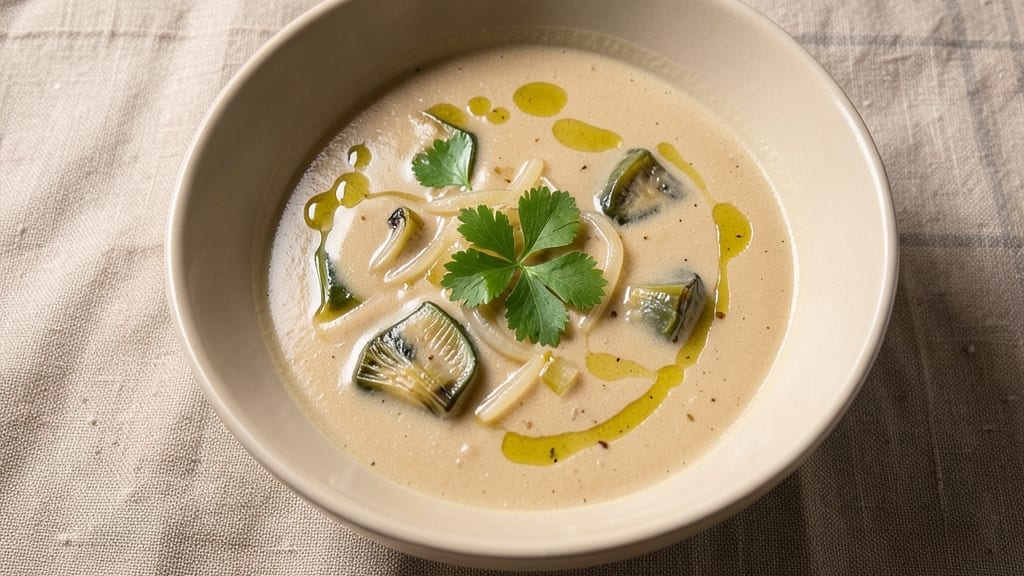
This vegan artichoke soup delivers restaurant-quality creaminess without dairy, using cashews as the secret weapon for that velvety texture. The earthy artichokes shine through with bright lemon and fresh herbs, while a touch of nutritional yeast adds depth—no one will guess it's plant-based.
What sets this apart is the foolproof technique for balancing the soup's richness with acidity, ensuring every spoonful is perfectly harmonized.
We start by sautéing garlic and onions until fragrant, then building flavor with canned artichokes and vegetable broth. The cashew velout—blended with garlic, lemon juice, and nutritional yeast—creates a luxuriously smooth base that coats every ingredient.
Unlike many vegan soups, this one never feels heavy or one-dimensional thanks to the careful balance of textures and flavors.
The result is a creamy, herbaceous soup with tender artichoke hearts, crisp edges, and a finish that's bright yet satisfying. It's the kind of dish that feels indulgent but aligns with plant-based values—perfect for cozy weeknights or special occasions.
The best part? It comes together in under 30 minutes with minimal prep, making it ideal for busy schedules.
Optional garnishes like toasted pine nuts or fresh parsley elevate the presentation, while a drizzle of olive oil adds another layer of richness. This isn't just a vegan artichoke soup—it's a transformative recipe that proves plant-based cooking can be just as luxurious as traditional versions. Let's get started.
Ingredients for artichoke soup recipe vegan
Creamy, velvety, and packed with earthy artichoke flavor—this vegan soup proves plant-based richness can rival traditional versions.
| Ingredient | Amount | Notes |
|---|---|---|
| Extra-Virgin Olive Oil 🫒 | ¼ cup | For sautéing aromatics |
| Yellow Onion 🧅 | 1 whole | Medium, finely diced |
| Garlic Cloves 🧄 | 4 cloves | Peeled, minced |
| Canned Artichoke Hearts 🍃 | 14 oz | Drained, quartered |
| Vegetable Broth 💧 | 4 cups | Low-sodium preferred |
| Raw Cashews 🥜 | 1 cup | Soaked 2 hours for creaminess |
| Fresh Lemon Juice 🍋 | 2 tbsp | Brightens flavor profile |
| Nutritional Yeast 🍞 | 2 tbsp | For umami depth |
| Fresh Thyme Leaves 🌿 | ¼ cup | Chopped, stems removed |
| Fresh Parsley Leaves 🌿 | 0.2 cup | Chopped for garnish |
| Salt 🧂 | 1 tsp | Adjust to taste |
| Black Pepper 🌶️ | ½ tsp | Freshly ground |
| Pine Nuts 🥜 | ¼ cup | Toasted for garnish |
| Extra-Virgin Olive Oil (garnish) 🫒 | 1 tbsp | For finishing drizzle |
The cashews are the game-changer here—soak them overnight for maximum creaminess, but even 2 hours makes a difference. Trader Joe's sells pre-soaked cashews if you're in a rush, though they're pricier. The artichokes should be tender but still hold their shape—look for brands like Mutti or La Valle in the canned section, as they're more consistent. Fresh thyme and parsley elevate the dish, but dried will work in a pinch (use half the amount). For the vegetable broth, Pacific Foods or Imagine brands are top-tier for flavor without added sodium.
No cashews? Silken tofu or coconut cream can mimic creaminess, though texture will differ slightly. Short on artichokes? Substitute with asparagus or zucchini, but reduce the amount by half to avoid wateriness. The nutritional yeast adds that cheesy depth—Bob's Red Mill is my go-to brand, but any fortified variety works. For extra richness, blend in 1 tablespoon of white miso paste with the cashews. And if you're worried about the soup being too heavy, the lemon juice and fresh herbs cut through any heaviness beautifully.
This soup tastes even better the next day as flavors meld. Store in an airtight container for 4-5 days in the fridge, or freeze for 3 months—portion into single servings for easy reheating. For a restaurant-worthy presentation, toast the pine nuts in a dry pan until golden, then sprinkle over each bowl. The olive oil drizzle should be added just before serving to maintain freshness. Double the batch and freeze half—perfect for lazy weeknights when you crave comfort without compromise.
Why You'll Love This Recipe
- Here’s what sold me: the slow-sautéed garlic in olive oil until it’s just golden, not burnt. That nutty, sweet aroma blends with the artichokes and broth for a depth that’s ridiculously satisfying. (Yes, even on a Tuesday night.)
- Pantry Magic: I swear by this recipe when I’ve got nothing but basics. One jar of artichokes, a jar of broth, and a few pantry staples—no fancy shopping required. That deep, briny artichoke flavor from the canned hearts? It’s the secret weapon here, and it’s always in my cupboard.
- Garlic Kiss: Here’s what sold me: the slow-sautéed garlic in olive oil until it’s just golden, not burnt. That nutty, sweet aroma blends with the artichokes and broth for a depth that’s ridiculously satisfying. (Yes, even on a Tuesday night.)
- Double Duty: This soup is my meal prep MVP. It’s hearty enough for a weeknight dinner but light enough for a summer lunch. I’ll make a big batch, freeze half, and still have leftovers that taste just as good reheated—no sad, watery texture here.
Step-by-step instructions for creamy vegan artichoke soup
This method delivers velvety texture and deep herbal notes without dairy or cream.
Sauté Aromatics Until Fragrant
Heat the 0.25 cup extra-virgin olive oil in a heavy-bottomed pot over medium heat. Add the 1 whole yellow onion, diced evenly, and cook for 5-6 minutes until softened and translucent. The onions should release their natural sweetness without browning.
Add the 4 cloves garlic cloves, minced finely, and cook for another 1 minute until the raw garlic aroma gives way to a toasted scent. This aromatic base forms the flavor foundation for the entire soup. If the garlic begins to brown too quickly, reduce heat slightly to prevent bitterness.
Build the Soup Base with Artichokes and Broth
Increase heat to medium-high and add the 14 oz canned artichoke hearts, quartered and drained. Stir for 2 minutes to coat the artichokes in the aromatic oil. Then pour in the 4 cups vegetable broth, scraping any browned bits from the bottom of the pot.
Bring to a gentle boil, then reduce heat to medium-low and let simmer for 10 minutes until the artichokes are tender when pierced with a fork. The broth should now carry the earthy artichoke flavor and herbal notes from the sautéed aromatics.
Create the Creamy Cashew Base
While the soup simmers, drain and rinse the 1 cup raw cashews if they were soaked. In a high-speed blender, combine the cashews with 2 tbsp fresh lemon juice, 2 tbsp nutritional yeast, 0.25 cup fresh thyme leaves, 0.2 cup fresh parsley leaves, and 1 tsp salt. Blend until completely smooth, scraping down the sides as needed.
The cashew mixture should have a thick, paste-like consistency that will blend seamlessly into the soup. This blend provides the creamy texture and umami depth that replaces traditional dairy. If the mixture is too thick, add 1-2 tablespoons of broth to achieve a pourable consistency.
Blend and Season the Soup
Carefully transfer the cashew mixture to the simmering soup pot. Stir continuously over medium-low heat for 5 minutes until fully incorporated. The soup should begin to thicken noticeably as the cashew emulsion binds with the broth.
Add the 0.5 tsp black pepper and adjust seasoning with additional salt if needed. Taste the soup at this stage—it should be rich and balanced with artichoke, garlic, and herbal notes. If the soup is too thick, thin with additional broth; if too thin, simmer uncovered for 2-3 minutes to reduce.
Finish and Garnish
Toast the 0.25 cup pine nuts in a dry skillet over medium heat for 3-4 minutes until golden and fragrant. Remove from heat immediately to prevent burning. Transfer the soup to serving bowls, reserving 0.5 cup for garnish if desired.
Drizzle each serving with the 1 tbsp extra-virgin olive oil (garnish) and sprinkle with toasted pine nuts. The contrast of crispy pine nuts against the velvety soup adds both texture and visual appeal. Serve immediately while the soup is warm, as the cashew cream continues to thicken as it cools.
Pro Tips For Making Artichoke Soup Recipe Vegan
- CHOP ONION THIN: Dice that onion into paper-thin slices—it’ll soften faster and blend smoother. I used to hack it roughly, and the soup always tasted unevenly cooked. A sharp knife and steady hand make all the difference here.
- SAUTÉ GARLIC LOW: Cook the garlic at the very end, just until fragrant—no browning, no bitterness. I learned this the hard way after burning three batches of garlic into oblivion. Drop it in with the broth for 30 seconds max.
- DRAIN ARTICHOKES WELL: Rinse and drain the canned artichoke hearts thoroughly, even if the label says they’re low-sodium. The extra brine makes the soup watery and dulls the flavor. Pat them dry with a paper towel if you’re feeling extra.
- BLITZ THE BROTH: Use a high-powered blender for the broth—immersion or countertop—because a regular blender will leave you with a chunky, unsatisfying mess. Pulse first, then blend fully, and resist the urge to overfill. (I know, it’s tempting, but trust me.)
Essential equipment for artichoke soup recipe vegan
High-Speed Blender
This is the most critical piece of equipment for achieving that silky-smooth cashew velout. I recommend a Vitamix 5200 or Ninja BN601—both handle cashew blends effortlessly without overheating. A high-speed blender emulsifies the cashews into a creamy paste that mimics dairy perfectly.
If you don’t have one, a food processor works in a pinch, but you’ll need to scrape and pulse repeatedly for the same texture. 💫
Heavy-Bottomed Pot
Use a 5-6 quart Dutch oven or enamel-coated pot like Le Creuset to prevent scorching. The deep sides help with blending the cashew mixture, and the heavy base distributes heat evenly so your soup doesn’t burn.
Avoid thin, lightweight pots—they create hot spots that can turn your aromatics bitter. I’ve ruined many a soup in flimsy pots!
Immersion Blender
If you prefer blending directly in the pot (no transferring!), an immersion blender like Breville BMB450 is a game-changer. It chops the cashews into the soup while keeping everything contained—no messy transfers.
Just submerge the blender, pulse until smooth, and stir to incorporate. This method saves cleanup time and keeps flavors cohesive. Perfect for busy weeknights! ⏰
Fine-Mesh Strainer
A stainless steel strainer with a fine mesh (like OXO Good Grips) is essential for rinsing soaked cashews. It removes any debris or skins that could make your soup gritty. I also use it to strain excess thyme leaves if I prefer a smoother texture.
Pro tip: Rinse the cashews under cold water while straining—they’ll cool faster and be ready to blend immediately. 🥜
Skillet for Toasting
For the pine nut garnish, a small nonstick skillet (like All-Clad) is ideal—it heats evenly and prevents burning. Medium heat is key: too hot, and they’ll turn bitter; too low, and they’ll stay raw.
A cast-iron skillet works too, but watch closely to avoid scorching. Toasting adds a delightful crunch that contrasts beautifully with the creamy soup. 🌟
Nutrition facts
Frequently asked questions
Can I make this vegan artichoke soup without cashews?
For a cashew-free version, blend 1 cup silken tofu with 2 tbsp coconut cream, 2 tbsp nutritional yeast, and 1 tbsp lemon juice until smooth. The texture will be slightly lighter but still creamy. For extra richness, stir in 1 tbsp white miso paste with the tofu blend.
How do I prevent the soup from getting too thick or thin?
Start with 4 cups broth and adjust as you go. If the soup feels too thick after adding the cashew mixture, thin it with 2-3 tbsp extra broth while stirring. For a thicker consistency, simmer uncovered for 2-3 minutes to reduce. The key is to taste as you blend and adjust gradually—medium-low heat helps maintain control.
Can I use fresh artichokes instead of canned?
Yes, but it requires extra prep! Trim and quarter 2 large fresh artichokes, remove the tough outer leaves, and steam for 15-20 minutes until tender. The flavor will be more intense, but the texture may be slightly firmer. Use 1 cup less broth since fresh artichokes release more liquid when cooked.
Why does my vegan artichoke soup taste flat?
Flat flavors usually mean one of three things: under-seasoned broth, overcooked aromatics, or missing acidity. Boost umami with an extra 1 tbsp nutritional yeast or 1 tsp white miso. Add brightness with 1 extra tbsp lemon juice or a pinch of red pepper flakes. Always sauté onions and garlic until fragrant but not browned—this builds depth!
How long can I store leftovers, and how do I reheat?
Store in an airtight container in the fridge for 4-5 days or freeze for 3 months. To reheat, warm on the stovetop over low heat with 1-2 tbsp broth or water to restore creaminess. Never microwave directly—it breaks the cashew emulsion. For best texture, reheat gently and stir constantly.