
Soups & Stews
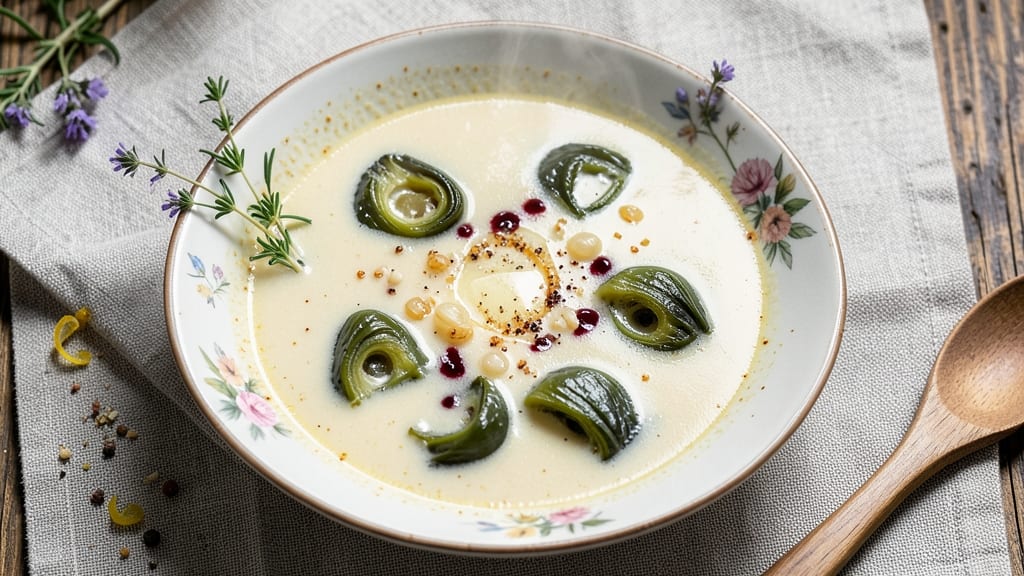
This artichoke heart soup transforms humble jarred hearts into a restaurant-worthy velouté with a velvety texture and bright, herby finish. The secret lies in proper preparation—blanching the artichokes first removes bitterness, while a slow simmer with garlic and shallots builds deep, aromatic depth.
What starts as a simple vegetable soup becomes something luxurious when finished with fresh herbs and a touch of lemon.
The recipe balances tradition and convenience, using jarred artichokes for ease without sacrificing quality. A classic French-style velouté technique—sautéing aromatics in butter, then deglazing with white wine—creates a rich base that blends seamlessly with the artichokes.
For extra depth, roasted garlic or smoked paprika adds complexity, while a final touch of cream (or coconut milk for vegan) ensures that signature silky smoothness.
What makes this soup truly special is its adaptability—it works as a light vegetarian main or a sophisticated starter. The fresh herb finish (parsley, thyme, or basil) brightens every spoonful, while optional garnishes like toasted breadcrumbs or lemon zest add texture and visual appeal.
Perfect for chilly evenings or holiday gatherings, this soup proves that comfort food can be elegant too.
Ready in about 45 minutes, it’s ideal for weeknight dinners or make-ahead entertaining. The instructions guide you through every step—from blanching to blending—so you’ll achieve that velvety consistency without guesswork. Let’s make this soup that tastes like a Mediterranean vacation in a bowl.
Ingredients for artichoke heart soup
Transform humble jarred artichokes into a velouté with velvety texture and Mediterranean elegance.
| Ingredient | Amount | Notes |
|---|---|---|
| Jarred Artichoke Hearts 🍃 | 14 oz | Drained and rinsed thoroughly |
| Unsalted Butter 🧈 | 4 tbsp | European-style preferred |
| Shallots 🧅 | 3 whole | Minced, about 0.25 cup |
| Garlic Cloves 🧄 | 4 cloves | Roasted for depth of flavor |
| White Wine 🍷 | ½ cup | Dry, like Sauvignon Blanc |
| Vegetable Stock 💧 | 4 cups | Homemade or low-sodium |
| Heavy Cream 🥛 | ½ cup | Full-fat for velvety texture |
| Fresh Lemon Juice 🍋 | 1 tbsp | Brightens the finished soup |
| Fresh Parsley 🌿 | ¼ cup | Chopped, for garnish |
| Fresh Thyme Leaves 🌿 | 1 tbsp | Or 1 tsp dried thyme |
| Smoked Paprika 🌶️ | ½ tsp | For subtle smoky depth |
| Salt 🧂 | 1 tsp | Diamond Crystal preferred |
| Black Pepper 🌶️ | ½ tsp | Freshly ground for aroma |
| Olive Oil 🫒 | 1 tbsp | For finishing drizzle |
The artichoke hearts require proper preparation to eliminate bitterness. Opt for high-quality jarred hearts like Muir Glen or Bertolli, which are less processed and retain better texture. Rinse them thoroughly under cold water before draining. For the shallots and garlic, roasting enhances their sweetness—wrap them in foil with a drizzle of olive oil and roast at 400°F for 15 minutes. Fresh herbs are non-negotiable here; Whole Foods or local farmers markets offer the brightest parsley and thyme, but even grocery store varieties work if they smell vibrant. The smoked paprika adds depth without overpowering, so Penzeys or McCormick brands deliver consistent quality.
No white wine on hand? Substitute an extra 0.25 cup vegetable stock plus 1 tsp lemon juice to mimic acidity. Heavy cream can be swapped for full-fat coconut milk to maintain richness while keeping it vegetarian. For a more robust flavor, add 1 tsp miso paste or a pinch of nutritional yeast—both contribute umami complexity. If using dried thyme, reduce to one-third the amount of fresh. The vegetable stock should be homemade if possible, as store-bought versions often contain hidden sodium. For a lighter option, replace half the heavy cream with cashew cream blended from soaked cashews.
This soup reheats beautifully—simmer gently on low heat for 5-10 minutes to restore its velvety texture. Store in an airtight container for up to 4 days in the refrigerator, though it’s best enjoyed within 2 days for peak freshness. For make-ahead entertaining, freeze in 4-oz portions for up to 3 months. Garnish with a drizzle of extra-virgin olive oil and a sprinkle of toasted breadcrumbs just before serving to add texture contrast. The lemon juice should be added last to preserve its bright, zesty quality.
Why You'll Love This Recipe
- No Chopping Nightmare: I swear by jarred hearts here—just drain, rinse, and toss them in. No thorny mess, no fuss. The shallots and garlic? Tiny dice that take two minutes max. Honestly, this is the kind of soup where the prep feels like a warm-up for real cooking.
- Wine-Infused Magic: That splash of white wine? It’s not just flavor—it’s the soul of the dish. The acidity cuts through the richness of the butter, and the garlic? Oh, it sings when it caramelizes just right. You’ll taste the difference between this and any other "artichoke soup" you’ve had.
- Weeknight to Dinner Party: Same recipe, zero extra work. Serve it with crusty bread for a lazy Tuesday or drizzle with cream and garnish with parsley for a fancy-ish guest night. Between us, I’ve pulled this off for both—no one’s the wiser.
- Leftovers That Beg for More: This soup only gets better the next day. The flavors meld, the texture smooths out, and suddenly you’ve got a lunch that feels like a reward. Plus, it reheats in minutes—no sad, watery soup here. My freezer’s full of these leftovers because they’re just that good.
Step-by-step instructions for artichoke hearts soup
Transform jarred artichoke hearts into a velvety, herb-finished soup with professional technique.
Sauté Shallots and Garlic for Aromatic Foundation
Heat the 4 tablespoons unsalted butter in a large pot over medium heat until melted and foaming subsides. Add the 3 minced shallots and cook for 5-6 minutes until completely softened and translucent, stirring occasionally to prevent browning.
Push the shallots to the side of the pot and add the 4 roasted garlic cloves, crushing them slightly with the back of a spoon. Cook for 1 minute until fragrant. This step builds the aromatic base that carries through the entire soup—don't rush it, as proper development ensures depth of flavor.
Deglaze and Simmer with Wine and Stock
Pour in the ½ cup white wine and scrape up any browned bits from the bottom of the pot with a wooden spoon. This deglazing step captures all the flavor molecules that would otherwise be lost. Let the wine simmer for 2-3 minutes until reduced by half, allowing the alcohol to cook off and intensify the flavor.
Add the 4 cups vegetable stock and bring to a gentle simmer. Stir in the ½ teaspoon smoked paprika and 1 teaspoon salt, then add the 14 ounces drained and rinsed artichoke hearts. Reduce heat to low-medium and let the soup simmer uncovered for 15 minutes to allow the flavors to meld and the artichokes to soften slightly.
Finish with Cream and Acid Balance
Increase heat to medium and stir in the ½ cup heavy cream, allowing it to heat through for 2-3 minutes without boiling. This step adds luxurious body to the soup while maintaining its velvety texture. Remove from heat and stir in the 1 tablespoon fresh lemon juice and ½ teaspoon black pepper.
The acid from the lemon juice brightens the soup and cuts through the richness of the cream, creating a balanced flavor profile. Taste and adjust seasoning if needed, adding more salt or lemon juice as necessary. Real talk: this is where the soup comes together—don't skip the lemon.
Garnish and Serve with Fresh Herbs
Ladle the soup into bowls and finish each serving with a drizzle of 1 tablespoon olive oil. Sprinkle generously with the ¼ cup chopped fresh parsley and 1 tablespoon fresh thyme leaves, distributing them evenly over the surface for both visual appeal and herbaceous freshness.
Serve immediately while the soup is hot. The fresh herbs should be vibrant and bright, providing a beautiful contrast to the creamy soup. Each spoonful should deliver the silky texture promised, with the artichokes tender but still holding their shape, and the herbs adding a refreshing finish that elevates the dish from ordinary to extraordinary.
Pro Tips For Making Artichoke Heart Soup
- Drain and Rinse Hearts: Jarred artichoke hearts come packed in water or brine—skip the rinse if you’re using the liquid for soup, but drain them thoroughly first. I learned this the hard way when my soup turned watery; pat them dry with a paper towel to get rid of excess moisture before cooking.
- Sweat Shallots Low and Slow: Shallots release their sweetness when cooked gently, not fried. Sauté them in butter over medium-low heat for 5-6 minutes until translucent, stirring occasionally. Rushing this step burns them fast and turns your soup bitter—trust me, you’ll taste the difference.
- Deglaze with Wine Early: Add the white wine to the pot right after removing the shallots and garlic—don’t wait for the butter to brown. The alcohol will cook off faster this way, leaving behind just the flavor without that harsh, boozy aftertaste lingering in your soup.
- Finish with a Splash of Cream: No cream in the recipe? Add a tablespoon of heavy cream or half-and-half at the very end—just before serving. It cuts the acidity from the wine and adds a velvety finish without curdling. (Yes, even if you’re skipping the fancy touch, your soup deserves this.)
Health benefits of this recipe
Digestive Comfort
Artichoke hearts are a prebiotic powerhouse, feeding the good bacteria in your gut to support digestion and overall gut health. A 1-cup serving provides about 6 grams of fiber, which is roughly 24% of your daily needs.
This fiber helps regulate bowel movements and keeps your digestive system running smoothly. I always notice how this soup leaves me feeling satisfied and comfortable after eating—it’s like a warm hug for your gut. 💛
Heart-Healthy Fats
The combination of olive oil and artichoke hearts delivers heart-friendly fats that support cardiovascular health. Olive oil contains monounsaturated fats, which help lower bad cholesterol (LDL), while artichokes provide sterols that further reduce cholesterol absorption.
The ½ cup heavy cream adds richness without overwhelming—it’s a balanced approach that keeps your heart happy. 💪
Rich in Antioxidants
Artichokes are packed with antioxidants like cyanidin and rutin, which combat oxidative stress and inflammation in your body. These compounds help protect your cells from damage and may even reduce the risk of chronic diseases.
The smoked paprika in this recipe adds another layer of antioxidants, creating a flavorful and health-boosting combo. You’ll love how vibrant and energizing this soup feels.
Low-Calorie, High-Nutrient
This soup is surprisingly low in calories—about 200 calories per servingvitamin C (for immunity), vitamin K (for bone health), and folate (for cell repair).
The fresh herbs like parsley and thyme add even more vitamins and minerals without adding many calories. It’s the perfect comfort food that doesn’t weigh you down.
Supports Liver Function
Artichokes contain silymarin, a compound that supports liver health by promoting detoxification and regeneration of liver cells. The lemon juice in this recipe enhances this effect by aiding digestion and liver function.
I’ve found that incorporating this soup into my routine helps me feel lighter and more energized, especially after heavy meals. It’s a natural way to give your liver some love. ✨
Vegan-Friendly Adaptations
With a few simple swaps, this soup becomes a nutrient-dense vegan option. Replace the heavy cream with full-fat coconut milk and use olive oil instead of butter for sautéing.
The result is just as creamy and satisfying, packed with plant-based goodness. The artichokes and herbs still shine, proving that plant-based meals can be both delicious and nourishing. 🌱
Nutrition facts
Frequently asked questions
Can I use fresh artichokes instead of jarred hearts?
Fresh artichokes work beautifully but require more prep time. Trim off the tough outer leaves, cut off the top and bottom, then slice the artichoke in half lengthwise. Remove the choke (fuzzy center) and trim the remaining leaves. Blanch for 10 minutes in boiling water, then drain and cool before using in the recipe. Fresh artichokes have more texture and a slightly earthier flavor than jarred hearts.
Why does my soup taste bitter?
Bitterness usually comes from undercooked artichokes or using low-quality jarred hearts. Always rinse jarred artichokes thoroughly before using. If bitterness persists, add ½ teaspoon extra lemon juice or a pinch of sugar to balance the flavor. For future batches, try blanching jarred hearts for 2 minutes before using to reduce bitterness.
How can I make this soup vegan?
Swap the butter for olive oil and replace the heavy cream with ½ cup full-fat coconut milk. Use vegetable stock instead of chicken stock, and ensure your smoked paprika is vegan-certified. The texture remains creamy while keeping the dish completely plant-based. The flavor profile stays rich and satisfying with these simple swaps.
Can I make this soup ahead of time?
This soup tastes even better the next day. Store in an airtight container in the refrigerator for up to 4 days. Reheat gently on the stove over low heat for 5-10 minutes, stirring occasionally. For longer storage, freeze in 4-oz portions for up to 3 months. The flavors meld beautifully, making it perfect for meal prep.
What herbs can I use besides parsley and thyme?
Fresh basil adds a bright, slightly sweet note, while tarragon brings an anise-like depth. For a Mediterranean twist, try oregano or marjoram. If you prefer milder flavors, chives or dill work beautifully. Just