
Soups & Stews
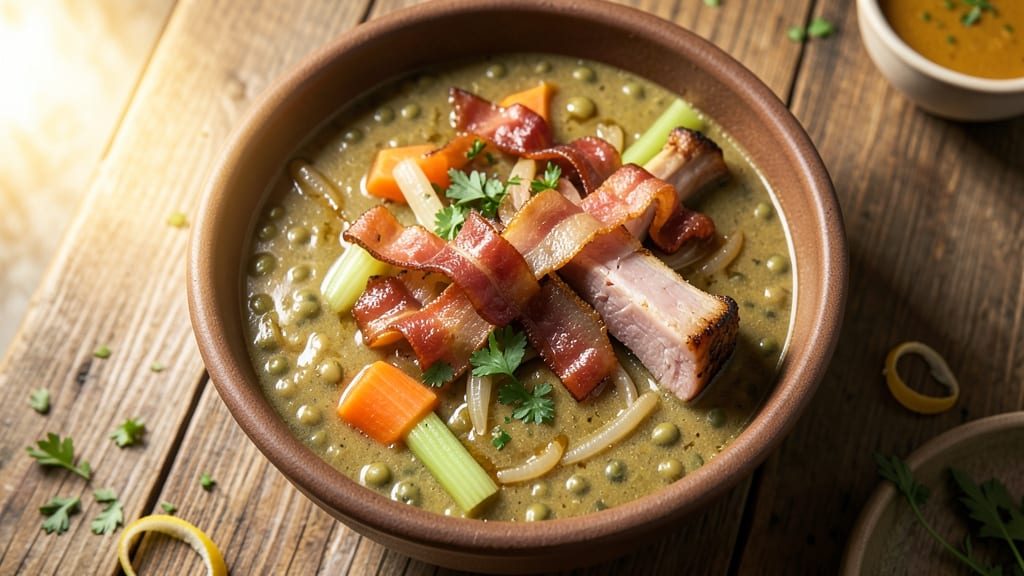
This Andersen's split pea soup copycat recipe delivers the same rich, velvety texture and smoky bacon crunch that made the original a diner classic. The secret lies in slow-simmered ham bones and bacon, which infuse the broth with deep, savory flavor while split peas break down into a creamy consistency.
I've replicated the signature blend of herbs and spices that give it that unmistakable warmth, ensuring every spoonful tastes like a trip to your favorite comfort food spot.
The recipe begins with a savory base of bacon and ham bone, which simmer for hours to develop that unmistakable depth of flavor. Split peas soak overnight to soften perfectly, while aromatics like onions, carrots, and celery build a fragrant foundation.
The key to achieving that creamy, velvety texture without blending lies in the slow cooking process—patience transforms tough split peas into a luxurious, spoonable soup.
What sets this copycat version apart is the smoky bacon crunch that tops each bowl, adding a satisfying contrast to the smooth soup. The herbs—thyme, bay leaves, and parsley—infuse the broth with just the right balance of earthy and bright notes.
Whether you're serving it at a family gathering or a cozy weeknight dinner, this recipe delivers the comfort and nostalgia of the original, with a few modern shortcuts for convenience.
Ready in about 3 hours (or just 45 minutes in a pressure cooker), this soup is perfect for meal prepping and reheating. Serve it with crusty bread to soak up every last drop of that flavorful broth, and don’t forget the extra bacon on top for that signature crunch.
The result? A restaurant-quality split pea soup that tastes like home.
Ingredients for andersen's split pea soup copycat
Pantry staples meet diner magic—just 13 ingredients for that signature smoky, velvety split pea experience.
| Ingredient | Amount | Notes |
|---|---|---|
| Dried Green Split Peas 🌱 | 2 cups | Rinse before soaking overnight |
| Bacon 🥓 | 12 oz | Thick-cut, smoked for best flavor |
| Ham Bone 🦴 | 1 whole | Smoked ham bone preferred |
| Yellow Onion 🧅 | 1 whole | Medium, diced into 1/4-inch pieces |
| Carrots 🥕 | 3 whole | Medium, cut into 1/2-inch chunks |
| Celery Stalks 🧄 | 3 whole | Cut into 1/2-inch pieces |
| Garlic Cloves 🧄 | 4 cloves | Minced for depth of flavor |
| Fresh Thyme 🌿 | 2 tbsp | Leaves only, chopped fine |
| Bay Leaves 🌿 | 2 whole | Dried, standard size |
| Fresh Parsley 🌿 | ¼ cup | Chopped for garnish, stems removed |
| Kosher Salt 🧂 | 1 ½ tsp | Diamond Crystal preferred |
| Black Peppercorns 🌶️ | ½ tsp | Freshly cracked for heat |
| Water 💧 | 8 cups | Or vegetable broth for extra depth |
The bacon and ham bone are non-negotiable for that unmistakable smoky depth. Oscar Mayer or Hormel smoked bacon works perfectly, but avoid the pre-cubed stuff—thick-cut slices render better. For the ham bone, most grocery stores carry them near the deli counter, or check the meat section. If you can't find a ham bone, smoked ham hock is a great substitute. The split peas? Bob's Red Mill has the best quality, but any dried green split peas will work. Soak them overnight—this is where the magic happens for that creamy texture. Trust me, skipping the soak means mushy peas.
No thick-cut bacon? Regular bacon chopped into 1/2-inch pieces works in a pinch, but it won't give that same satisfying crunch. Out of ham bone? Smoked turkey neck or chicken feet add similar depth, though they're harder to find. Fresh thyme is ideal, but dried at one-third the amount gets you close. The bay leaves? Standard dried ones from the spice aisle are fine—no need to splurge. For the carrots and celery, baby carrots and celery hearts save chopping time, though they won't have the same rustic texture. And if you're using broth instead of water, Swanson or Pacific Foods are the best for that rich, smoky flavor.
This soup tastes even better the next day as flavors meld—double the batch if you can. Store in the fridge for 5-6 days or freeze for up to 3 months. The bacon crunch is best added fresh when serving, but you can crisp it ahead and store in an airtight container for 1 week. For meal prep, portion into containers with a layer of bacon on top—it keeps crispy surprisingly well. And if you're using a pressure cooker, skip the soak and just add the peas directly to the pot.
Why You'll Love This Recipe
- No-Chop Shortcut: I swear by the 5-minute prep here—just toss in whole carrots and onion chunks. The split peas soften them right into oblivion, so you’re not stuck dicing while dinner burns.
- Smoky Depth Magic: That crispy bacon and ham bone? Game over. The broth gets this rich, almost charred sweetness from the bone, while the bacon adds a salty crunch that makes you want seconds.
- Leftovers That Shine: Between us, this soup only gets better after a day or two. The flavors meld like old friends, and reheating it is so easy—just add a splash of water, stir, and boom. My freezer’s full of it.
- Budget Feast: Dried peas and a ham bone stretch this into a full week’s worth of meals. Honestly, it’s the kind of dish that makes grocery day feel like a win, especially when you’re feeding a crowd for cheap.
Step-by-step instructions for Andersen's signature split pea soup
Here's how to nail that iconic smoky depth and creamy texture—just like Andersen's.
Soak and Prepare the Split Peas
Rinse the 2 cups dried green split peas under cold water to remove any debris, then transfer them to a large bowl. Cover with plenty of cold water (about 4 cups) and let them soak overnight in the refrigerator. This overnight soak ensures they cook evenly and develop that signature creamy texture without turning mushy.
I like to soak them in a sealed container to prevent any odors from spreading. The next morning, drain and rinse the peas again before adding them to the pot. This removes any excess starch that could make the soup gummy. Real talk: Skipping the soak won't ruin it, but your soup will take longer to cook and might lack that velvety finish.
Render the Bacon and Build the Flavor Base
Cut the 12 oz bacon into ¼-inch pieces and place them in a large Dutch oven over medium heat. Let them cook undisturbed for 5-6 minutes until they render about half their fat and develop a deep golden color. Here's the thing—don't rush this step. You want that fat to caramelize slightly for maximum flavor.
Once the bacon is crispy, remove it with a slotted spoon and set it aside, leaving the rendered fat in the pot. Add the 1 whole ham bone, 1 whole yellow onion (diced), 3 whole carrots (cut into ½-inch chunks), and 3 whole celery stalks (cut into ½-inch pieces) to the pot. Stir everything together and cook for 8-10 minutes until the vegetables begin to soften and the onion turns translucent.
Simmer the Soup for Deep Flavor Development
Add the 4 minced garlic cloves, 2 tbsp fresh thyme leaves, 2 whole bay leaves, 1.5 tsp kosher salt, and 0.5 tsp freshly cracked black peppercorns to the pot. Pour in the 8 cups water and bring everything to a boil. Once boiling, reduce the heat to low and let it simmer uncovered for 30 minutes. This initial simmer helps extract all the flavors from the ham bone and vegetables.
After 30 minutes, add the drained split peas and return the reserved bacon to the pot. Stir gently to combine, then increase the heat to medium-low. Cover the pot and let it simmer for 1 to 1.5 hours, stirring occasionally. The soup should reduce slightly, and the peas should become tender but still hold their shape. You'll know it's ready when the peas are fork-tender and the soup has thickened to a creamy consistency.
Finish with Fresh Herbs and Adjust Seasoning
Once the peas are tender, remove the ham bone and discard it. Stir in the 0.25 cup chopped fresh parsley and taste the soup. This is where you make any final adjustments—add more salt if needed, or a splash of water if the soup is too thick. The parsley adds a bright finish that cuts through the richness of the bacon and ham.
Let the soup sit off the heat for 5 minutes before serving. This resting period allows the flavors to meld together and the soup to thicken slightly. Serve it hot, garnished with extra crispy bacon pieces on top. Each spoonful should deliver that perfect balance of smoky bacon, sweet ham, and velvety peas with a hint of fresh thyme.
Pro Tips For Making Andersen'S Split Pea Soup Copycat
- CRACK THE PEAS FIRST: I learned this the hard way—those dried split peas need a quick soak in hot water for 10 minutes before adding to the pot. Skipping this step means your soup will fight you for hours, never quite softening right. (Yes, even if you’re impatient like me.)
- BLISTER THE BACON: Don’t just cook the bacon—get it dark and crispy first. The fat renders out faster, and those crispy bits add depth to the soup. Toss them out before adding the peas, but leave the greasy goodness in the pot. That’s where the flavor hides.
- SIMMER, DON’T BOIL: After the initial 30 minutes of cooking, drop the heat to a gentle simmer. I used to let it boil hard, and the peas would turn mushy while the ham stayed tough. Low and slow keeps everything tender without falling apart.
- USE THE HAM BONE: That ham bone isn’t just for looks—it’s the backbone of the soup. Split it open with a cleaver and scrape out the marrow, then toss it back in. The marrow melts into the broth, giving it a richness you won’t get from just meat. (Your future self will thank you.)
Storing and reheating your leftovers
Refrigerator Storage
Let your split pea soup cool completely before transferring it to airtight containers—I love using glass Pyrex with snap-on lids for best results.
Store in the fridge at 40°F or below for up to 5-6 days, though I’ve found the flavors actually deepen overnight as the bacon fat melds with the broth. Always keep the crispy bacon separate until serving to maintain that satisfying crunch. 💧
Freezer Storage
For long-term storage, portion the soup into quart-sized freezer bags (leave 1-inch headspace for expansion) or airtight containers. Freeze for up to 3 months—the texture remains creamy when reheated properly.
I recommend freezing without the bacon, adding it fresh when serving. Label containers with the date to track freshness. For meal prep, freeze in single-serving portions for easy grab-and-go lunches. ❄️
Stovetop Reheating
This is my preferred method—it preserves the soup’s velvety texture. Transfer the soup to a heavy-bottomed pot and heat over medium-low heat for 10-15 minutes, stirring occasionally. Add ¼ cup water or broth if the soup looks too thick.
Taste and adjust seasoning—split pea soup often needs a pinch more salt after reheating. The bacon should crisp up again when added fresh at the end. 🔥
Microwave Reheating
For quick reheating, transfer soup to a microwave-safe bowl and cover with a damp paper towel. Heat on 70% power for 2-3 minutes, stir, then continue in 30-second intervals until reaching 165°F. Add a splash of water if it thickens too much.
The bacon crunch is best added fresh—microwaving it separately for 1-2 minutes restores its crispiness. Stir in the parsley at the end for freshness. ⚡
Pressure Cooker Shortcut
If you’re short on time, use a pressure cooker to reheat frozen soup in just 15 minutes. Add 1 cup water to the frozen soup, seal the lid, and cook on high pressure for 10 minutes, then quick-release.
Stir and adjust seasoning—this method works best for previously frozen soup, not freshly made. The texture stays creamy, and the bacon can be crisped separately. 💫
Nutrition facts
Frequently asked questions
Why does Andersen's split pea soup have that signature creamy texture?
The velvety texture comes from two key techniques: overnight soaking of the split peas and slow simmering for 1-1.5 hours. Soaking removes excess starch that could make the soup gummy, while the long cooking time allows the peas to break down just enough to release their natural creaminess. The bacon fat also emulsifies with the broth, adding richness without blending.
Can I make this soup without a ham bone?
Yes, but you'll sacrifice some depth of flavor. Try using smoked turkey neck or chicken feet (both add gelatinous richness), or boost flavor with 2 extra cups of bone broth and an extra 1/2 cup bacon. For a vegetarian version, use vegetable broth and a 1/2 cup nutritional yeast for umami depth. The texture will still be creamy, but the flavor profile changes slightly.
How do I fix split peas that turned mushy?
If your peas are too soft, it likely means they cooked too long or weren't soaked properly. For immediate fixes, stir in 1/4 cup cornstarch mixed with 2 tbsp cold water and simmer for 3-5 minutes to thicken the broth. If the texture is still off, blend 1/2 cup of the soup and stir it back in to create a smoother consistency. For next time, reduce simmering time to 45-60 minutes and always soak the peas overnight.
What's the best way to reheat leftover soup?
For creamy texture, reheat on the stovetop over medium-low heat for 10-15 minutes, stirring occasionally. Add 1/4 cup water or broth if needed. Microwave on 70% power in 30-second intervals, stirring between each. The bacon should always be added fresh—crisp it separately for 1-2 minutes in a dry pan. Never reheat above 165°F to prevent skin formation.
Can I use canned split peas instead of dried?
Canned peas will work in a pinch, but they won't give the same restaurant-quality texture. Canned peas are pre-cooked and release starch immediately, making the soup thicker and less velvety. If using canned, drain and rinse them well, then simmer for only 30-45 minutes (not 1-1.5 hours). For best results, stick with dried peas—they develop that signature creaminess through slow cooking.