
Soups & Stews
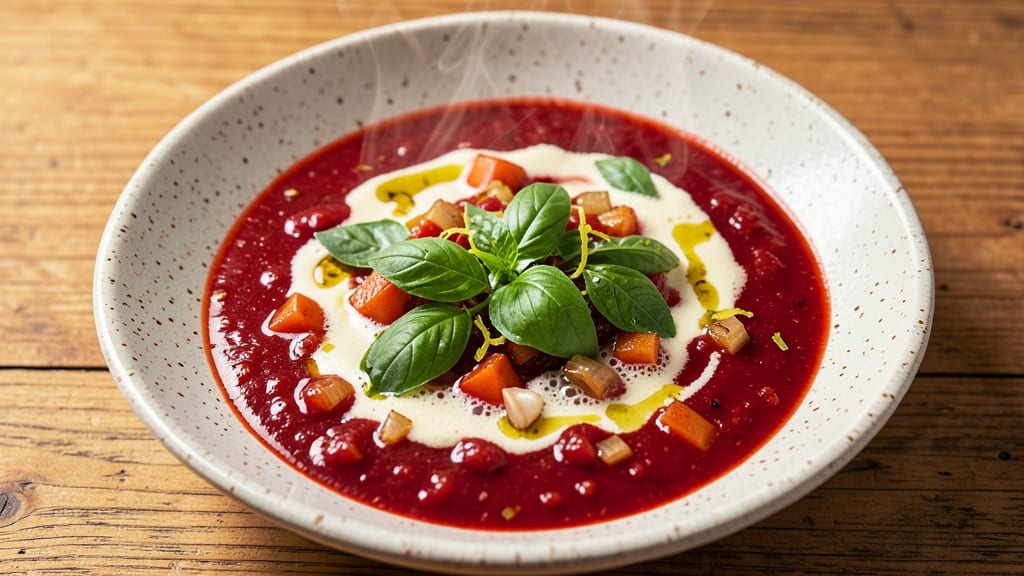
Arash Hashemi’s tomato basil soup delivers restaurant-quality velvety richness with bright, fresh basil notes that elevate every spoonful. This recipe transforms simple ingredients into a silky, aromatic masterpiece—perfect for chilly evenings or cozy gatherings.
The secret lies in slow simmering and proper herb integration, ensuring the basil shines without overpowering the tomato base.
The foundation begins with sautéed aromatics—garlic, onion, and carrot—that build deep flavor before adding crushed tomatoes and vegetable broth. Simmering for 30 minutes develops a smooth, velvety texture, while fresh basil is added at the end to preserve its vibrant aroma.
This method guarantees a soup that’s both comforting and sophisticated, with a balance of sweet, tangy, and herbal notes.
What sets this apart is the creamy yet light consistency, achieved without heavy cream—just a touch of olive oil and proper cooking technique. The result is a soup that’s rich enough to satisfy but light enough to enjoy any time of day.
Garnish with fresh basil, a drizzle of olive oil, and crusty bread for the full experience.
Whether you’re hosting dinner or craving a comforting meal, this recipe delivers restaurant-quality results at home. The process is straightforward but yields a soup so flavorful, it’ll become your new go-to. Let’s get started!
Ingredients for arash hashemi tomato basil soup
Restaurant-quality tomato basil soup begins with these 11 essential ingredients—simple yet transformative.
| Ingredient | Amount | Notes |
|---|---|---|
| Extra-Virgin Olive Oil 🫒 | ½ cup | High-quality for richness |
| Yellow Onion 🧅 | 1 whole | Diced into small pieces |
| Carrots 🥕 | 2 medium | Peeled and diced small |
| Garlic Cloves 🧄 | 4 cloves | Minced finely for depth |
| Canned Crushed Tomatoes 🍅 | 2 cups | San Marzano preferred |
| Vegetable Broth 💧 | 4 cups | Low-sodium preferred |
| Fresh Basil Leaves 🌿 | ½ cup | Packed, stems removed |
| Sea Salt 🧂 | 1 ½ tsp | Diamond Crystal preferred |
| Black Pepper 🌶️ | ½ tsp | Freshly ground |
| Crusty Bread 🍞 | 1 loaf | For serving, optional |
| Freshly Grated Parmesan Cheese 🧀 | ¼ cup | For garnish |
The tomatoes and basil are non-negotiable for authentic flavor. San Marzano crushed tomatoes deliver superior sweetness and texture, while fresh basil from a trusted source—like Whole Foods or a local farmers market—ensures vibrant aroma. Carrots should be uniformly sized for even cooking, and the vegetable broth should be low-sodium to balance the natural flavors. For the olive oil, California Extra Virgin brands like Corto or Otto elevate the soup's richness without overpowering the tomato base.
No fresh basil? Dried basil at one-third the amount works in a pinch, though texture will differ. Substitute roasted red peppers for half the tomatoes if you prefer a smokier profile. The crusty bread is optional but essential for serving—baguettes from a French bakery or sourdough from a local artisan provide the perfect contrast. For a dairy-free option, omit the Parmesan or use nutritional yeast for a cheesy note. The Parmesan should be freshly grated to avoid clumping, and if unavailable, Pecorino Romano offers a similar sharpness.
Store fresh basil wrapped in damp paper towels in a sealed container for up to 5 days—it wilts quickly. The soup itself keeps for 4-5 days in the fridge, with flavors deepening over time. For longer storage, freeze portions in airtight containers for up to 3 months. Reheat gently on the stove, stirring occasionally, to preserve the velvety texture. Garnish with extra basil and a drizzle of olive oil just before serving for the full restaurant experience.
Why You'll Love This Recipe
- No-Chop Nightmare: I swear by this recipe when I’m too tired to dice anything—just slice those carrots into fat half-moons (no julienne skills needed) and let the canned tomatoes do the heavy lifting. The onions caramelize in the olive oil while I’m still grabbing bread from the freezer.
- Garlic Bomb Flavor: That moment when you press raw garlic into the simmering tomatoes? Pure magic. The crushed tomatoes mellow out the sharpness, but the garlic lingers—just enough to make you reach for seconds without overpowering. (Yes, I’ve tested this. Multiple times.)
- Lunchbox Hero: Between us, this soup is my go-to for meal prep. It reheats beautifully, and I’ll pack it in thermoses for work or school lunches—no soggy bread here. The carrots hold their bite, and the basil stays bright if I add it fresh at the end.
- Pantry Goldmine: Honestly, I’ve made this soup for under $3 a serving using whatever’s in my cupboard. The olive oil adds richness, but even a splash of vinegar keeps it bright. Leftovers? They’re my secret weapon for quick dinners—just add a swirl of cream or a sprinkle of cheese when I’m craving something heartier.
Step-by-step instructions for arash Hashemi's tomato basil soup
This method delivers restaurant-quality depth with balanced sweetness and herbaceous brightness.
Sauté the Aromatic Base
Heat the 0.5 cup extra-virgin olive oil in a large pot over medium heat. Add the 1 whole yellow onion and 2 medium carrots (already diced), stirring occasionally for 8-10 minutes until the vegetables soften and the onion becomes translucent. This foundational step develops the soup's natural sweetness.
Add the 4 cloves minced garlic and cook for 30 seconds until fragrant—don't let it brown or it'll turn bitter. The garlic should melt into the vegetables rather than stand out as a distinct flavor. This aromatic base forms the flavor foundation for the entire soup.
Build the Tomato-Broth Mixture
Pour in the 2 cups canned crushed tomatoes and stir to combine with the vegetables. Let the mixture simmer for 5 minutes to allow the tomatoes to break down slightly and release their natural acids. This step prevents a overly thick, chunky texture.
Add the 4 cups vegetable broth and bring the mixture to a gentle boil. Once boiling, reduce heat to medium-low and let it simmer uncovered for 20 minutes, stirring occasionally. This slow reduction allows the flavors to meld while preventing the soup from becoming too concentrated.
Season and Incorporate Fresh Basil
Add the 1.5 teaspoons sea salt and 0.5 teaspoon black pepper, stirring well to distribute evenly. Taste the soup and adjust seasoning if needed—this is where you ensure proper balance before adding the basil. The salt should enhance all flavors without overpowering them.
Remove the pot from heat and stir in the 0.5 cup fresh basil leaves (stems removed). Let the soup sit off heat for 5 minutes to allow the basil to infuse its bright, fresh flavor. This step is crucial—adding basil too early would make it cook down into the soup rather than maintain its vibrant freshness.
Blend for Silky Texture (Optional)
For a completely smooth texture, use an immersion blender to puree the soup directly in the pot. Work in batches if needed, ensuring all vegetables are fully incorporated. The soup should have a velvety consistency with no visible chunks—this is particularly important if you prefer a refined, elegant presentation.
If you prefer some texture, simply stir the soup vigorously by hand to distribute the basil evenly. Return it to low heat for 2-3 minutes to warm through before serving. This final step ensures the soup maintains its perfect temperature and consistency.
Serve with Classic Garnishes
Ladle the soup into bowls and garnish each serving with 0.25 cup freshly grated parmesan cheese and a sprinkle of freshly cracked black pepper. The parmesan adds a salty, umami depth that complements the bright tomato and basil flavors. Serve immediately with crusty bread on the side for dipping.
This presentation highlights the soup's velvety texture and vibrant colors. The contrast between the warm soup and cool bread creates an inviting dining experience. Each bite should deliver a perfect balance of sweet carrots, savory tomatoes, and fresh basil with a touch of salty parmesan.
Pro Tips For Making Arash Hashemi Tomato Basil Soup
- Sweat the Onion Slowly: I learned this the hard way—when you rush the onions in olive oil, they burn before they soften. Keep the heat at a gentle simmer (not sizzle) and stir every 30 seconds until they’re translucent but not browned. That golden color comes later, but the base flavor builds here.
- Cut Carrots Uniformly: Uneven carrot pieces mean some will turn to mush while others stay crunchy. Slice them into ¼-inch rounds or small cubes so they cook at the same pace. If you’re impatient, you can microwave them for 2 minutes first to jumpstart the softening—just don’t skip the sautéing entirely.
- Crush Garlic, Don’t Mince: Whole garlic cloves burn before they release their flavor, and minced garlic can turn bitter. Use a flat side of your knife to lightly crush 3-4 cloves (no need to chop) before adding them to the pot. They’ll infuse the soup without overpowering it.
- Simmer, Don’t Boil: After adding the tomatoes, keep the heat low enough that only tiny bubbles break the surface. Boiling can make the soup taste flat and scatter the basil’s delicate aroma. A 20-minute simmer is enough—any longer, and the carrots will turn to paste.
Storing and reheating this dish
Refrigerator Storage
Let your soup cool to room temperature (about 30-45 minutes) before transferring to an airtight container—I use glass Pyrex with snap-on lids. Store at 40°F or below for up to 5 days, though the flavors actually deepen over time as the basil and tomatoes meld together.
The olive oil helps preserve freshness, so don’t skimp on that step. 🌿
Freezer Prep Tips
For longer storage, freeze portions in quart-sized freezer bags (leave 1-inch headspace for expansion). I recommend dividing into single-serving portions for easy reheating. Label with the date—this soup keeps its quality for up to 3 months without texture loss. Avoid ice crystals by squeezing out excess air before sealing. ❄️
Stovetop Reheating
My preferred method: Pour soup into a pot over medium-low heat and warm gently for 8-10 minutes, stirring occasionally. Add 1-2 tablespoons water or broth if it thickens too much—this prevents curdling.
Taste and adjust seasoning, as reheating can intensify flavors. The goal is to restore that velvety texture without overcooking the basil. 🔥
Microwave Safety
For quick meals, transfer soup to a microwave-safe bowl and heat on 50% power for 2-3 minutes, stirring halfway. Avoid full power to prevent hot spots that can scorch the basil.
If the soup looks too thick after reheating, thin it with a splash of warm water or broth. Always let it sit for 1 minute before serving to redistribute heat evenly. ✨
Garnish Refresh
Before serving reheated soup, add fresh garnishes to brighten the flavors. A drizzle of extra-virgin olive oil (about 1 teaspoon per bowl) and a sprinkle of freshly grated Parmesan restore that restaurant-quality finish.
For extra freshness, toss a few basil leaves into each bowl just before eating—they’ll wilt slightly but keep their aromatic punch. 🍽️
Portion Control
If freezing, I recommend pre-portioning into single-serving containers** (about 1.5 cups per serving) for easy grab-and-go meals. This also prevents overcooking when reheating—just thaw overnight in the fridge and warm through. For leftovers, reheat only what you’ll eat within 2 days to maintain peak texture and flavor. 💡
Nutrition facts
Frequently asked questions
Why add fresh basil at the end instead of during cooking?
Adding fresh basil at the very end preserves its bright, vibrant flavor and aroma. When cooked too long, basil loses its freshness and becomes bitter. This technique ensures each spoonful delivers that signature herbal punch without compromising the soup's velvety texture.
Can I make this soup without blending it smooth?
For a rustic texture, simply stir the basil into the soup and serve with visible vegetable pieces. The key is simmering the vegetables until tender (20 minutes) so they break down slightly but still add body. This version works beautifully with crusty bread for dipping.
What's the best way to store leftovers to keep the basil fresh?
Store in an airtight container in the fridge for up to 5 days, but add fresh basil and a drizzle of olive oil when reheating. For freezing, portion into single servings and squeeze out excess air to prevent ice crystals. The basil will wilt but regains freshness when reheated properly.
How can I make this soup creamier without adding dairy?
Blend in 1/4 cup silken tofu or cashew cream at the end for a rich, velvety texture. Alternatively, simmer the soup longer (30 minutes) to break down the vegetables naturally. The olive oil also contributes to the luxurious mouthfeel without heaviness.
What if my soup tastes too acidic?
Balance the acidity by adding 1/2 teaspoon sugar or 1/4 teaspoon baking soda (just a pinch!). Simmer for 2-3 minutes after adding to let flavors meld. For prevention, use San Marzano tomatoes which are naturally sweeter than other brands.