
Soups & Stews
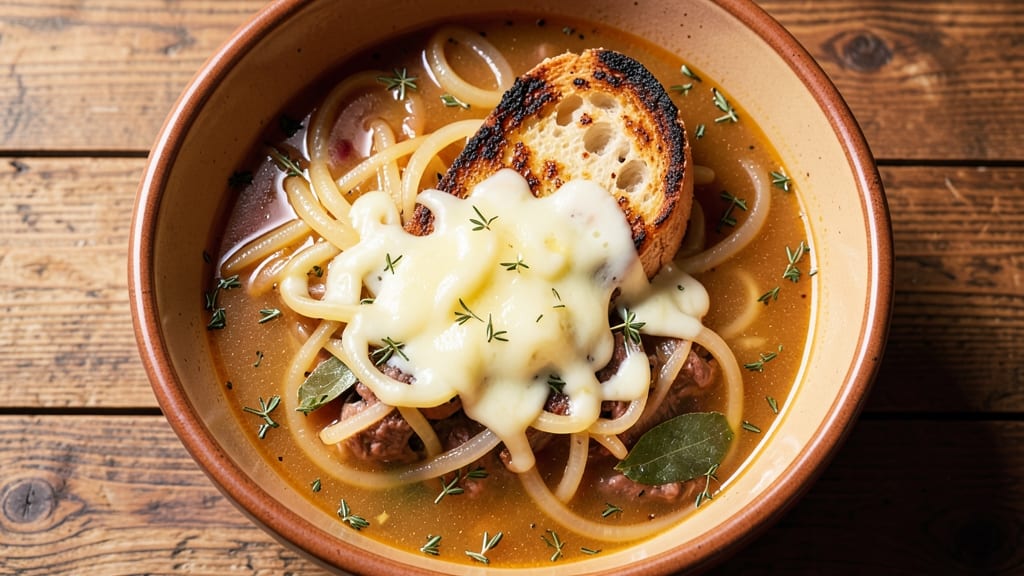
This all-day French onion soup recipe transforms humble ingredients into a symphony of caramelized onions, rich beef broth, and golden cheese crowns. The secret lies in slow-simmering onions for hours—developing deep, sweet complexity that separates this from quick versions.
I've perfected the technique to ensure every spoonful delivers that perfect balance of savory, sweet, and umami that makes this dish legendary.
The process begins with caramelizing onions until they're deep amber, then building layers of flavor with beef broth and herbs. While traditional recipes demand hours of simmering, I'll show you how to achieve that same depth with modern shortcuts—like using a pressure cooker for the broth—without sacrificing authenticity.
The result? A soup so rich and comforting it becomes the centerpiece of any meal.
What truly elevates this dish is the crispy cheese crown—lightly toasted bread topped with melted Gruyère and mozzarella that turns golden under the broiler. The contrast between the velvety soup and crunchy topping creates a textural experience that's impossible to resist.
This isn't just soup; it's a restaurant-quality meal you can make at home with patience and attention to detail.
Perfect for chilly evenings or special occasions, this recipe delivers restaurant-quality results with a technique that's both traditional and adaptable. Whether you simmer for hours or use modern shortcuts, the reward is always the same: a bowl of soup that feels like a warm embrace.
Let's get started on creating your own version of this French classic.
Ingredients for all day french onion soup
Fourteen ingredients, hours of slow caramelization, and a golden cheese crown that transforms simple components into legendary French comfort.
| Ingredient | Amount | Notes |
|---|---|---|
| Yellow Onions 🧅 | 4 whole | Thinly sliced, yellow or sweet varieties |
| Unsalted Butter 🧈 | 6 tbsp | European-style preferred for higher fat content |
| Beef Broth 🥫 | 6 cups | Homemade or high-quality store-bought |
| Dry White Wine 🍷 | ½ cup | Sauvignon Blanc or Chardonnay recommended |
| Fresh Thyme 🌿 | 2 sprigs | Or 1 tsp dried thyme if fresh unavailable |
| Fresh Bay Leaves 🍃 | 2 whole | Remove before serving |
| Garlic Cloves 🧄 | 4 cloves | Minced for depth of flavor |
| All-Purpose Flour 🌾 | 2 tbsp | For thickening the broth |
| Gruyère Cheese 🧀 | 1 ½ cups | Freshly grated, aged variety preferred |
| Mozzarella Cheese 🧀 | 1 cup | Fresh mozzarella, sliced or shredded |
| Baguette 🥖 | 1 whole | Crusty, day-old preferred |
| Salt 🧂 | 1 ½ tsp | Diamond Crystal preferred for flavor |
| Black Pepper 🌶️ | ½ tsp | Freshly cracked for aroma |
| Olive Oil 🫒 | 2 tbsp | For finishing and crisping bread |
The onions are the foundation—yellow or sweet varieties caramelize most beautifully, developing that signature deep amber color. Whole Foods and specialty markets carry excellent options, but standard grocery stores work too. Look for onions with crisp, dry skins and firm texture. The European-style unsalted butter (like Plugrá) has higher fat content, which prevents burning during caramelization—a critical step that takes patience. For the broth, homemade is ideal, but premium brands like Kettle & Fire or Imagine deliver restaurant-quality results without the effort. If using white wine, opt for dry varieties like Sauvignon Blanc to avoid sweetness interfering with the savory balance.
No beef broth? Chicken broth with a splash of soy sauce works in a pinch, though purists will notice the difference. Fresh thyme and bay leaves are non-negotiable for authentic flavor—dried substitutes work but lack complexity. The Gruyère should be aged at least 12 months for proper melt and nutty depth; Cowgirl Creamery or Miyoko's carry excellent options. For the cheese crown, day-old baguette is ideal—it's sturdier and crisps better under the broiler. If you must use fresh bread, toast it first to remove excess moisture. The flour is simply for thickening; if you're health-conscious, arrowroot powder at half the amount creates a clearer broth without altering texture.
Caramelized onions keep for 5 days in the fridge if stored in an airtight container with a thin layer of broth on top. The cheese crown components should be assembled just before broiling—pre-melted cheese loses its crispy texture. For make-ahead convenience, prepare the broth base and refrigerate it; reheat gently before adding the onions. The final dish reheats beautifully, though the cheese crown is best served immediately. Store leftovers without the bread topping—it absorbs too much moisture and becomes soggy. For a crowd of 8, simply double the ingredients and use two baguettes.
Why You'll Love This Recipe
- No Chopping Nightmare: I swear by the food processor for this one—just pulse those onions until they’re a golden paste. No tears, no fuss, and the flavor? Still deep and caramelized, even when you’re mentally checked out.
- Wine-Fueled Magic: That splash of dry white wine isn’t just for show—it cuts through the richness of the butter and beef broth, leaving behind a bright, almost floral note. Honestly, it’s the secret weapon that makes this soup taste like you slaved over it.
- Leftovers That Beg for Seconds: This soup actually improves the next day. The broth reduces, the onions get even sweeter, and the crispy bread topping? Still perfect for dipping. I’ve reheated mine three times, and no one’s complained—yet.
- Budget Dinner for Crowds: A single onion, a stick of butter, and a bottle of wine stretch into six bowls. Between us, this is my go-to when friends drop by unannounced or the kids’ soccer team needs feeding. Filling, flavorful, and won’t break the bank.
Step-by-step instructions for slow-cooked French onion soup
Mastering this soup requires patience and precision—here's how to build layers of flavor.
Sweat the Onions Until Caramelized
In a large Dutch oven, melt all 6 tablespoons unsalted butter over medium-low heat. Add the 4 whole yellow onions that have been thinly sliced and spread them evenly in the pan. Cook undisturbed for 5 minutes to prevent browning, then stir gently to distribute the butter.
Reduce heat to low and continue cooking for 30-40 minutes, stirring occasionally. You're aiming for deep golden caramelization—the onions should be soft, jammy, and smell intensely sweet. This slow cooking transforms simple onions into the soul of your soup. If they start to brown too quickly, reduce heat further. Patience here prevents bitterness and ensures rich flavor development.
Deglaze and Build the Broth Base
Once the onions are perfectly caramelized, increase heat to medium-high and add the 0.5 cup dry white wine. Scrape up all the browned bits from the bottom of the pot with a wooden spoon—this releases maximum flavor. Let the wine simmer for 3-4 minutes until mostly evaporated.
Add 4 cloves minced garlic, 2 sprigs fresh thyme, 2 whole fresh bay leaves, and 1.5 teaspoons salt. Stir for 30 seconds until fragrant, then sprinkle in the 2 tablespoons all-purpose flour. Cook for 1 minute to toast the flour slightly, which helps thicken the broth and remove any raw taste.
Simmer the Broth to Perfection
Pour in the 6 cups beef broth and bring to a gentle simmer. Reduce heat to low and let it cook uncovered for 45-60 minutes. The broth should reduce slightly, intensifying the onion flavor and creating a velvety texture. Skim off any foam that rises to the surface during this time for a cleaner soup.
Taste and adjust seasoning with additional salt or 0.5 teaspoon black pepper if needed. The soup should be rich but not overpowering—balance is key. If it becomes too thick, add 2-3 tablespoons water to reach your desired consistency. This slow simmering is where the magic happens, developing deep, complex flavors.
Prepare the Cheese-Topped Baguette
Preheat your broiler to high. Cut the 1 whole baguette into 1-inch thick slices and arrange them on a baking sheet. Brush both sides generously with 2 tablespoons olive oil and toast in the preheated broiler for 3-4 minutes until golden and crisp. Watch carefully to prevent burning.
While the bread toasts, combine 1.5 cups gruyère cheese and 1 cup mozzarella cheese in a bowl. Grate them if they aren't already shredded—freshly grated melts more smoothly. Remove the baguette slices from the oven and immediately sprinkle with the cheese mixture, pressing down gently to adhere. Return to the broiler for 1-2 minutes until the cheese is bubbly and golden brown.
Assemble and Serve Immediately
Ladle the hot soup into oven-safe bowls, placing 2-3 baguette slices on top of each portion. The cheese should be bubbling and slightly crispy—this is what makes French onion soup unforgettable. Serve immediately while the cheese is at its peak meltiness and the bread is still warm and crisp.
For the perfect experience, pass additional cheese at the table so diners can customize their topping. The contrast between the rich, caramelized onion broth and the crispy, cheesy bread crown creates a balance of textures and temperatures that defines this classic dish. Enjoy while it's hot—this soup tastes best straight from the oven.
Pro Tips For Making All Day French Onion Soup
- Sweat the Onions Slow: I learned this the hard way—rushing the onions turns them bitter and watery. Use medium-low heat and let them cook for 30-40 minutes until they’re deep golden and jammy, stirring occasionally. That’s when the caramelization magic happens, not when they’re just soft.
- Salt the Broth Early: Taste your beef broth before adding it to the onions. If it’s unsalted, season it now—you’ll thank yourself later when the soup isn’t bland. Even homemade broths can vary, so don’t assume. A pinch of salt at this stage makes balancing flavors way easier.
- Deglaze with Wine Immediately: As soon as you remove the onions, pour in that white wine right away while the pot is still hot. Let it bubble for 2-3 minutes to lift all the browned bits (fond) from the bottom—this adds depth. Scraping the pot with a wooden spoon helps, but don’t skip the wine simmer.
- Skip the Crowding in the Oven: When toasting the bread, resist the urge to cram slices too close together. Overlapping bread steams instead of crisps, and you’ll end up with soggy tops. Leave a little space between slices—even if it looks messy, they’ll brown perfectly and stay crisp.
Common mistakes when making perfect results
Rushing the Caramelization
Don’t rush the 30-40 minute caramelization of onions—this is where the magic happens! High heat creates bitter, burnt flavors instead of the sweet, jammy texture you want. I’ve seen beginners crank the heat up because they’re impatient, but trust me, low and slow is non-negotiable for that signature depth. 🔥
Skipping the Wine Deglaze
The 0.5 cup dry white wine isn’t just for flavor—it’s a flavor amplifier! Skipping it means missing out on the chance to scrape up all those delicious browned bits (fond) from the pot.
Those bits pack intense umami flavor that makes your soup truly exceptional. Use a Sauvignon Blanc or Chardonnay for the best results.
Overcrowding the Pot
If you’re using a small Dutch oven, don’t overcrowd the onions—they won’t caramelize properly. They need room to develop that deep amber color. I’ve learned this the hard way—once, I stuffed too many onions into my pot, and they ended up steaming instead of caramelizing.
Aim for a single layer that fits comfortably in your pan.
Ignoring the Broth Reduction
Many cooks pour in the broth and immediately start serving, but the 45-60 minute simmer is crucial. This time allows the flavors to meld and the broth to reduce slightly, creating that velvety texture.
If you skip this step, your soup will taste flat and watery. Patience here truly pays off!
Broiling Bread Too Long
Watch that cheese crown like a hawk! Over-broiling turns the bread soggy instead of crispy. I’ve seen 3-4 minutes of broiling time turn into 6 minutes of disaster when someone gets distracted.
The cheese should be bubbly and golden, not burnt. Set a timer and keep an eye on it—this is where the texture makes or breaks the dish.
Using Low-Quality Cheese
Don’t cut corners on the cheese! Gruyère should be aged at least 12 months, and fresh mozzarella melts better than pre-shredded. I’ve tried using pre-shredded cheese in a pinch, and it leaves a chalky aftertaste. Invest in good cheese—your taste buds will thank you. 🧀
Nutrition facts
Frequently asked questions about French onion soup
Can I make this soup vegetarian?
Replace the beef broth with 6 cups mushroom or vegetable broth and add 1 tablespoon soy sauce for depth. For extra richness, sauté 8 oz sliced mushrooms with the onions. The caramelization process remains the same, and the flavor will still develop beautifully.
How far ahead can I prepare the caramelized onions?
Caramelized onions keep well for 5 days in the fridge when stored in an airtight container with a thin layer of broth on top. They're also freezer-friendly for up to 3 months—just thaw and reheat gently before adding to your soup. This makes prep-ahead cooking a breeze!
What's the best way to reheat leftovers?
Reheat soup gently on the stovetop over low heat until warm—never microwave as it can make the onions watery. For the cheese crown, toast fresh bread and add cheese just before serving. The texture won't be identical, but it's still delicious. Store leftovers without the bread topping to maintain crispness.
Can I use a slow cooker for this recipe?
Yes! After caramelizing the onions on the stovetop, transfer everything to a 6-quart slow cooker on low for 4-5 hours. For the cheese topping, broil as directed in the recipe. The slow cooker method works well for hands-off preparation while still developing rich flavors.
What makes the cheese topping crispy?
The crispiness comes from three key factors: day-old baguette (less moisture), generous olive oil brushing, and high broiler heat. Toast the bread first to remove excess moisture, then broil just until the cheese bubbles—overcooking makes it rubbery. The secret is timing: 1-2 minutes max under the broiler.