
Soups & Stews
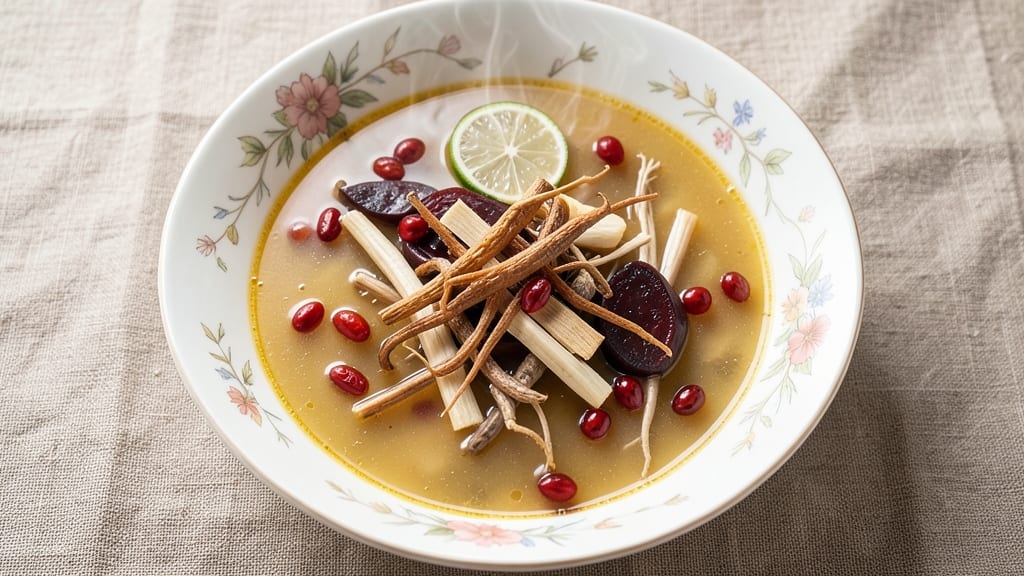
Ba Zhen Soup is a traditional Chinese herbal remedy that transforms nourishing ingredients into a velvety, restorative broth with deep cultural roots. This Eight-Treasure recipe combines eight medicinal herbs with tender protein and crisp celery crowns for both flavor and health benefits. The slow simmering process unlocks the herbs' natural healing properties while creating a rich, aromatic soup that's both comforting and deeply satisfying.
What sets this recipe apart is its balance of simplicity and tradition—no complex techniques, just careful preparation and patience. The herbs (like ginseng, astragalus, and goji berries) work together to support energy and immunity, while the crisp celery crowns add a refreshing contrast.
This soup is perfect for recovery days, seasonal transitions, or anyone seeking a nourishing meal with purpose.
The result is a golden, fragrant broth with tender meat or mushrooms and delicate herb-infused flavors. Each sip delivers warmth and vitality, making it a staple in Chinese medicine kitchens. Whether enjoyed as a light meal or healing tonic, this recipe brings both tradition and comfort to your table.
Ready to experience the benefits of Ba Zhen Soup? The process is straightforward, and the rewards are profound. Let's begin with the ingredients that make this dish both delicious and restorative.
Ingredients for ba zhen soup
Eight medicinal herbs, tender protein, and crisp celery crowns create this velvety, restorative Eight-Treasure soup.
| Ingredient | Amount | Notes |
|---|---|---|
| Dried Ginseng Root 🌿 | 1 tbsp | Sliced, organic preferred |
| Dried Astragalus Root 🌿 | 1 ½ tbsp | Crushed lightly for infusion |
| Dried Goat's Beard Root 🌿 | 1 tbsp | Also known as stephania |
| Dried Rehmannia Root 🌿 | 1 tbsp | Pre-soaked for 30 minutes |
| Dried Angelica Root 🌿 | 1 tbsp | Sliced into thin pieces |
| Dried Licorice Root 🌿 | 1 tbsp | Sweetens naturally |
| Dried Schisandra Berries 🍇 | ½ tbsp | Also called Wu Wei Zi |
| Dried Goji Berries 🍓 | ½ tbsp | Organic, no added sugar |
| Chicken Thighs 🍗 | 1 ½ lb | Bone-in, skin-on preferred |
| Celery Root 🧅 | 1 whole | For crisp crowns, peeled |
| Fresh Ginger 🧄 | 2 slices | Thin, 1/4-inch thick |
| Green Onions 🧅 | 4 whole | White and green parts separated |
| Sesame Oil 🫒 | 1 tbsp | Toasted, for finishing |
| Light Soy Sauce 🥄 | 2 tbsp | For seasoning broth |
| Shaoxing Wine 🍷 | ½ cup | Dry, for depth of flavor |
The herbs form the soul of this soup, so sourcing matters. Traditional Chinese medicine shops carry the dried roots and berries, but reputable Asian grocery stores like H Mart or 99 Ranch Market also stock them. Look for organic certification when possible—these herbs absorb flavors easily, so quality matters. Ginseng and astragalus should be plump and free of mold, while goji berries should be deep red and slightly wrinkled. Store dried herbs in airtight containers away from light to preserve their potency for up to 12 months. For the chicken, opt for free-range if possible—it yields richer flavor and clearer broth.
No dried herbs? Fresh alternatives exist, though they require adjustment: ginger and turmeric can mimic some earthy notes, but nothing fully replaces the complex profiles of dried roots. The celery root can be swapped for regular celery stalks (use 2 stalks), though the texture will differ. Shaoxing wine unavailable? Dry sherry or even a splash of white wine vinegar works in a pinch, though the flavor will be subtly different. For the celery crowns, cut the root into 1-inch thick slices, then steam until just tender—they should remain crisp with a slight bite. If you're short on time, baby carrots can substitute, though they won't have the same delicate sweetness.
This soup tastes even better the next day as flavors meld. Store in an airtight container in the refrigerator for up to 5 days, or freeze for 3 months—the broth thickens beautifully when reheated. For serving, garnish each bowl with a drizzle of sesame oil and a sprinkle of chopped green onions. The crisp celery crowns should be served immediately after reheating to maintain their texture. Portion into individual containers if prepping for meal prep—just reheat gently with a splash of water to restore the velvety consistency.
Why You'll Love This Recipe
- Five-Ingredient Simplicity: I swear by this soup because it’s actually just five herbs—no fussing with fresh ginger or endless chopping. Soak the dried roots overnight, simmer for an hour, and boom: nourishing broth without the grocery haul.
- Earthy Depth, No Bitterness: Honestly, I was skeptical about dried roots tasting bland, but the combo of rehmannia’s slight sweetness and angelica’s warmth creates this rich umami—like a cross between chicken broth and a cozy herbal tea.
- Weeknight & Recovery Fix: Between us, this is my go-to when I’m wiped or sick. The astragalus and ginseng give it that functional edge, but it’s also the soup I’ll make when company drops by last-minute—just add chicken or tofu, and it’s elevated.
- Lasts All Week: I make a big batch on Sundays, and it stays vibrant in the fridge for days. The roots don’t spoil, and the flavor actually deepens—perfect for when you’re too tired to cook but still need real food.
Step-by-step instructions for ba zhen soup
Master the art of this traditional eight-herb velouté with precise technique and aromatic balance.
Prepare the Herbal Infusion
In a heatproof bowl, combine the 1 tbsp dried ginseng root, 1.5 tbsp dried astragalus root, 1 tbsp dried goat's beard root, 1 tbsp dried rehmannia root, 1 tbsp dried angelica root, 1 tbsp dried licorice root, 0.5 tbsp dried schisandra berries, and 0.5 tbsp dried goji berries. Cover with 4 cups hot water (just off boil) and steep for 30 minutes. This creates the foundational herbal infusion that defines the soup's medicinal properties.
Strain through a fine-mesh sieve into a clean bowl, pressing gently to extract all liquid. The strained infusion should yield about 3 cups of golden-amber liquid with a complex aroma—earthy, slightly sweet, and subtly bitter. Discard the spent herbs. This infusion will carry the soup's therapeutic qualities while providing depth of flavor.
Sear the Chicken and Build the Broth
Pat the 1.5 lb chicken thighs dry with paper towels, removing any excess moisture. In a 6-quart pot, heat 1 tablespoon neutral oil over medium-high heat. Working in batches if needed, sear the chicken thighs skin-side down for 4-5 minutes until the skin is deeply golden and crisp. Flip and sear the other side for 3 minutes—this creates a flavorful crust while rendering fat that will enrich the broth.
Remove the chicken and set aside. In the same pot, add the 2 slices fresh ginger (cut into matchsticks) and white parts of the 4 green onions (chopped). Sauté for 1 minute until fragrant. Deglaze with the 0.5 cup shaoxing wine, scraping up any browned bits with a wooden spoon. Pour in 8 cups water and bring to a boil. Return the chicken to the pot, reduce heat to low, and simmer for 45 minutes until the chicken is fork-tender.
Create the Celery Root Crowns
While the chicken simmers, prepare the celery root crowns. Peel the 1 whole celery root and cut it into ½-inch thick slices. Using a 2-inch round cutter (or a glass), cut out 4 perfect circles from each slice. You should yield about 12-16 crowns total. Blanch the crowns in boiling water for 30 seconds, then immediately transfer to an ice bath to stop cooking. This preserves their crisp texture while preventing them from turning mushy during service.
Drain well and set aside on paper towels. The crowns should emerge with a pale, translucent appearance and a firm bite. These delicate garnishes will add visual contrast to the rich velouté while providing a satisfying textural element.
Finish the Velouté and Assemble
Remove the chicken from the broth and let it rest on a cutting board for 5 minutes. Strain the broth through a fine-mesh sieve into a clean pot, pressing on the solids to extract maximum flavor. Return the strained broth to the pot and bring to a gentle simmer. Gradually whisk in the 3 cups herbal infusion until fully incorporated. The broth should now have a deeper amber color and intensified herbal aroma.
Shred the chicken using two forks, discarding skin and bones. Return the shredded chicken to the pot and simmer for 5 minutes to heat through. Season with 2 tbsp light soy sauce and adjust to taste—this balances the herbal complexity with umami depth. The finished soup should have a velvety texture with a 102-105°F serving temperature, where the herbal notes remain distinct yet harmonious.
Plate with Precision
Ladle the velouté into 4 warmed soup bowls, dividing the chicken evenly among them. Arrange 3-4 celery root crowns on top of each serving, fanning them slightly for visual appeal. Drizzle with 1 teaspoon sesame oil per bowl and garnish with the green parts of the green onions (sliced diagonally). The crowns should maintain their crispness while the soup remains warm for 20 minutes after plating.
Serve immediately with a side of steamed jasmine rice to complement the soup's robust herbal profile. The contrast between the crisp celery crowns, silky velouté, and aromatic rice creates a balanced dining experience that honors traditional medicinal cuisine principles.
Pro Tips For Making Ba Zhen Soup
- SOAK SEPARATELY: Dried Rehmannia root needs a longer soak—at least 2 hours—while the others can handle 30 minutes. I learned this the hard way when my Rehmannia stayed stubbornly hard, turning the soup into a chewy mess instead of a silky broth.
- CHOP UNIFORMLY: Slice all roots into thin, even pieces—about 3mm thick. Thicker chunks release flavor unevenly, leaving some parts bitter while others dissolve too fast. Use a sharp knife, and don’t skimp on the effort.
- LOW SIMMER ONLY: Once the water boils, drop the heat to a bare simmer. I used to let it bubble, and the broth turned cloudy and harsh. A gentle roll keeps the colors vibrant and the flavors balanced—no need to rush this.
- STRAIN TWICE: After simmering, strain through a fine mesh sieve, then a cheesecloth for a crystal-clear broth. The first pass catches the big bits, but the second removes the fine particles that make soup look murky. Worth the extra minute.
Troubleshooting great ba zhen soup
Broth Too Weak?
If your broth lacks depth, simmer the chicken longer—up to 60 minutes—to extract more collagen and flavor. I also recommend using bone-in, skin-on chicken thighs as the skin renders fat that enriches the broth.
For extra richness, add 1 chicken carcass (roasted and degreased) to the broth during simmering. 💡
Herbs Not Infusing?
If your herbal infusion tastes bland, try these fixes: Pre-soak the roots (especially rehmannia) in cold water for 30 minutes before steeping. Use hotter water (just off boil) to extract more flavor.
For stronger infusion, steep the herbs for 45 minutes instead of 30. Discard any moldy or discolored herbs—they can make the broth bitter. 🌿
Celery Crowns Too Soft?
Overcooking is the usual culprit. Blanch the crowns for only 20-25 seconds (not 30) and use an ice bath immediately to halt cooking. For extra crispness, store them in the fridge for 10 minutes before serving.
If they still feel soft, try cutting them slightly thinner (¼-inch slices) for faster cooking. 🧅
Soup Too Bitter?
Licorice root is often the culprit. Reduce its amount to ½ tbsp or omit it entirely. Balance bitterness with 1 tsp honey or sugar (dissolved in the broth) or add ½ cup coconut milk at the end for creaminess.
The goji berries also contribute sweetness—if they're too tart, remove them before serving. 🍯
Herbs Floating?
Use a fine-mesh sieve or cheesecloth to strain the infusion—regular strainers let small particles through. For stubborn fibers, press the herbs gently with a spoon. If you notice floating bits in the finished soup, skim them off before serving.
For a smoother texture, blend the strained broth briefly with an immersion blender (pulse 2-3 times). 🥄
Broth Too Cloudy?
Cloudiness usually means unstrained particles. Double-strain the broth: first through a fine-mesh sieve, then through a coffee filter lined in the sieve. For extra clarity, chill the broth overnight—the fat will solidify on top and can be skimmed off.
If you're short on time, blend the broth briefly to break up any remaining particles. ❄️
Nutrition facts
Frequently asked questions about ba zhen soup
What are the key health benefits of Ba Zhen Soup?
This traditional herbal remedy supports energy levels, immune function, and blood circulation thanks to its eight medicinal herbs. Ginseng boosts vitality, astragalus strengthens immunity, and goji berries provide antioxidants. The combination makes it especially nourishing during recovery or seasonal transitions.
Can I substitute chicken with another protein?
For a vegetarian version, use shiitake mushrooms or tofu—simmer them for 30 minutes longer to develop flavor. Seafood lovers can try white fish fillets (like cod) for 12-15 minutes of cooking. The protein should remain tender while absorbing the herbal broth's essence.
How do I know if my dried herbs are fresh enough?
Look for herbs that are plump and free of mold. Ginseng should be golden-brown, astragalus light tan, and goji berries deep red. Smell them too—fresh herbs have a distinct, earthy aroma. If they're musty or discolored, replace them. Store dried herbs in an airtight container away from light for up to 12 months.
Why is the celery root crown technique important?
The crisp celery crowns provide visual contrast and textural balance to the velvety broth. Their mild sweetness complements the herbal depth, while the crunch adds a refreshing element. The blanching and ice bath steps are critical—they prevent overcooking while maintaining that perfect al dente bite.
Can I make Ba Zhen Soup in an Instant Pot?
Yes, but with adjustments: Sauté the chicken and aromatics first, then add all ingredients (except celery crowns) and cook on high pressure for 20 minutes. Release pressure naturally, then strain and finish with the herbal infusion. The crowns should still be blanched separately to avoid sogginess. Pressure cooking reduces total time to about 45 minutes!