
Soups & Stews
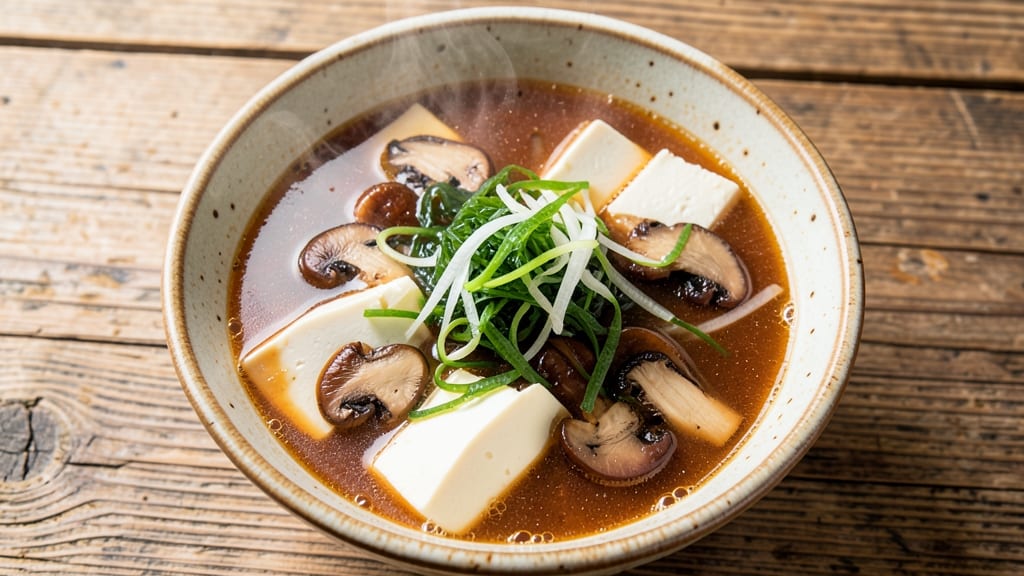
This aka miso soup recipe delivers the deep, fermented comfort of Japan’s most beloved soup—rich, savory, and ready in just 15 minutes. The secret lies in fermented red miso paste, which transforms simple ingredients into a complex, umami-packed broth that warms both body and soul.
Unlike lighter white miso soups, the deep red paste delivers a bold, earthy flavor that stands out in every sip.
The foundation of authentic aka miso soup is vegetarian-friendly dashi stock, made from kombu seaweed and shiitake mushrooms, which provides that signature umami depth without animal products. Silken tofu adds protein and a delicate texture, while rehydrated wakame seaweed contributes a subtle oceanic sweetness.
Green onions provide the final bright, fresh contrast that balances the soup’s richness.
What you’ll end up with is a bowl of restaurant-quality soup that’s as nourishing as it is delicious—perfect for chilly evenings, quick lunches, or as a comforting starter for any meal.
The technique is simple, but the flavor is anything but ordinary. This is the kind of soup that makes you crave seconds, even on your busiest days.
For those looking to modernize the classic, try adding spinach for extra nutrients or mushrooms for deeper umami. The beauty of this recipe lies in its flexibility—customize it to your taste while keeping the soul of traditional Japanese comfort food intact. Let’s get started on creating this umami masterpiece.
Ingredients for aka miso soup
Fermented umami meets fresh ingredients—just 12 components for restaurant-quality miso soup.
| Ingredient | Amount | Notes |
|---|---|---|
| Red Miso Paste 🧈 | 2 tbsp | Fermented, high-quality preferred |
| Dashi Stock 🍵 | 3 cups | Vegetarian, kombu-based |
| Silken Tofu 🧀 | ½ lb | Block or pre-cut cubes |
| Wakame Seaweed 🌊 | ½ oz | Dried, rehydrated in water |
| Green Onions 🧅 | 2 whole | Thinly sliced, white and green parts |
| Shiitake Mushrooms 🍄 | 4 whole | Fresh or rehydrated dried |
| Kombu Seaweed 🌿 | 1 sheet | Dried, for dashi base |
| Water 💧 | 4 cups | Filtered preferred |
| Sesame Oil 🫒 | 1 tsp | Toasted, for finishing |
| Sea Salt 🧂 | ½ tsp | Adjust to taste |
| Spinach 🍃 | 1 cup | Optional, chopped fresh |
| White Miso Paste 🧈 | 1 tbsp | Optional, for balance |
The miso paste is non-negotiable here. Miso Master or Marukome brands deliver the deepest flavor, but any quality red miso will work. For dashi, kombu from Japanese markets has more body than supermarket versions—look for vibrant color and no fishy smell. Shiitake mushrooms should be firm and moist; dried ones rehydrate perfectly but lose some texture. I always double-check the kombu sheet for tears before soaking—it’s the backbone of the broth.
No red miso? White miso with a dash of beets mimics the color, though flavor will differ. Fresh wakame is ideal, but dried rehydrates in 10 minutes of warm water. Swap spinach for baby bok choy if you prefer. Sesame oil is optional but adds that final nutty depth—toasted in a dry pan first intensifies the flavor. The tofu? Silken blocks hold shape better than pre-cubed when sliced fresh.
Dashi stock keeps for 3 days in the fridge, but miso soup reheats beautifully—taste as you go. Store tofu submerged in broth to prevent drying. For meal prep, freeze portions in ice cube trays with broth—just add hot water to serve. The soup’s magic lies in its simplicity: make a double batch and enjoy leftovers all week.
Why You'll Love This Recipe
- Foolproof Simplicity: Honestly, this soup takes less effort than boiling water for pasta. Just whisk the red miso into warm dashi, toss in the pre-packaged wakame and silken tofu cubes (no chopping, no stress), and you’re done. My lazy Sundays just got a lot cozier.
- Umami Bomb: That first sip of red miso—salty, deep, with a hint of sweetness—is like a flavor hug. The dashi amplifies it, the wakame adds briny ocean notes, and the tofu soaks up every last drop. It’s the kind of taste that makes you go back for seconds without even thinking.
- Weeknight Workhorse: I make this when I’m too tired to plan but still need something nourishing. Double the batch on Sunday, and you’ve got lunch for two days—no reheating drama, just warm, comforting bowls. Even my picky husband grabs a second one when it’s on the table.
- Budget Magic: Red miso is cheap, dashi stock lasts forever, and silken tofu stretches further than you’d expect. Wakame in sheets? Even cheaper than fresh veggies. It’s the kind of recipe that lets you feed the whole family without breaking the bank—or the grocery budget.
Step-by-step instructions for aka miso soup
This umami-rich soup comes together faster than you think—just follow these simple steps.
Prepare the Kombu Dashi Base
Start by rinsing the 1 sheet kombu seaweed under cold water to remove any debris, then pat it dry with paper towels. Place the kombu in a clean pot with the 4 cups water and bring to a gentle simmer over medium-low heat. The kombu will release its natural umami compounds as it steeps.
Simmer for exactly 5 minutes—you'll see bubbles form and the water take on a faint golden hue. Remove the kombu immediately after 5 minutes (it can become bitter if left too long), then strain the liquid through a fine-mesh sieve into a clean bowl. This kombu-infused water forms the aromatic foundation of your soup.
Rehydrate and Prep Ingredients
While the kombu steeps, prepare the remaining ingredients. Soak the 0.5 oz wakame seaweed in a small bowl of hot water for 3-5 minutes until it softens and expands to about 3 times its original size. Drain well, reserving the soaking liquid for later use.
Slice the 4 whole shiitake mushrooms into ¼-inch thick pieces and set aside. Cut the 2 whole green onions into 1-inch lengths, separating the white and green parts. If using, chop the 1 cup spinach into bite-sized pieces. Finally, cube the 0.5 lb silken tofu into ½-inch pieces—no need to drain as silken tofu holds its shape beautifully.
Build the Miso Broth
Return the kombu-infused water to the pot and add the 3 cups dashi stock and reserved wakame soaking liquid. Bring the mixture to a gentle boil over medium heat, then reduce to a simmer. Add the sliced shiitake mushrooms and simmer for 3-4 minutes until they soften slightly but still maintain their texture.
In a small bowl, whisk together the 2 tbsp red miso paste and 1 tbsp white miso paste (if using) with ¼ cup of the hot broth to create a smooth paste. This prevents the miso from clumping and ensures even distribution. Slowly ladle this miso mixture back into the pot while stirring continuously to dissolve completely.
Finish and Serve
Add the silken tofu cubes, wakame, and white parts of the green onions to the pot. Simmer for another 2-3 minutes—just enough to heat through without overcooking the delicate tofu. Stir in the 0.5 tsp sea salt and adjust to taste if needed (the miso is already quite salty).
Remove from heat and gently fold in the spinach (if using) and green onion tops. Drizzle with 1 tsp sesame oil just before serving to add a nutty aroma and rich finish. Ladle the soup into bowls immediately—this quick assembly keeps the tofu tender and the broth vibrant. Serve with steamed rice for the ultimate comfort experience.
Pro Tips For Making Aka Miso Soup
- Dissolve Miso Slowly: Start with half the miso paste and let it melt into the warm—not boiling—dashi first. Stirring constantly for 30 seconds prevents clumps and lets the umami develop evenly. I learned this the hard way after scraping burned paste off my pot for the third time.
- Soak Wakame Properly: Break the dried seaweed into 1-inch pieces and soak them in cold water for 5 minutes before adding to the broth. This ensures they rehydrate fully and don’t turn to mush—no one wants slimy seaweed in their soup.
- Slice Tofu Thin: Cut the silken tofu into ½-inch cubes and press them between paper towels for 10 minutes to remove excess water. This keeps them from turning to glue when they hit the hot broth, and the texture stays silky instead of gummy.
- Add Green Onions Last: Chop the white and green parts separately and toss the whites into the simmering soup for 30 seconds before turning off the heat. The greens go in right before serving so they stay bright and crisp—no one wants sad, wilted garnishes.
Perfect pairings for these flavors
Rice Pairing Essentials
Steamed short-grain Japanese rice is the classic companion to aka miso soup, providing the perfect neutral base to highlight the soup's bold flavors. I always use sushi rice (like Koshihikari) for its sticky texture that clings to the spoonful of soup.
For extra authenticity, season the rice with ½ tsp rice vinegar and ¼ tsp sugar while steaming—this subtle tang cuts through the miso's richness. 🍚
Crunchy Garnishes
Add texture contrast with toasted sesame seeds or crispy tempura flakes—just sprinkle 1 tsp over each bowl before serving. For a vegan option, try crispy fried shallots—their golden crunch pairs beautifully with the silken tofu.
I keep a small bag of Kewpie tempura flakes on hand for quick garnishing.
Protein Additions
Boost nutrition with soft-boiled eggs or grilled salmon alongside the soup. For the egg method, cook 2 eggs for 6 minutes in boiling water, then slice in half and nestle them into the rice.
If you prefer fish, lightly pan-sear 4 oz salmon with 1 tsp mirin until just cooked through—its delicate flavor complements the miso perfectly. 🍳
Vegetable Sides
Light, fresh sides balance the soup's heartiness. A simple steamed bok choy with a drizzle of toasted sesame oil or quick-pickled cucumbers (slice ½ English cucumber thin, toss with 1 tbsp rice vinegar and ½ tsp sugar) add vibrant acidity. I often serve both—one for crunch, one for brightness.
Beverage Harmony
Match the soup's umami depth with a green tea like Sencha or Matcha latte—their vegetal notes cleanse the palate between sips. For something stronger, try a Japanese whiskey like Suntory Toki served over ice.
Even a simple sparkling water with lemon works if you want to keep it light. 🍵
Modern Twists
For a fusion approach, serve with crispy miso-glazed tofu (marinate ½ lb extra-firm tofu in 1 tbsp miso + 1 tbsp maple syrup, then bake at 400°F for 20 minutes).
Or pair with kimchi—its spicy tang cuts through the soup's richness. I've even experimented with avocado slices for a creamy contrast. 🌱
Nutrition facts
Frequently asked questions about aka miso soup
What makes aka miso soup different from regular miso soup?
The key difference is the red miso paste used in aka miso soup, which gives it a deeper, richer flavor and distinctive color. Regular miso soup typically uses white miso, which has a lighter taste and milder umami. The red miso's fermentation process is longer, creating more complex flavors that stand out in every bowl.
Can I make this soup without kombu? What can I substitute?
Yes! If you can't find kombu, use 1 tsp kombu powder or ½ tsp dashi granules instead. For a vegetarian option, try shiitake mushrooms or seaweed snacks simmered in water to create a similar umami base. Just remember, kombu is the traditional choice for that authentic depth.
How do I know if my miso paste has gone bad?
Fresh miso paste should have a rich, fermented aroma and smooth texture. If it smells sour or putrid, or has mold, it's time to replace it. Store opened miso paste in the fridge and use within 3 months for best flavor. The color should remain consistent—darkening is normal, but gray or white spots indicate spoilage.
Can I make this soup ahead of time?
Miso soup actually tastes better the next day as flavors meld. Store it in an airtight container in the fridge for up to 3 days. Reheat gently on the stove, stirring continuously to prevent clumping. For longer storage, freeze portions in ice cube trays—just add hot water when ready to serve.
What's the best way to adjust the saltiness?
Since miso is already salty, taste as you go! If it needs more depth, add a pinch of sea salt or a splash of soy sauce. For freshness, stir in more green onions or a squeeze of lemon juice. The key is balance—start with less and adjust gradually to avoid overpowering the delicate tofu and seaweed.