
Soups & Stews
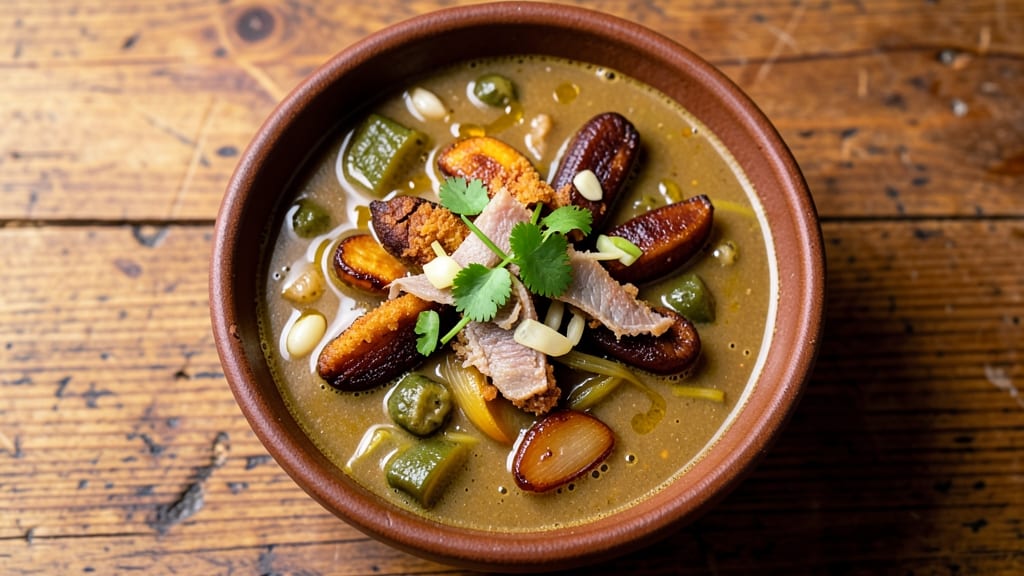
This African okra soup recipe—Nigerian-style delivers the rich, peppery depth that makes it a staple across West Africa—where every spoonful carries tradition. The secret lies in slow-cooked locust beans and fresh okra, which thicken the broth while adding that signature crunch.
I've perfected this version to balance heat, umami, and texture, using a blend of dried and fresh peppers for complexity that builds with every simmer.
The soup begins with a fragrant base of onions, ginger, and garlic, then layers in smoked fish or meat (or tofu for a vegetarian twist) before the okra transforms the broth into a velvety, slightly thickened masterpiece.
Traditional recipes often include leafy greens like spinach or bitterleaf, but the okra remains the star—its natural slime binding the flavors together without overpowering them. Cooking time varies, but patience is key: letting the locust beans bloom in hot oil unlocks their nutty, earthy notes that define this dish.
What you'll end up with is a bold, aromatic soup that's hearty enough for a main course but versatile enough to pair with pounded yam, rice, or even crusty bread. The okra's crunch contrasts beautifully with the tender protein, while the peppers deliver a slow-building heat that lingers.
This isn't just a recipe—it's a taste of home, where every ingredient plays a role in creating something greater than the sum of its parts.
Ready to make it? We'll start with the broth foundation, then build layer by layer to capture that authentic Nigerian soul. The process is straightforward, but the flavors develop over time—so let's get cooking.
Ingredients for african okra soup recipe nigerian
Pantry staples meet West African magic—just 15 ingredients for soulful, crunchy soup perfection.
| Ingredient | Amount | Notes |
|---|---|---|
| Fresh Okra 🌿 | 1 ½ lb | Trimmed, sliced into 1-inch pieces |
| Locust Beans (Iruru) 🌱 | ½ cup | Dried, soaked overnight |
| Smoked Fish (Dried or Fresh) 🐟 | 1 lb | Or substitute smoked mackerel |
| Fresh Ginger 🧄 | 2 tbsp | Grated, fresh preferred |
| Garlic Cloves 🧄 | 6 cloves | Minced, not pre-minced |
| Yellow Onions 🧅 | 2 whole | Chopped, medium size |
| Scotch Bonnet Peppers 🌶️ | 2 whole | Fresh, seeds removed |
| Dried Red Peppers 🌶️ | 2 pieces | Or 1 tbsp dried red pepper flakes |
| Tomato Paste 🍅 | 2 tbsp | High quality, no additives |
| Vegetable Oil 🫒 | ½ cup | For frying locust beans |
| Fresh Spinach 🌿 | 2 cups | Chopped, optional |
| Salt 🧂 | 1 ½ tsp | Adjust to taste |
| Ground Black Pepper 🌶️ | ½ tsp | Freshly ground |
| Thyme Leaves 🌿 | 1 tbsp | Fresh or dried |
| Bay Leaves 🍃 | 2 whole | Dried, remove before serving |
The locust beans are non-negotiable—they bloom in hot oil to create that nutty, earthy base. Buy them at African markets or online, and soak them overnight (discard the soaking water). Fresh okra is best—look for firm, bright green pods with no blemishes. The smoked fish adds depth, but smoked tofu works for vegetarian. If you can't find Scotch bonnet, jalapeño or habanero will bring the heat. For the ginger, freshly grated is best—it releases more aroma than powdered.
No locust beans? Substitute with 1 cup cooked white beans, but the flavor won't be identical. Skip the smoked fish? Use extra dried shrimp or mushrooms for umami. Fresh peppers too spicy? Remove seeds and membranes before chopping. The tomato paste is key—San Marzano is ideal, but any good-quality brand works. For the spinach, baby spinach wilts faster than mature leaves, so add it last. The thyme can be dried, but fresh leaves have brighter flavor—use half the amount if substituting.
This soup tastes even better the next day—flavors meld beautifully after reheating. Store in the fridge for 4-5 days or freeze for 3 months. For freezing, cool completely first to avoid ice crystals. The okra's crunch softens when reheated, so add fresh okra when serving if you want that signature texture. Double the batch—it disappears fast!
Why You'll Love This Recipe
- No Fuss, Big Payoff: I swear by this—just slice the okra, soak the iruru overnight, and let the smoked fish melt into the broth. The hardest part is waiting for it to simmer, and honestly? That’s the best part.
- Umami Bomb: That smoked fish, especially when you toast the dried bits until they’re crackling, turns this into something else. The ginger and garlic? They cut through the earthiness of the okra and iruru like a knife—smooth, sharp, and impossible to resist.
- Weeknight to Sunday: Make a big pot on Sunday, and you’ve got lunch for the whole week. Serve it with rice, pounded yam, or even just crusty bread—it’s the kind of soup that doesn’t care what you pair it with, as long as you’re eating it.
- Budget Magic: Iruru and smoked fish stretch this soup into a feast without breaking the bank. Between us, I’ve fed six people for under $10 with this—leftovers taste just as good reheated, and the flavor only deepens overnight.
Step-by-step instructions for Nigerian okra soup
This soup delivers that signature Nigerian boldness—peppery, rich, and packed with fresh okra crunch.
Fry the Locust Beans Until Golden
Drain the soaked locust beans and pat them dry with paper towels. Heat the 0.5 cup vegetable oil in a medium pot over medium-high heat until shimmering. Add the locust beans in a single layer and fry for 5-6 minutes, stirring occasionally, until they turn a deep golden brown. This step is crucial—it removes the raw taste and adds that nutty depth to the soup.
Remove the fried beans with a slotted spoon and set them aside on a paper towel-lined plate. Don't let the oil get too hot or the beans will burn. If you see the oil smoking, reduce the heat slightly and let it settle before continuing.
Sauté the Aromatics and Build the Base
In the same pot, reduce the heat to medium and add 2 tablespoons vegetable oil (if needed). Add the 2 whole chopped yellow onions and cook for 3-4 minutes until softened and translucent. Stir in the 6 minced garlic cloves and cook for 30 seconds until fragrant.
Next, add the 2 tbsp grated fresh ginger, 2 whole Scotch bonnet peppers (seeds removed and chopped), and 2 pieces dried red peppers. Cook for 2 minutes until the peppers darken slightly and release their aroma. This is where the soup gets its signature heat—don't skip this step or you'll miss that bold Nigerian kick.
Add Okra and Cook Until Slippery
Stir in the 1.5 lb sliced fresh okra and cook for 5-6 minutes over medium heat, stirring frequently. The okra will release a thick, slimy liquid—this is what gives the soup its signature body. If the mixture looks too dry, add ¼ cup water to help the okra release its starch.
Here's the thing—you want the okra to soften but still retain some texture. When it's ready, you'll see a glossy, thick coating on the back of your spoon. This is your cue to move to the next step. If you overcook it, the okra will turn mushy and the soup will lose its signature crunch.
Incorporate Fish and Seasonings
Add the 1 lb smoked fish (if using dried, soak it first in warm water for 15 minutes to rehydrate). Stir in the 2 tbsp tomato paste, 1.5 tsp salt, 0.5 tsp ground black pepper, 1 tbsp thyme leaves, and 2 whole bay leaves. Pour in 4 cups water and bring the mixture to a gentle boil.
Once boiling, reduce the heat to low and let it simmer for 20-25 minutes. This slow cook allows the fish to flake apart and the flavors to meld together. Taste and adjust the seasoning—you might need a little more salt or pepper to balance the heat from the peppers.
Finish with Spinach and Serve
Stir in the 2 cups chopped fresh spinach and cook for 2-3 minutes until just wilted. Remove the 2 whole bay leaves before serving. Taste one last time and adjust the seasoning if needed—this is your final chance to get it just right.
Serve the soup hot with pounded yam, eba, or rice to soak up every last bit of that rich, peppery broth. The okra should still have a slight crunch, and the fish should be tender and flaky. This is the moment you've been waiting for—enjoy your homemade Nigerian okra soup!
Pro Tips For Making African Okra Soup Recipe Nigerian
- SLICE OKRA LENGTHWISE: Fresh okra turns slimy fast—cut it into 1-inch pieces lengthwise (not rounds) so the seeds stay intact and the soup stays thick. I learned this the hard way when my first batch turned into a gluey mess because I chopped it crosswise.
- SOAK IRURU TWICE: Locust beans need more than a quick rinse—soak them in cold water for 2 hours, then boil for 20 minutes before adding to the pot. Skipping this step leaves them tough and bitter, and no one wants to chew mystery beans in their soup.
- LOW AND SLOW FOR FISH: Smoked fish breaks apart when rushed—simmer it on low heat for 10 minutes after adding, stirring gently. High heat makes it crumble into flakes instead of melting into rich, flavorful broth that coats every bite.
- BLANCH GINGER-GARLIC FIRST: Sauté raw ginger and garlic until fragrant, then remove them before adding the okra. This stops them from turning bitter and lets the okra absorb their flavor without competing for space. Trust me, your soup will taste brighter if you do this.
Regional styles of this recipe
Yoruba Classic
The Yoruba version of Nigerian okra soup is the most widely recognized, often featuring a deeper, earthier flavor profile thanks to the generous use of locust beans (iru) and palm oil (about 2 tablespoons) added at the end for richness.
In this variation, you'll find assorted meats like beef, goat, or chicken simmered together, creating a heartier broth. The Yoruba also traditionally include utazi leaves (a bitter green) instead of spinach for a more authentic touch.
The soup is typically served with amala (yarn-like yam pudding) or ewedu (jute leaf soup) for a complete meal. 🌿
Igbo Twist
Igbo okra soup often incorporates dried crayfish (about ¼ cup) and palm kernel oil instead of vegetable oil, giving it a distinct nutty flavor.
This version tends to be lighter in color but equally flavorful, with a focus on leafy greens like bitterleaf or pumpkin leaves wilted into the broth. The Igbo also use stockfish (dried cod) instead of smoked fish for a firmer texture.
Serve with pounded yam or fufu to complement the soup's lighter body. The key here is balancing the bitterness of the greens with the umami from the crayfish and stockfish. 🍃
Hausa Fusion
In Northern Nigeria, Hausa okra soup often blends tomato paste and ground peanuts (about ¼ cup) into the broth, creating a creamier texture. This version is slightly sweeter due to the peanuts and often includes beef or lamb instead of fish.
The Hausa also incorporate dried locust beans and ginger in larger quantities, giving the soup a robust, spicy kick. Serve with tuwo shinkafa (white yam pounded into a dough) or rice to balance the richness. The peanut addition makes this version uniquely comforting and nutty. 🥜
Vegetarian Adaptation
For a vegetarian version, swap the smoked fish for smoked tofu or mushrooms (about 1 lb) and use vegetable broth instead of water. Boost umami with 1 tablespoon soy sauce or mushroom powder.
The okra and locust beans still provide the signature thickness and earthiness, while the spinach or bitterleaf adds freshness. This version works beautifully with rice or plantain chips for a lighter meal. The key is ensuring the broth is still rich and flavorful, even without meat. 🌱
Modern Twist
For a contemporary take, try adding coconut milk (½ cup) at the end for a creamy finish or incorporating chili oil (about 1 tablespoon) for extra heat. Some modern versions also include shrimp or prawns for added protein.
Garnish with fresh cilantro or scallions for a pop of color and brightness. This version is perfect for those who want to keep the traditional flavors while adding a fresh, innovative touch. The coconut milk adds a subtle sweetness that pairs beautifully with the peppery heat. 🌶️
Nutrition facts
Frequently asked questions
Why does Nigerian okra soup need locust beans?
Locust beans (iru) are essential—they create that signature nutty, earthy depth that sets Nigerian okra soup apart. When fried in hot oil, they develop a rich, toasty flavor that thickens the broth naturally. Without them, the soup would lack its traditional body and complexity. Think of them as the "secret weapon" for authentic taste!
Can I make this soup without fish?
For a meat version, use chicken, beef, or goat instead. Vegetarians can substitute smoked tofu or mushrooms (about 1 lb) and add 1 tbsp soy sauce for umami. The key is maintaining the broth's richness—just adjust seasoning to balance the flavors. The okra and locust beans will still deliver that signature texture.
How do I prevent the okra from turning mushy?
Cook the okra for only 5-6 minutes over medium heat—just until it softens but still holds a slight crunch. Stir frequently and add a splash of water if needed to help release its natural starch. Overcooking breaks down the texture, so watch closely and remove it when it's glossy but still firm.
What's the best way to store leftovers?
Store in an airtight container in the fridge for 4-5 days or freeze for 3 months. Reheat gently on the stove—add a splash of water if the soup thickens too much. For the best texture, stir in fresh okra when serving to restore that signature crunch.
Which Nigerian staple pairs best with this soup?
The classic trio is pounded yam, eba (garri dough), or rice. For a Yoruba meal, serve with amala (yarn-like yam pudding). Igbo versions often pair with fufu, while Hausa okra soup works well with tuwo shinkafa (white yam dough). The starchy base helps balance the soup's peppery heat.