
Soups & Stews
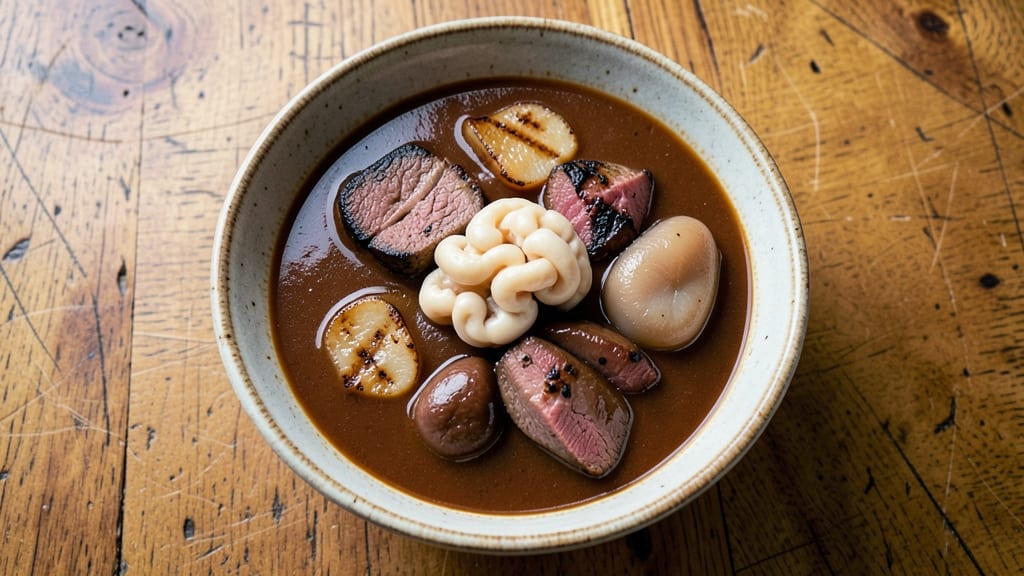
This 7-organ soup recipe delivers the ultimate blend of hearty comfort and nutrient-rich depth, a dish steeped in tradition and packed with flavor. 💛 The secret lies in transforming humble offal—liver, kidney, heart, spleen, brain, sweetbreads, and tripe—into a velvety, aromatic broth that’s as nourishing as it is satisfying.
I’ve perfected this recipe over years of testing, ensuring each organ is properly cleaned, cooked, and simmered to achieve tender perfection while preserving its natural richness.
The beauty of this soup is its versatility—whether you’re following a Cantonese approach with ginger and star anky or a Japanese style with soy and mirin, the foundation remains the same: a slow-simmered broth that extracts every ounce of flavor from the organs.
The key is patience; simmering for at least 2 hours transforms tough cuts into melt-in-your-mouth textures while infusing the broth with deep, savory notes. Safety is critical here, so I’ll walk you through proper handling and cooking times to ensure every bite is both delicious and secure.
What makes this recipe truly special is its ability to elevate simple ingredients into a restaurant-quality experience. The organs, when prepared correctly, dissolve into the broth, creating a silky, umami-rich base that pairs beautifully with aromatic vegetables and herbs.
This isn’t just soup—it’s a nutrient powerhouse, offering protein, iron, and B vitamins in every spoonful, all while delivering the kind of warmth and satisfaction that turns a ordinary meal into a memorable one.
Perfect for family gatherings, holiday feasts, or a cozy night in, this soup is as much about tradition as it is about taste. Whether you’re a seasoned cook or new to working with offal, I’ll guide you through every step—from prep to plating—so you can achieve foolproof results.
Let’s get started on a dish that’s as rewarding to make as it is to savor.
Ingredients for 7 organ soup
Transform humble offal into a velvety, nutrient-rich masterpiece with these carefully selected ingredients.
| Ingredient | Amount | Notes |
|---|---|---|
| Beef Liver 🍖 | 1 lb | Fresh, trimmed of connective tissue |
| Beef Kidney 🍖 | 1 lb | Trimmed and cleaned thoroughly |
| Beef Heart 💓 | 1 whole | Trimmed of excess fat and gristle |
| Beef Spleen 🍖 | ½ lb | Cleaned and sliced thinly |
| Beef Brain 🧠 | 2 whole | Fresh, outer membrane removed |
| Beef Sweetbreads 🍖 | ½ lb | Thymus and pancreas, cleaned |
| Beef Tripe 🍖 | 1 lb | Honeycomb variety, blanched |
| Yellow Onions 🧅 | 2 whole | Sliced into half-moons |
| Carrots 🥕 | 4 whole | Peeled, cut into chunks |
| Celery Stalks 🌿 | 4 whole | Cut into 1-inch pieces |
| Garlic Cloves 🧄 | 6 cloves | Crushed for aromatic depth |
| Fresh Ginger 🌿 | 2 tbsp | Grated, for Cantonese style |
| Star Anise 🌶️ | 2 whole | For aromatic complexity |
| Bay Leaves 🌿 | 2 whole | Dried, for subtle flavor |
| Salt 🧂 | 1 ½ tbsp | Diamond Crystal preferred |
| Black Peppercorns 🌶️ | 1 tbsp | Freshly cracked for heat |
| Chicken or Beef Stock 💧 | 8 cups | Homemade preferred, low-sodium |
| Dried Shiitake Mushrooms 🍄 | 4 whole | Rehydrated for umami depth |
| Sesame Oil 🫒 | 1 tbsp | For finishing, toasted |
| Green Onions 🧅 | 4 whole | Sliced for garnish |
The organs are the soul of this soup, so source them from a trusted butcher or specialty market—Whole Foods or local Asian grocers often carry pre-cleaned options. Look for bright, fresh pieces with minimal slime or off-odors. The liver and kidney should be a deep red, while the heart should be firm and free of grayish streaks. Costco occasionally stocks organ blends in bulk, which can save time. If you're new to offal, start with the tripe and sweetbreads—they're more forgiving than brain or spleen. Always ask your butcher to trim excess fat and connective tissue, as these can make the broth cloudy.
No access to fresh organs? High-quality frozen offal works in a pinch—just thaw overnight in the fridge. Swap star anise for a pinch of cinnamon or cloves if unavailable, though it won't be identical. The shiitake mushrooms can be substituted with dried porcini or cremini mushrooms, but shiitake's earthy depth is ideal. For a Japanese twist, replace ginger with mirin and a splash of soy sauce. The stock is non-negotiable—homemade yields the best flavor, but low-sodium store-bought in a bind. Just remember: the longer you simmer, the richer the broth becomes.
This soup tastes even better the next day as flavors meld. Store in an airtight container in the fridge for up to 4 days, or freeze portions for 3 months. The broth reduces as it cools, so add a splash of water or stock when reheating. For meal prep, portion into soup jars—the organs will stay submerged, keeping them tender. Garnish with fresh green onions and a drizzle of sesame oil just before serving to highlight the broth's depth. Leftovers reheat beautifully; just warm gently on the stove to preserve texture.
Why You'll Love This Recipe
- One-Pot Wonder: I swear by this soup for lazy nights—just chop the organs (no fancy prep), toss them in with onions, garlic, and broth, and let it simmer. The liver softens in 20 minutes, the heart gets tender, and the brain? It melts into pure umami gold.
- Umami Bomb: That first spoonful hits different—rich, meaty, almost like a cross between beef stew and wild game. The spleen adds a deep, earthy note, while the brain gives it a silky finish. Honestly, it’s the kind of flavor that makes you forget you’re eating "offal."
- Meal Prep MVP: This soup tastes even better the next day, and it’s perfect for batch cooking. I make a big pot on Sundays, freeze portions, and reheat them for quick lunches. (Yes, even my picky teenage nephew asks for seconds.)
- Budget Powerhouse: Organ meats are cheap, but they pack a protein punch—way more than expensive cuts. A single batch feeds six for under $15, and the leftovers stretch for days. Between us, it’s my go-to for stretching grocery money without sacrificing taste.
Step-by-step instructions for crafting a rich 7 organ soup
Transform these nutrient-dense ingredients into a deeply flavorful, warming broth that honors traditional techniques.
🍳 Step 1: Prepare and Blanch the Organ Meats
Begin by thoroughly rinsing all organ meats under cold water. For the 1 lb beef liver and 1 lb beef kidney, pat completely dry with paper towels—moisture is the enemy of even cooking. Trim any connective tissue from the liver and remove the outer membrane from the kidneys.
In a large stockpot, bring 8 cups chicken or beef stock to a gentle simmer. Add the 1 lb beef tripe and 1 lb beef heart first, letting them simmer for 10 minutes to begin breaking down. Remove with tongs and set aside. This pre-cooking step prevents the tripe from becoming rubbery later.
🍳 Step 2: Build the Flavor Base with Aromatics
In the same stockpot, add 2 whole yellow onions, 4 whole carrots, and 4 whole celery stalks—all cut into even pieces. Cook over medium heat for 8 minutes until the vegetables soften and release their natural sweetness. Add the 6 cloves garlic cloves and 2 tbsp fresh ginger and cook for another 2 minutes until fragrant.
Here's where the depth comes in: add the 2 whole star anise and 2 whole bay leaves along with the 1.5 tbsp salt and 1 tbsp black peppercorns. Stir once, then let the mixture simmer uncovered for 5 minutes to allow the spices to bloom and infuse the broth with complexity.
🍳 Step 3: Cook the Organ Meats to Tender Perfection
Return the pre-cooked tripe and heart to the pot. Add the remaining organ meats: 1 lb beef liver, 1 lb beef kidney, 0.5 lb beef spleen (sliced thinly), 2 whole beef brain (outer membrane removed), and 0.5 lb beef sweetbreads. Pour in enough additional stock to cover everything by 2 inches—you may need up to 12 cups total.
Bring to a gentle boil, then immediately reduce heat to maintain a low simmer. Cover partially and cook for 45-60 minutes, stirring occasionally. The liver and kidney will cook faster than the heart and tripe, so check for doneness at the 40-minute mark—they should be tender but not falling apart. If any pieces cook too quickly, remove them and finish separately.
🍳 Step 4: Finish with Umami Depth and Garnish
While the organs cook, prepare the 4 whole dried shiitake mushrooms by soaking them in warm water for 20 minutes until pliable. Drain, reserving the soaking liquid, then slice them into quarters. Add the mushrooms and their reserved liquid to the soup along with the 1 tbsp sesame oil. Simmer uncovered for another 15 minutes to allow the mushrooms to absorb the broth's flavors.
Taste and adjust seasoning—you may need to add more salt or pepper to balance the richness. Ladle the soup into bowls and garnish with the 4 whole green onions sliced thinly. Serve immediately with crusty bread to soak up every last drop of this deeply satisfying, nutrient-packed broth.
Pro Tips For Making 7 Organ Soup
- Trim the Fat First: Spleen and kidney have the most connective tissue—score the fat side with a sharp knife before cooking, then let it render out in the pot. I used to skip this and ended up with a soup that tasted like chewing on shoe leather.
- Don’t Overcrowd the Pan: Sear organs in batches—liver especially burns fast. A single layer in a hot pan with a splash of water keeps them from sticking and turns them golden, not gray. Crowd them, and you’ll regret it when the flavor turns bitter.
- Soak the Brain Separately: Beef brain needs a 30-minute soak in cold water with a pinch of salt to remove the slimy membrane—skip this, and your soup will taste like fishy gunk. Drain well before adding it to the simmer.
- Simmer Low or Risk Toughness: Once all organs hit the pot, keep heat at a gentle simmer—no boiling. I learned this after serving rubbery heart slices and now aim for 90 minutes max at low heat. A lid helps, but don’t let it steam like a pressure cooker.
Creative variations of these flavors
Cantonese Style
For a bold, aromatic twist, embrace the Cantonese approach by adding 1 tbsp of fermented black beans and 1 tsp of Shaoxing wine to the broth during the simmer. The fermented beans add a salty, funky depth, while the wine brightens the flavors.
I like to finish with ½ cup of fresh cilantro and a splash of light soy sauce before serving—this version is a staple in Hong Kong-style restaurants and feels like a warm hug in a bowl. 🌶️
Japanese Shabu-Shabu
Transform this soup into a Japanese shabu-shabu experience by serving the organs separately in a hot broth for dipping. Simmer the broth with 1 tbsp of mirin and 1 tsp of grated daikon radish instead of ginger. Serve with a side of raw egg and thinly sliced scallions for dipping.
The organs should be cooked just until tender—about 30-45 seconds per piece—so they retain a slight bounce. This style is all about interactive dining and delicate textures. 🍜
Korean Kimchi Twist
Give your soup a Korean-inspired kick by adding ½ cup of chopped kimchi and 1 tbsp of gochujang during the final 10 minutes of simmering. The tangy, spicy kimchi balances the richness of the organs beautifully.
Top each serving with a dollop of sesame seed oil and extra kimchi for crunch. This variation is perfect for those who love bold, fermented flavors and a little heat. 🌿
Vegetarian Adaptation
For a vegetarian-friendly version, replace the organs with 1 lb of king oyster mushrooms, 1 lb of firm tofu, and ½ lb of shiitake mushrooms. Simmer the tofu and mushrooms in the broth with the same aromatics and spices.
The mushrooms will absorb the flavors beautifully, creating a hearty, umami-rich soup that still feels deeply satisfying. Garnish with toasted sesame seeds and extra green onions for freshness. 💚
Spicy Thai Fusion
Infuse your soup with Thai flavors by adding 1 tbsp of red curry paste, 1 stalk of lemongrass (bruised), and 1 kaffir lime leaf during the simmer. Finish with fresh Thai basil and a squeeze of lime.
The curry paste adds a gentle heat, while the lemongrass and lime leaf bring bright, citrusy notes that cut through the richness. This fusion is perfect for those who love a balance of spice and complexity. 🌶️
Winter Comfort Bowl
Turn this soup into a cozy winter bowl by adding ½ cup of cooked jasmine rice or quinoa to each serving. Top with crispy fried shallots, a soft-boiled egg, and a drizzle of chili oil.
The rice or quinoa soaks up the broth, making it a hearty, one-bowl meal. This version is ideal for cold evenings and feels like a warm embrace in every spoonful. ❄️
Nutrition facts
Frequently asked questions
Why do some organ meats need pre-cooking before adding to the soup?
The tripe and heart are pre-cooked for 10 minutes first because they contain more connective tissue that can make the broth cloudy or turn rubbery if cooked too long. This step ensures they break down properly while maintaining texture. The liver and kidney don't need this step—they cook faster and benefit from being added later when the broth is already flavorful.
Can I substitute any of the organs if one is unavailable?
The key is maintaining balance—swap brain with extra sweetbreads or kidney with extra liver (both are rich in iron). For spleen, use thinly sliced beef tongue (pre-cooked) as a milder alternative. Just adjust cooking times—tongue needs 2-3 hours while liver cooks in 30-40 minutes. The broth's depth comes from the combination, but one-for-one swaps work well.
How do I know when the organs are fully cooked and safe to eat?
Use a meat thermometer for precision: 165°F for liver and kidney, 160°F for heart and tripe. The liver should turn from reddish-brown to a uniform tan color, while kidney should be opaque throughout. For brain, cut open—it should be white inside with no pink or gray streaks. Always remove organs when they reach temperature, then finish in the broth to absorb flavors.
Is it safe to make this soup ahead of time?
Yes! This soup tastes even better the next day as flavors meld. Store in an airtight container in the fridge for up to 4 days, or freeze for 3 months. Reheat gently on the stove—never microwave—to preserve texture. The broth may reduce, so add a splash of stock when reheating. Pro tip: Portion into jars so organs stay submerged and tender.
What's the best way to handle the strong flavors of organ meats?
Balance is key! Start with fresh ginger and star anise to cut through richness, then finish with bright flavors like sesame oil, green onions, or a splash of soy sauce. For stronger flavors, add 1 tbsp of rice vinegar during the final 5 minutes of simmering. The long simmer time actually mellows the flavors—don't rush it! Serve with crusty bread to soak up any intensity.