
Soups & Stews
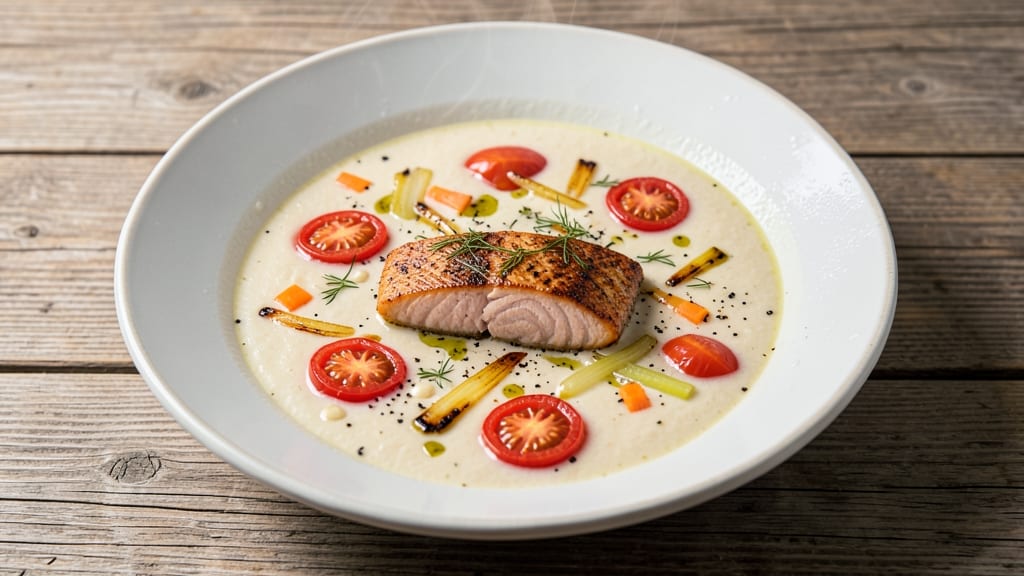
This salmon tomato soup recipe delivers the perfect balance of protein-rich salmon and bright tomato broth, creating a comforting meal that feels like a hug in a bowl.
My version builds on classic tomato soup by adding tender poached salmon fillets that melt in your mouth while maintaining their delicate texture. The key lies in poaching the salmon directly in the broth, allowing it to absorb subtle flavors while staying flaky and moist.
What sets this recipe apart is its versatility—it works as a light lunch, cozy dinner, or even an elegant starter for special occasions. The soup base simmers with aromatic vegetables and herbs, creating a rich, velvety texture that pairs beautifully with the flaky salmon.
I’ve tested this recipe multiple times in my small Boston kitchen, adjusting seasoning until it achieved that perfect harmony of acidity and richness.
By the time you finish this soup, you’ll have a bowl filled with tender salmon pieces swimming in a vibrant tomato broth, infused with garlic, onions, and fresh herbs. The salmon adds a luxurious protein element while keeping the dish light enough for summer or comforting enough for winter.
Serve it with crusty bread to soak up every last drop of that flavorful broth.
For those looking to adapt this recipe, you can easily substitute the salmon with mushrooms or chickpeas for a vegetarian version without sacrificing depth of flavor. The technique remains the same—simmer, season, and savor. Let’s get cooking!
Ingredients for salmon tomato soup
Bright tomato broth meets tender salmon—just 14 simple ingredients for cozy comfort.
| Ingredient | Amount | Notes |
|---|---|---|
| Wild-Caught Salmon Fillets 🐟 | 1 ½ lb | Skin-on, center-cut preferred |
| Canned San Marzano Tomatoes 🍅 | 2 cans | 28 oz each, crushed by hand |
| Yellow Onion 🧅 | 1 whole | Diced, medium size |
| Carrots 🥕 | 2 medium | Peeled, chopped into small pieces |
| Celery Stalks 🌿 | 3 stalks | Diced, fresh for best flavor |
| Garlic Cloves 🧄 | 4 cloves | Minced, fresh preferred |
| Extra-Virgin Olive Oil 🫒 | ½ cup | High quality, fruity |
| Fresh Thyme Sprigs 🌿 | 2 sprigs | Leaves only, or 1 tsp dried |
| Vegetable or Fish Stock 💧 | 4 cups | Low-sodium preferred |
| Heavy Cream 🥛 | ½ cup | Full-fat for creaminess |
| Lemon Juice 🍋 | 2 tbsp | Freshly squeezed |
| Salt 🧂 | 1 ½ tsp | Kosher or sea salt |
| Black Pepper 🌶️ | ½ tsp | Freshly ground preferred |
| Fresh Dill 🌿 | ¼ cup | Chopped, for garnish |
| Crusty Bread 🍞 | 1 loaf | For serving, optional |
The salmon is everything here. Wild-caught, skin-on fillets stay moist and flavorful while poaching. Whole Foods or local fishmongers have the best quality—look for vibrant pink color and firm texture. If you can't find San Marzano tomatoes, any high-quality canned tomatoes work, but drain them well. The carrots and celery form the aromatic base, so don't skip chopping them small—they'll soften completely. Fresh thyme and dill make all the difference, but dried works in a pinch at one-third the amount.
No salmon? Mushrooms or chickpeas make great substitutes—they'll soak up the broth beautifully. Short on stock? Water plus bouillon cubes works, but add an extra pinch of salt. The heavy cream can be swapped for coconut milk for a lighter version. If you're making this ahead, hold off on adding the cream until reheating—it keeps the soup cleaner. The lemon juice brightens everything, so don't skip it, even if you're not a big lemon fan. Trust me on this.
This soup tastes even better the next day—make a double batch and freeze half. Portion into containers for easy lunches. The broth keeps for 5 days in the fridge, and the salmon reheats beautifully. Garnish with fresh dill right before serving. The crusty bread? Warm it in the oven for 5 minutes—it soaks up the broth like a dream.
Why You'll Love This Recipe
- I swear by this one: chop the onion, carrots, and celery while the salmon simmers—no prepping ahead, no stress. The San Marzano tomatoes handle all the heavy lifting, so you’re basically stirring while they do the work.
- Fridge-to-Pot Magic: I swear by this one: chop the onion, carrots, and celery while the salmon simmers—no prepping ahead, no stress. The San Marzano tomatoes handle all the heavy lifting, so you’re basically stirring while they do the work.
- Rich Without the Effort: That first bite of flaky salmon in a velvety tomato broth? It’s like a hug in a bowl. The wild-caught salmon adds depth, and the slow-simmered tomatoes caramelize into something dangerously good—no fancy techniques, just patience.
- Lunch for Days: Make a double batch and freeze half. Reheat it straight from the freezer for a cozy lunch when you’re too tired to cook. My daughter’s favorite? The crispy salmon bits on top—she calls them “fish gold.”
Step-by-step instructions for salmon and tomato soup
Here's how to build a hearty, protein-rich soup that balances rich salmon with bright tomato flavors.
Sear and Remove Salmon Skin
Pat the 1.5 lb wild-caught salmon fillets completely dry with paper towels. Heat 0.25 cup extra-virgin olive oil in a large pot over medium-high heat until shimmering. Place the salmon skin-side down and press gently with a spatula for 1 minute to render the skin crispy.
Flip the salmon and sear for 2-3 minutes until the flesh turns opaque. Transfer to a plate and let cool slightly. Use a fish spatula to scrape up any browned bits from the bottom of the pot—this flavor will form the soup's base. Remove the salmon skin with tongs and discard it.
Flake the cooked salmon into 1-inch chunks and set aside. Here's the thing—this searing step isn't just about flavor. It also helps tenderize the salmon slightly, making it easier to flake and incorporate into the soup later.
Build the Vegetable Base
In the same pot, add 0.25 cup extra-virgin olive oil and reduce heat to medium. Add the diced yellow onion, chopped carrots, and diced celery stalks. Cook for 8-10 minutes, stirring occasionally, until the vegetables soften and release their natural juices.
Add the minced garlic cloves and thyme leaves (stripped from 2 sprigs), cooking for 1 minute until fragrant. Here's where it gets good—this aromatic base forms the flavor foundation of your soup. If you smell any burning, reduce the heat slightly. You want sweet, not bitter.
Pour in the 2 cans crushed San Marzano tomatoes and stir to combine. Let the mixture simmer for 5 minutes to allow the tomato flavors to meld with the vegetables. This step develops depth before adding the stock.
Simmer the Soup and Add Salmon
Gradually pour in the 4 cups vegetable or fish stock, stirring constantly to prevent lumps. Bring to a gentle boil, then reduce heat to low and let it simmer uncovered for 20 minutes. This slow cook time ensures the vegetables become tender while the broth absorbs their flavors.
Add the flaked salmon back to the pot along with 1.5 tsp salt and 0.5 tsp black pepper. Stir gently to distribute the salmon evenly. The soup should now have a rich, pink hue from the salmon. If it looks too thick, add ½ cup water to reach your desired consistency.
Here's the moment that matters: Taste the soup at this stage before adding cream. The acidity from the tomatoes and the saltiness from the stock should balance perfectly. If it needs brightness, add 1 tbsp lemon juice now—you can always adjust later.
Finish with Cream and Fresh Herbs
Reduce heat to low and stir in the 0.5 cup heavy cream. Let the soup simmer gently for 3-4 minutes—just enough time to warm through without curdling the cream. The soup should now have a velvety texture with a beautiful balance of rich and bright flavors.
Remove the pot from heat and stir in the 2 tbsp lemon juice and 0.25 cup chopped fresh dill. The lemon juice brightens the dish while the dill adds a fresh herbal note that cuts through the richness. Give it one final taste adjustment—this is your chance to perfect the seasoning.
Real talk: Don't skip the lemon juice. It might seem like an afterthought, but it's what transforms this from a rich soup to a truly balanced, comforting bowl. The acidity makes every spoonful sing.
Serve with Crusty Bread
Ladle the soup into bowls, making sure each serving gets a generous portion of salmon. The 1 loaf crusty bread is perfect for soaking up every last drop of that creamy broth. Serve immediately while the soup is hot and the flavors are at their peak.
For an extra touch, garnish each bowl with an additional sprinkle of chopped fresh dill and a crack of black pepper. The contrast of textures—creamy soup against crisp bread—makes this dish truly satisfying. And that's the comfort we promised.
Pro Tips For Making Salmon Tomato Soup
- Poach, Don’t Fry: DESCRIPTION: Salmon in soup? Skip the pan and poach it first—gentle simmer in the broth for 8-10 minutes until just opaque. I learned this the hard way after overcooking my first batch and ending up with rubbery flakes. The texture stays tender, and the broth absorbs all that rich flavor.
- Dice Small, Sauté Fast: DESCRIPTION: Chop onions, carrots, and celery into ¼-inch pieces—smaller than you’d think. Cook them in butter or oil over medium-high heat until the onions turn translucent but not browned (that’s where bitterness hides). I used to rush this, and the soup always tasted dull afterward.
- Drain, Don’t Rinse Tomatoes: DESCRIPTION: Open those San Marzano cans and drain the tomatoes but leave the juices—they’re liquid gold. That sweet, tangy pulp is the base of your soup’s depth. I once rinsed them out of habit, and the flavor was half as vibrant. Just skim any floating bits if needed.
- Blend in Stages: DESCRIPTION: After simmering, blend the soup in two passes: first, a quick pulse to break up chunks, then a full blend for silkiness. This keeps some texture if you prefer it—no one likes a gluey mess. I was skeptical until I tried it; the result is smoother without losing heartiness.
Wine and beer pairings for these flavors
White Wine Pairings
A crisp, zesty white wine cuts through the richness of the salmon and complements the bright acidity of the tomato broth. I always reach for a dry Vermentino from Sardinia—its citrus notes and mineral finish mirror the lemon in the soup while keeping your palate fresh.
A Pinot Grigio from Alto Adige works beautifully too, especially if you prefer something slightly lighter. Avoid anything too oaky or heavy, as those flavors will clash with the delicate salmon. 🍷
Light Beer Options
For beer lovers, a Belgian witbier like Hoegaarden brings a perfect balance with its coriander and citrus undertones. The effervescence also cleanses your palate between spoonfuls of creamy soup. If you prefer something more approachable, a German Helles lager offers a clean, malty backbone that won’t overpower the dish.
Just skip the heavy IPAs—they’ll make the salmon taste bland by comparison.
Red Wine Exception
Here’s the surprise: a light-bodied Pinot Noir from Oregon or New Zealand actually works if you’re craving red. Look for one with bright cherry notes and minimal tannins—La Crema or Kumeu River are my go-tos.
The acidity in these wines enhances the tomato’s brightness, while the fruitiness complements the salmon. Serve it slightly chilled (55-60°F) to emphasize its freshness.
Non-Alcoholic Choices
Don’t have wine or beer? A sparkling apple cider like Martinelli’s brings that same citrus lift without alcohol. For something more sophisticated, try a dry sparkling water with a splash of grapefruit juice—it’s refreshing and lets the soup’s flavors shine.
I keep a bottle of LaCroix Grapefruit in my fridge specifically for pairing with this dish.
Pro Pairing Tip
Let your wine or beer breathe alongside the soup for 10-15 minutes before serving. This allows the aromas to open up and harmonize with the dish’s flavors. And here’s my secret: serve the soup slightly warm (160-170°F) rather than boiling hot.
The contrast between the warm soup and chilled drink creates a luxurious dining experience. ✨
Nutrition facts
Frequently asked questions
Can I substitute salmon with another protein?
For a vegetarian version, try mushrooms (like cremini or shiitake) or chickpeas for heartiness. Both absorb the broth beautifully while keeping the dish satisfying. If you prefer seafood, shrimp or scallops work well—just cook them separately and add at the end to avoid overcooking.
How do I prevent the salmon from breaking apart in the soup?
Start by searing the salmon skin-side down first to render the skin crispy, then flip and cook just until the flesh turns opaque (2-3 minutes). After removing the skin, flake the salmon into 1-inch chunks instead of tiny pieces. Adding it back to the soup at the 20-minute mark ensures it stays tender without falling apart.
Can I make this soup ahead of time?
Yes! Prepare the soup base (without the cream) up to 2 days ahead and store it in an airtight container in the fridge. When ready to serve, reheat gently, stir in the cream, and add fresh dill and lemon juice. For the salmon, poach it separately and add it back just before serving to keep it tender.
Why does my soup taste too acidic?
If the tomatoes or lemon juice overpower the dish, balance it with a pinch of sugar (½ tsp) or a splash of heavy cream (1-2 tbsp). The cream also adds richness to complement the acidity. Taste as you go—this soup is all about adjusting to your preference!
What’s the best way to reheat leftovers?
Reheat gently on the stovetop over low heat until just warm (160-170°F). Avoid microwaving, as it can make the salmon dry. If the soup thickens, stir in 1-2 tbsp water or broth to restore creaminess. Garnish with fresh dill after reheating to keep it vibrant.